UNUSUAL CARS MODEL GUIDE
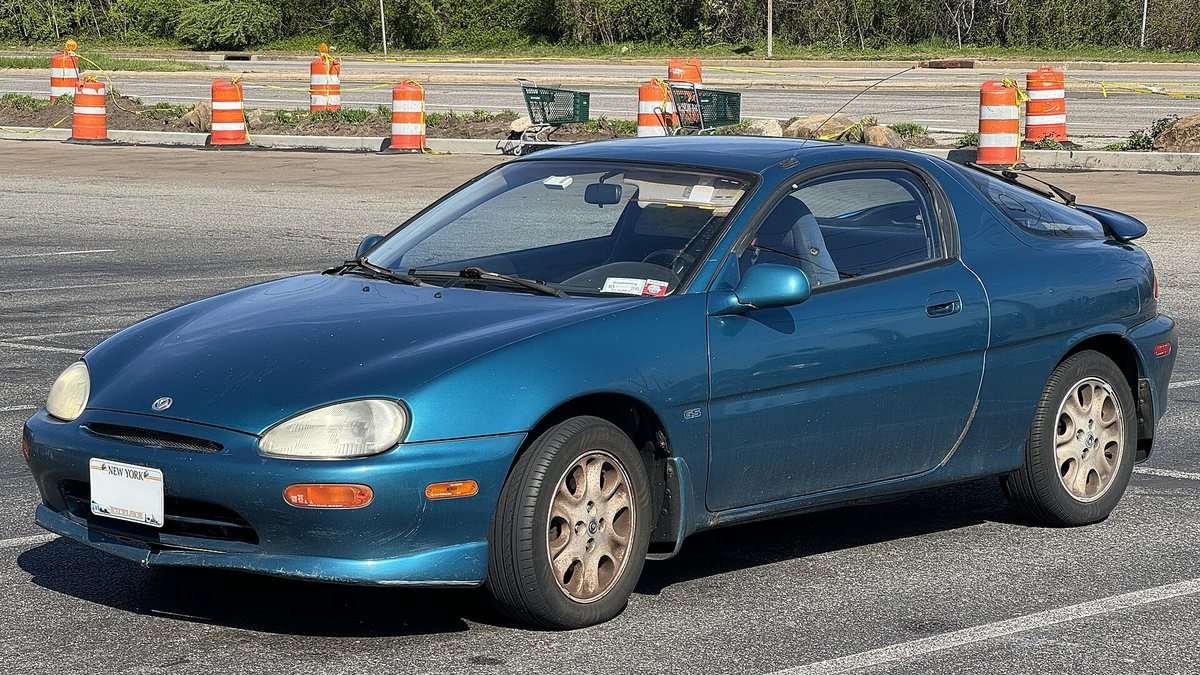
The Mazda MX-3 is a compact four-seat coupé introduced at the 1991 Geneva Motor Show. Its defining version uses a 1.8-litre, 24-valve V6: Mazda described it as the smallest-displacement mass-produced V6 engine in the world at the time.
Quick answer: the MX-3 was sold with four-cylinder engines as well as the 1.8 V6, and wore different names in Japan, including Eunos Presso and Autozam AZ-3. The V6 is the enthusiast focus, but buying one now is as much about body, parts completeness and correct identity as engine condition.
A small coupé from Mazda’s experimental period
Mazda revealed the MX-3 in Geneva in March 1991 and launched the Japanese Eunos Presso that June. It joined a crowded early-1990s Mazda catalogue that included the MX-5, MX-6, RX-7 and several domestic sales channels.
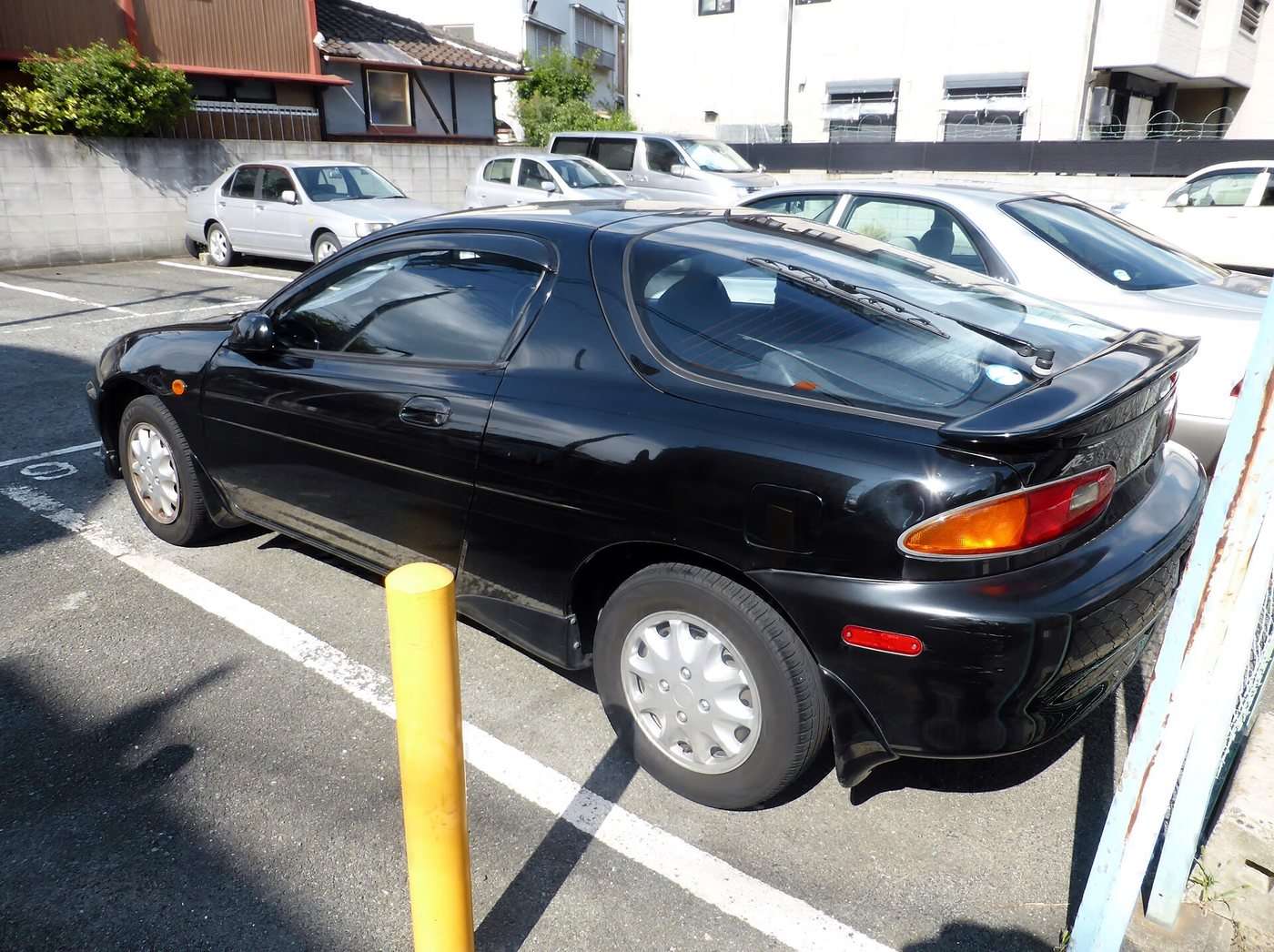
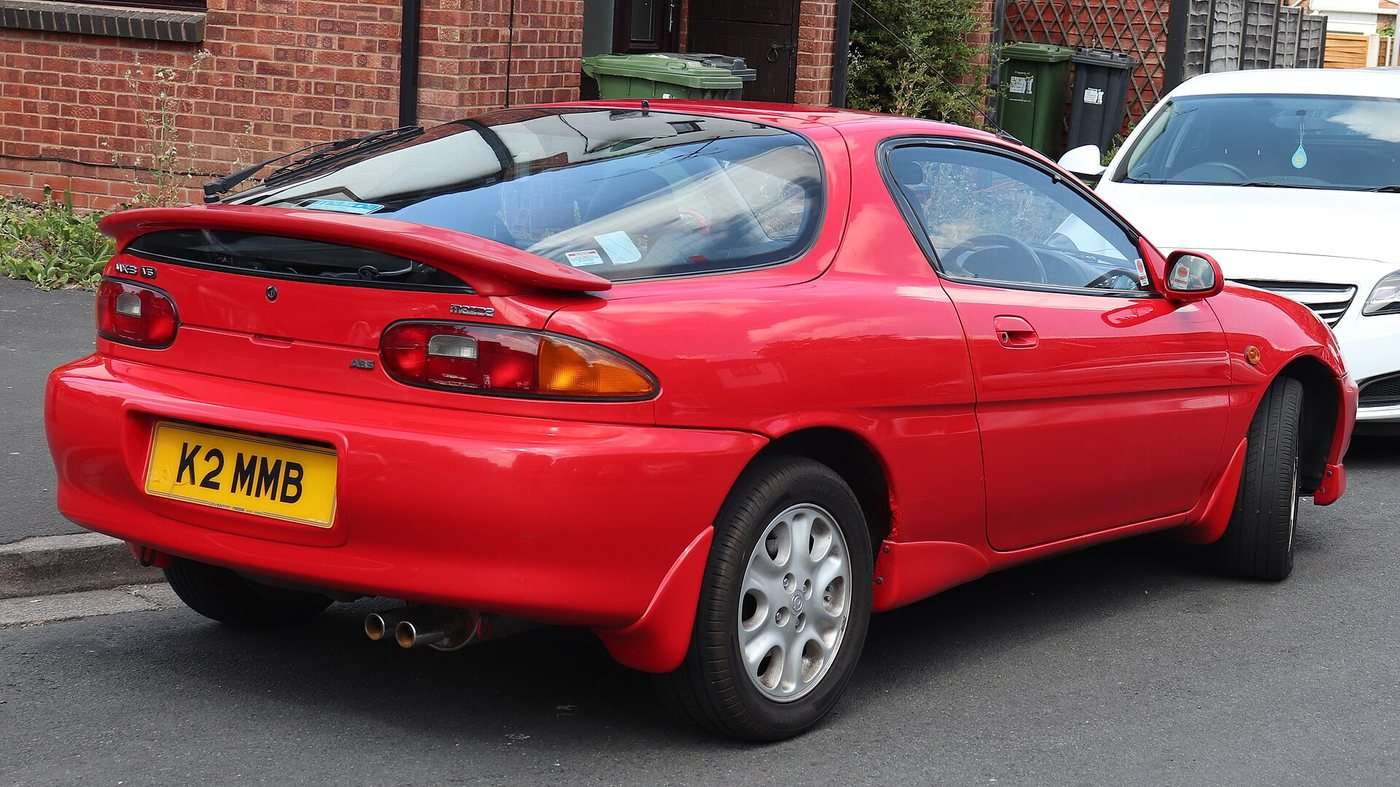
The body is a two-door hatchback with two small rear seats. Its curved glass, tapering tail and low nose distinguished it from conventional hot hatchbacks, while front-wheel drive and shared compact-car components kept it practical.

The 1.8-litre K8 V6
The K8 is a 1,845cc, 60-degree V6 with four camshafts and 24 valves. Mazda’s Japanese history quotes 140PS at 7,000rpm for the Eunos Presso. Export outputs vary with emissions equipment and measurement standard, but the significance is unchanged: six cylinders, high revs and unusually small capacity in a compact coupé.
A variable-resonance intake system broadens the useful torque curve. The engine’s appeal is smoothness and response rather than large low-speed torque, so a healthy manual car should pull cleanly as revs rise without overheating, hesitation or warning lights.

MX-3, Eunos Presso and Autozam AZ-3
| Name | Market or channel | Typical distinction |
|---|---|---|
| Mazda MX-3 | Europe and North America | Export name with four-cylinder and V6 specifications depending on market |
| Eunos Presso | Japan, Eunos channel | Included the 1.8-litre V6 version and domestic-market equipment |
| Autozam AZ-3 | Japan, Autozam channel | Closely related coupé offered with a 1.5-litre four-cylinder in Mazda’s domestic range |
| Eunos 30X | Selected export markets | Alternative market name for the same model family |
Names and specifications overlap, but they are not interchangeable shorthand for every car. A private import should be matched to its chassis plate and Japanese documentation, while an official UK MX-3 should retain a consistent registration and service history.
Chassis, cabin and character
The MX-3 uses struts at the front and Mazda’s twin-trapezoidal-link arrangement at the rear. It was engineered as a nimble road coupé rather than a stripped homologation model. The V6 adds sound and refinement without turning the car into a high-torque muscle coupé.
The rear seats are best treated as occasional accommodation, but the hatch gives useful luggage space. Original seats, dashboard trim, lamps, glass and exterior mouldings now matter because breakers and new-old-stock supplies are far thinner than for an MX-5.

Love cars you don’t see every day?
Get forgotten cars, surprising motoring stories and the most interesting finds from Unusual Cars by email.
Free to join. No spam. Unsubscribe whenever you like. See our privacy policy.
Mazda MX-3 V6 buying guide
Confirm the engine and identity
Check the chassis plate, engine number, market specification and registration history. Four-cylinder cars, V6 cars and Japanese-channel derivatives should not be valued or described as though they are the same.
Cambelt, cooling and oil leaks
Look for documented cambelt and cooling-system maintenance. Check coolant level and colour, radiator, hoses and fans, then inspect the compact V6 for cam-cover and distributor-area oil leaks. Any overheating history deserves specialist investigation.
Intake, idle and ignition
The engine should idle evenly and pull smoothly through the rev range. Split intake hoses, vacuum leaks, tired ignition parts and neglected injectors can mimic more serious faults. Diagnose rather than replacing parts at random.
Body and suspension
Inspect sills, rear arches, floors, front and rear suspension mounts and the hatch area. Look for poor accident repairs and water ingress. Worn bushes, dampers and wheel bearings can make a fundamentally good chassis feel untidy.
Gearbox, brakes and scarce trim
Test synchromesh cold and warm, clutch take-up, driveshaft joints and brake balance. Make sure unique lamps, glass, interior panels and exterior trim are complete before treating a cheap car as an easy project.

Why the Mazda MX-3 deserves attention
The MX-3 belongs to a brief period when Japanese manufacturers put unusually ambitious engineering into affordable compact coupés. Its 1.8-litre V6 was not necessary for transport, which is exactly why the car remains interesting.
Research sources
- Mazda: MX-3, Eunos Presso and Autozam AZ-3 product history
- Mazda: multi-channel and V6 development history
- Automobile/MotorTrend: Mazda MX-3 history and specifications
- Honest John Classics: Mazda MX-3 review and ownership notes
- RAC: Mazda MX-3 used-car review
Continue the Mazda story
Explore the Rare & Performance Mazdas hub, then compare the MX-5 NA guide and the Eunos Cosmo guide.
Frequently asked questions
What engine is in the Mazda MX-3 V6?
The V6 model uses Mazda’s 1,845cc K8 60-degree V6 with four camshafts and 24 valves.
Was the MX-3 V6 the smallest production V6?
Mazda described the 1.8-litre unit as the world’s smallest-displacement mass-produced V6 engine at the time of launch.
Is an Eunos Presso the same as a Mazda MX-3?
It is the closely related Japanese-market version sold through Mazda’s Eunos channel, with domestic engines, grades and equipment.
What is an Autozam AZ-3?
The AZ-3 is a Japanese-market member of the same coupé family sold through Mazda’s Autozam channel, typically with a 1.5-litre four-cylinder engine.
What should be checked before buying an MX-3 V6?
Confirm identity and engine specification, then check cambelt and cooling history, oil leaks, intake and ignition health, rust, suspension, gearbox and completeness of scarce trim.