UNUSUAL CARS MODEL GUIDE
The Mazda 323 GTX and GT-R were turbocharged, four-wheel-drive versions of the seventh-generation BG Familia hatchback. Developed from Mazda’s rally programme, they combined a 1.8-litre DOHC engine, compact three-door body and full-time four-wheel drive years before performance hatchbacks routinely used that formula.
Quick answer: the GTX is the earlier road-and-rally foundation; the rarer GT-R is the more focused 1992 evolution with a larger turbocharger, bigger intercooler, stronger transmission and aggressive bonnet vents. Japanese-market power figures differ from European versions, so badges and advertised output must be checked against the car’s origin.
Familia, 323 and the BG platform
Mazda launched the seventh-generation Familia in 1989 with three distinct bodies. In export markets the conventional three-door hatchback was generally sold as the 323. A full-time four-wheel-drive performance derivative continued the approach Mazda had used successfully with the earlier BF-generation 323 in international rallying.
Mazda’s Japanese history records a front-to-rear torque split of 43:57 for the BG full-time 4WD system, intended to give the car a more sporting balance. The turbocharged 1,839cc BP engine drove through a five-speed manual transmission and viscous-coupling centre differential.
The 323 GTX road car
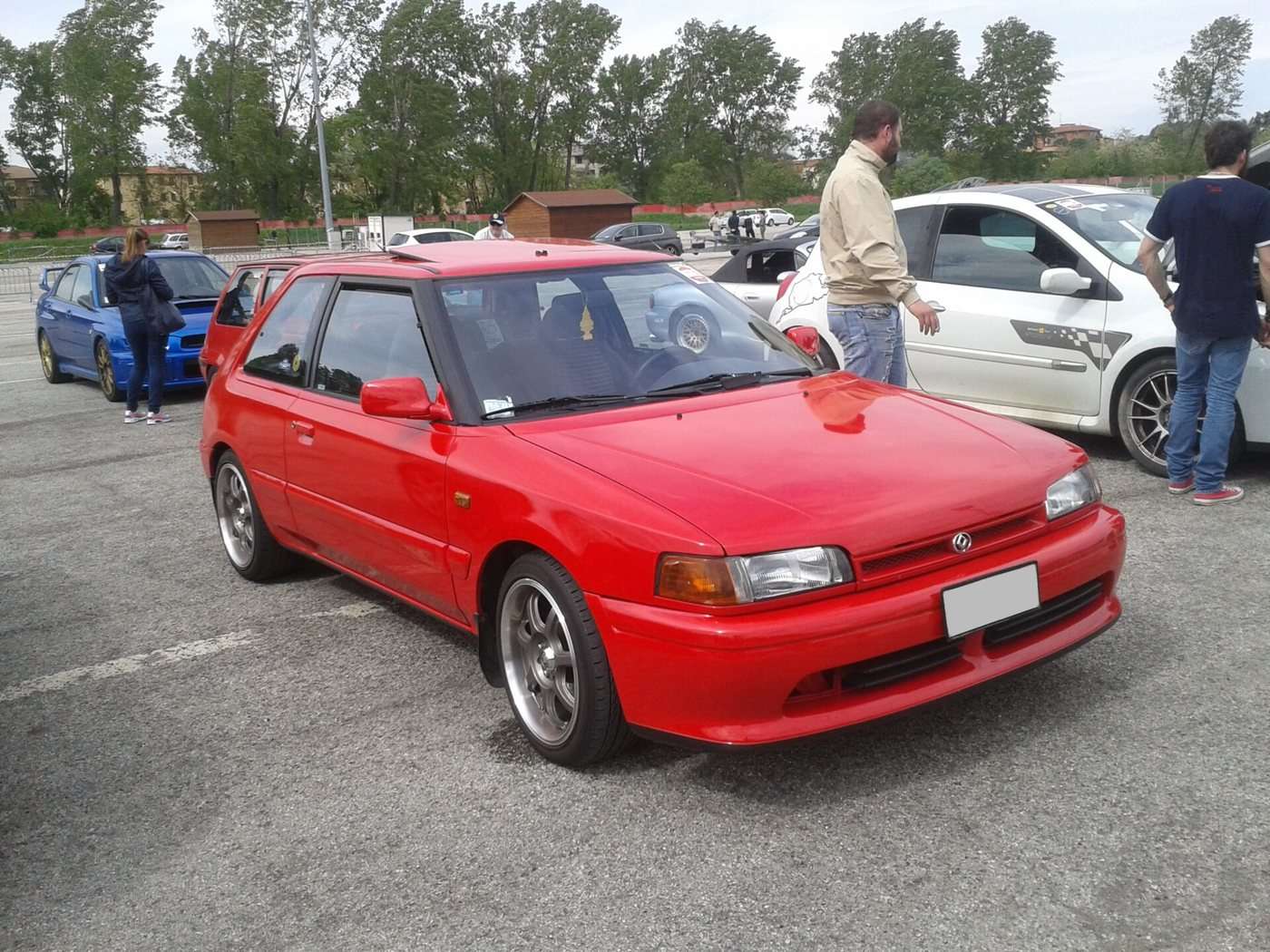
The BG GTX used the BP-series 16-valve engine with a turbocharger and intercooler. Japan received a quoted 180PS version, while European-market figures were lower according to local specification and measurement. Four-wheel ABS and a purposeful but relatively discreet three-door body helped the GTX work as a usable road car rather than a stripped competition special.
The GTX also provided the competition base. Mazda states that the Familia won the 1989 Group N manufacturers’ championship and the 1991 Group N drivers’ championship. Those results matter because the later GT-R was not a styling exercise; it was an attempt to turn accumulated rally experience into a stronger production package.
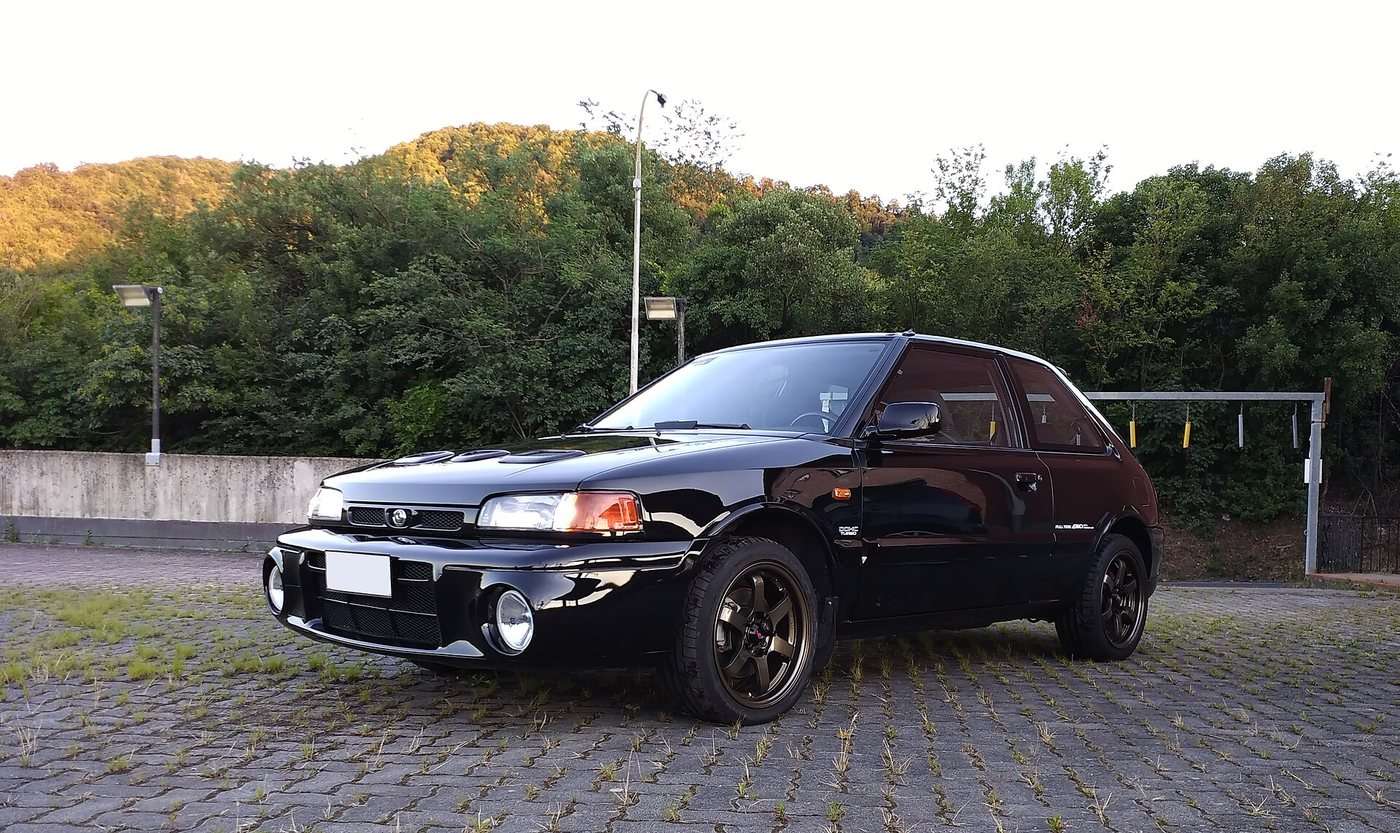
What changed for the 323 GT-R?
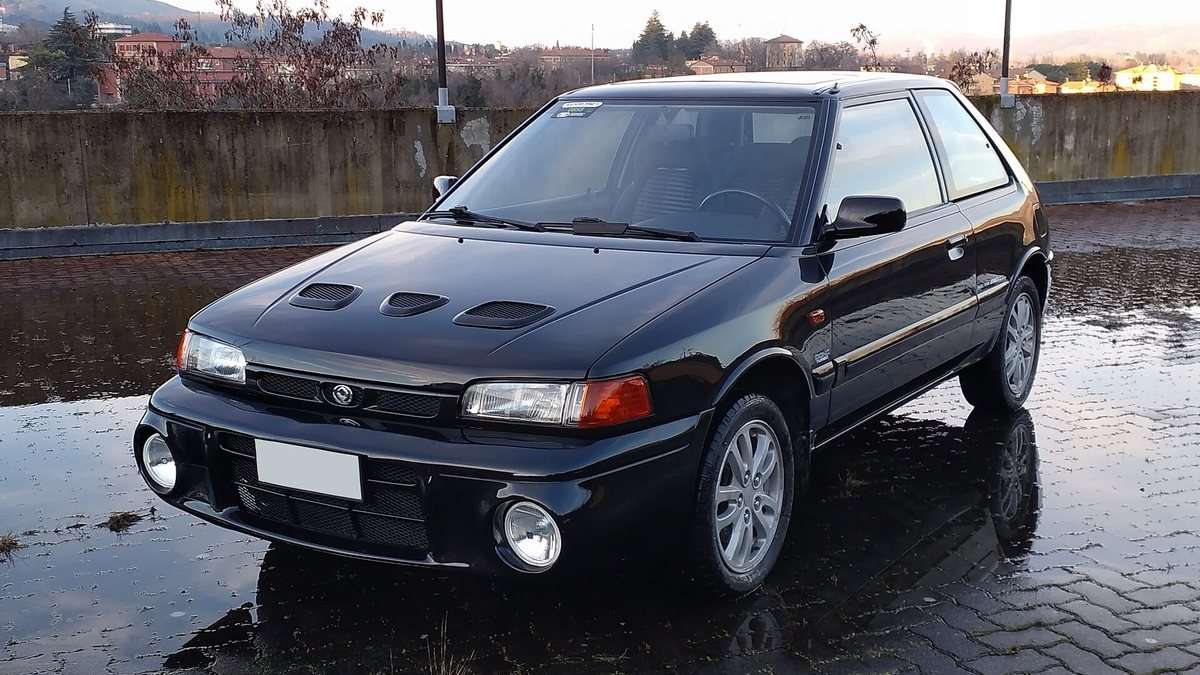
The GT-R arrived in Japan in January 1992. Mazda fitted a larger turbocharger and front-mounted intercooler, strengthened the BP engine and transmission, and gave the car a distinctive bumper, grille and three-vent bonnet. Japanese output was quoted at 210PS, again higher than the specification commonly quoted for European cars.
The FIA Historic Database records the Mazda 323 GT-R 4WD BG8 under homologation number 5473, effective from 2 January 1993. The road car’s purpose is therefore documented independently of later enthusiast mythology: it was a homologated compact performance car created for rally competition.

| Feature | 323 GTX | 323 GT-R |
|---|---|---|
| Engine family | 1.8-litre BP turbo | 1.8-litre BPD turbo development |
| Japanese quoted output | 180PS | 210PS |
| Induction | Turbocharger and intercooler | Larger turbocharger and front-mounted intercooler |
| Body cues | Relatively restrained | Vented bonnet and more aggressive front treatment |
| Role | Road car and rally foundation | Focused homologation evolution |
GT-Ae and production-number caution
A still rarer Japanese GT-Ae derivative removed equipment and used lighter components as an evolution model. Production totals quoted online for the GT-R, GT-Ae and combined markets vary substantially, and definitions are often mixed. This guide therefore avoids presenting one unsupported total as fact. A prospective buyer should concentrate on whether the individual shell, chassis code and equipment are authentic.

Why the 323 GT-R was forgotten
The car arrived into a crowded homologation era dominated by larger, more successful names. Mazda’s top-level rally programme changed direction before the GT-R could build the competition story its hardware suggested. Its ordinary 323 roots and limited official-market presence also kept it below the radar once used examples became cheap.
That anonymity is now part of the appeal. The GT-R delivers turbocharged four-wheel-drive engineering in a compact hatchback whose identity is not obvious to most road users, while the GTX offers much of the same family history in a less extreme form.

Love cars you don’t see every day?
Get forgotten cars, surprising motoring stories and the most interesting finds from Unusual Cars by email.
Free to join. No spam. Unsubscribe whenever you like. See our privacy policy.
Mazda 323 GTX and GT-R buying guide
Prove the car’s identity
Start with the chassis code, VIN, original market and import documentation. Compare bonnet, bumper, intercooler, engine and transmission details with period specifications. Standard 323 shells have been converted, and desirable GT-R parts have moved between cars.
Rust and previous competition use
Inspect sills, arches, floor, chassis rails, suspension turrets, rear structure and seams around the hatch. Look beneath underseal and interior trim for repair evidence. A car used in competition may be sound and well prepared, but it needs documented cage installation, straight suspension points and repairs that preserve shell integrity.
Engine, turbo and cooling
Check cold start, oil pressure, smoke, crankcase breathing, coolant condition and evidence of detonation. Ageing hoses, radiators and intercooler plumbing deserve particular attention. Modified boost without verified fuel, ignition and engine-management work can turn a rare engine into an expensive rebuild.
Four-wheel drive and transmission
Use four matching tyres with similar wear and circumference. Listen for transfer and differential noise, check clutch operation and test every gear for synchromesh wear. Confirm that the centre coupling and driveshaft system have not been damaged by mismatched tyres or aggressive launches.
Parts and ownership planning
Routine service items can be manageable, but model-specific body, drivetrain and interior pieces are scarce. Join marque communities and identify a specialist before buying. Completeness can matter more than cosmetic finish because missing GT-R-only components may take years to replace.
Research sources
- Mazda Japan: seventh-generation Familia, GTX and GT-R history
- Mazda: 1980–1989 product history and Familia 4WD
- FIA Historic Database: Mazda 323 GT-R homologation 5473
- Mazda centenary: seventh-generation Familia
Continue the Mazda story
Explore the Rare & Performance Mazdas hub, then read about the RX-7 FD or the MX-5 NA and Eunos Roadster.
Frequently asked questions
What is the difference between a Mazda 323 GTX and GT-R?
The GT-R is the more focused 1992 evolution, with a larger turbocharger, bigger front intercooler, strengthened transmission and distinctive vented bonnet and front styling.
Was the Mazda 323 GT-R a homologation car?
Yes. The FIA Historic Database records the 323 GT-R 4WD BG8 under homologation number 5473, effective from 2 January 1993.
How much power did the Mazda 323 GT-R make?
Mazda quoted 210PS for the Japanese-market GT-R. Export versions can carry different figures, so the original market and measurement standard must be stated.
Did the Mazda 323 GTX use four-wheel drive?
Yes. The BG GTX combined a turbocharged 1.8-litre engine with full-time four-wheel drive and a viscous centre differential.
What should be checked before buying a 323 GT-R?
Verify identity, inspect the shell for corrosion and competition repairs, assess engine and turbo health, test the transmission and four-wheel-drive system, and confirm scarce model-specific parts are present.