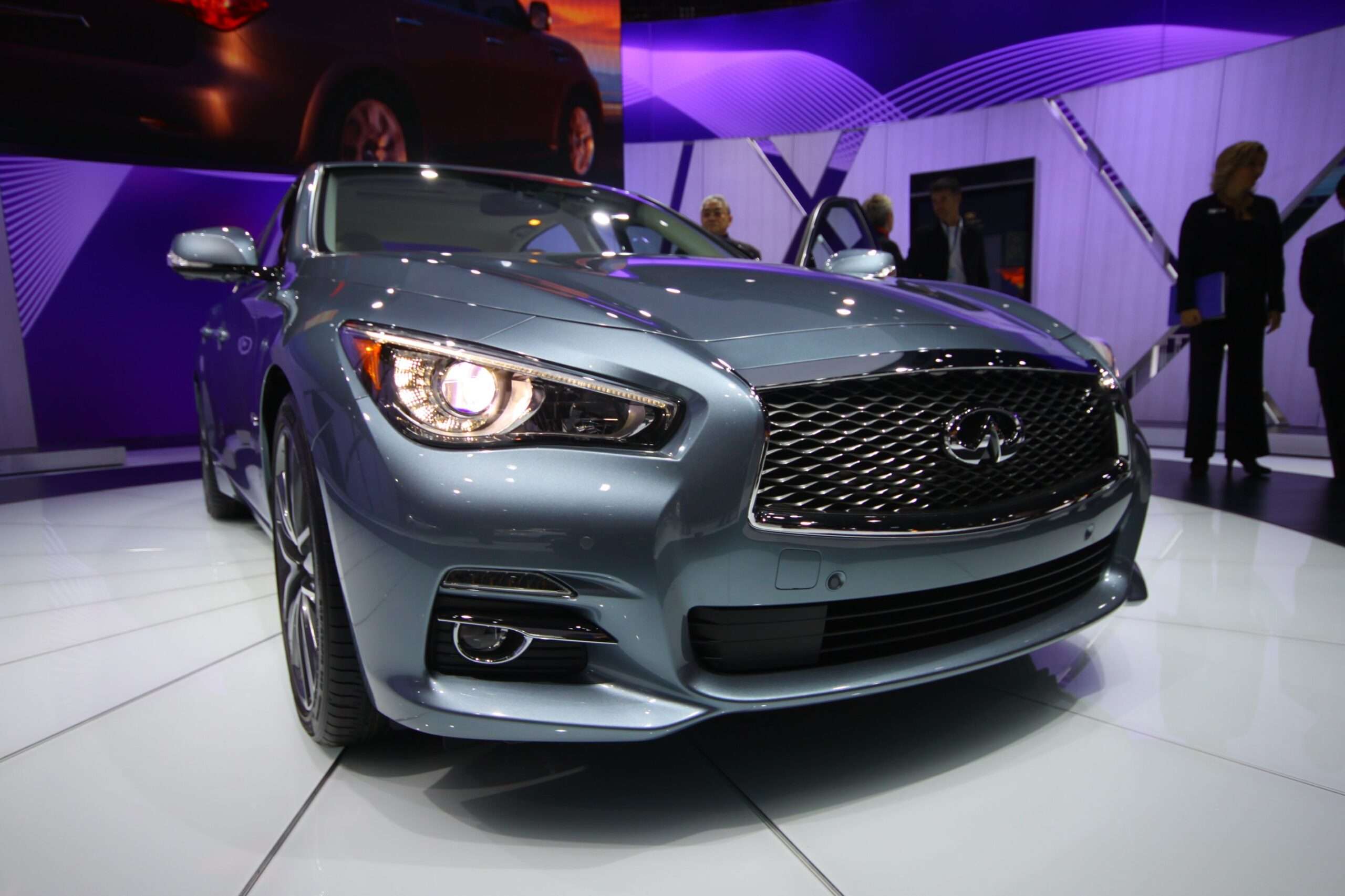
The Infiniti Q50 was one of the most technically ambitious compact executive saloons officially sold in Britain. Launched here in 2013, it combined rear-wheel drive, dramatic styling and unusually generous equipment with a choice of diesel, petrol and high-performance hybrid power. Later 3.0t versions added a twin-turbo V6 with up to 405bhp in UK Sport Tech specification.
The Q50 was designed to challenge the BMW 3 Series, Mercedes-Benz C-Class and Lexus IS, but Infiniti’s limited dealer network kept sales modest. With the marque gone from Western Europe since 2020, the Q50 is now a rare modern performance saloon whose low used prices conceal substantial technical complexity.
UK launch and model history
Infiniti revealed the Q50 as the replacement for the G saloon and the first model under its new Q-based naming system. British deliveries began in 2013. The range initially centred on the 2.2d diesel and the Q50 Hybrid, followed by a Mercedes-sourced 2.0-litre turbo petrol and Infiniti’s own 3.0-litre twin-turbo V6.
The body was shaped for a low drag coefficient and the cabin introduced a distinctive twin-screen InTouch system. The Q50 also became the first production car offered with Direct Adaptive Steering, an electronic steer-by-wire system that could vary response and effort.
Q50 Hybrid
The Q50 Hybrid paired a 3.5-litre naturally aspirated V6 with an electric motor, lithium-ion battery and seven-speed automatic gearbox. Combined output was 364PS, sent to the rear wheels in most UK cars. Acceleration to 62mph took roughly 5.1 seconds, making it much faster than its discreet appearance suggested.
Electric assistance gives immediate response, while the petrol engine disconnects when conditions allow. It is a performance hybrid rather than a plug-in economy car: electric-only range is short and real-world fuel use depends heavily on the journey. The battery reduces boot space, but the blend of pace, refinement and rarity remains compelling.
Q50 3.0t twin-turbo
The later VR30DDTT engine was a 2,997cc twin-turbo V6. UK Sport and Sport Tech versions were offered with a high-output tune quoted at 405bhp, giving the Q50 performance to rival serious German sports saloons. A lower-output version existed in other markets, so imported cars need careful identification.
The 3.0t uses a seven-speed automatic and rear-wheel drive. It is extremely quick, but the chassis and steering divide opinion: some drivers admire the stability and adjustability, while others prefer the natural feedback of a conventional hydraulic or electric steering rack.
2.2d and 2.0t versions
The 2.2d used a 2,143cc four-cylinder turbo diesel linked to a six-speed manual or seven-speed automatic. It delivered the economy and company-car figures needed for the UK market, but it is less distinctive than the V6 models and brings familiar modern-diesel emissions concerns.
The 2.0t petrol used a 1,991cc turbocharged four-cylinder engine and seven-speed automatic. It is smoother for short-distance use than the diesel and more economical than the V6s, though neither its sound nor performance defines the Q50 experience.
UK model comparison
| Model | Powertrain | Output | Character |
|---|---|---|---|
| Q50 2.2d | 2.1 turbo diesel | 170PS | Most economical; check DPF and EGR health |
| Q50 2.0t | 2.0 turbo petrol | 211PS | Refined everyday option |
| Q50 Hybrid | 3.5 V6 plus electric motor | 364PS combined | Fast, smooth and technically unusual |
| Q50 3.0t Sport Tech | 3.0 twin-turbo V6 | 405bhp | Rare UK performance flagship |
Direct Adaptive Steering
Direct Adaptive Steering removes the continuous mechanical link between the steering wheel and front wheels during normal operation, although a backup coupling is provided for safety. Sensors, motors and control units translate the driver’s input into road-wheel movement. It allows adjustable steering weight and response while filtering kickback.
The technology improved through software updates, but it remains the Q50 feature most likely to surprise a new owner. Warning lights, inconsistent assistance or strange self-centring demand specialist diagnosis. Cars without the system use a conventional steering arrangement and may appeal to buyers who value simpler feedback.
Interior and equipment
Most UK cars were well equipped with leather or part-leather upholstery, heated seats, climate control, keyless entry, reversing cameras and the dual-screen InTouch interface. Sport Tech models added equipment such as Bose audio, surround-view cameras, adaptive cruise control and extensive driver assistance.
Check both screens from a cold start. Slow loading is normal by current standards, but repeated reboots, dead areas, Bluetooth faults or failed cameras are not. Confirm that the navigation, seat motors, climate control and every safety system operate without warnings.
What is the Q50 like to drive?
The basic rear-wheel-drive balance is sound and the Q50 feels planted at speed. The hybrid is extremely rapid off the line, while the 3.0t delivers effortless overtaking performance. Ride quality varies with wheel size and adaptive suspension; large wheels can make poor British surfaces feel abrupt.
The seven-speed automatic is smooth when healthy but not as fast-reacting as the newest dual-clutch or multi-ratio rivals. Use a long test drive to assess cold and hot shifting, regenerative braking on the hybrid, and the steering in each selectable mode.
Infiniti Q50 common problems
- Direct Adaptive Steering: warning messages, heavy or inconsistent response and poor self-centring require a full diagnostic scan and confirmation that software updates have been completed.
- Hybrid system: investigate battery, inverter or control warnings rather than clearing codes. A weak 12-volt battery can also create misleading faults.
- 3.0t turbo system: listen for abnormal turbo noise, check for smoke or coolant loss and confirm consistent boost. Cooling-system condition is important.
- Diesel emissions equipment: short journeys can cause DPF, EGR and intake problems on the 2.2d.
- Automatic transmission: delayed engagement, shudder or flaring revs need investigation.
- Infotainment: test both screens, cameras, Bluetooth, audio and navigation from a cold start.
- Brakes and suspension: look for warped discs, seized calipers, worn bushes, noisy wheel bearings and uneven tyre wear.
Bodywork and underside
The Q50 is not known as an especially rust-prone car, but British winter use still warrants inspection of subframes, brake pipes, suspension mounts and the rear underside. Check door edges, wheelarches and the boot floor, and look closely for accident repairs around sensors and cameras.
Large alloy wheels are easily damaged and premium tyres are expensive. A matching set with even wear is a useful sign of conscientious ownership. Budget tyres on a 364PS or 405bhp rear-wheel-drive saloon should be treated cautiously.
Servicing, recalls and parts
Infiniti arranged continuing aftersales support after leaving Western Europe, and Nissan connections help with some service items. Model-specific electronic modules, trim, lights and body panels can be slower to obtain, so a specialist familiar with Infiniti and Nissan diagnostic systems is valuable.
Check the registration number with the manufacturer or DVSA recall service and confirm that campaigns and software updates have been completed. Regular oil and coolant changes are especially important on the 3.0t; the hybrid benefits from documented system checks as it ages.
Which Q50 should you buy?
The Q50 Hybrid is the best expression of the original concept and offers remarkable performance for the price. The 3.0t Sport Tech is the rare enthusiast’s choice but deserves the most rigorous cooling, turbo and diagnostic checks. The 2.0t suits shorter everyday journeys, while a 2.2d makes sense only for regular longer-distance use.
Condition and history matter more than specification. Buy a fault-free, correctly tyred car with invoices and clean diagnostics rather than the cheapest high-output example.
Why the Q50 deserves recognition
The Q50 tried genuinely different solutions in a conservative market. Its hybrid powertrain, steer-by-wire technology and later twin-turbo performance gave it an identity beyond simply undercutting German rivals.
That ambition did not translate into strong UK sales, but it has created an unusual modern classic candidate: fast, rare, officially sold here and supported by a compelling engineering story.
Frequently asked questions
Was the Infiniti Q50 officially sold in the UK?
Yes. It was sold through Infiniti’s official British network from 2013 until the company’s withdrawal from Western Europe.
How fast is the Q50 Hybrid?
With 364PS combined, it can reach 62mph in about 5.1 seconds when operating correctly.
Is every UK Q50 3.0t a Red Sport?
No. UK descriptions and specifications differ from North American branding. Identify the exact car by VIN, original documentation and quoted output rather than relying on an advert.
Is Direct Adaptive Steering reliable?
Many cars operate normally, but faults can be expensive and the driving feel is subjective. Test it carefully and scan the car for stored codes before purchase.