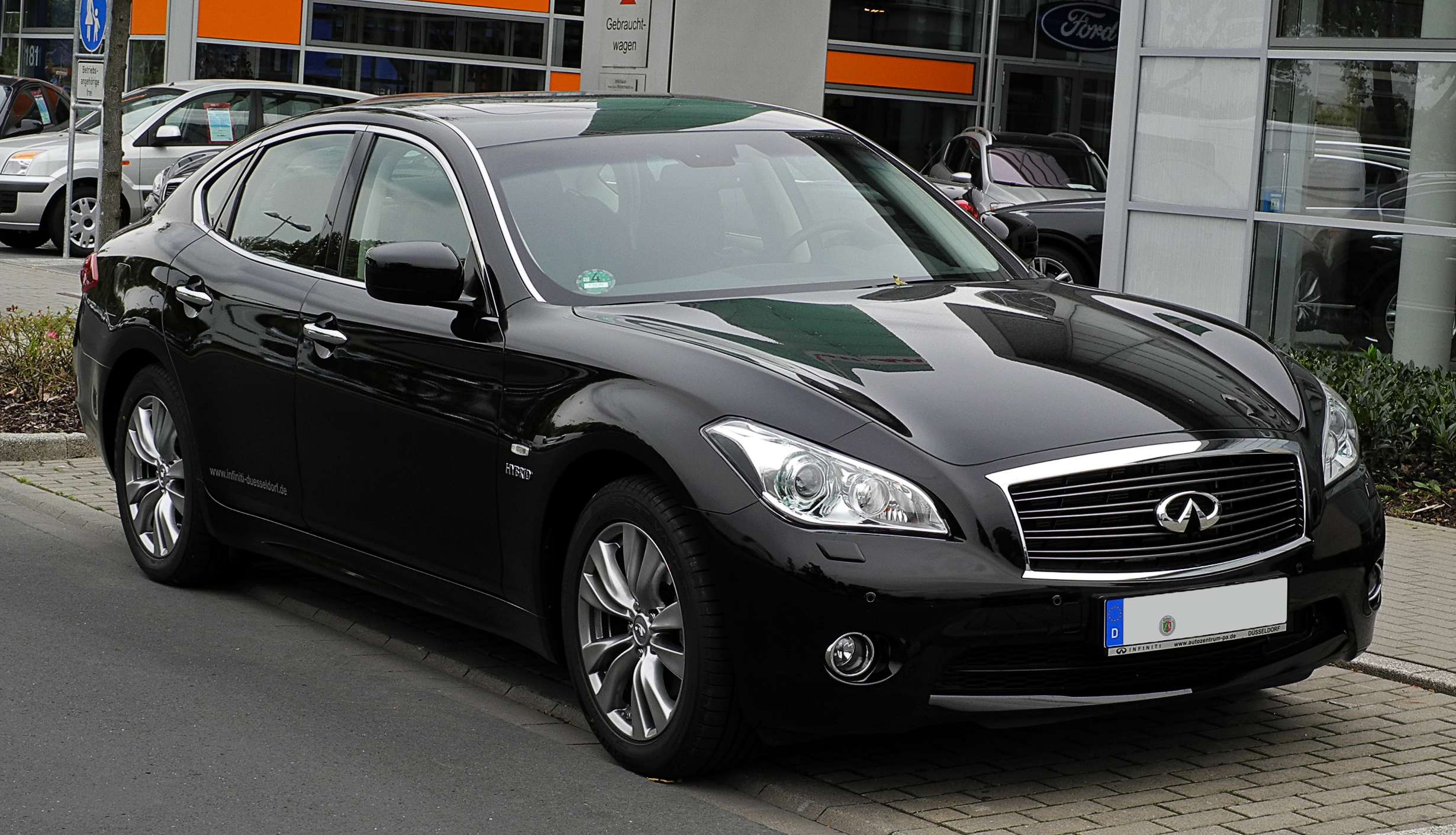
The Infiniti M was a rare Japanese executive saloon built to challenge the BMW 5 Series, Mercedes-Benz E-Class and Lexus GS. In Britain it was offered with petrol, diesel and hybrid power before being renamed Q70. The M35h was especially significant: a 364PS rear-wheel-drive hybrid that combined serious performance with the ability to move briefly on electric power.
Infiniti’s limited UK dealer network meant that few were sold, and the brand’s 2020 departure from Western Europe made the M and Q70 almost instantly forgotten. Used prices can look tempting, but these sophisticated cars demand careful selection.
Infiniti’s executive flagship
The fourth-generation M, internally known as Y51, reached Europe in 2010. It shared its rear-wheel-drive architecture with other large Infiniti models but was developed as a full-size luxury saloon with a high standard specification, distinctive curving bodywork and a technology-heavy cabin.
British buyers initially had the M37 petrol and M30d diesel. The M35h hybrid followed in 2011. When Infiniti changed its naming strategy, the M became Q70, with broadly the same model continuing through the middle of the decade.
M30d diesel
The M30d used a 2,993cc turbocharged V6 diesel producing 238PS and 550Nm. It was paired with a seven-speed automatic gearbox and rear-wheel drive. Strong low-speed torque made it effortless on motorways, while official figures were more competitive with European executive diesels than the petrol M37 could manage.
For a buyer covering long distances, the diesel can still make sense. However, age and urban use bring the familiar risks of diesel particulate filters, EGR systems and intake contamination. A low-mileage car used mainly for short trips is not automatically the best example.
M35h hybrid
The M35h combined a 3.5-litre naturally aspirated V6 with a 50kW electric motor, a lithium-ion battery and a seven-speed automatic transmission. Combined output was 364PS, with 0-62mph taking roughly 5.5 seconds. At launch it was among the fastest full-hybrid production saloons available.
Unlike a continuously variable hybrid, the Infiniti retained a conventional multi-ratio automatic and rear-wheel drive. The electric motor sat within the transmission system, allowing the petrol engine to disconnect when conditions permitted. It could travel short distances on electricity alone, but performance rather than maximum economy was the defining theme.
M37 petrol
The naturally aspirated M37 used the 3.7-litre VQ V6 found elsewhere in the Infiniti range, producing around 320PS. It is smooth and mechanically appealing, but UK fuel costs meant very few buyers chose it. Surviving examples are rare and potentially desirable, provided their condition and documentation are strong.
From M to Q70
The Q70 name arrived as part of Infiniti’s global rebranding. Later cars gained detail changes, updated equipment and revised styling, but remained closely related to the M. UK engine availability varied by year and the diesel became particularly important. Buyers should search under both names because adverts and registration records do not always use them consistently.
UK model comparison
| Model | Powertrain | Output | Best suited to |
|---|---|---|---|
| M30d / Q70 3.0d | 3.0 V6 turbo diesel | 238PS, 550Nm | High-mileage motorway use |
| M35h / Q70 Hybrid | 3.5 V6 plus electric motor | 364PS combined | Performance with unusual hybrid technology |
| M37 | 3.7 naturally aspirated V6 | About 320PS | Low-mileage petrol enthusiasts |
Interior and equipment
Most British cars have leather upholstery, powered and heated seats, keyless entry, navigation, a reversing camera and extensive audio equipment. Higher specifications added ventilated seats, a surround-view camera, Bose sound, adaptive cruise control and a suite of lane and collision-warning systems.
The cabin is comfortable and well assembled, but some controls and graphics now feel dated. More importantly, every electrical function should operate because diagnosis can be time-consuming and used modules may require coding.
What is it like to drive?
The M is a substantial, quiet long-distance car. Steering and chassis responses are more sporting than the soft styling suggests, but it does not shrink around the driver like the best 5 Series. The M35h is remarkably quick in a straight line and its electric assistance gives immediate response.
Regenerative braking can make the hybrid pedal feel different from a conventional system. A test drive should include cold start, urban traffic, open roads and a full warm-up so that transitions between petrol and electric operation can be assessed.
Infiniti M and Q70 common problems
- Hybrid battery and control system: warning lights, reduced performance or inconsistent charge behaviour require specialist diagnosis. Do not assume every fault means the battery itself has failed.
- Diesel DPF and EGR: repeated short trips can lead to regeneration and emissions-system problems.
- Automatic transmission: check for smooth engagement and clean shifts under light and heavy throttle.
- 12-volt battery: a weak conventional battery can trigger misleading electrical warnings on complex modern cars.
- Brakes: heavy weight accelerates wear. On hybrids, corrosion can develop where regenerative braking reduces use of the friction brakes.
- Suspension and steering: listen for bush, link and wheel-bearing noise, and check for uneven tyre wear.
- Electrical equipment: test cameras, climate control, seats, navigation, audio, radar systems and keyless functions.
Bodywork and underside
Inspect the complete underside, subframes, brake pipes and suspension mounting points. Check wheelarches and door edges for corrosion and look for accident repairs, particularly around parking sensors and camera systems. The large body panels and model-specific lights can be difficult to replace.
Premium tyres are essential. Mismatched brands, uneven wear or damaged alloys suggest deferred spending and can spoil the car’s refinement.
Servicing and specialist support
The M30d’s engine has Renault-Nissan alliance connections, while the petrol and hybrid systems draw on Nissan and Infiniti engineering. That helps with some mechanical parts, but Infiniti-specific electronics, interior trim and body components are less straightforward.
Ask for invoices showing correct fluids and regular maintenance. Hybrid buyers should obtain a diagnostic health check; diesel buyers should confirm that emissions faults have not been masked. Infiniti’s withdrawal makes an experienced independent specialist especially valuable.
Buying advice
The M35h is the most interesting and distinctive version, offering the performance and engineering that best explain Infiniti’s ambitions. The M30d is more plentiful and practical for long journeys. The M37 is rare enough that buyers may need patience to find a well-kept example.
A cheap car with warning lights can quickly exceed the value of a better example. Prioritise history, fault-free operation and quality tyres over age or cosmetic specification.
Why the Infiniti M and Q70 matter
The M represented a credible attempt to break the German hold on Britain’s executive-car market. It was not a rebadged mainstream saloon: rear-wheel drive, strong engines, extensive equipment and the innovative M35h powertrain gave it a clear identity.
Its commercial failure has made it more interesting, not less. The M35h in particular deserves recognition as an early high-performance luxury hybrid from a manufacturer willing to take a different route.
Frequently asked questions
Was the Infiniti M officially sold in the UK?
Yes. The M30d, M35h and M37 were offered through Infiniti’s official British network before the range was renamed Q70.
Is the Infiniti M35h fast?
Yes. Its 364PS combined output allowed approximately 5.5-second acceleration to 62mph, exceptional for a hybrid executive saloon of its period.
Is the Q70 a different car from the M?
It is a later name for the same basic Y51-generation model, with updates to styling, trim and equipment.
Which version is safest to buy?
No engine is risk-free. The best choice is the car with the strongest history, clean diagnostics and evidence of correct use and maintenance.