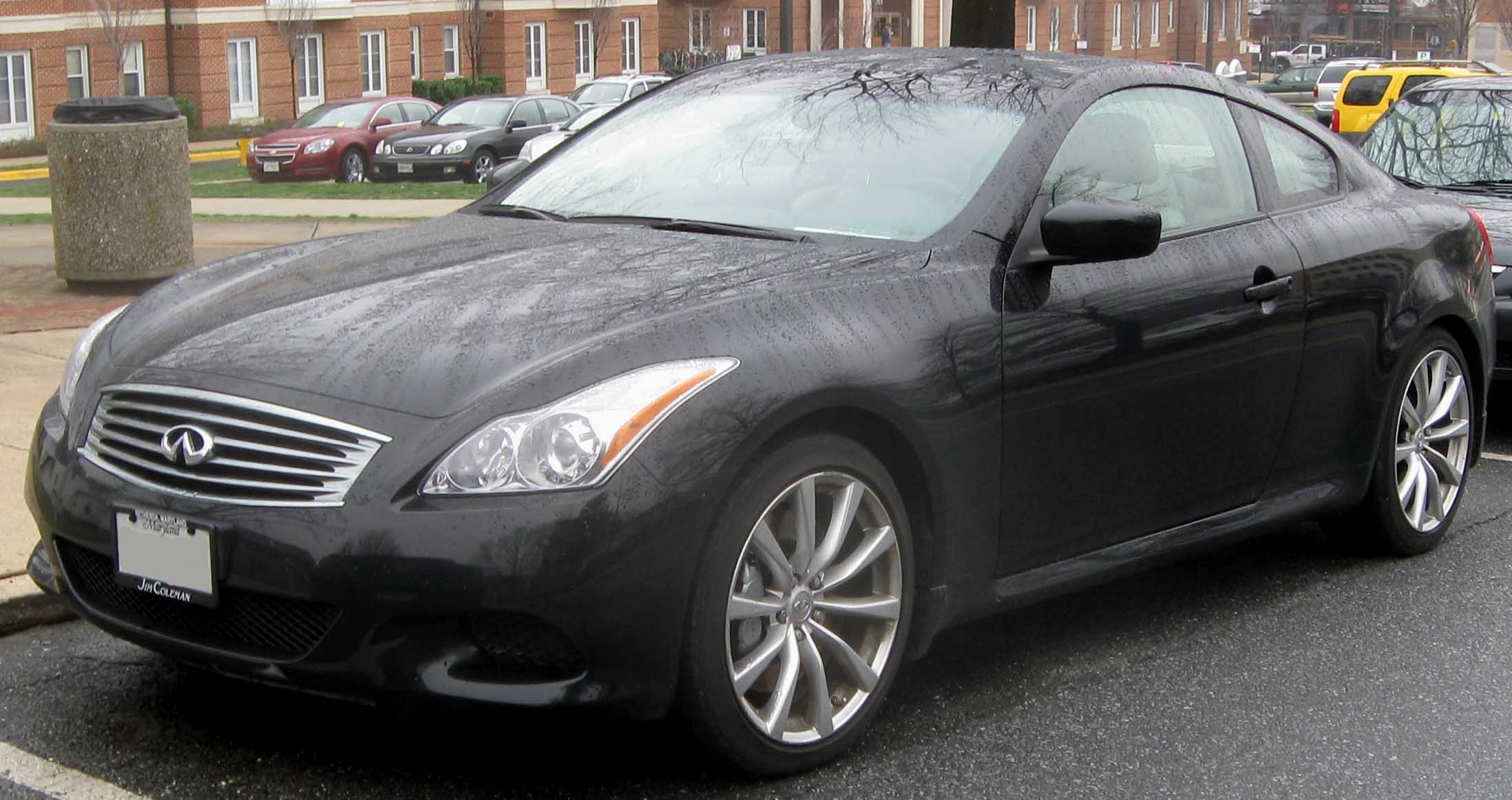
The Infiniti G37 Coupé and Convertible were among the most distinctive Japanese grand tourers officially offered in Britain. Arriving with Infiniti’s full UK launch in 2009, they combined a naturally aspirated 3.7-litre V6, rear-wheel drive and unusually generous equipment with far greater rarity than their BMW, Audi and Mercedes-Benz rivals.
Today the G37 is an intriguing used buy: quick, refined and mechanically related to Nissan’s 370Z, yet discreet enough to pass almost unnoticed. That obscurity is part of its appeal, but it also makes service history, parts knowledge and careful inspection particularly important.
Infiniti arrives in the UK
Infiniti was created by Nissan for the North American premium market in 1989, but Britain had to wait two decades for an official dealer network. The UK range arrived in 2009 with the FX crossover and the G37 family. Buyers could choose a four-door saloon, two-door coupé or folding-hardtop convertible.
The G37 used Nissan’s rear-wheel-drive FM platform, shared in broad terms with the 370Z, and mounted its engine well back in the chassis. The UK-market coupé began at £31,950, while the convertible started at £38,900. Both were rare from the beginning because Infiniti had only a small retail network and almost no brand recognition in Britain.
Engine and performance
Every UK G37 used the VQ37VHR, a 3,696cc naturally aspirated V6 with variable valve timing and lift. Infiniti quoted 320PS, with power delivered high in the rev range and a smooth, increasingly urgent character. Unlike the turbocharged engines that later dominated the class, the V6 responded immediately and encouraged the driver to use its revs.
A six-speed manual gearbox was available on selected coupé versions, although most British cars have the seven-speed automatic with steering-wheel paddles. Rear-wheel drive was standard. The coupé could reach 62mph in roughly six seconds, while the heavier convertible was slightly slower.
Coupé versus Convertible
The coupé is the lighter, more focused choice. It has a fixed roof, useful luggage space and a more cohesive driving feel. The rear seats are best treated as occasional accommodation, but the cabin is comfortable for two adults and standard equipment was high.
The convertible uses a three-piece electrically folding metal roof. With the roof raised it gives genuine coupé-like weather protection, but the mechanism adds weight and consumes much of the luggage space when lowered. Buyers should operate it several times and watch for hesitation, warning messages, uneven movement or water ingress.
UK specifications and versions
| Version | Key features | What to know |
|---|---|---|
| G37 GT | Leather, powered seats, xenon lights and extensive standard equipment | The sensible core model |
| G37 GT Premium | Navigation, Bose audio and additional convenience equipment | Check every electrical feature |
| G37 S | Sports seats, larger wheels, stronger brakes and chassis upgrades | Sharper but firmer, with more expensive tyres |
| G37 S Premium | Combines the sporting and luxury packages | Often the most desirable specification |
Equipment packages changed during the model’s life, so identify a car from its original documentation rather than relying only on an advert.
What is the G37 like to drive?
The G37 feels substantial rather than delicate. The steering is direct, the V6 is the centrepiece and the chassis has the balance expected of a front-engined, rear-wheel-drive coupé. It is better viewed as a fast grand tourer than as a lightweight sports car. Road noise and fuel consumption are more noticeable than in a diesel executive coupé, but the engine gives the Infiniti a character few modern alternatives match.
The automatic suits relaxed touring, although it is not as quick-witted as the latest transmissions. A manual coupé is much rarer and potentially more collectible, but condition matters more than gearbox choice.
Infiniti G37 common problems
- Oil gallery gaskets: earlier VQ37 engines can suffer falling oil pressure if internal gallery gaskets deteriorate. Evidence of correct diagnosis and repair is valuable.
- Clutch hydraulics: manual cars can develop concentric slave-cylinder trouble. A heavy pedal, inconsistent bite or difficulty selecting gears needs investigation.
- Automatic transmission: changes should be smooth when cold and hot. Shuddering, flaring revs or delayed engagement justify a specialist inspection.
- Brakes: powerful, heavy cars consume discs and pads. Check for vibration, seized calipers and uneven wear.
- Suspension: listen for knocks from bushes and links, and inspect the inner edges of the tyres for wear caused by poor alignment.
- Convertible roof: test the complete cycle and inspect seals, drains, boot trim and hydraulic components.
- Electronics: confirm that cameras, navigation, seat motors, climate control, keyless entry and Bose audio all work.
Rust and bodywork checks
The G37 is not notorious for structural corrosion, but British winter use and neglected accident repairs can still cause problems. Inspect subframes, suspension mounting areas, brake pipes, wheelarches and the underside. Look closely at panel gaps and paint finish because body panels and trim can be slower to source than routine Nissan mechanical parts.
Large alloy wheels are easily damaged. Cracks, poor repairs and mismatched budget tyres can reveal a car maintained without regard for cost. On a convertible, check the boot floor and rear cabin for dampness.
Servicing and parts availability
Infiniti withdrew from Western Europe in 2020, but Nissan retained arrangements for aftersales support. Many service items cross over with other Nissan products, while model-specific trim, electronics and body parts can require more patience. An independent specialist familiar with Nissan’s VQ engines is a considerable advantage.
Regular oil changes matter more than stretching intervals. Check invoices rather than relying on stamps alone, and budget for premium tyres, strong brakes and the fuel appetite of a large naturally aspirated V6.
Buying advice
Buy the best documented example rather than the cheapest. A complete history, matching quality tyres and fully functioning electronics usually indicate an owner who understood the car. A pre-purchase inspection should include an oil-pressure check where appropriate, a diagnostic scan and careful examination of the underside.
The coupé is the better driver’s car and the manual is especially scarce. The convertible provides open-air appeal without a fabric roof, but only if its complex mechanism is healthy.
Why the Infiniti G37 deserves recognition
The G37 arrived in Britain at the wrong moment for a new luxury badge, competing against deeply established German marques during a difficult economic period. Its rarity was not caused by weak engineering: the naturally aspirated V6, rear-wheel-drive platform and lavish specification made it a credible alternative.
As conventional large-capacity coupés disappear, the G37 looks increasingly special. It remains affordable, genuinely uncommon and closely connected to one of Nissan’s best modern sports-car platforms.
Frequently asked questions
Was the Infiniti G37 officially sold in the UK?
Yes. Infiniti launched the G37 saloon, coupé and convertible through its official British network in 2009.
Is the Infiniti G37 the same as a Nissan 370Z?
No, but the cars share related FM-platform engineering and versions of Nissan’s 3.7-litre VQ engine. The Infiniti is longer, more luxurious and configured as a grand tourer.
Which G37 is most desirable?
A well-documented manual coupé is particularly rare, while an S Premium automatic offers a strong blend of equipment and performance. Condition should take priority over trim.
Is the G37 expensive to run?
Fuel, tyres, brakes and road tax can be costly. Routine mechanical support is generally manageable, but Infiniti-specific trim and electronics may take time to source.