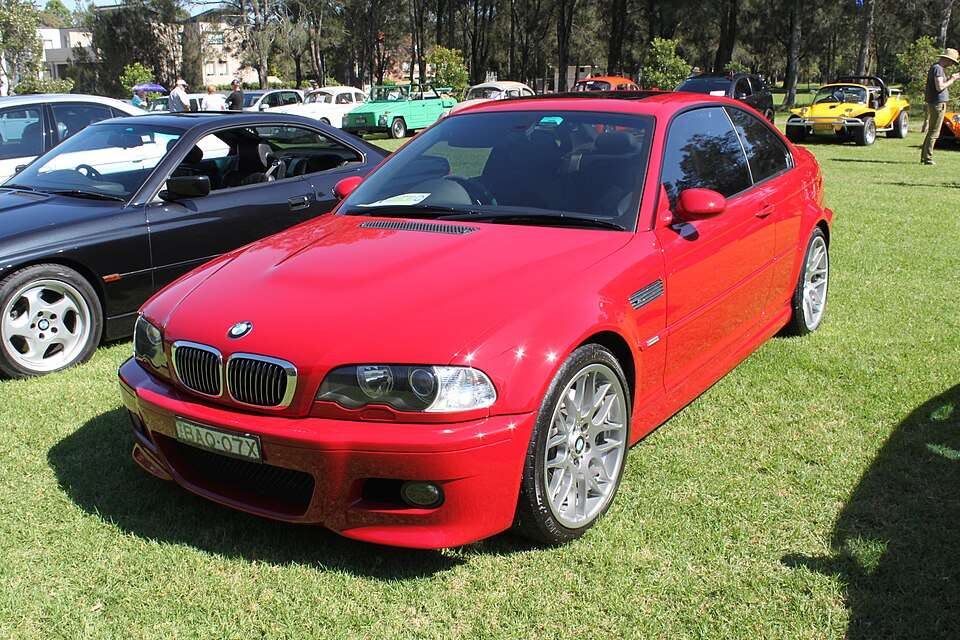
The E46 M3 combines a naturally aspirated S54 straight-six with rear-wheel drive and a genuinely usable coupe or convertible body. It can be a compelling long-term enthusiast car, but buying one as though it were an ordinary E46 is expensive. Structural condition, bearing and VANOS evidence, gearbox operation and the quality of past work matter more than shiny paint or a desirable colour.
Our buying verdict
Our starting point is a substantially standard coupe or convertible with a documented specialist inspection and a budget left for repairs. Choose manual or SMG after a proper drive, then compare condition and invoices. A car with well-evidenced structural and mechanical work can justify a premium; an unexplained claim that “the big three are done” cannot. Treat CSL and CS provenance, and any gearbox conversion, as separate verification tasks.

Versions: standard M3, CS, CSL, manual or SMG?
BMW records E46 M3 production from 2000 to 2006, with the convertible following the coupe in 2001. The normal car has the 3.2-litre S54 straight-six; BMW quotes 252kW, commonly expressed as 343PS, and 365Nm. The six-speed manual and six-speed SMG use different driver controls, but SMG is an automated manual, not a torque-converter automatic or later dual-clutch DCT.
| Version | What changes the purchase | Priority checks |
|---|---|---|
| Standard coupe | The core fixed-roof road-car proposition | Structure, engine condition, documentation and accident history. |
| Convertible | Open-air use with additional roof and sealing equipment | Roof cycle, drains, dampness, glass alignment and underside condition. |
| SMG II | Electrohydraulic operation of a single-clutch manual gearbox | Hot and cold selection, hydraulic diagnosis and clutch/adaptation evidence. |
| CS / CSL | Special specifications and collector premiums | VIN/build record, original equipment and separate like-for-like market evidence. |
| Converted manual / modified car | Potentially appealing, with greater verification work | Conversion scope, coding, parts, insurance and workmanship. |
A CSL-style intake, wheel set, steering wheel or boot lid cannot prove special-edition identity. Equally, a manual conversion may be well executed but should be described and valued honestly. Request the original build specification and conversion invoices, including who completed the work and what was retained. Do not pay a factory-manual provenance premium for a car whose origin has not been established.
For ordinary road use, the best car is often the one with sound standard geometry, quality tyres and a quiet, dry structure rather than the longest modification list. Track use is not automatically disqualifying, but maintenance, accident history and the purpose of each alteration need to be understood. Ask whether expensive changes are supported by receipts and whether original parts remain available.
Try the actual driving position and transmission before choosing. SMG needs a different approach from a conventional automatic and some low-speed behaviour may be characteristic, but warnings, repeated failure to select gears or excessive hydraulic activity should never be dismissed as normal. A specialist should distinguish operating technique from a fault.
E46 M3 prices: asking prices and reported auction results
Checked 4 November 2026. PistonHeads showed 28 classified cars on its main E46 M3 page. Visible examples included a 2006 manual convertible at £16,000 with 99,956 miles; a 2003 SMG coupe at £22,495 with 77,900 miles; and a 2004 manual coupe at £27,500 with 48,000 miles. These are advertised prices and seller descriptions, not inspected cars or completed sale values.
The same page reported auction sales of a 2004 manual coupe with 78,088 miles at £16,079 on 23 September 2026, and a 2003 manual convertible with 98,948 miles at £13,880 on 6 August 2026. These are platform-reported results: check the individual auction’s fees, condition and terms before comparing the total buyer cost. A current opening bid is not a valuation, and a CSL asking price is not evidence for a normal M3.
Compare the same body style, original transmission, mileage band and repair evidence. Dealer preparation, a documented restoration and an unusually low-mileage collector car can produce large differences. Some adverts contain inconsistent body or gearbox labels, so confirm the details rather than repeating every classification uncritically.
Work backwards from the cost of buying and putting the car into the condition you need. An uninspected rear floor, unidentified engine noise and intermittent SMG fault are uncertainties, not three small deductions. If repair exposure cannot be bounded by a competent inspection and written scope, move to another example. A lower asking price is useful only when the eventual work is understood.
Rear axle carrier panel, corrosion and body repairs
Inspect the rear axle carrier panel, not just the subframe itself. The familiar “subframe cracks” shorthand can hide damage to the bodyshell and its internal structures. Redish’s first-party material describes underside and internal areas requiring assessment, and explains why repair pricing depends on the actual car. A glance through the boot or a statement that reinforcement plates are fitted is not a complete inspection.
Ask for dated photographs, the repair invoice, the original findings and the current condition of any earlier work. Establish whether cracks were repaired, which areas were reinforced and how corrosion protection was restored. A plate welded over an unassessed area does not prove that hidden damage was addressed. Have a specialist decide whether covers, interior access or further dismantling are needed.
Inspect arches, sill and jacking areas, floors, suspension mounts, brake pipes and the underside of the rear structure on a lift. Fresh underseal deserves examination of what it covers. Check corrosion advisories against repair invoices over time and obtain a bodyshop opinion when external bubbling suggests larger work. Cosmetic paint preparation is not structural repair evidence.
Compare paint finish and panel gaps, inspect inner wings, boot floor, undertrays and fasteners, and look for signs of impact or poor reassembly. Check door seals, window drop, mirrors and lights. On a convertible, cycle the roof fully, inspect its fabric and seals and look for damp carpets or luggage areas. A roof adjustment claim needs a diagnosis before it enters your budget.

S54 engine, bearings, VANOS and drivetrain checks
Start with a genuinely cold engine and inspect again after a fully warm drive. Observe idle, smoke, fluid leaks and temperature behaviour. Unexplained metallic noise, misfires, coolant loss or warning lamps need diagnosis. Ask about oil consumption and obtain evidence of the lubricant and service work used. A recently serviced engine is not necessarily an engine whose major inspection requirements have been met.
Conrod bearings: request invoices identifying the date, mileage, parts, bolts, clearances and workshop. Redish’s inspection description explicitly warns that bearing wear cannot be reliably ruled out by a normal viewing; an oil sample can add context but is not a certificate of internal health. A historical campaign or earlier replacement does not establish the condition today. Let a competent S54 specialist explain the residual risk and appropriate next steps.
When comparing bearing quotations, ask about bolt specification, sump seals, oil, filter and additional parts discovered during access. Redish distinguishes different bolt arrangements and complete job scopes. The cheapest advertised shell set is not the fitted price, and a generic online kit should not be selected without engine-specific confirmation. Ask for photographs of removed bearings and an invoice that stays with the car.
VANOS: the S54’s variable valve timing needs more than an absence of a warning light. Have a specialist assess operation and the relevant mechanical components, including exhaust-hub concerns, as appropriate. “Rebuilt VANOS” can mean very different scopes. Compare the named seals, solenoids, hub and fasteners and establish what was tested afterwards. A seal kit invoice alone cannot prove a comprehensive overhaul.
Investigate poor compression, running faults and unexplained performance loss rather than assuming that every symptom is VANOS. A specialist may recommend compression or leak-down testing, with results interpreted together and limitations explained. Inspect the cooling system, hoses, radiator, water pump and evidence of previous overheating. Old plastic and rubber components remain age-related liabilities even on a low-mileage car.
Check the service record for valve-clearance work as well as oil changes. Ask for measured results and adjustment evidence where applicable. The engine uses timing chains, so an external belt change is not an internal timing overhaul. Inspect auxiliary belts, tensioners, mounts and leaks while the car is on a lift, and price work in groups when access overlaps.
With a manual, assess clutch engagement, selection and noises from cold and hot. A clutch kit does not include a flywheel or all hydraulic parts by default. With SMG, test normal road use, reversing and manoeuvring after the car is fully warm; request a hydraulic, electrical and adaptation assessment for any fault. Do not accept a promise that a relay or fluid change will cure an undiagnosed transmission problem.
Inspect differential mounts, propshaft joints, driveshafts, suspension bushes, arms, dampers and wheel bearings. Not every driveline clunk has the same cause. Check that brakes work evenly and tyres match the fitted wheel sizes with adequate condition and age. Geometry should follow repair of worn parts; an alignment printout cannot fix damaged bushes or a compromised shell.
Interior, electronics and everyday usability
Inspect seat bolsters and adjustment, steering-wheel wear, carpets, headlining and dashboard displays. Check all climate-control settings, air conditioning, windows, central locking, both keys and any navigation or audio equipment. Water ingress and untidy aftermarket wiring can turn a small convenience fault into a lengthy diagnostic exercise.
Confirm normal warning-lamp self-checks and ask the inspector to compare stored mileage information where appropriate. A clean instrument display and new battery do not demonstrate the absence of recently cleared faults. Examine seat and restraint installations on modified cars, and establish whether airbags and other safety equipment remain correctly installed.
Try the car with the roof up as well as down if buying a convertible. Assess demisting, wind noise, seals, rear visibility and parking needs. Check the locking-wheel-bolt key and supplied tools. Original trim and model-specific pieces can be costly to replace, so list missing items before agreeing a price rather than discovering them during the first service.

Maintenance costs and useful parts searches
The figures below are editorial planning allowances for parts only, unless a fitted service is explicitly identified. They are not live eBay quotes: brand, specification, availability, delivery and VAT treatment vary. Obtain a registration/VIN-matched written estimate before committing to a repair. Cheap search results can include incompatible parts, deposits or single components rather than a complete kit.
Affiliate disclosure: the parts searches below use our eBay affiliate campaign. We may earn a commission if you buy, at no additional cost to you. Search results are not a recommendation of every seller or product; verify fitment, maker, returns and warranty.
| Maintenance item | Parts allowance / search | What to check |
|---|---|---|
| Oil/filter service parts | £90–£160 | Confirm the correct S54 specification and quantity; labour extra. |
| Six spark plugs | £50–£110 | Verify engine application and quality. |
| Air and cabin filters | £30–£75 | Check airbox specification on modified cars. |
| Auxiliary belt components | £70–£180 | Separate from the internal chain-driven timing system. |
| Alternator | £160–£350 | Match output and part number; exchange deposits may apply. |
| Water pump/thermostat parts | £150–£320 | Include coolant, seals and labour in a fitted estimate. |
| Front brake discs and pads | £250–£600 | Standard, CS and aftermarket brake setups differ. |
| Rear suspension bush parts | £40–£120 | Correct fitting and geometry add cost; inspect adjacent components. |
| Manual clutch kit | £250–£500 | Flywheel, hydraulics and labour excluded. |
| Rocker-cover gasket parts | £30–£90 | Diagnose leak source; valve-clearance work has separate labour. |
These are parts planning allowances, not quoted fitted repairs. Obtain written specialist scopes for bearings, VANOS, structural work and SMG diagnosis. Redish’s RACP page listed a five-hour check/report with comprehensive inspection at £435 including VAT when checked, and expressly declined remote ballpark repair pricing. That is an inspection price, not the cost of repairing a cracked shell.
Keep time-based maintenance in view even when the mileage is low. Read the inspection schedule with a specialist, including valve clearances and appropriate gearbox, differential and brake-fluid requirements. A fresh stamp is useful only alongside evidence of what was actually done.
Hidden ownership costs: overlapping jobs and restoration creep
The hidden bill is often the work surrounding a headline repair. A rear-floor repair may expose corrosion, seized fixings, tired bushes and old brake pipes once the axle and exhaust are removed. Ask the workshop which items are mandatory, which are sensible access-related additions and which are optional restoration work. Get a written approval process for discoveries, so the scope does not expand without discussion.
Engine jobs also need complete scopes. Bearing shells, bolts, seals, oil and labour are different from a kit price; VANOS descriptions can include or omit major hardware. Keep old invoices and photographs with the car. A repair completed correctly adds useful evidence, while a vague claim can leave the next owner paying for verification or repeat work.
Budget for appropriate tyres, brakes and suspension rather than treating an M3 as a cheap 3 Series. Large wheels, track-oriented pads and altered geometry can change both cost and comfort. Original body parts, convertible seals, interior trim and specialist electrical diagnosis may be more expensive than routine filters. An aftermarket warranty needs scrutiny of coverage, limits and pre-authorisation rules.
Get insurance terms for the actual car, including a gearbox conversion, remap, exhaust, wheels or track-related modifications. Check current tax from the registration record and fuel costs for your expected use. Keep a separate repair reserve after purchase; spending it all on colour, wheels or a low-mileage premium leaves no room for the first inspection findings.

E46 M3 viewing checklist
- Verify VIN, build specification, body style, transmission origin and any CS/CSL claims.
- Read service invoices, MOT chronology, major repair details and conversion paperwork before travelling.
- Arrange a cold start, fully warm drive and comprehensive specialist diagnostics.
- Commission a proper RACP and corrosion assessment, including hidden areas where appropriate.
- Review bearing and VANOS evidence with an S54 specialist; understand what inspection cannot guarantee.
- Test clutch/manual or SMG operation hot and cold, and diagnose driveline noises.
- Inspect tyres, brakes, suspension, cooling and roof equipment on the actual car.
- Obtain complete repair scopes and insurance terms, then preserve a first-year reserve.
BMW M3 E46 buying questions
Is SMG an automatic?
It is an automated single-clutch manual gearbox. Its controls and behaviour differ from a torque-converter automatic and from later DCT units. Drive it properly and have any warnings or selection faults diagnosed before purchase.
Does “subframe reinforced” mean the floor is healthy?
No. Ask what areas were inspected and repaired, request photographs and invoices, and assess the current underside and internal condition. Reinforcement plates alone do not document the full state of the rear axle carrier panel.
Can a viewing rule out worn rod bearings?
No. Documentation and specialist advice matter, and even oil analysis has limits. A quiet engine or an old replacement invoice cannot guarantee present bearing condition.
Does the E46 M3 need a timing-belt change?
The S54 uses timing chains. External auxiliary belts still need attention, and valve-clearance and VANOS requirements are separate maintenance questions.
Is a manual conversion a reason to walk away?
Not automatically. Verify the original specification, detailed conversion scope, workmanship, coding and insurer acceptance. Value it as the car it actually is, rather than assuming factory-manual provenance.
Sources, method and image credits
Checked 4 November 2026. This independently written guide uses factory history, specialist first-party procedures and a dated classified/auction snapshot. Supplier material reflects a commercial perspective; no pictured or advertised car was inspected by us.
- BMW M: E46 M3 production, engine and transmission history
- Redish: RACP inspection, repair scope and pricing limitations
- Redish: PPI scope and limitations of bearing, VANOS and compression checks
- Redish: bearing-job components and bolt differences
- Redish: VANOS overhaul components and optional work
- PistonHeads: asking prices and platform-reported auction results
Images illustrate the generation and include overseas examples. Badges and photographs do not prove original specification or vehicle condition. Each image has an adjacent credit, source and reuse licence; hub thumbnail credits remain outside the cards.