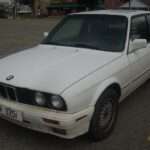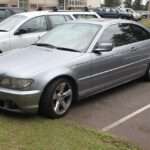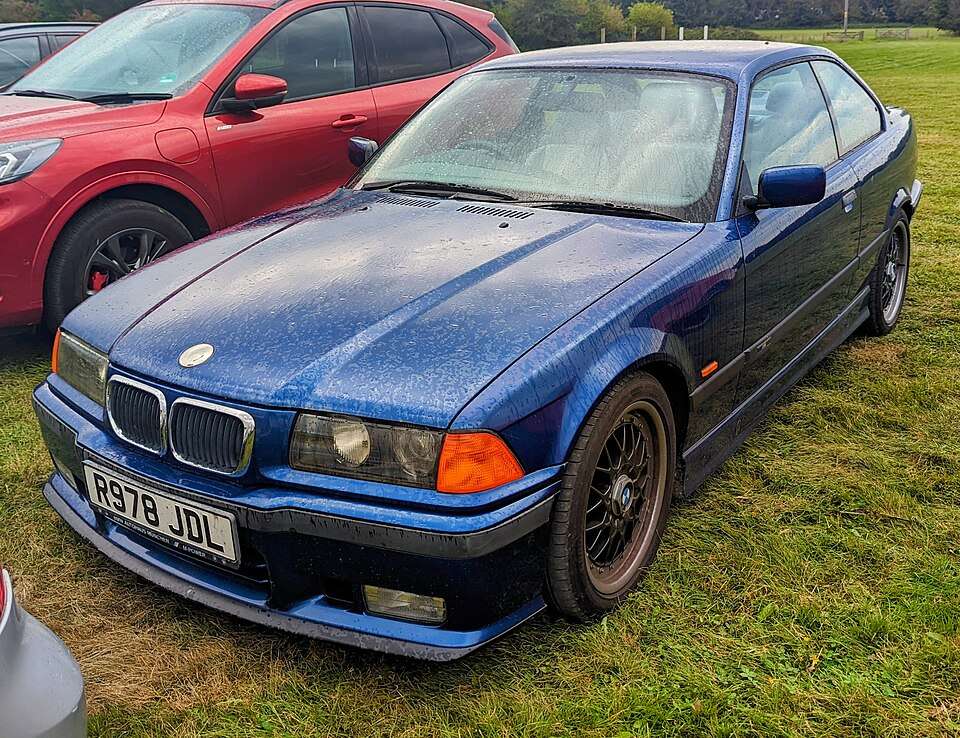
The six-cylinder E36 combines compact dimensions, rear-wheel drive and the smooth delivery that helped define the 3 Series. Today, the appeal ranges from an unmodified saloon to a 328i coupe or a usable Touring. Age, corrosion and previous modifications make the individual car far more important than its badge. This guide concentrates on non-M six-cylinder petrol models: 320i, 323i, 325i and 328i, with body-style differences explained where they affect a purchase.
Our buying verdict
Look for a sound, largely standard car with documented cooling-system care, a convincing engine identity and an underside inspection. A good 325i or 328i manual is our enthusiast starting point, but a cleaner 320i or 323i can be the better ownership proposition. Keep restoration ambitions separate from a budget for an immediately usable car.

Which E36 should you buy?
Body choice changes the ownership proposition. A saloon offers rear access and can be a discreet daily classic; a coupe offers a different silhouette and frameless-door details; the Touring adds luggage flexibility; a convertible adds roof inspection and maintenance. Do not pay a coupe premium until you know whether the less expensive body you have overlooked would suit you better.
| Model / body | What to establish |
|---|---|
| 320i | Six-cylinder character with a smaller engine. Identify the actual M50/M52 specification and judge performance against your expectations. |
| 323i | The badge does not describe a 2.3-litre engine: verify the actual 2.5-litre specification, build and maintenance history. |
| 325i | M50-family 2.5-litre proposition; early and later configurations differ. Do not assume every 325i has identical variable-valve-timing equipment. |
| 328i | M52-family 2.8-litre appeal. Confirm engine identity, condition, cooling history and any replacement-block documentation. |
| Saloon / coupe / Touring / convertible | Different body parts, seals, glass, trim and roof obligations. A shared engine does not make every part interchangeable. |
| Outside this guide | M3/SMG, diesel and Compact variants need their own inspection and specification treatment. The Compact rear suspension is not the same arrangement as the mainstream bodies. |
We favour a healthy manual 325i or 328i for enthusiast use, but that is an editorial preference rather than a claim of superior reliability. A good automatic can suit relaxed use; test the actual transmission and obtain maintenance advice for it. An engine or gearbox conversion needs a far more detailed inspection than an original car, including mounts, wiring, cooling, prop shaft, differential and documentation.
Sport bumpers, seats or wheels can be retrofitted. Verify the claimed factory specification from reliable build information and the car’s records. An ordinary car converted to resemble a Sport may still be enjoyable, but price and insure it honestly. Avoid paying for a badge that the seller cannot substantiate.
Decide whether you want originality, a daily driver or a track-oriented project before searching. Welded differentials, drift modifications, extreme lowering and removed interior equipment can substantially change road use, insurance and restoration cost. A seller’s “ready for anything” description is not evidence of an appropriately engineered car.
E36 prices: separate the genuine comparables
The Car & Classic E36 search checked on 4 November 2026 mixed ordinary 3 Series with M3s, Z3s, overseas adverts and live auctions. We excluded those from the following non-M UK asking examples. These are seller advertisements with unverified condition and mileage, not achieved sales or national value bands.
| Advertised example | Displayed asking price | Buying context |
|---|---|---|
| 1994 325i manual, 80,600 miles, Edgware | £4,895 | Potentially accessible six-cylinder entry; establish body style, structure and engine condition. |
| 1997 323i manual, 31,750 miles, Brixworth | £9,750 | A low-mileage claim needs chronology and storage evidence as well as condition checks. |
| 1998 328i manual coupe, 29,000 miles, Sudbury | £16,750 | A premium low-mileage coupe ask; compare with verified similar cars rather than every E36. |
| 1996 323i automatic, 49,000 kilometres, Southend-on-Sea | £17,995 | Kilometre reading and market/origin need verification; not directly comparable with the manual-mileage examples. |
Four-cylinder cars visible on the page were not used to establish six-cylinder values. Nor were M3 prices or current auction bids. The spread above says more about specification, claimed mileage and seller positioning than it does about a single correct E36 price. Read individual adverts and obtain inspection evidence before deciding a lower ask is a saving.
Create a shortlist of the same engine, body and gearbox. Add the purchase price to immediate cooling work, tyres, brakes, suspension, corrosion repair and missing trim. A lower-mileage coupe with a deteriorating shell can become more expensive than a higher-mileage saloon with excellent records. Where originality matters, price replacement of non-standard parts before treating them as desirable extras.
Ask for MOT chronology, invoices and recent underside photographs before travelling. Note repeated corrosion or brake-line observations, unexplained mileage changes and long periods off the road. A service indicator can be reset; it is the dated record of actual work that helps establish how the car was maintained.
Rust, mounting points and accident history
Inspect front wings, wheelarch lips, rear quarters, sill seams and jacking points. Body kits and side skirts can conceal damage; bubbling at their edges deserves inspection behind accessible trim with permission. Check the floor and box sections on a suitable lift. Outer-panel appearance cannot establish the condition of structural metal beneath.
Examine rear suspension/subframe attachments, trailing-arm mounting areas and damper towers for cracking, distortion, corrosion or previous repair. Hard use and unsuitable modifications justify a specialist assessment. A reinforcement plate is not proof that damage was repaired correctly, and the absence of plates does not by itself condemn an ordinary road car. Ask what was found, how it was repaired and who did the work.
Check boot-floor seams, the spare-wheel area, screen surrounds and sunroof areas for water entry or corrosion. Touring tailgates add their own inspection needs. Examine drain routes and wet insulation rather than simply drying the visible carpet. Corrosion repairs should have dated photographs and a clear scope showing metalwork before paint or protective coating.
Look for accident evidence in panel gaps, paint finish, overspray, fasteners, lamp position and the way the car sits. A modified body can make it harder to compare against original alignment and fit. Verify VIN, registration, seller entitlement, mileage, provenance and any engine replacement. Put important claims into the purchase record rather than relying on a conversation.
An MOT pass is useful evidence of a test on a date, not a comprehensive inspection of hidden cavities. Fresh coating without preparation photographs can obscure rather than resolve questions. If major structural repair is suspected, get a written specialist scope before negotiating. Do not plan a safe daily car around the hope that a serious defect is a small welding job.

Six-cylinder engine problems and cooling checks
Establish the engine before applying advice
The E36 range spans changes in engine family and equipment. Confirm engine code and build, especially after a swap, rather than applying every M50/M52 internet statement to the badge. Early 325i configurations and later VANOS-equipped examples are not identical. This guide does not treat four-cylinder timing-belt advice as applicable to every E36.
The non-M six-cylinder engines covered here use timing chains. A chain is not a promise of zero maintenance: persistent rattles, rough running, timing faults and poor oil history deserve diagnosis. The external drive belts are separate items. Ask exactly which components a seller means by “belts done” and read the invoice rather than assuming it includes internal timing work.
Historical Nikasil discussions concern particular engine configurations and past fuel conditions. Do not claim every surviving M52 is affected or that a particular registration date guarantees a replacement. Where bore condition or identity is uncertain, have a specialist check documentation and engine health using appropriate tests. A smooth idle alone is not conclusive; an internet scare story is not a diagnosis either.
Cooling system: inspect the whole circuit
Cooling-system care is a major buying priority. Pelican Parts’ first-hand repair article identifies water-pump and thermostat problems and explains why overheating can become an expensive engine issue. Inspect the radiator, expansion arrangement, hoses, cap, thermostat housing, pump, fan and related drive hardware appropriate to the actual car.
Ask what a claimed “cooling refresh” included, when it was completed and which parts were fitted. Replacing one hose is not the same as assessing the circuit. A new pump cannot prove that an engine escaped previous overheating. Repeated coolant loss, unstable temperature, abnormal pressure or an unexplained heater problem should prompt a proper pressure/combustion-leak investigation as appropriate.
Witness a genuinely cold start and a progressive warm-up. Check for leaks before and after the road test; never open a hot pressurised system or put hands near a running fan/belt. Correct filling and bleeding matter after repairs. An enthusiastic test drive is not a substitute for a specialist checking whether the system holds pressure and functions correctly.
Pelican’s historical article discusses older plastic pump impellers and metal replacements. That is context for asking what is installed, not a claim that any metal-impeller listing automatically makes the car reliable. Part quality, compatibility, bearing condition and installation still matter. Avoid using a US article’s old dollar estimate as a current UK fitted price.
Leaks, idle quality and VANOS
Inspect accessible gasket joints and oil lines for leaks, noting whether oil is reaching belts, exhaust components or the ground. A recently cleaned engine bay should still be checked warm. Ask about oil consumption in measurable terms and investigate smoke, fouled plugs, poor running or suspiciously frequent top-ups. There is a difference between a diagnosed seep and an unknown engine condition.
On VANOS-equipped engines, investigate abnormal noise or loss of response with someone who understands the actual system. A rattle or weak low-speed performance can have more than one cause; do not buy a repair kit before diagnosis. Intake leaks, sensors, ignition, fuel delivery and mechanical condition can create overlapping symptoms.
Request a fault scan using equipment suitable for the car and its diagnostic connection. A generic reader may not reveal every relevant module or fault. Check warning-lamp self-tests and any evidence of wiring changes. A seller clearing codes or disconnecting a battery before viewing creates an evidence gap that a short clean drive cannot fully close.

Manual, automatic and differential
Test cold and warm shifts, clutch engagement and driveline noises on an insured road test. A reluctant shift may involve linkage, hydraulics, clutch or internal gearbox wear. Listen for differential whine and investigate vibration from the prop shaft, mounts or other rotating components. Do not assume every non-M car has a limited-slip differential, especially after modifications.
An automatic should select forward/reverse without unreasonable delay and shift smoothly through suitable driving conditions. Identify the gearbox before choosing fluid or a service procedure. A specialist can advise how to approach an unknown service history; “sealed for life” is not a useful substitute for assessing an ageing transmission. A recent fluid change does not prove internal wear has been cured.
Manual conversions need invoices and a coherent installation rather than a list of parts. Check pedal installation, wiring, starting interlocks, clutch hydraulics, mounts and final-drive suitability. The enjoyment of a conversion depends on execution, and returning it to original specification can be more involved than simply reinstalling a gearbox.
Suspension, steering and brakes
Check front control arms/joints, bushes, dampers, springs, rear mounts and wheel bearings. An E36 should not need to feel loose simply because it is old. Repair worn components before paying for geometry; a printout cannot remove play or repair a cracked mounting area. Lowered cars need particular attention to travel, clearance and alignment.
Inspect power-steering hoses and connections for leaks and assess assistance, free play and noises. Brake pull, judder, sticking calipers, deteriorated lines or ABS warnings need diagnosis. Check tyre specification, age, damage and consistency across the car, and wheels for cracks or poor repairs. The cost of four appropriate tyres belongs in the purchase calculation, not in a future wishlist.
Interior, electrics and body-specific costs
Check seat frames, bolster condition, headlining and door cards. Correct-colour original trim can be harder to find than ordinary service parts, and a used replacement is not necessarily ready to fit. Test windows, central locking, mirrors, ventilation, air-conditioning, displays and all fitted electrical equipment. A claim of “only needs a regas” needs a diagnosis.
On coupes, assess glass/seal alignment and door operation. On a convertible, test the roof as directed by the handbook, including fabric, rear screen, latches, seals and operating sequence. Do not force a reluctant mechanism. Touring buyers should inspect the load area, tailgate, rear wiper and water entry. Body style changes the parts requirement even where engines match.
Aftermarket alarms, immobilisers and audio installations deserve close inspection. Poor wiring can create intermittent starting or drain problems. Obtain both keys and any security information the seller is entitled to provide. A neat dashboard and new steering wheel do not outweigh damaged wiring or warning lights that fail to illuminate correctly.

Maintenance costs and model-specific parts
We have not obtained a current workshop quotation for an individual E36. Use the searches below to establish current parts options, then request labour-inclusive quotes for the actual car. Timing diagnosis, coolant filling/bleeding, seized fasteners, alignment and associated repairs can cost more than the headline component. Do not reuse historical buying-guide prices as current fitted estimates.
Affiliate disclosure: Our eBay parts links use campaign 5339238906. We may earn a commission if you buy, at no extra cost to you. Links open searches rather than a verified product. Results may include unsuitable parts; confirm engine, build date, part number, condition and returns before ordering.
| Item | What to confirm | Relevant eBay search |
|---|---|---|
| Cooling refresh | Engine, pump, thermostat/housing, radiator, hoses, cap and fan condition; agree actual scope. | E36 328i M52 pump and thermostat kits |
| Timing system | Chain-driven six-cylinder; diagnose faults before ordering. Match engine and VANOS configuration. | M50/M52 timing-chain parts |
| Auxiliary belts | Match engine and accessories; inspect tensioners and pulleys too. | E36 328i drive belts and tensioners |
| Alternator | Confirm fitted part number, output and connectors after charging diagnosis. | E36 328i alternators |
| Service items | Correct engine-specific filters, plugs and lubricants; a generic kit may omit needed items. | E36 325i M50 service kits |
| Chassis | Actual arm/bush/damper specification, mounting condition and final geometry. | E36 suspension mounts and bushes |
| Clutch and brakes | Match engine/gearbox and actual brake hardware; include associated hydraulics and fluids. | E36 328i clutch and flywheel options |
The query is deliberately visible in each label’s context: a 328i part should not be assumed suitable for a 320i, and US-market naming can confuse imported listings. Verify by VIN and part number before ordering. Ask the workshop whether it will fit owner-supplied components and what warranty applies. Compare exchange surcharges and delivery as well as the initial price.
Set a first-year plan for an inspection and baseline servicing, the safety/structural work identified, overdue fluids and cooling, then tyres/suspension as required. Retain a separate reserve for unresolved faults. Preserve invoices with date and mileage so that maintenance history grows more useful than a row of unexplained service-book stamps.
Hidden ownership costs
Plan the first year before agreeing the purchase price. Add inspection, collection, immediate servicing, diagnosed repairs, tyres, insurance, storage and a contingency for unresolved work. Use a written estimate for the actual car rather than assuming that spending a fixed percentage of its price will cover everything.
- Body kits, paint and coating can hide extensive sill work. Obtain a structural repair scope before paying for cosmetic improvements.
- Original Sport trim, body-specific seals and convertible-roof repairs can consume money that an ordinary service-parts catalogue does not predict.
- Cooling failure may have damaged the engine before the leaking part was replaced. A refresh invoice needs to be read alongside an assessment of current health.
- Undoing drift or extreme-lowering modifications can require differential, suspension, wheels, alignment, trim and wiring work. Price a complete return to your intended specification.
- Labour and associated work: diagnosis, access, fluids, alignment, seized fixings and tax can change the bill. Confirm what the quotation includes and how additional work will be agreed.
- Exchange components: rebuilt alternators or starters may require a returnable old unit. Compare the surcharge, return deadline, postage and warranty as well as the headline price.
- Downtime: allow for recovery and alternative transport if a rare component or specialist appointment is needed. A catalogue entry does not prove that a part is on the shelf.
Viewing and test-drive checklist
Before travelling
- Confirm registration, exact specification, seller identity and ownership history. Ask about accidents, insurance losses, modifications and engine replacements.
- Read the MOT chronology and request dated invoices. Arrange a genuinely cold start, inspection access and a properly insured road test.
- Request current underside photographs and a written list of known faults, included keys and spare or original parts.
At the car
- □ Verify engine family, build, body style, transmission and genuine Sport claims against records.
- □ Inspect sills behind accessible trim, jacking points, arches, floors and suspension/damper mounting areas on a lift.
- □ Read cooling-system invoices; observe cold start and stable warm operation and investigate any overheating history.
- □ Assess leaks, consumption, chain/VANOS symptoms and faults with equipment appropriate to the actual engine.
- □ Test gearbox, clutch, differential, brakes, steering, tyres and chassis behaviour progressively.
- □ Operate body-specific roof/glass/tailgate equipment, electrics and air-conditioning, and inspect damp insulation.
- □ Inspect accessible structure on a suitable lift. Never go under a vehicle supported only by a jack.
- □ Try all fitted equipment, check warning-lamp behaviour and assess tyres for age, damage and specification as well as tread.
- □ Test progressively from cold to fully warm, then recheck starting and visible leaks. Stop if a serious fault develops.
Proceed when the description, identity, condition and records agree. Investigate a plausible but undiagnosed fault before negotiating. Walk away if crucial inspection is refused or the budget depends on a serious problem proving cheap. Put inspection conditions and deposit terms in writing.
Buying questions answered
Which E36 is the best buy?
We favour a sound manual 325i or 328i for enthusiast use. Structural condition and documented maintenance matter more than that preference; a cleaner 320i or 323i may be the better car.
Does every E36 have a timing belt?
No. The non-M six-cylinder petrol engines covered here use timing chains. Four-cylinder engine families differ, so identify the engine rather than applying one rule to every E36.
Should Nikasil put me off a 328i?
Do not decide from the badge or registration year alone. Verify the actual engine and any replacement records, then assess present health with an appropriate specialist.
Is a cooling refresh enough to make it reliable?
It is useful maintenance when properly scoped and fitted, but it cannot erase previous overheating or establish the health of the rest of the car.
Are modified E36s worth buying?
Possibly, if the changes suit your use, are properly engineered, documented and insurable. Price incomplete work and restoration realistically; do not assume modifications add their full purchase cost to value.
Sources and research method
Independently written desk research by Unusual Cars UK, checked on 4 November 2026. We have not inspected or road-tested the illustrated cars or independently authenticated sellers’ claims. Inspection priorities and recommendations are our editorial assessment. Historical guides inform technical context; their old prices are not current valuations. Confirm service requirements against the actual vehicle and appropriate workshop information.
- Pelican Parts E36 water-pump repair article — Primary illustrated repair experience concerning pump/thermostat and overheating; historical US prices and generic procedures are not current UK quotations.
- Classics World E36 overview, May 2026 — Secondary body/range context. Its broad four-cylinder belt statement and historical price/insurance estimates are not applied indiscriminately.
- Car & Classic E36 advertisements — Current non-M six-cylinder UK asking examples observed 4 November 2026; M3, Z3, overseas and live bids excluded.
- GOV.UK used-car checks and MOT history — identity, document and test-history checks.
Images illustrate versions and inspection themes; they are not photographs of the advertised examples discussed above. Credits and licence links accompany each image. No endorsement by photographers, owners, specialists or suppliers is implied. Prices and availability can change.