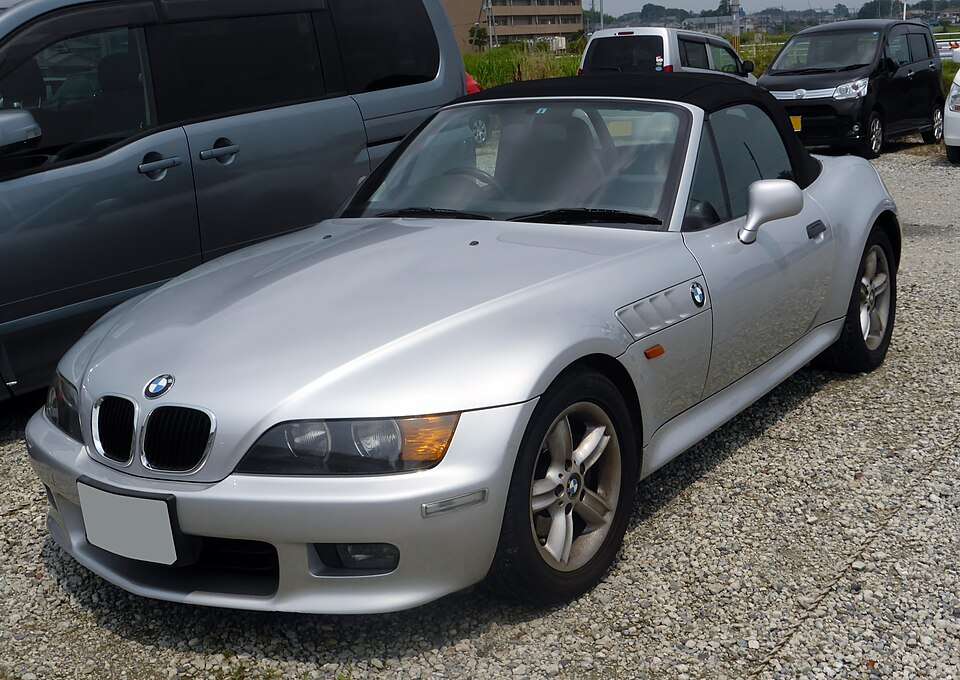
The BMW Z3 offers an appealing mix of long-bonnet roadster styling, familiar BMW mechanicals and a choice between light-footed four-cylinder cars and muscular straight-sixes. Buying well requires more than choosing the biggest engine: hidden sill corrosion, ageing cooling systems and rear structure deserve attention before paintwork and wheel size. This guide concentrates on ordinary Z3 Roadsters; M models and Coupes need additional model-specific assessment.
Our buying verdict
A sound 1.9 can be an excellent affordable roadster, while a documented 2.8 or 3.0 makes the strongest case for six-cylinder character. Buy the shell and maintenance history first. Inspect the inner structure and differential mounting area, then budget for cooling, suspension and roof work instead of spending the whole allowance on the purchase.

Which BMW Z3: 1.9, 2.2, 2.8 or 3.0?
The Z3 was built in South Carolina and reached UK customers in 1996. It uses a front-engine, rear-wheel-drive layout with semi-trailing-arm rear suspension, giving it a different feel from a mid-engined Boxster or a lighter MX-5. Treat it as a characterful roadster whose condition determines much of the driving experience.
| Version | What to establish | Buying appeal |
|---|---|---|
| Early 1.9 M44 | 1.9-litre, twin-cam 16-valve four; approximately 140bhp | A comparatively straightforward route into Z3 ownership. |
| Later entry-level four | M43-family single-cam engine; badges vary by market | Do not assume a 1.9 badge means the earlier 140bhp engine. |
| 2.0 and 2.8 | M52/M52TU family; single- and double-VANOS distinctions matter | Six-cylinder smoothness; the 2.8 offers a substantial performance step. |
| 2.2 and 3.0 | Later M54 straight-sixes; around 170 and 231bhp respectively | The 3.0 is particularly appealing for effortless performance. |
| M Roadster / Coupe | Different M engines and maintenance requirements | A separate specialist purchase, not simply a trim upgrade. |
The 1999 facelift changed the rear styling and broadened the ordinary Roadster body treatment. Earlier 2.8s have their own wide-body appearance. Compare the actual specification and build record rather than interpreting wide rear wings as proof of one engine. Exterior parts, wheels and badges can be changed.
The four-cylinder cars have a useful place in the market. They may cost less to buy and offer sufficient pace for relaxed open-road use. A smaller six brings the sound and smoothness without the performance of a 2.8 or 3.0. Try examples before deciding whether that trade-off suits you.
Manual and automatic cars both deserve consideration. Gearbox type varies with engine and year; do not order transmission service parts from a generic Z3 description. Test an automatic in traffic and on an open road to check that its behaviour fits your expectations. A good automatic can be a better purchase than a tired manual chosen solely for resale appeal.
Our preferred six-cylinder starting point is a well-maintained 2.8, with a 3.0 attractive where the extra purchase price is supported by condition. For a tighter budget, prioritise the best 1.9 shell and cooling history. M badges, cosmetic Sports packages and large wheels do not remove the need to verify what is actually fitted.
BMW Z3 prices: evidence from current adverts
Car & Classic listings checked on 3 November 2026 included a 1997 1.9 Roadster advertised with 112,000 miles at £2,995, a 2002 2.2i with 84,629 miles at £4,995, and a 1999 2.8 with 48,767 miles at £5,495. A pre-facelift 2.8 advertised with 20,804 miles was listed at £13,995. These are seller asking prices, not completed transactions or verified condition reports.
The same model can attract very different adverts because originality, mileage, presentation and recent mechanical expenditure vary. A very low-mileage asking price is not a universal benchmark. An inexpensive car with rotten inner sills, cooling concerns and a tired roof may be a larger financial commitment than a more expensive, carefully maintained example.
Build your comparison around the same engine, body generation, gearbox and condition. Ask for underside photographs and repair invoices before travelling. Separate genuine invoices for useful work from vague claims such as fully restored or fully serviced. A stamped book may record visits without proving that coolant components, suspension bushes or brake lines were renewed.
Keep a written initial-work budget. Add inspection, immediate service, diagnosed repairs and necessary tyres to the purchase price. Negotiate from the condition of the car in front of you; do not assume a seller’s higher asking price guarantees a better shell or that every fault on a cheap car is easily fixed.

Rust: outer panels are only the beginning
The Z3’s bolt-on outer sill covers and wings can encourage the idea that corrosion is simple to fix. The key question is what lies behind them. Inspect sill ends, jacking points, the lower front floor and the inner structure. A replaced outer panel does not demonstrate that the metal beneath was sound or repaired properly.
Ask permission for appropriate inspection access, ideally on a lift. Look for distorted jacking areas, missing fasteners, trapped dirt and fresh coatings. Where restoration is claimed, request photographs before, during and after the work, including bare metal and repaired structure. A neatly painted cover can hide an unresolved problem.
Check arches, panel edges, floor seams and underside components. Rear trailing arms, brake pipes and exhaust fittings deserve attention. Not all corrosion is structural, but only an informed inspection can distinguish a removable cosmetic panel from work affecting the shell or suspension support. Obtain a body specialist’s written scope for any significant repair.
Boot floor and differential mounting
Inspect the boot-floor spot welds and the differential mount/crossmember area. Redish Motorsport’s primary explanation, focused on Z3 M cars, describes how drivetrain loading can fatigue welds and sheet metal around the differential mounting structure. Its examples are not a failure-rate survey for ordinary Roadsters, but they provide a clear reason to inspect this area rather than relying on exterior condition.
Look for disturbed or separated welds, cracks, deformation, metallic creaks and evidence of past repairs. Inspection from inside the boot and from beneath can reveal different aspects of the same structure. Do not remove trim destructively or assume that a visible patch is an engineered repair. Ask a Z3-experienced specialist to assess suspicious evidence.
If reinforcement or repair has been performed, obtain the design, installer and photographs. Simply closing a crack is not necessarily the same as addressing the load path that caused it. Treat significant structural uncertainty as a reason to pause the purchase and obtain an expert estimate, not as a minor item to price using a generic welding allowance.
Accident and identity checks
Match the VIN and documents, check the MOT chronology and use a history check. Inspect panel gaps, paint consistency and disturbed fasteners, recognising that bolt-on panels can have been changed for cosmetic reasons or after impact. Confirm engine changes and modifications with invoices and the relevant records. A clean history report cannot prove the absence of every past accident.
Z3 engine problems and cooling checks
Cooling is a purchase priority
Inspect the radiator, expansion tank, hoses, thermostat housing and water-pump history as applicable to the fitted engine. Ageing plastic fittings can become brittle. Ask what has been replaced, when and with which parts. An invoice for one water pump does not establish that the rest of the cooling system was renewed.
Start from cold and drive until fully warm. Watch temperature behaviour and look for leaks, coolant staining or evidence of repeated topping up. Unexplained overheating, pressurisation or oil/coolant contamination needs proper diagnosis. On a six-cylinder car, an overheated engine can lead to a substantial repair decision; do not buy on the assumption that a head-gasket job will be straightforward.
A seller’s explanation that the gauge only rises in traffic is still a fault requiring investigation. Confirm fan operation, coolant circulation and the correct bleeding procedure through a workshop. Never open a hot cooling system during a viewing. A pressure test and other diagnostic work can be useful when the history is uncertain.
Four-cylinder engines
Distinguish the M44 twin-cam from the later M43-family single-cam engine. Their performance, service parts and common leak points are not identical. Check oil-filter housing and other visible gasket areas, idle quality, sensors and coolant fittings. These engines can be durable, but neglect and previous overheating still matter.
The ordinary engines covered here use timing chains, so there is no routine cambelt kit to order. Chain noise or poor running requires an engine-specific diagnosis. Avoid treating a general reputation for durability as evidence that an individual engine has been maintained properly.
Six-cylinder engines
On M52/M52TU and M54 engines, inspect oil leaks around the cam cover and oil-filter housing, intake hoses and crankcase ventilation plumbing. Ask the seller to quantify oil use over distance, particularly on later engines. Smoke can have several causes; replacing one ventilation component should not be promised as a universal cure.
VANOS arrangements differ between early and later sixes. Worn seals or other faults can affect delivery and idle, but a low-power complaint needs diagnosis rather than a blanket VANOS parts order. Likewise, electronic throttle and intake components vary with engine. Confirm the engine code before sourcing parts.
For early 2.8s, discuss bore condition and any historical replacement block with a knowledgeable specialist. Do not infer present health solely from a production date or a claimed old warranty replacement. Compression evidence, running behaviour and the documented history of the installed engine are more useful than repeating a broad internet warning.
Gearbox, differential and chassis
Manual gearboxes should select cleanly without grinding or jumping out of gear. Sloppy linkage bushes can affect feel, but confirm the cause before assuming a cheap repair. Check clutch operation, engagement and any vibration. On automatics, inspect engagement in forward and reverse, changes when cold and hot, and service evidence for the correct unit.
Listen for differential whine, driveline clunks and rear-end noises. These may arise from several components, including mounting bushes or the structure already discussed. Do not accept an unexplained noise as normal simply because the car is old. Ask whether the differential is original and whether any limited-slip claim is supported by the actual unit.
Inspect front arms, ball joints, dampers, rear beam bushes, springs and trailing arms. Worn components can make the car wander or tramline, while wheel and tyre choices also affect behaviour. Check alignment records and inner tyre edges. A suspension refresh should be followed by an appropriate geometry check.
Inspect brake pipes, hoses, discs and calipers, and test the parking brake. Confirm that ABS and other warning lamps illuminate in the self-test and extinguish appropriately. Diagnose warnings rather than assuming a wheel sensor is responsible. Brake specifications differ across engines, so identify the fitted hardware before ordering.

Roof, seat movement and cabin electrics
Inspect the hood fabric, seams, rear window, front catches and seals. A cloudy or split plastic screen needs a realistic replacement quotation; it is not automatically a quick zip-in task. Operate a manual or powered roof completely and check whether any conversion has been carried out properly. Examine carpets and luggage areas for water ingress.
Check the door mirrors carefully: corroded pivots can make folding risky and replacement can involve paint and component transfer. Test locks, alarm, windows, heater, air conditioning, lights and instruments. Investigate an airbag warning rather than allowing a seller to dismiss it as a harmless seat connector.
Seat rocking is a known runner/bush complaint and can often be repaired, but establish what is worn. Test adjustment and heating where fitted. If seats have been swapped, confirm the safety-system connections and correct installation. A cosmetically appealing replacement interior is not automatically compatible with the original restraint system.
Check both keys and smooth ignition operation. A spinning or reluctant lock requires a proper repair plan; improvised fixes are poor evidence of careful maintenance. Compare cabin wear with the mileage and broader history. Missing trim, damaged seals and poorly installed audio can consume time even where the engine is healthy.
Maintenance costs and useful Z3 parts
Affiliate disclosure: eBay parts links below are affiliate links using our campaign. We may earn a commission if you buy, at no extra cost to you. Links open search results rather than a verified individual product. Check engine, year, part number, seller, condition and returns; search results can contain incompatible items.
Follow the service requirements for the actual engine and use, keeping dated invoices and mileage. After purchase, establish what is due across engine oil and filtration, coolant, plugs, brake fluid, transmission servicing, belts and chassis inspection. Separate the auxiliary belt from the internal timing chain. A recent oil service does not clear every other age-related task.
As parts-only examples on 3 November 2026, an eBay search displayed a Febi water pump advertised for several Z3 six-cylinder applications at £33.45 and a Gates pump/thermostat kit advertised for specified later 2.8/3.0 applications at £160.99. These are individual listing prices and seller fitment claims, not an installed cooling-system quote. Compare Z3 2.8 water pumps and thermostats and verify the exact engine, production date, contents and postage before purchase.
| Item | Parts search | What changes the bill |
|---|---|---|
| Routine service | Z3 service kits | Four- and six-cylinder kits differ; confirm oil requirements and contents. |
| Alternator | Z3 alternators | Engine, output, pulley/connections and exchange surcharge. |
| Cooling | Z3 radiators and expansion tanks | Inspect the whole system; hoses, fittings, coolant and labour add cost. |
| Auxiliary drive | Z3 auxiliary belts and tensioners | Not a cambelt; match engine and accessories. |
| Crankcase ventilation | M54 Z3 breather components | Only for the relevant engine; diagnose smoke and leaks first. |
| Front suspension | Z3 front arms and bushes | Quality, complete assemblies, fixings and alignment. |
| Seat movement | Z3 seat-runner repair bushes | Confirm the cause of movement and safe refitting. |
| Roof | Z3 roof and rear-window parts | Fitting, fabric condition and seal repairs may exceed the component price. |
Hidden ownership costs
Set a first-year budget before making an offer. Add the purchase price, fees and collection, independent inspection, immediate servicing, diagnosed repairs, insurance, storage and a reserve for unresolved work. Use quotations for the car in front of you; a percentage of the purchase price is a poor substitute for knowing what needs doing.
- Inner sills and rear structure. Obtain an inspected repair scope, not a cosmetic-panel price. Boot-floor work may require an engineered reinforcement plan.
- Cooling catch-up. A single new pump does not renew old tanks, fittings and hoses. Price the work as a system after inspection.
- Roof and trim. Screen fitting, mirror repairs, paint matching and missing interior parts can add up despite modest mechanical parts prices.
- Suspension and tyres. Add alignment and suitable tyres to a refresh; cosmetic large wheels may make ownership more expensive.
- Parts are only part of the bill. Access, diagnosis, fluids, alignment, seized fasteners and VAT can change the total. Ask the workshop what its quotation includes and how additional work will be agreed.
- Exchange units and delivery. Alternators, starters and other rebuilt components can require a returnable old unit. Compare the surcharge, return postage, deadline and warranty before choosing a supplier.
- Insurance and downtime. Obtain a quote for the actual specification and declared modifications. Allow for recovery and alternative transport if this will be your only car.

Viewing and test-drive checklist
Before travelling
- Confirm registration, exact version, seller identity and ownership history. Ask about accidents, insurance write-offs, engine changes and modifications.
- Read the MOT chronology and request invoices, not just a stamped service book. Agree a cold start, inspection access and a properly insured test drive.
- Get a written list of included keys, original parts and any outstanding faults. For a distant car, request current underside and engine-bay photographs.
At the car
- □ Identify the actual engine and gearbox, rather than relying on the badge.
- □ Inspect behind outer sill covers where appropriate and assess inner sills and jacking points.
- □ Check boot-floor welds and differential mounting structure from above and below.
- □ Review cooling renewal invoices and investigate any overheating history.
- □ Check oil use, leaks, cold running, hot starting and diagnostic warnings.
- □ Assess roof, rear screen, mirrors, seat movement and all restraint-system lamps.
- □ Test gearbox, clutch, brakes and suspension; investigate rear clunks before negotiating.
- □ Compare identification with documents, check panel alignment and inspect accessible structure on a lift. Never go beneath a car supported only by a jack.
- □ Try lights, wipers, washers, heater, locks and warning lamps. Inspect tyres for age and damage as well as tread.
- □ Drive from cold to fully warm, using gears and brakes progressively. Note smoke, overheating, vibration, warning lights or hesitant acceleration; stop if a serious fault develops.
- □ Recheck hot starting and visible leaks afterwards. Record unresolved faults and obtain specialist estimates before paying a deposit.
Proceed when identity, structure and maintenance evidence fit the description. Investigate when a fault has a plausible cause but no diagnosis. Walk away when crucial inspection is refused, identity remains uncertain or the budget depends on a serious fault being cheap. Put any inspection condition and deposit terms in writing.
Buying questions answered
Which Z3 engine is best?
A sound 1.9 is a sensible affordable entry point; 2.8 and 3.0 sixes offer more performance and character. The best purchase is the one with strong structure, cooling history and a realistic repair budget.
Does a BMW Z3 have a timing belt?
The ordinary engines covered here use timing chains. The auxiliary belt is separate. Unusual chain noise needs diagnosis rather than a routine cambelt-kit purchase.
Are rusty outer sills easy to fix?
They are removable panels, but corrosion behind them is the important question. Inspect the inner structure and obtain a proper repair estimate before assuming the work is cosmetic.
Should every Z3 have its boot floor checked?
It is a sensible inspection priority, especially where noises, visible weld disturbance or performance use raise concerns. A specialist should assess both the differential mounting area and the surrounding structure.
Can I use this guide to buy a Z3 M?
Use its general inspection principles, but commission additional M-specific engine, chassis and authenticity checks. M Roadsters and Coupes have distinct maintenance and market considerations.
Sources and research method
Independently written desk research by Unusual Cars UK, checked on 3 November 2026. We have not road-tested or inspected the illustrated cars or independently authenticated sellers’ claims. Buying recommendations and inspection priorities are our editorial assessment. Historical guides inform technical context; their old price bands are not current valuations. Confirm service requirements against the actual vehicle and suitable workshop information.
- Classics World: BMW Z3 buying guide — Engine-family, cooling, body-panel and chassis inspection context; specifications checked conservatively where the source timeline is inconsistent.
- Redish Motorsport: Z3 M boot-floor cracking — Primary repair specialist explanation; M-focused evidence, not a failure-rate claim for all Roadsters.
- Car & Classic: BMW Z3 listings — Dated asking-price examples; auction bids excluded and seller claims unverified.
- eBay: Z3 cooling parts (affiliate search) — Parts-only listing examples checked 3 November 2026; confirm exact fitment.
- GOV.UK used-car checks and MOT history — document and test-history checks.
Images are illustrative surviving vehicles, not the advertised cars discussed in the market section. Individual credits and licence links accompany each photograph. No endorsement by a photographer, club, supplier or seller is implied. Prices and availability can change.