UNUSUAL CARS MODEL GUIDE
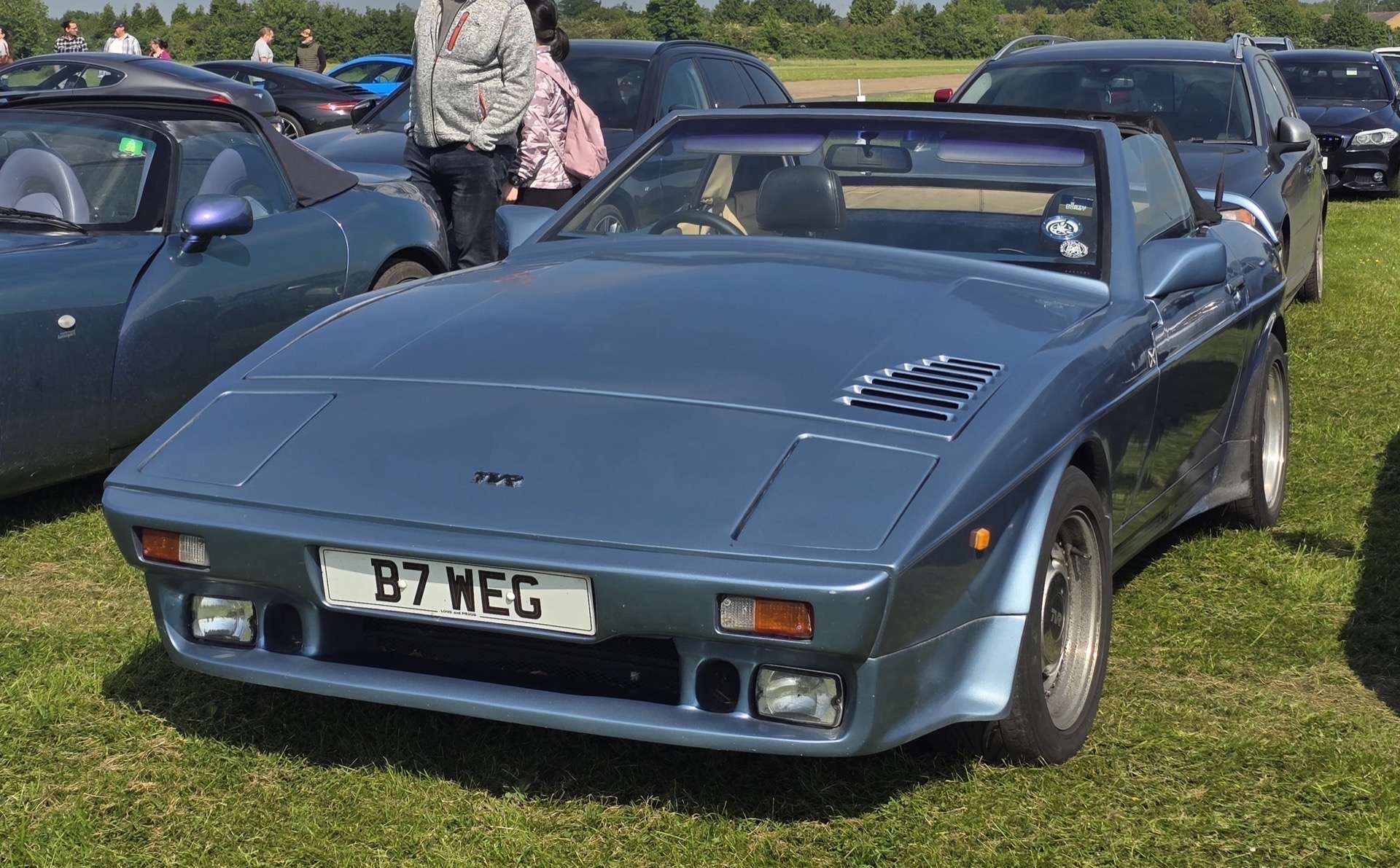
The TVR Tasmin and the Wedge family carried TVR through the 1980s. Oliver Winterbottom’s angular shape appeared first with Ford four- and six-cylinder engines, then became progressively more powerful as Peter Wheeler’s company installed Rover V8s and developed the 350i, 390SE, 400SE and rare SEAC derivatives.
Featured image: 1988 TVR 350i. Photograph by MrWalkr, CC BY-SA 4.0, via Wikimedia Commons; locally hosted.
A radical replacement for the M Series
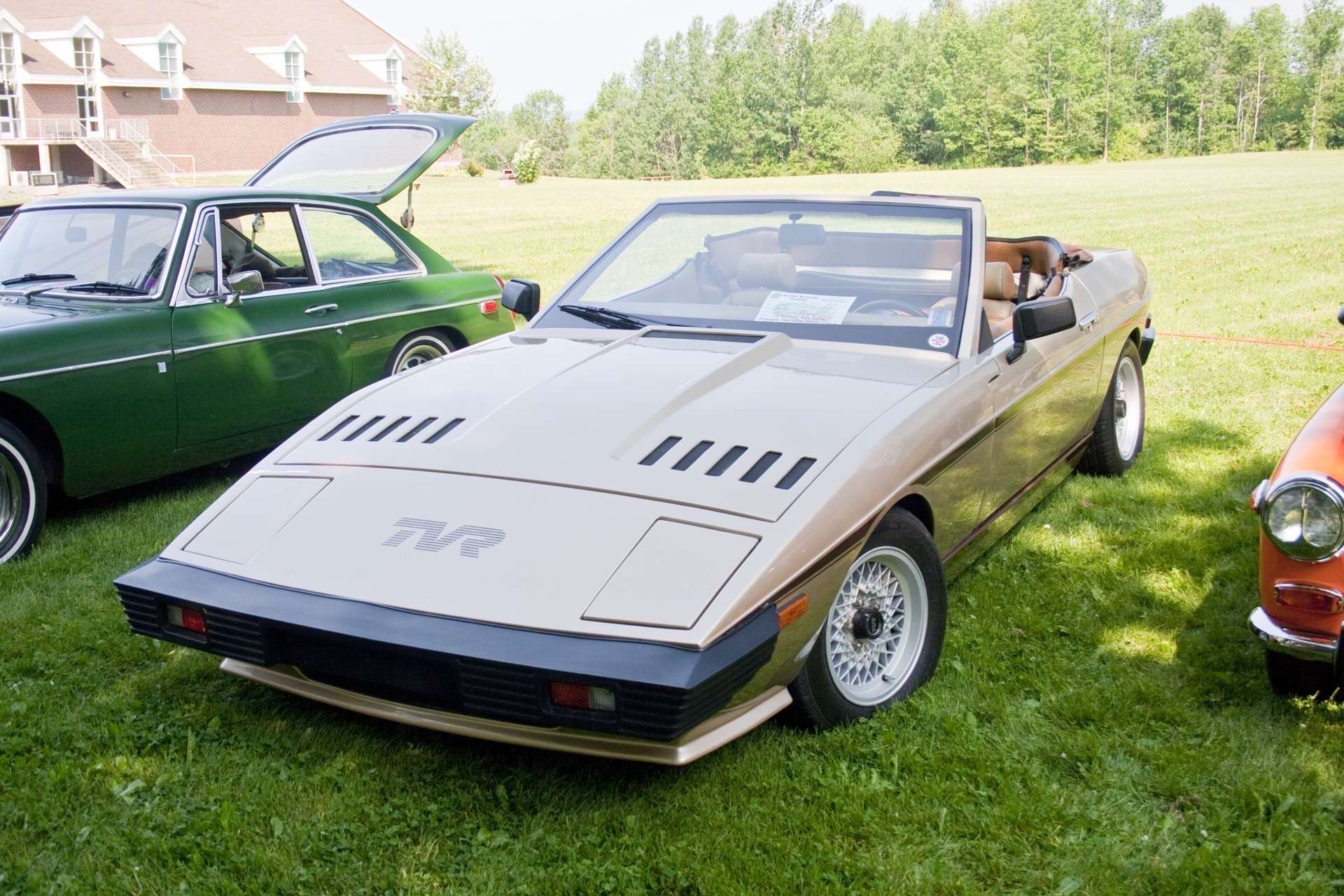
TVR entered the 1980s needing a modern design that could replace the rounded M Series. Oliver Winterbottom, previously associated with Lotus, created a sharp-edged glassfibre body around a new tubular chassis engineered with help from Ian Jones. The Tasmin was launched in 1980 as a fixed-head coupé, followed by convertible and 2+2 forms.
The styling was controversial because it abandoned familiar TVR curves, but the fundamental package remained recognisable: front engine, rear-wheel drive, independent suspension and a lightweight composite body. The first important version used Ford’s fuel-injected 2.8-litre Cologne V6 and became known as the 280i.
From Tasmin 200 to 350i
| Model | Engine | Role |
|---|---|---|
| Tasmin 200 | 2.0-litre Ford Pinto four-cylinder | Lower-priced model intended to occupy the space left by cars such as the Triumph TR7; sales were limited. |
| Tasmin / 280i | 2.8-litre Ford Cologne V6 with fuel injection | The original core model, offered in several body configurations. |
| 350i | 3.5-litre fuel-injected Rover V8 | The breakthrough V8 Wedge and the range’s strongest seller during the period. |
| 390SE and 400SE | Enlarged TVR-developed Rover V8 | Higher-performance evolutions with detail changes that must be verified car by car. |
Peter Wheeler bought control of TVR in 1981 and moved the range towards Rover V8 power. The 350i arrived in 1983 with approximately 190bhp and enough torque to give the Wedge the performance its appearance promised. TVR later dropped the Tasmin name from most versions, but enthusiasts continued to use Wedge as the family identity.

390SE, 400SE and the specialist variants
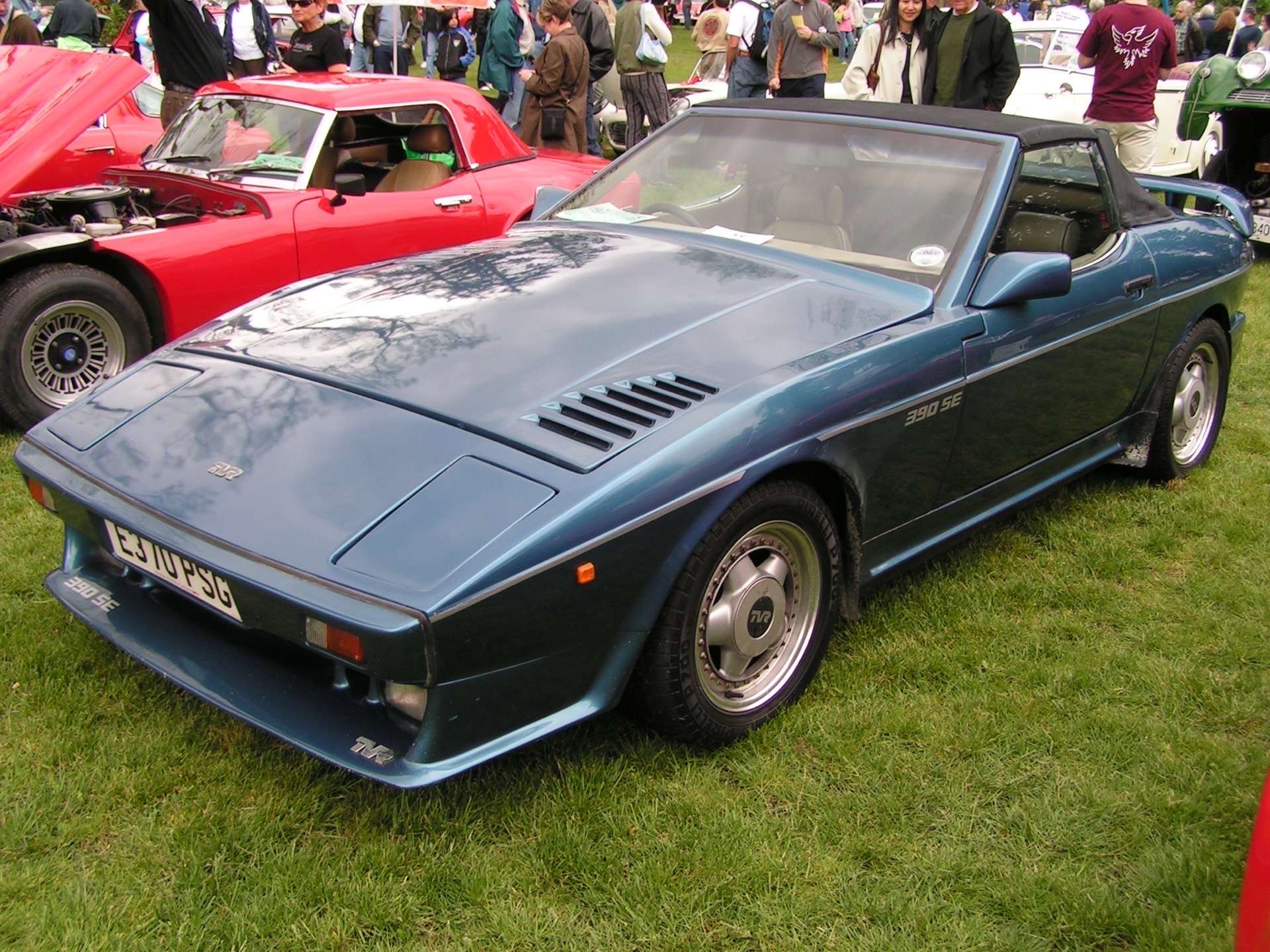
The 390SE used an enlarged Rover-based V8 developed with specialist input, and the 400SE continued the idea with a nominal four-litre capacity. TVR also produced 420, 450 and SEAC derivatives, together with small-run special-equipment cars. Factory practice was flexible and later upgrades are common, so a badge alone is not proof of engine capacity or original specification.
TVR Car Club figures, drawn from marque research, list 897 open 350is, 52 fixed-head 350is, 103 combined 390SE/420SE cars and 242 400SEs. These totals are useful context rather than a substitute for a particular car’s chassis record and documented history.
Love cars you don’t see every day?
Get forgotten cars, surprising motoring stories and the most interesting finds from Unusual Cars by email.
Free to join. No spam. Unsubscribe whenever you like. See our privacy policy.
Why the Wedge matters
The Wedge era is sometimes treated as a visual detour between the M Series and the later Griffith, but it kept TVR producing cars through a difficult decade and established the Rover V8 as the company’s defining engine. It also provided the mechanical starting point for the curvier S Series that followed.
Different bodies, engines and production changes make the range unusually rich for research. A Tasmin 200, a 280i coupé and a 400SE convertible may share a family shape, yet they deliver very different performance and ownership experiences. A good guide therefore has to preserve those distinctions instead of treating every angular TVR as the same car.
TVR Tasmin and Wedge buying guide
Chassis and body
Inspect the complete tubular structure on a lift, including outriggers, suspension mounts, central rails and tubes near the exhaust. The glassfibre body cannot rust, but it can conceal corrosion and poor repairs. Check panel alignment, stress cracks, screen surrounds and the operation of the bonnet and doors.
Engine and cooling
On Ford-engined cars check fuel injection, ignition, cooling, oil leaks and evidence of overheating. Rover V8 cars require good hot oil pressure, a healthy camshaft, stable cooling and correctly maintained injection. Verify the capacity and provenance of enlarged engines rather than accepting decals or verbal claims.
Transmission, suspension and brakes
Check clutch operation, every gear, differential noise, wheel bearings, steering and suspension bushes. Geometry and matched tyres strongly affect stability. Confirm that brakes match the version and that later upgrades have been engineered and documented properly.
Roof, lamps and electrics
Test the pop-up headlamps, fans, windows, instruments, wipers and every switch. Examine the removable roof or hood, seals and drains for leaks. Interior trim and model-specific electrical parts can take time to replace.

Sources and further reading
- TVR official Wheeler-era history
- TVR official 430SE and Wedge background
- TVR Car Club Tasmin and Wedge history
- Classic & Sports Car Wedge overview
Continue the TVR story
The Wedges carried TVR from Ford-V6 Tasmins to increasingly serious Rover-V8 sports cars. Explore the complete TVR hub, then look back to the M Series and Taimar and continue to the S Series and V8S.
Frequently asked questions
What is a TVR Wedge?
Wedge is the enthusiast name for the angular TVRs derived from the Tasmin and produced through the 1980s, including Ford-engined 200 and 280i cars and Rover-V8 models such as the 350i, 390SE and 400SE.
Who designed the TVR Tasmin?
Oliver Winterbottom styled the Tasmin, with engineering input from Ian Jones. Its angular glassfibre body marked a decisive break from TVR’s earlier rounded shapes.
What engine is in the TVR 350i?
The 350i uses TVR’s installation of the fuel-injected 3.5-litre Rover V8. Later Wedges used larger-capacity developments including the 390SE, 400SE and SEAC variants.
Was the TVR Tasmin available as a coupé?
Yes. TVR sold two-seat fixed-head, convertible and limited 2+2 forms, although availability and production totals differed between versions.
What are the main TVR Wedge buying checks?
Inspect the tubular chassis and outriggers, cooling system, fuel injection, drivetrain, suspension, pop-up lamps, roof seals, electrics and the accuracy of any claimed engine or special-edition specification.