UNUSUAL CARS MODEL GUIDE
The TVR Chimaera is a two-seat Rover-V8 roadster produced from 1993 to 2003. Developed alongside the Griffith but with more cabin space, a larger boot and slightly softer suspension, it became the most successful model in TVR’s history.
Featured image: 1998 TVR Chimaera, photographed by Calreyn88, CC BY-SA 4.0, via Wikimedia Commons; locally hosted.
Why TVR created the Chimaera
The Griffith had re-established TVR as a maker of dramatic V8 roadsters, but its compact cabin and harder-edged character limited everyday appeal. The Chimaera used the same basic tubular chassis and Rover V8 family while adding a longer body, a more useful luggage area and suspension tuned towards grand touring.
The name came from the Chimera of Greek mythology. TVR’s organic styling made the reference unusually appropriate: the car combined familiar mechanical ingredients with a body unlike anything produced by a large manufacturer.
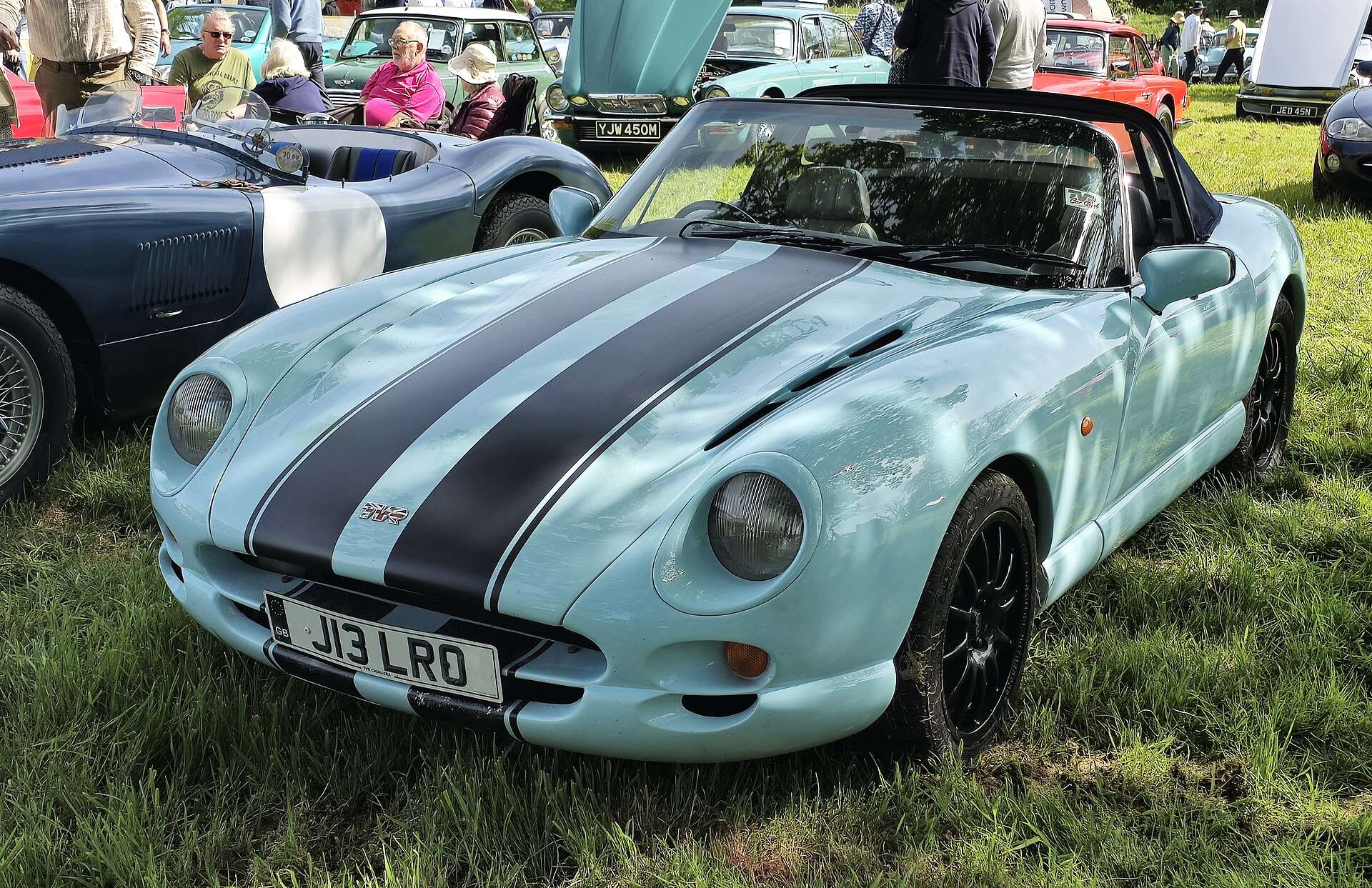
Chimaera versions compared
| Version | Common factory figure | Character |
|---|---|---|
| 400 | 3,950cc, about 240bhp | The most common entry point and often the easiest to use. |
| 400 HC | Higher-compression four-litre, about 275bhp | Stronger performance without the largest engine. |
| 430 | 4,280cc, about 280bhp | Early higher-torque version; relatively uncommon. |
| 450 | 4,546cc, about 285bhp | Broad torque and a useful compromise between 400 and 500. |
| 500 | 4,988cc, commonly quoted at up to 340bhp | The fastest and most valuable regular Chimaera. |

How the Chimaera evolved
Early cars used the Rover LT77 gearbox before TVR adopted the Borg-Warner T5 during the 1990s. The body and cabin evolved through numerous running changes rather than rigid model years, so two cars registered close together can differ in dashboard design, door mirrors, nose treatment, rear lamps and minor mechanical details.
The important lesson is to identify a car by chassis number, engine specification and surviving factory details, not by a convenient Mk1 or Mk2 label alone. TVR production was flexible and customer specification added further variation.

Love cars you don’t see every day?
Get forgotten cars, surprising motoring stories and the most interesting finds from Unusual Cars by email.
Free to join. No spam. Unsubscribe whenever you like. See our privacy policy.
Why it became TVR’s best seller
The Chimaera kept the ingredients enthusiasts expected—low weight, rear-wheel drive, a manual gearbox and a V8 soundtrack—but made them easier to live with. A removable roof panel, folding rear section and generous boot allowed genuine touring, while the simpler Rover-derived engine had a broad specialist support network.
Approximately 6,000 were produced, according to the TVR Car Club and widely used marque histories. That makes the car common by TVR standards, but it also means knowledge, replacement parts and specialist experience are better established than for many lower-volume models.
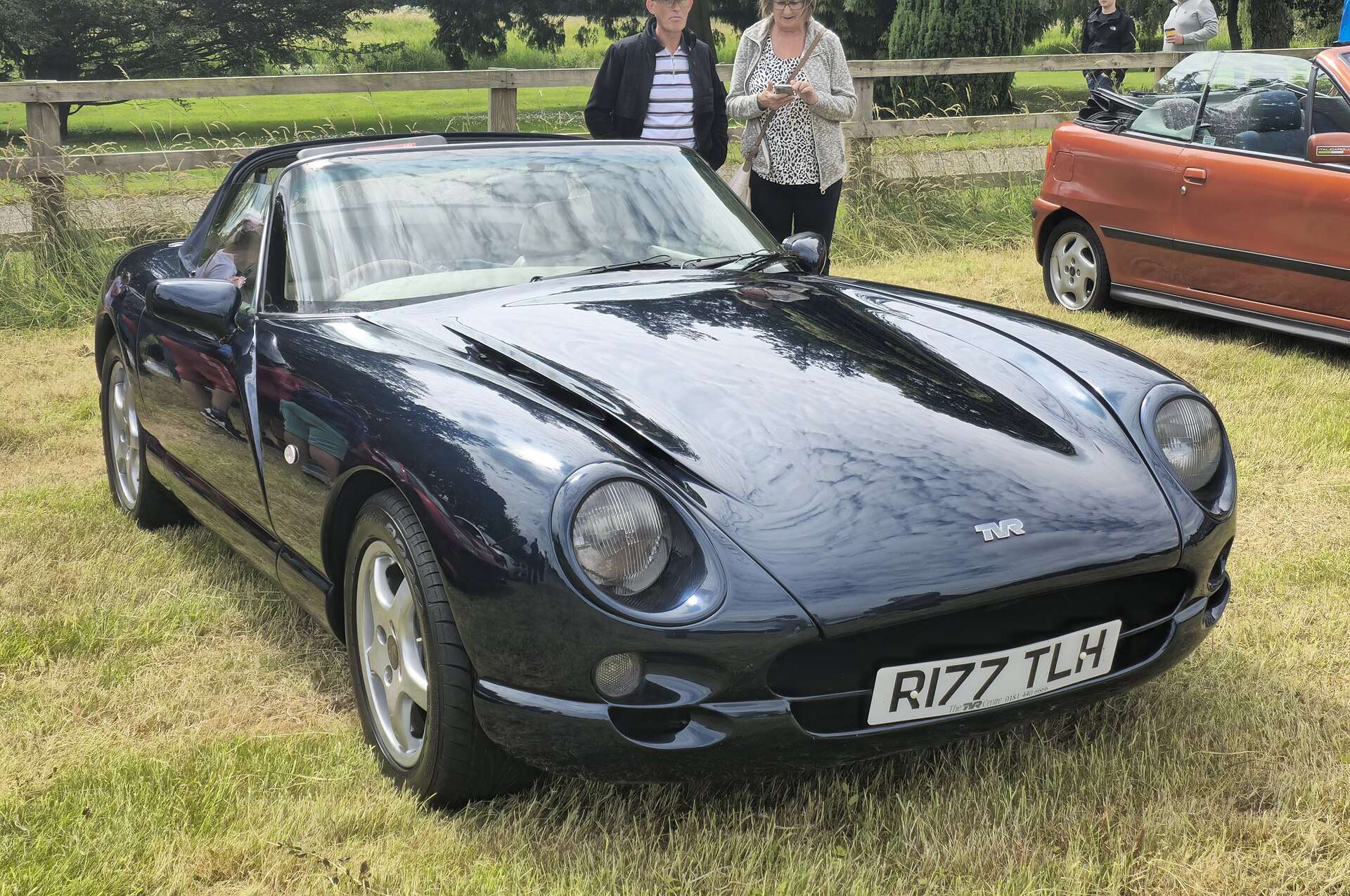
TVR Chimaera buying guide
Chassis condition
Inspect the outriggers beneath the cabin, central spine, suspension mounts and tubes near the exhaust. Factory powder coating can lift and trap corrosion. A clean glassfibre body says little about the frame below; seek lift access, photographs of any restoration and invoices naming the specialist.
Rover V8 and cooling
Check cold starting, oil pressure, idle quality, camshaft wear, coolant condition and fan operation. Overheating can damage an otherwise durable engine. Carburation or injection, ignition and any capacity or camshaft changes must be understood as a complete system.
Roof, body and water ingress
Fit and remove the roof panel, inspect the folding rear section and look for damp carpets or boot trim. Stone chips are normal, but star cracks, mismatched paint and distorted panels can reveal poor glassfibre repairs.
Steering, suspension and brakes
Look for worn bushes, dampers, ball joints, wheel bearings and incorrect geometry. The car should track cleanly and stop without pulling. Verify that aftermarket wheels and tyres preserve sensible clearances and matching axle pairs.
Sources and further reading
- TVR heritage history
- TVR Car Club Chimaera history and specifications
- TVRCC Chimaera Pages
- Hagerty UK Chimaera buying guide
Continue the TVR story
The Chimaera made the TVR roadster formula more usable without removing its character. Explore the complete TVR hub, then read the sharper Griffith 500 guide and see how the Tuscan replaced the Rover-V8 era.
Frequently asked questions
When was the TVR Chimaera built?
The Chimaera entered production in 1993 and remained in the range until 2003, although it had first been shown in 1992.
Which engines were offered in the TVR Chimaera?
TVR offered Rover V8 derivatives of approximately 4.0, 4.3, 4.5 and 5.0 litres, plus the higher-compression 4.0 HC.
Is the Chimaera related to the Griffith?
Yes. It shares the same basic chassis and Rover V8 family, but has a longer, roomier body and softer grand-touring suspension settings.
How many TVR Chimaeras were built?
The TVR Car Club and respected marque histories commonly state roughly 6,000, making it TVR’s best-selling model.
What is the main Chimaera problem?
Corrosion of the tubular chassis, especially the outriggers, is the principal structural concern. A specialist inspection is more reliable than judging the bodywork.