UNUSUAL CARS MODEL GUIDE
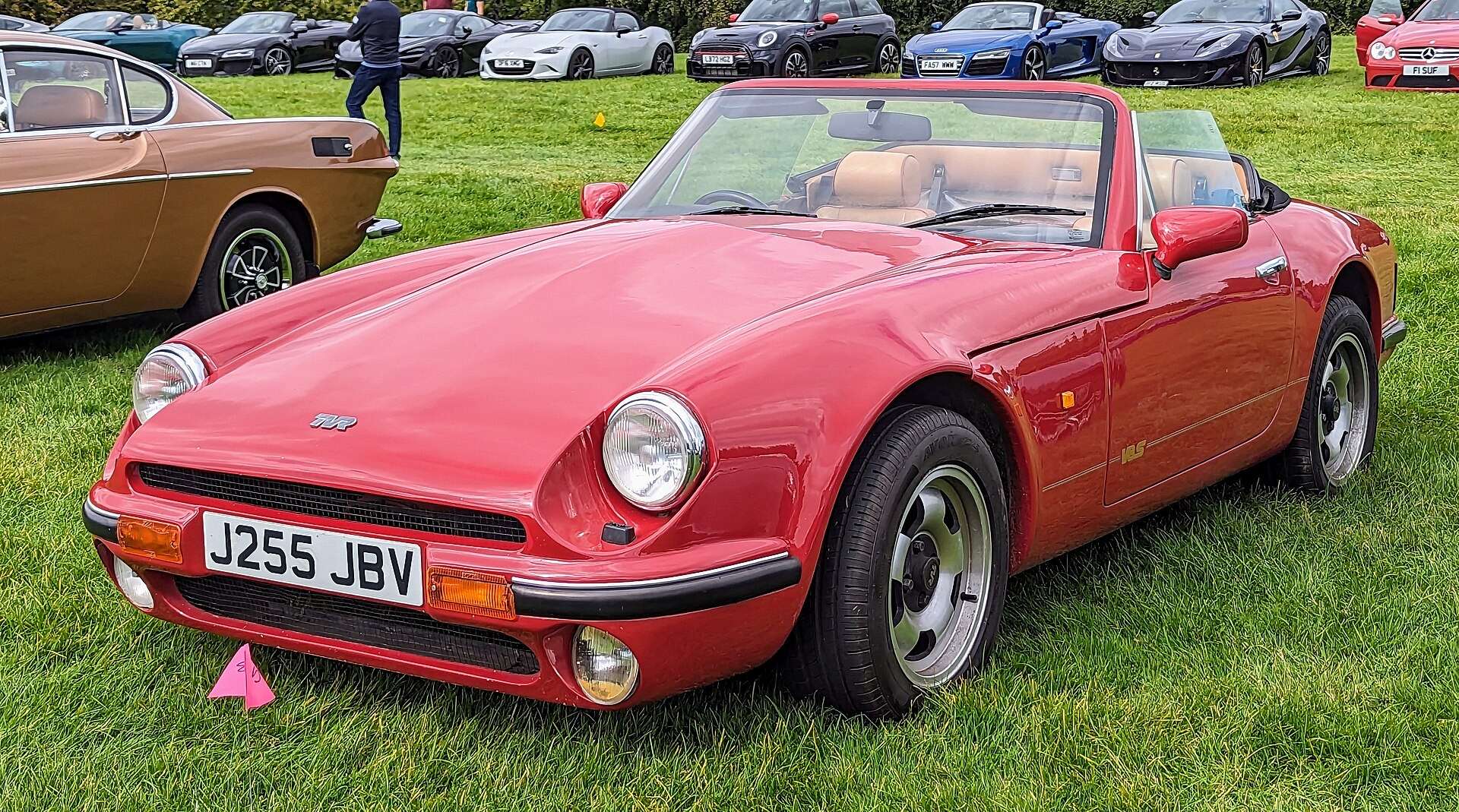
The TVR S Series revived the company’s traditional open-roadster shape and helped restore its fortunes during the late 1980s. The family developed from the Ford-V6 S1 through the S2, S3, S3C and S4C to the Rover-V8-powered V8S.
Featured image: TVR S2. Photograph by Parrot of Doom, Public domain, via Wikimedia Commons; locally hosted.
The car that changed TVR’s direction
Peter Wheeler had taken control of TVR in 1981, inheriting the angular Tasmin range. For the 1986 British International Motor Show, the company displayed a lower-cost roadster whose curves recalled the 3000S while its mechanical basis came from the Tasmin 280i. Strong public interest turned the show car into production reality.
Deliveries began in 1987. The new S gave TVR a more traditional visual identity and introduced interior themes, including sweeping dashboard forms, that influenced the Griffith and Chimaera.

S1 to V8S versions
| Version | Engine | Key changes |
|---|---|---|
| S1 | 2.8-litre Ford Cologne V6 | Original short-door production form. |
| S2 | 2.9-litre Ford Cologne V6 | Revised engine and numerous trim and detail changes. |
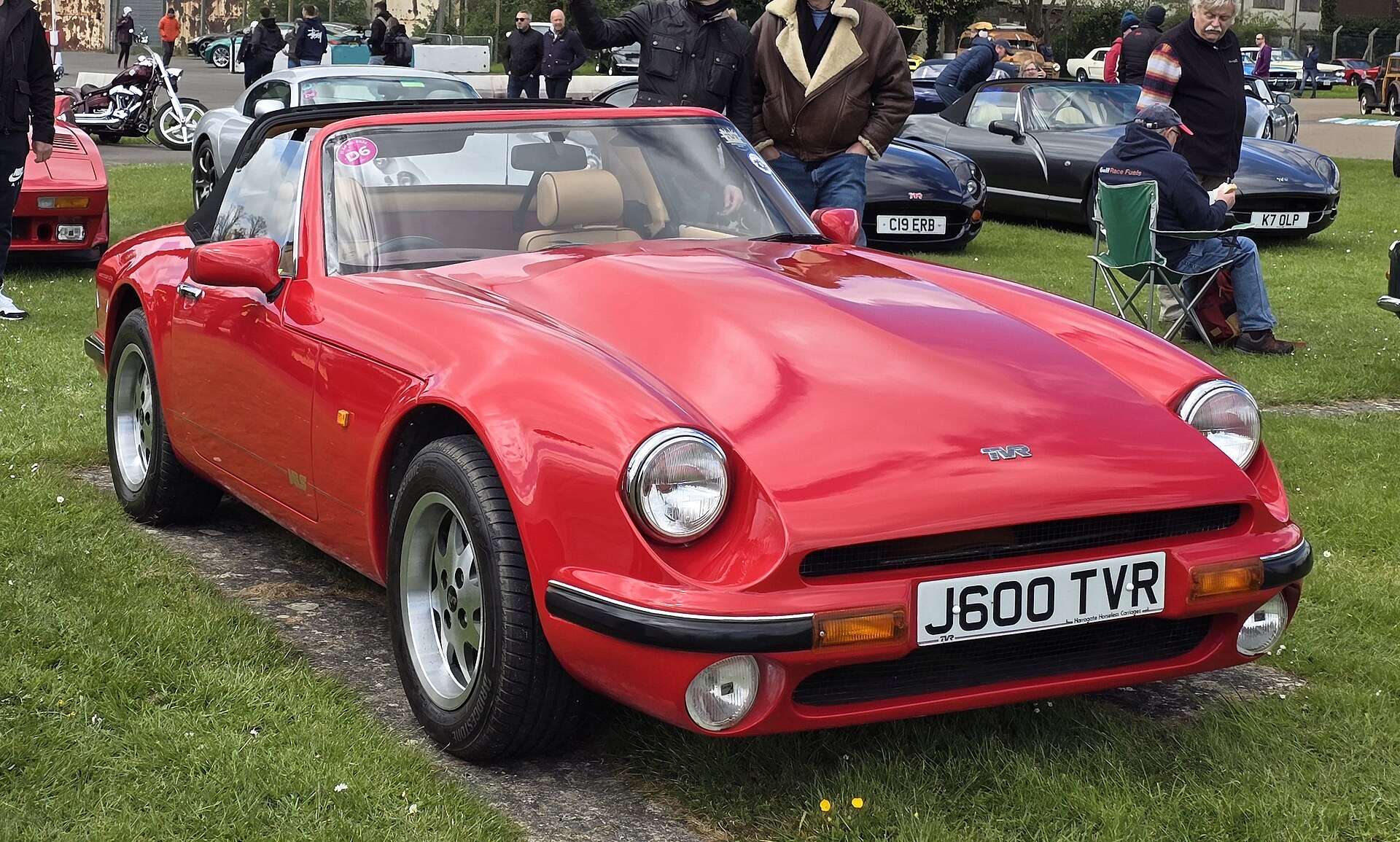
| S3 / S3C | 2.9-litre Ford Cologne V6 | Longer doors and updated chassis and cabin; C denotes catalytic-converter specification. |
| S4C | 2.9-litre Ford Cologne V6 | Late catalysed V6 model with wider-track and V8S-related development. |
| V8S | 3.9-litre TVR/Rover V8 | Wider chassis, four-wheel discs and approximately 240bhp. |
The V8S
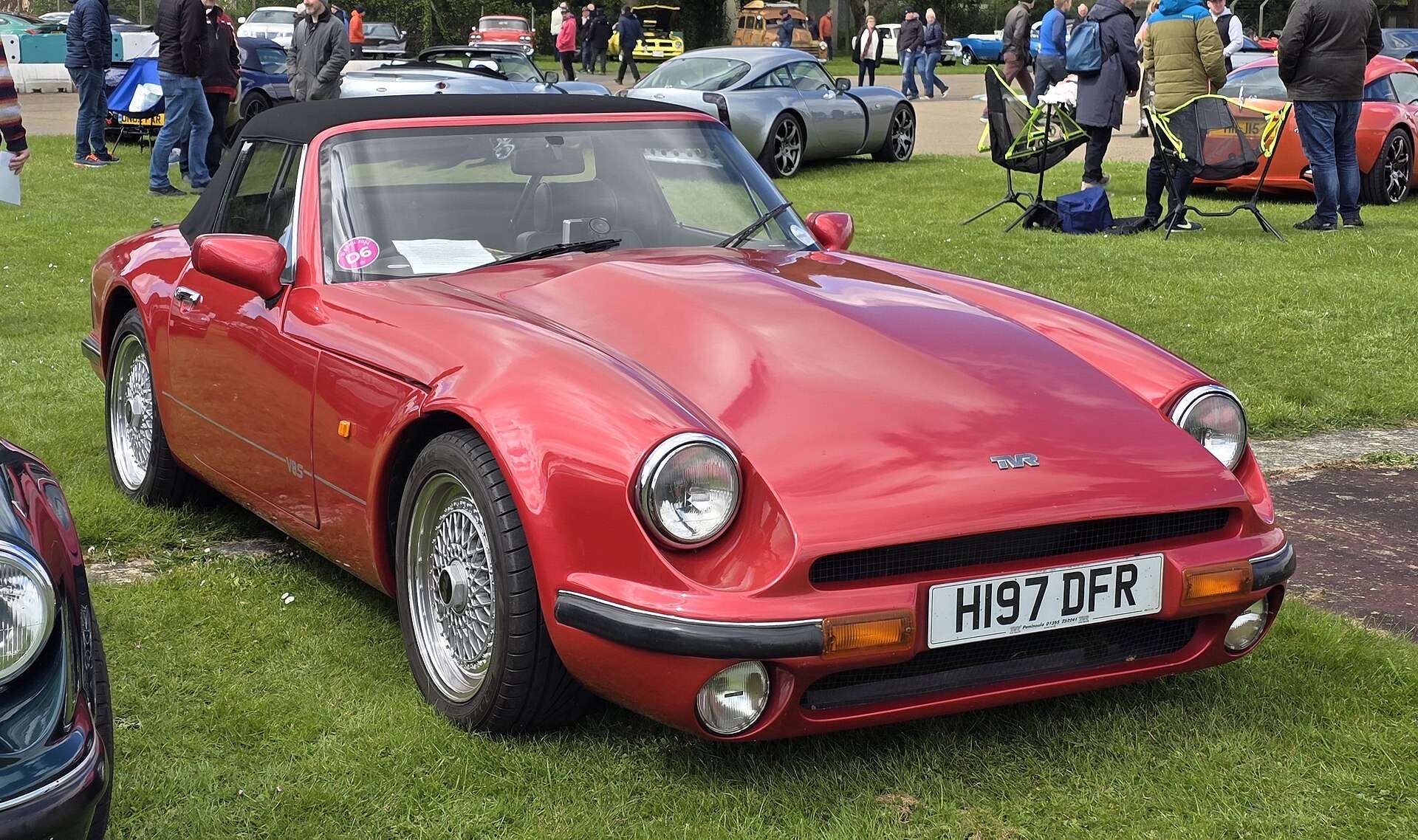
The Griffith was being developed around V8 power, but delays created an opportunity for a V8 S Series. TVR widened and strengthened the chassis, adapted the body and installed its 3,948cc development of the Rover V8. Official archive figures quote 240bhp, 270lb ft, 0–60mph in 4.9 seconds and 149mph.
The V8S also gained disc brakes at all four wheels. Bonnet shapes, vents and late-production details vary, and factory practice was flexible enough that rigid model-year assumptions can be misleading.

Love cars you don’t see every day?
Get forgotten cars, surprising motoring stories and the most interesting finds from Unusual Cars by email.
Free to join. No spam. Unsubscribe whenever you like. See our privacy policy.
Driving differences across the range
The early V6 cars are not merely slower V8Ss. Their lighter engine, narrower track and simpler braking specification give them a different balance and a more relaxed relationship with the available grip. The V8S has substantially greater torque and performance, together with chassis and brake changes intended to control it.
Production changes overlapped and TVR frequently used components until stocks were exhausted. Door length, bonnet form, mirrors, dashboards and trim therefore need to be assessed on the individual car. A recognised owners’ club or marque specialist can help distinguish factory variation from later alteration without forcing every example into a rigid model-year description.
TVR S Series buying guide
Chassis and outriggers
The glassfibre body can conceal serious corrosion. Inspect the outriggers, central spine, suspension mounts and tubes near the exhaust. A lift inspection and photographs of any restoration are preferable to relying on fresh paint or underseal.
Ford V6 and Rover V8 engines
On V6 cars check fuel-injection condition, cooling, ignition, oil leaks and service history. On the V8S also check camshaft wear, oil pressure and evidence of overheating. Engine swaps and capacity changes need supporting documentation.
Roof, cabin and electrics
Inspect the split roof panels, folding rear section, seals and storage. Water ingress affects carpets, trim and connectors. Test the windows, instruments, fans, lights and door hardware, and confirm that scarce model-specific trim is present.
Suspension and brakes
Worn bushes, dampers, ball joints and wheel bearings can undermine the light chassis. Check that brakes are appropriate to the exact version and that tyres are correctly matched. The car should steer cleanly without wandering or vibration.
Sources and further reading
- TVR V8S official model archive
- TVR Car Club S Series history
- Classic & Sports Car S Series buying guide
Continue the TVR story
The S Series returned TVR to a traditional roadster shape and created the foundation for the Griffith era. Explore the complete TVR hub, then jump forward to the Sagaris and continue to the Griffith 500.
Frequently asked questions
When was the TVR S Series built?
TVR launched the S at the 1986 British International Motor Show and produced the family from 1987 until 1994.
Which engines were used in the TVR S Series?
The S1 used a 2.8-litre Ford Cologne V6, the S2 to S4 used a 2.9-litre version, and the V8S used TVR’s development of the 3.9-litre Rover V8.
What is the difference between an S2 and S3?
The S3 introduced longer doors and revised chassis and cabin details, improving access. TVR changes overlapped, so individual-car inspection remains important.
How is the V8S different?
The V8S uses a widened and strengthened chassis, four-wheel disc brakes and a TVR-tuned Rover V8, with different bonnet details and much stronger performance.
What should be checked before buying an S Series?
Inspect the tubular chassis and outriggers, cooling, suspension, brakes, roof and weather sealing, electrical systems and the condition and identity of the Ford V6 or Rover V8.