UNUSUAL CARS MODEL GUIDE
The Mitsubishi Pajero Evolution is a road-going homologation special created for production-based cross-country rallying. Built from 1997 to 1999, it transformed the short-wheelbase second-generation Pajero with a 3.5-litre MIVEC V6, a wider body, all-independent suspension and purpose-built chassis hardware.
Quick answer: the Pajero Evolution is far more than a Shogun with a body kit. Its V55W structure, 6G74 MIVEC engine, wide track and independent rear suspension were developed around Dakar competition requirements. Approximately 2,500 road cars are widely reported, but condition, originality and Japanese-market documentation matter more than a precise production claim.
Why the Pajero Evolution existed
Mitsubishi had already made the Pajero one of the defining vehicles of the Dakar Rally. A regulation change in the mid-1990s placed greater emphasis on production-based entries, creating a reason to build a more specialised road car. Mitsubishi launched the Pajero Evolution in September 1997 in response to those entry requirements.
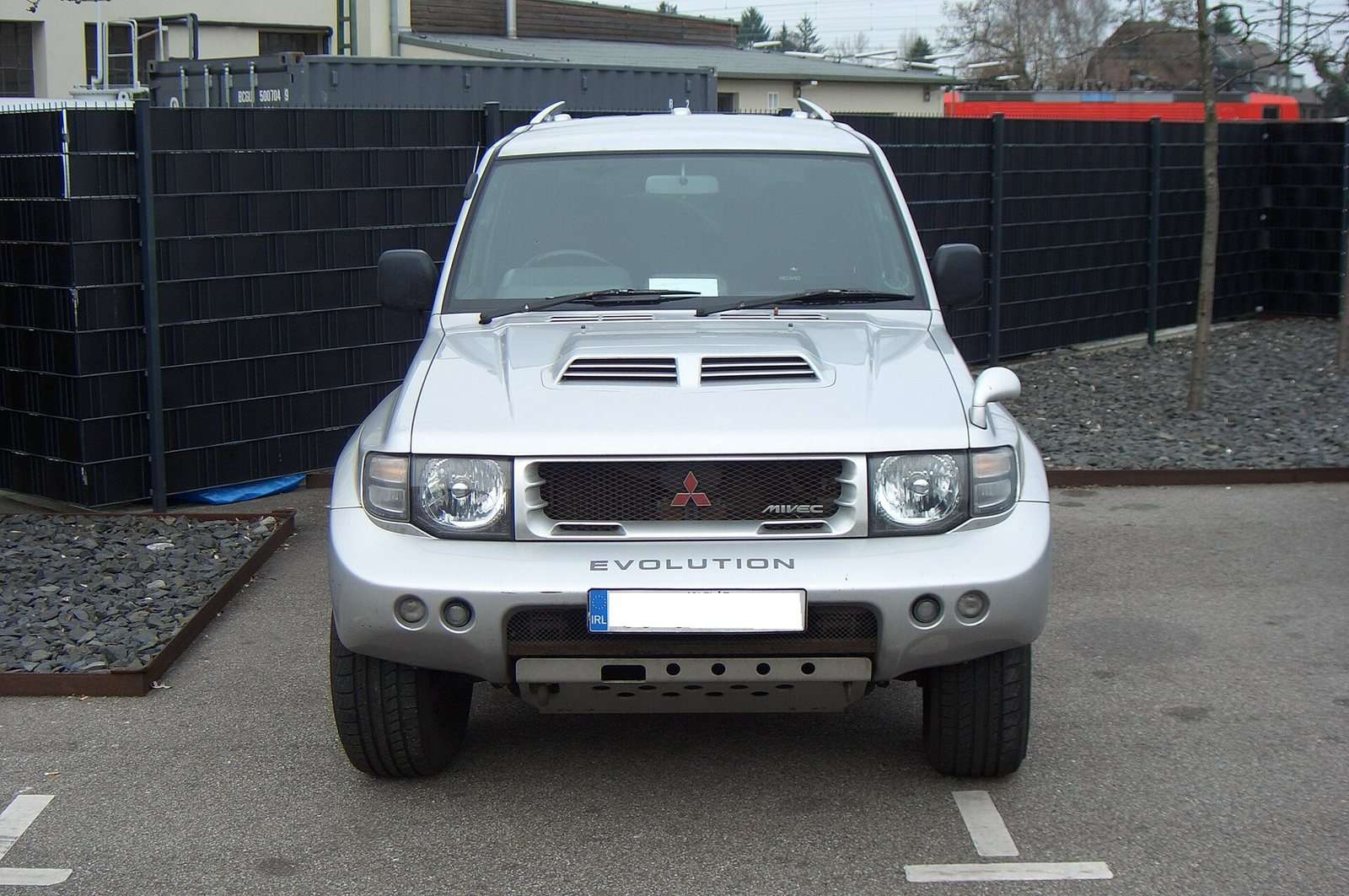
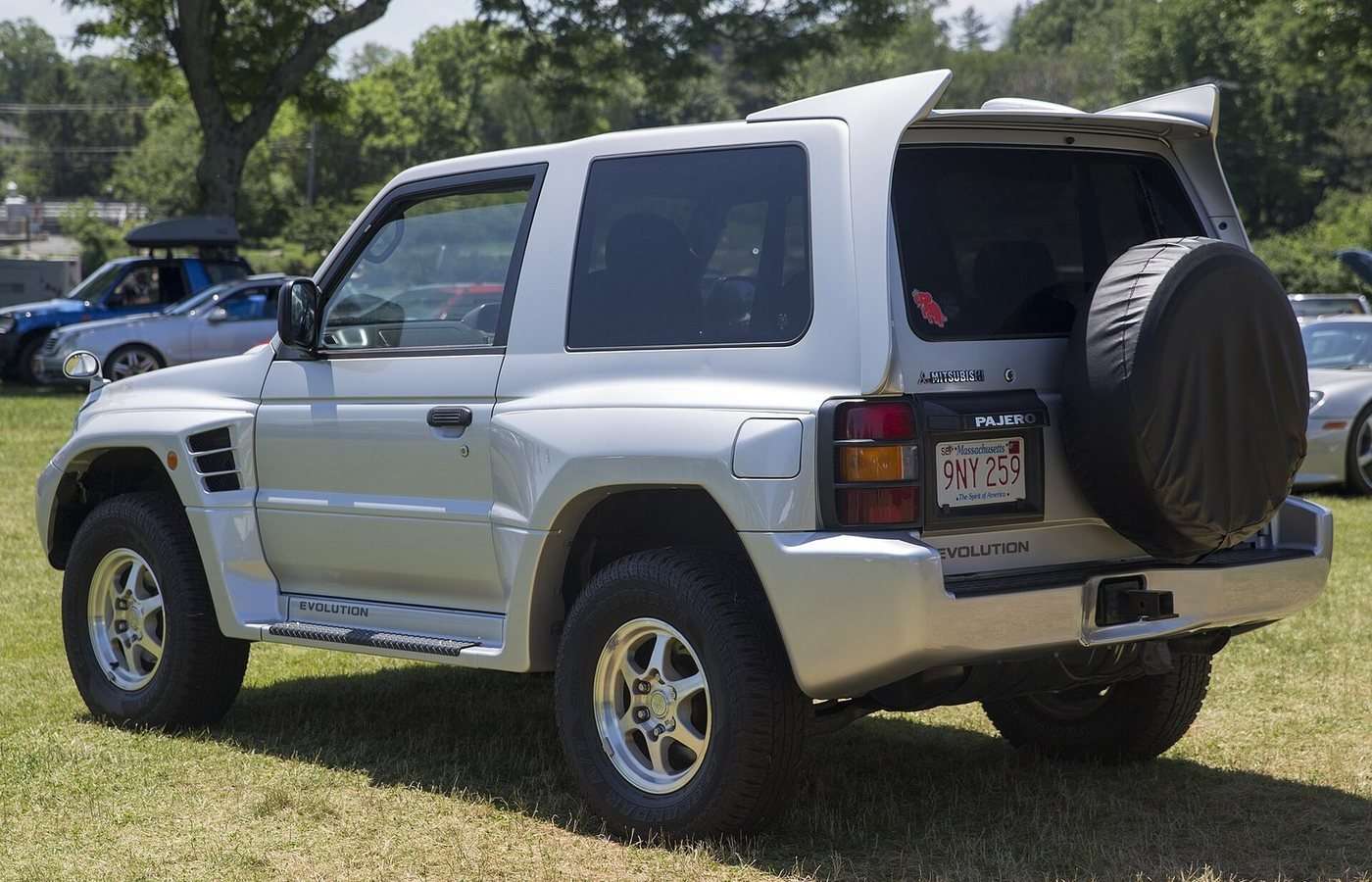
The result used the short three-door Pajero as its starting point but altered almost every visible and dynamic element. Overfenders covered a much wider track, the bonnet and bumpers managed airflow, and the rear wing and bodywork gave the car the stance of a competition machine translated into a road-legal SUV.
Engine and drivetrain
The road Pajero Evolution used Mitsubishi’s 3,497cc 6G74 V6 with MIVEC variable valve timing and gasoline direct injection. Japanese-market output was quoted at 280PS, sent through either a five-speed manual or five-speed automatic transmission.
Super Select four-wheel drive allowed the driver to select rear-wheel drive, full-time four-wheel drive and locked off-road modes. Torsen-type differentials and the wide track helped distribute torque, while all-independent suspension distinguished the Evolution from ordinary second-generation Pajeros.
| Item | Pajero Evolution road car |
|---|---|
| Production period | 1997–1999 |
| Model code | V55W |
| Engine | 3,497cc 6G74 MIVEC V6 |
| Representative output | 280PS |
| Transmissions | Five-speed manual or five-speed automatic |
| Drive system | Super Select four-wheel drive |
| Reported production | Approximately 2,500; commonly cited estimate |
Body and suspension differences
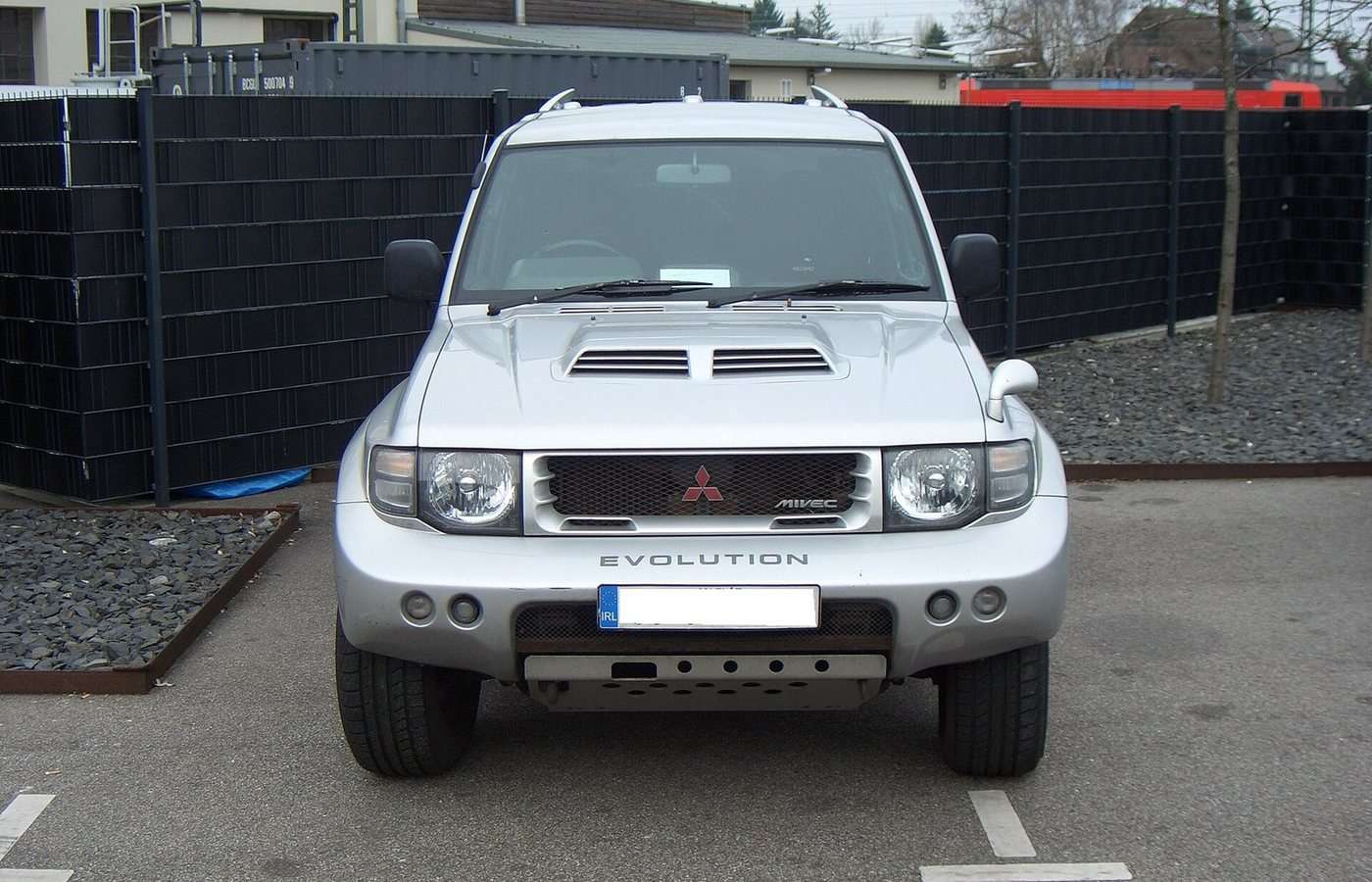
The Evolution’s bulging arches are functional as well as visual. They accommodate its broader suspension layout and wheels. Mitsubishi also strengthened and lightened the body, used an aluminium bonnet and adopted independent suspension at all four corners. The rear system is a major identifying difference from the live-axle arrangement associated with ordinary Pajeros of the period.
Inside, the Evolution remained recognisably Pajero but received sporting seats, model-specific instruments and trim. It was still usable as a compact SUV, which is part of its appeal: few homologation specials combine dramatic rally engineering with genuine everyday practicality.
Road car and Dakar rally car: not the same thing
The road-going V55W supplied the homologation foundation, but the Dakar competition cars were extensively prepared racing machines. Mitsubishi’s own retrospective explains that the production-based Pajero won in 1997 and that an Evolution-based vehicle returned to win again in 1998.
Later competition vehicles also carried the Pajero Evolution name despite being further removed from the late-1990s road car. That distinction matters when describing specifications: photographs of a 2003 works Dakar winner illustrate the lineage, not the mechanical specification of a showroom V55W.
Production and rarity
Approximately 2,500 road cars is the figure most often quoted by market specialists and auction references. Mitsubishi’s public heritage account confirms the September 1997 launch and homologation purpose but does not state that total, so it should be treated as a well-established estimate rather than an audited global number.
Most cars were sold in Japan and later exported. That creates differences in documentation, speedometer conversion, corrosion exposure and maintenance history. Genuine cars should carry the V55W model identity; ordinary Pajeros fitted with Evolution-style panels do not share the same engine and chassis package.

Love cars you don’t see every day?
Get forgotten cars, surprising motoring stories and the most interesting finds from Unusual Cars by email.
Free to join. No spam. Unsubscribe whenever you like. See our privacy policy.
Mitsubishi Pajero Evolution buying guide
Identity and paperwork
Confirm the V55W model code and compare the chassis details with Japanese export and auction paperwork. Check that the MIVEC engine, wide suspension and interior details are present. A convincing body-kit conversion is not an Evolution.
Body and chassis
Inspect the chassis, floor, body mounts, sills, wheelarches and suspension pick-up points. Imported cars vary from exceptionally clean to heavily corroded. Look for off-road damage, crushed underbody sections and poor repairs hidden by large plastic extensions.
Engine and cooling
The 6G74 should start cleanly, idle evenly and hold temperature. Check for oil leaks, coolant staining, timing-belt evidence and correct MIVEC operation. Direct-injection components and model-specific engine parts require informed maintenance.
Transmission and four-wheel drive
Test every Super Select mode and confirm that warning lights behave correctly. Manuals should select cleanly; automatics should engage without delay. Listen for transfer-case, differential and wheel-bearing noise on a long test drive.
Suspension, steering and brakes
Evolution-specific suspension parts are valuable and can be difficult to replace. Check bushes, dampers, ball joints and alignment. Uneven tyre wear may indicate worn hardware, accident damage or poor geometry after modification.
Frequently asked questions
Why was the Mitsubishi Pajero Evolution built?
It was created as a production road car to support Mitsubishi’s entry in production-based cross-country rally categories, particularly the Dakar Rally.
What engine does the Pajero Evolution use?
It uses a 3.5-litre 6G74 V6 with MIVEC variable valve timing and gasoline direct injection, officially rated at 280PS in Japan.
How many Pajero Evolutions were built?
Approximately 2,500 is the most widely reported estimate. Mitsubishi’s public heritage material confirms the model’s purpose and launch but does not provide a definitive total.
Is the Pajero Evolution the same as a Shogun?
It belongs to the second-generation Pajero family, sold as Shogun in the UK, but has a unique V55W performance specification with a dedicated engine, wide chassis and independent suspension.
What is the main buying risk?
The biggest risks are misidentified replicas, chassis corrosion, off-road damage and missing Evolution-specific drivetrain or suspension parts.
Research sources
- Mitsubishi Motors: Pajero and Pajero Evolution history
- Mitsubishi Motors: Pajero development and Dakar history
- Mitsubishi Motors: production-based rally development
- Mitsubishi Motors: main motorsport record
Continue the Mitsubishi story
Explore the Rare & Performance Mitsubishis hub, read about the WRC-bred Lancer Evolution VI, or go back to Mitsubishi’s rear-wheel-drive Starion Turbo.