UNUSUAL CARS MODEL GUIDE
The Mitsubishi Lancer Evolution VI is the final and most developed version of the compact CP9A-generation Evo. Introduced in 1999, it combined Mitsubishi’s 4G63 turbocharged engine, permanent four-wheel drive and Active Yaw Control with bodywork refined for cooling and aerodynamic reliability. The Tommi Mäkinen Edition followed as a road-going celebration of the Finnish driver’s four consecutive World Rally Championship titles.
Quick answer: the Evo VI is not simply an Evo V with different bumpers. Mitsubishi altered its cooling, aerodynamics and durability, while the Tommi Mäkinen Edition added a faster-spooling turbo specification, lower suspension, quicker steering and distinctive trim. Buyers should prioritise identity, structural condition and evidence of sympathetic maintenance over claimed power.
Why Mitsubishi created the Evolution VI
The Lancer Evolution programme began as a homologation route into international rallying. By the late 1990s Mitsubishi had developed the formula into one of the defining performance-car series of its era: a modest four-door shell carrying a sophisticated turbocharged four-cylinder drivetrain and competition-led four-wheel-drive hardware.
The Evo V brought a wider body, larger brakes and more aggressive aerodynamics. The VI concentrated on details that mattered in competition and hard road use. Mitsubishi reshaped the front bumper, improved airflow through the cooling package and paid close attention to component durability. The result retained the compact, mechanical character of the Evo IV and V while addressing the demands revealed by rallying.

Engine, transmission and four-wheel drive
The Evo VI used the 1,997cc 4G63 DOHC turbocharged four-cylinder engine. Japanese-market output remained within the period’s voluntary 280PS convention, but boost response, torque delivery and durability mattered more than a headline number. A five-speed manual gearbox transmitted power through a permanent four-wheel-drive system.
GSR road cars used Active Yaw Control at the rear axle to vary torque between the rear wheels and help the car rotate into a corner. The competition-focused RS followed a simpler, lighter specification and could be ordered with equipment suited to rally preparation. Exact hardware varies with grade, market and option package, so a chassis code and original build specification are essential evidence.
| Item | Evolution VI |
|---|---|
| Production period | 1999–2001, including the Tommi Mäkinen Edition |
| Engine | 1,997cc 4G63 DOHC turbo four-cylinder |
| Representative Japanese output | 280PS |
| Transmission | Five-speed manual |
| Layout | Front engine, permanent four-wheel drive |
| Main grades | GSR and competition-focused RS |
What changed on the Tommi Mäkinen Edition?
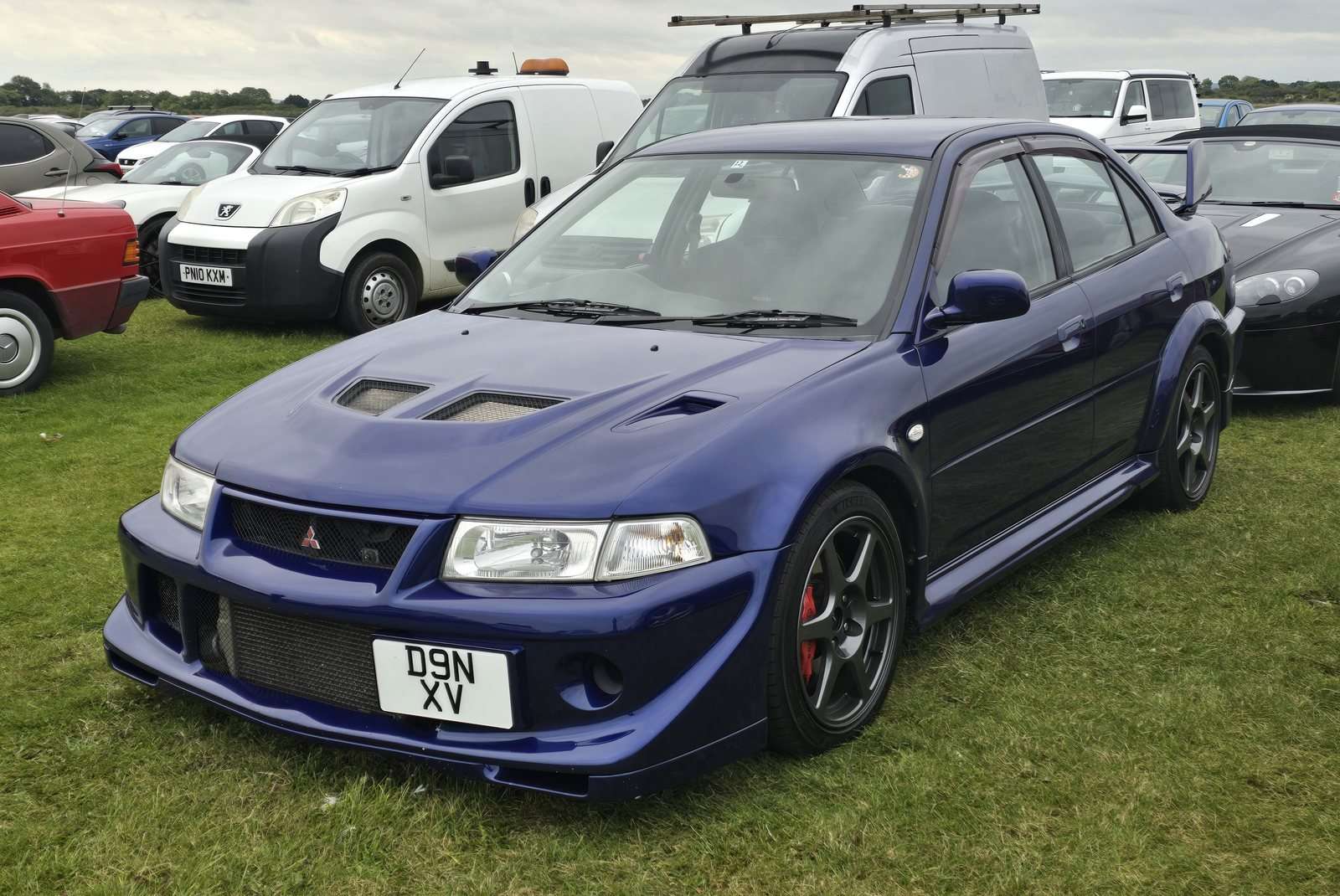
Mitsubishi announced the Tommi Mäkinen Edition after Mäkinen secured four successive WRC drivers’ championships. Often called the TME or Evo 6.5, it remained an Evolution VI but received meaningful chassis and engine-response changes rather than a cosmetic badge package.
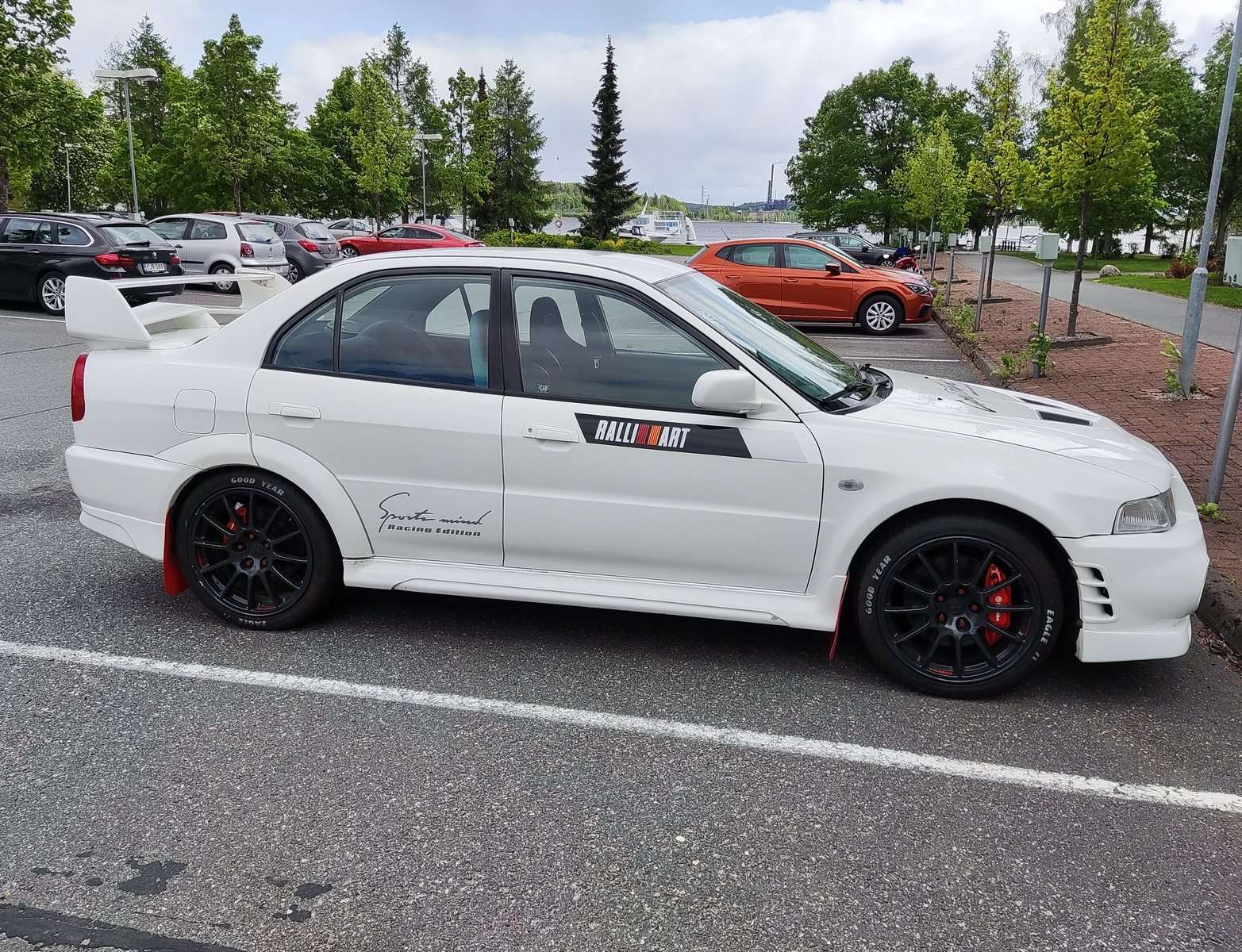
The specification included a revised front bumper, a quicker steering ratio, suspension lowered by about 10mm and model-specific 17-inch Enkei wheels. Turbo details varied by grade, but the aim was sharper response on tarmac. The interior received distinctive seats and trim. Red Special Colour Package cars added graphics recalling the works rally cars, although genuine TMEs were also sold in other colours.
A production figure of 2,500 cars is repeated widely, while other registries produce different totals depending on whether RS, GSR and special-colour cars are counted together. Mitsubishi’s accessible heritage material confirms the model and its purpose but does not provide a simple global total, so the safest description is limited-production rather than attaching false precision.

GSR, RS and UK-market cars
The GSR is the better-equipped road car, with Active Yaw Control and greater emphasis on daily usability. The RS was intended as a competition base: equipment levels, wheel sizes, differentials and turbo specifications can differ, and many RS cars were later modified for motorsport.
British buyers also encounter official Ralliart-market cars, grey imports and cars subsequently converted to resemble a TME. FQ badges and power claims require documentary proof because software, exhausts, turbochargers and engine internals have often changed. A genuine standard car is now unusual; originality should be established from numbers, paperwork and component details rather than colour alone.

Rally significance
The road car’s reputation is inseparable from Mitsubishi’s WRC campaign. Mitsubishi’s records list Evo VI victories on the Monte Carlo, Swedish and New Zealand rallies in 1999, with another Monte Carlo win in 2000. The works rally car was heavily prepared, but its connection to the production shell and drivetrain philosophy gave the road Evo unusual credibility.
The Tommi Mäkinen Edition marked the peak of that relationship. Later Evos became larger and more electronically integrated; the VI remains the end point of the compact homologation-era lineage that began with the Evo IV platform.

Love cars you don’t see every day?
Get forgotten cars, surprising motoring stories and the most interesting finds from Unusual Cars by email.
Free to join. No spam. Unsubscribe whenever you like. See our privacy policy.
Mitsubishi Evo VI buying guide
Identity and provenance
Confirm the CP9A chassis number, grade and factory specification before valuing a car as a TME, RS or official UK model. Check registration history, import documentation, auction sheets and service records. Replica graphics, replacement bumpers and later wheels are not proof of identity.
Body and corrosion
Inspect the floor, chassis rails, sills, jacking points, rear arches, suspension turrets, boot floor and seams around the bulkhead. Accident damage and hurried rally-style repairs are at least as important as rust. Uneven panel gaps, excess seam sealer and mismatched paint deserve investigation.
Engine and turbocharger
Start from cold. Look for smoke, crankcase pressure, coolant loss and unstable idle. Modified boost control, poorly mapped ECUs and inadequate fuel systems can shorten engine life. Evidence of regular oil changes, cambelt work and cooling-system maintenance is more valuable than a dyno graph.
Transmission, AYC and differentials
The five-speed gearbox should select cleanly without crunching. Listen for transfer-box and differential noise. On AYC-equipped cars, warning lights, noisy pumps and old fluid require attention. Confirm that replacement differentials match the claimed grade.
Suspension and brakes
Check for tired bushes, leaking dampers, cracked wheels and seized brake hardware. Aggressive aftermarket geometry can make a road car nervous and accelerate tyre wear. A standard-feeling car with matched tyres is often easier to assess.
Frequently asked questions
What engine does the Mitsubishi Evo VI use?
It uses Mitsubishi’s 1,997cc 4G63 turbocharged DOHC four-cylinder engine with a five-speed manual gearbox and four-wheel drive.
What is the Tommi Mäkinen Edition?
It is a limited-production Evolution VI created to celebrate Tommi Mäkinen’s four consecutive WRC drivers’ titles. It received revised steering, suspension, turbo-response and styling details.
Is the Evo VI TME the same as an Evo VII?
No. The TME is still based on the compact CP9A Evolution VI. The Evo VII introduced the larger CT9A platform and a different generation of drivetrain control.
How many Evo VI TMEs were built?
Published totals vary according to market and whether RS, GSR and special-colour cars are counted together. Mitsubishi’s accessible heritage material does not provide one definitive global figure, so claims should be supported by model-specific documentation.
What is the biggest buying risk?
Misrepresented identity and poorly executed modification are the largest risks, followed by structural corrosion and neglected four-wheel-drive or AYC maintenance.
Research sources
- Mitsubishi Motors car-history archive
- Mitsubishi Motors: 1999 World Rally Championship history
- Mitsubishi Motors: main motorsport record
- Mitsubishi Motors 1999 annual report
Continue the Mitsubishi story
Explore the Rare & Performance Mitsubishis hub, discover the rear-wheel-drive Mitsubishi Starion Turbo, or meet the Dakar-inspired Mitsubishi Pajero Evolution.