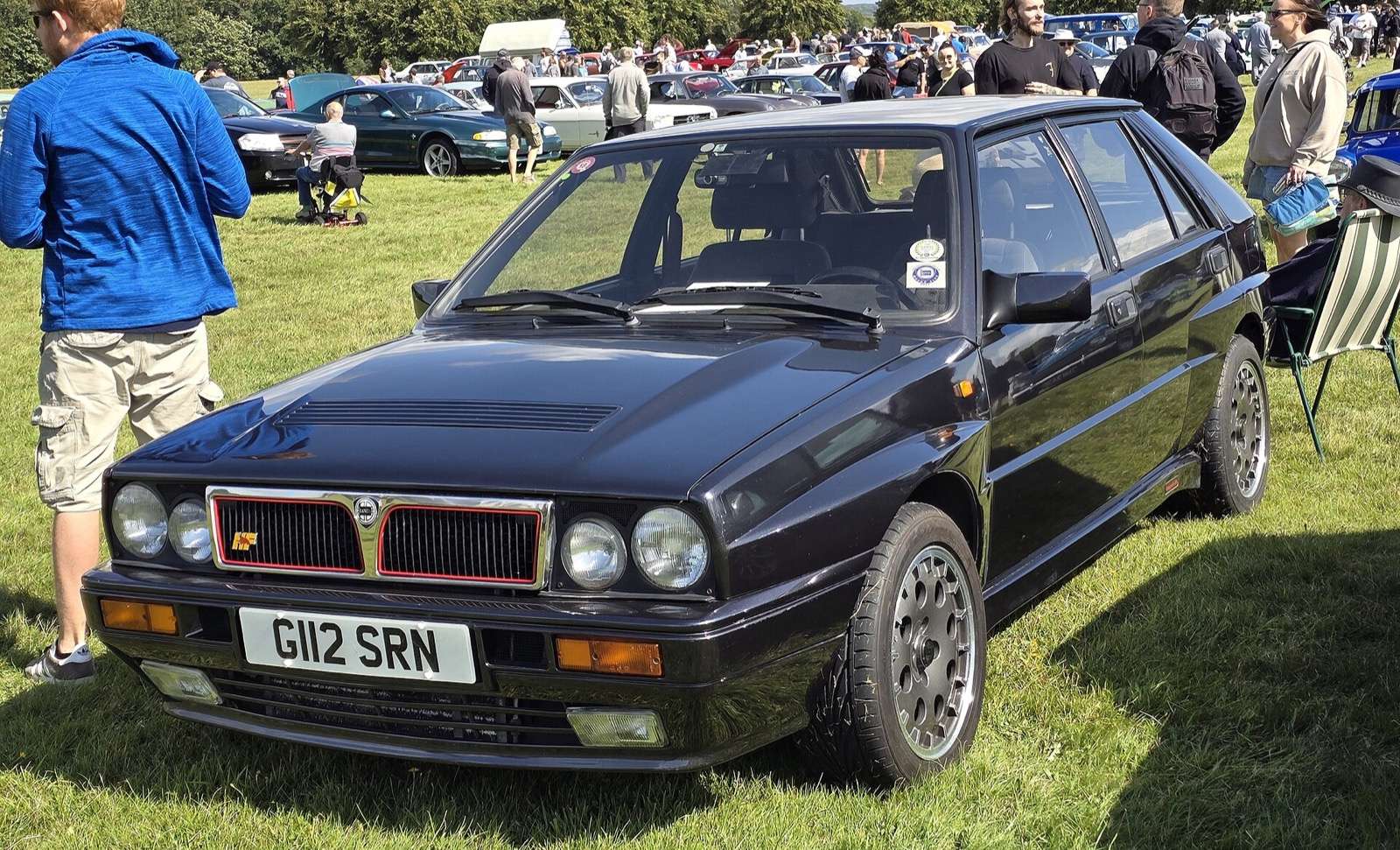
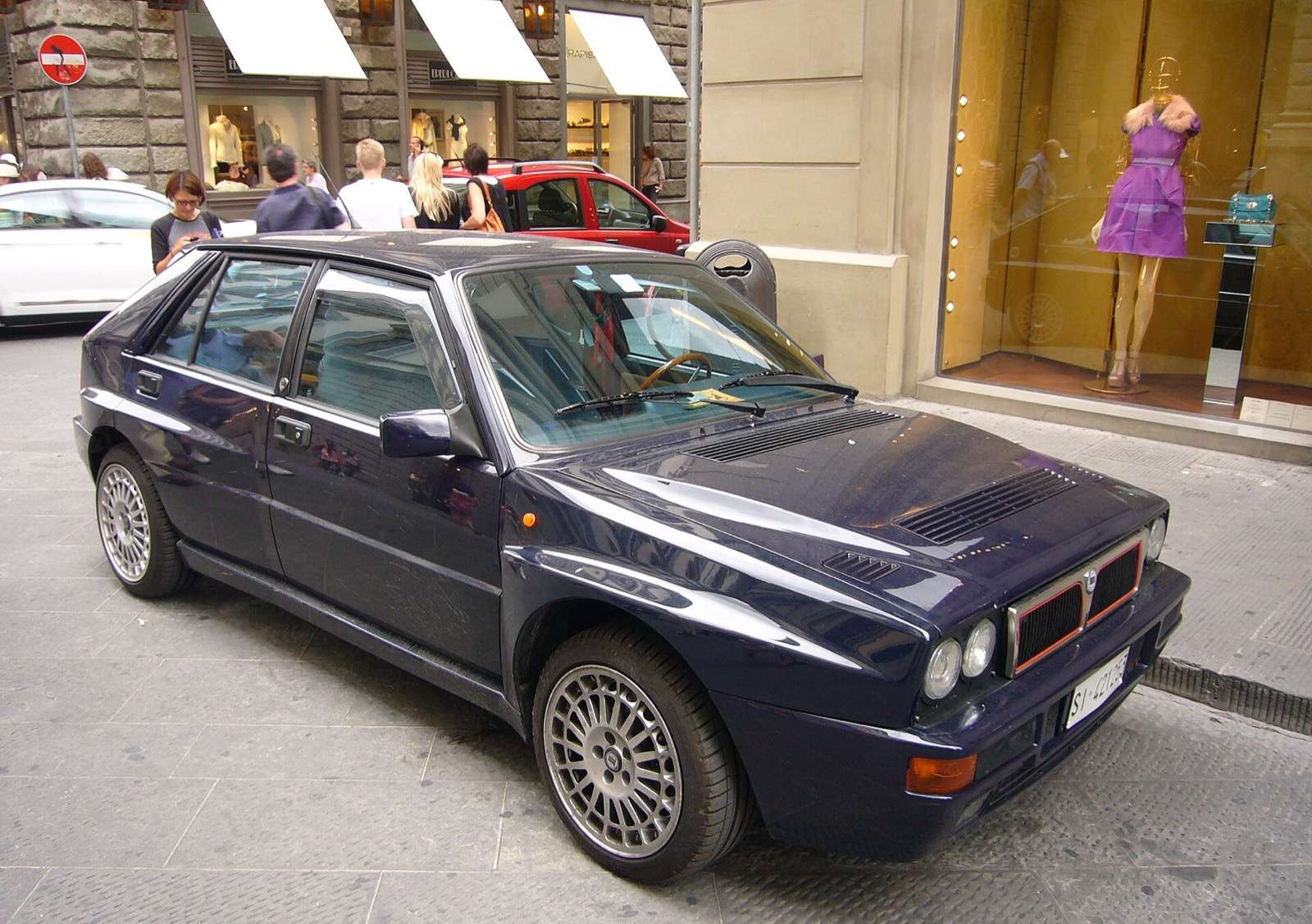
The Lancia Delta HF Integrale is the road-going, turbocharged four-wheel-drive hatchback developed from Lancia’s Group A rally programme. The family progressed from the discreet 165 PS Delta HF 4WD to the 185 PS eight-valve Integrale, 200 PS 16V, 210 PS Evoluzione I and 215 PS Evo II. Its importance comes from the way Lancia repeatedly transferred competition-led changes—wider tracks, cooling, brakes, suspension geometry and engine management—into a practical five-door road car.
Delta HF 4WD and Integrale versions at a glance
| Version | Approx. production period | Road-car output | How to recognise it |
|---|---|---|---|
| Delta HF 4WD | 1986–1987 | 165 PS | The visually discreet precursor; narrow body, eight-valve 1,995 cc turbo engine and permanent four-wheel drive. |
| Delta HF Integrale 8V | Late 1987/1988–1989 | 185 PS | Wider wheelarches, larger front intakes and bonnet vents over the developed eight-valve engine. |
| Delta HF Integrale 16V | 1989–1991 | 200 PS | Distinctive bonnet bulge for the taller 16-valve cylinder head, five-stud wheels and a more rear-biased driveline calibration. |
| Delta HF Integrale Evoluzione I | 1991–1992 | 210 PS | Much wider, rounder arches, revised suspension pick-up points, stronger brakes, extra cooling and an adjustable roof spoiler. |
| Delta HF Integrale Evoluzione II | 1993–1994 | 215 PS | Catalyst, Marelli management, 16-inch wheels, red cam cover and detail trim changes; developed primarily as a road car. |
The dates above describe the principal European sequence. Registration year is not a reliable identity check on its own: market specification, late registration and later cosmetic conversions can blur the boundaries.
How the Integrale story began
Giorgetto Giugiaro’s original Delta arrived in 1979 as a crisp, practical front-wheel-drive family hatchback. The performance line developed through the HF Turbo, but the decisive change came in 1986. With Group B ending, Lancia needed a production-based Group A platform, so the Delta HF 4WD combined a 1,995 cc turbocharged twin-cam four-cylinder engine with permanent four-wheel drive.
The system used an epicyclic centre differential with a Ferguson viscous coupling, a Torsen-type rear differential and a limited-slip front differential. That sophisticated layout made the Delta effective on mixed surfaces without turning it into a single-purpose competition car. Lancia won the 1987 World Rally Championship for Manufacturers with the HF 4WD, then kept evolving the package.

HF Integrale 8V: the first wide-arched road car
The car generally called the Integrale 8V arrived for the 1988 rally season after a late-1987 introduction. Wider arches made room for broader tyres; larger front openings and bonnet vents improved cooling; a larger Garrett turbocharger and intercooler helped lift the road engine from 165 to 185 PS. The visual change was dramatic enough to create the shape most people now associate with an Integrale.
For road use, the 8V has a particular appeal. Its delivery is strong without the later cars’ sharper edge, and period road tests and specialist guides often describe it as the most fluid and forgiving member of the family. It remains a serious, complex performance car, but not simply an inferior early step.
Integrale 16V: more power and a different balance
At the 1989 Geneva motor show, Lancia introduced the 16V. A four-valve-per-cylinder head raised road output to 200 PS, while the bonnet gained a central bulge to clear the taller engine. The driveline’s nominal torque split moved to 47 per cent front and 53 per cent rear, giving the car a more rear-led character. Five-stud wheels, larger tyres and detail chassis changes further separate a genuine 16V from the 8V.
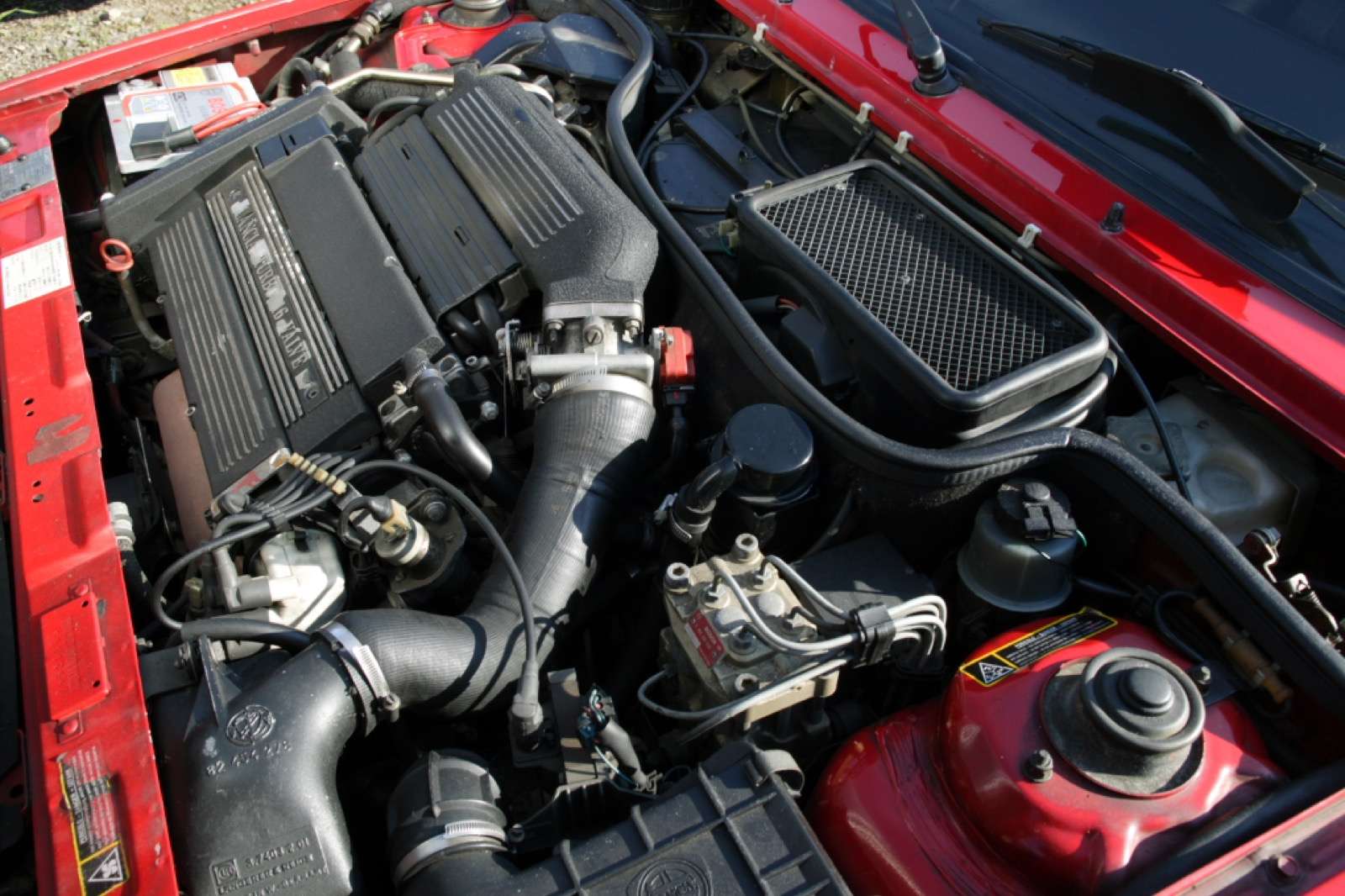
The 16V engine still belongs to the familiar Fiat/Lancia twin-cam family and retains twin balance shafts, turbocharging and intercooling. Its significance is not just the 15 PS increase: the broader development package made the road car feel closer to the continuously evolving Group A machine.
Evoluzione I: the homologation body reaches its peak
Introduced in 1991, Evoluzione I—often shortened to Evo I—was a substantial rework. Lancia widened the front and rear tracks, reshaped the arches in single-piece pressings, raised the front strut mounting points, added a strut brace, improved the brakes and steering, and revised cooling. The adjustable roof spoiler and extra vents are obvious, but the geometry beneath the skin is why the Evo is more than a body kit.
The uncatalysed European road engine produced 210 PS. Special editions such as Martini 5 and Martini 6 added collectability, but paint and decals are not proof of identity: limited-edition details should be checked against chassis documentation, build specification and marque expertise.
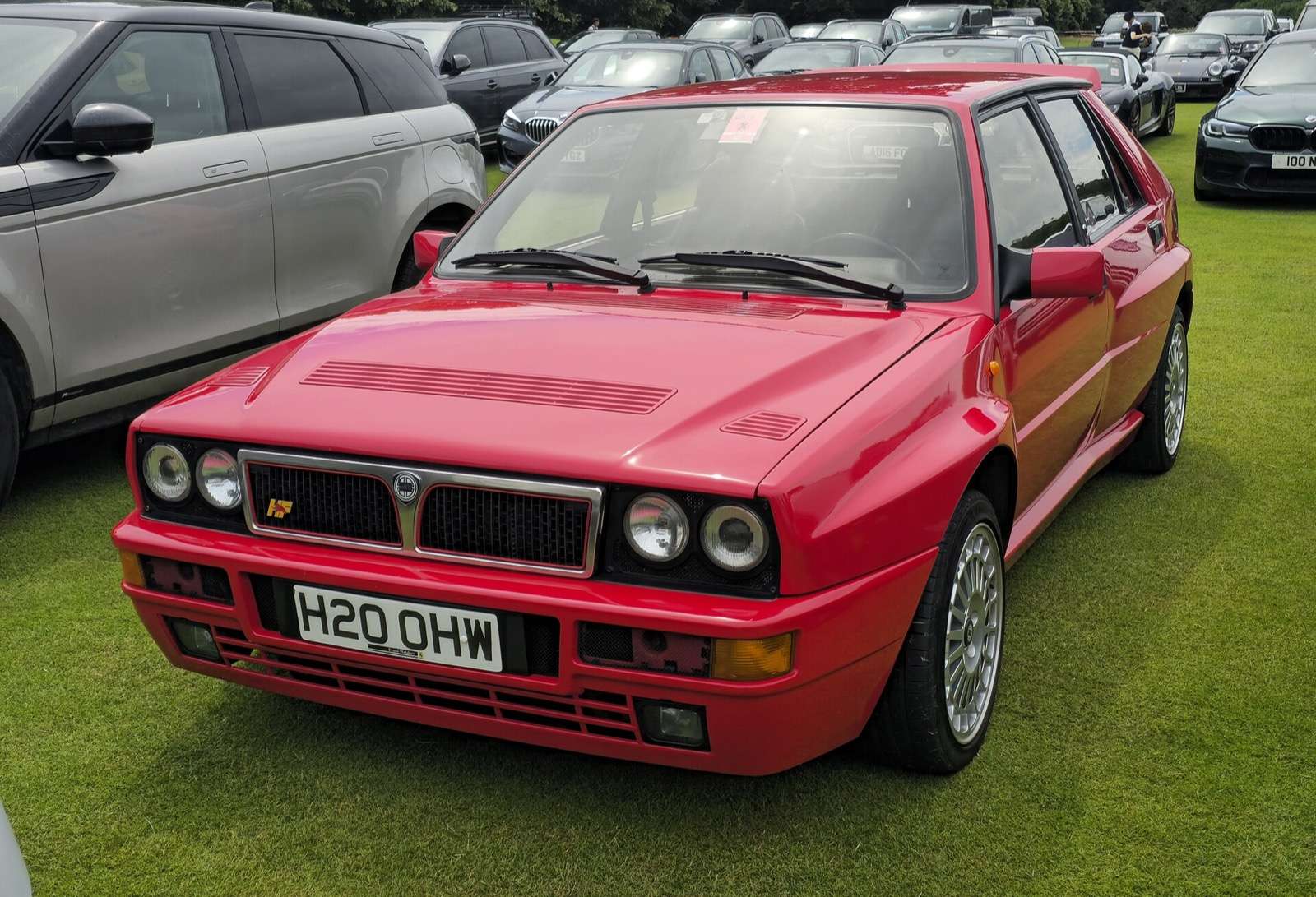

Evo II: the final 215 PS road development
The Evo II arrived in 1993 after Lancia’s factory World Rally Championship programme had ended. A three-way catalyst, lambda sensing and more sophisticated Marelli engine management accompanied a small increase to 215 PS. A revised water-cooled turbocharger, knock control, 16-inch wheels and trim changes—including the familiar red cam cover—help identify the final regular development.
Official Stellantis Heritage material describes the Evo II as the fifth and last series of the Integrale and quotes 215 hp with a 220 km/h top speed. Its road focus and special editions make it highly sought after, but rarity can also encourage replicas, rebodies and creative histories.

Why the rally record matters
Lancia’s four-wheel-drive Delta family won six consecutive World Rally Championship Manufacturers’ titles from 1987 through 1992. Stellantis Heritage also records four Drivers’ titles and 46 world-championship rally victories for the sequence. Those achievements belong to a chain of Group A competition cars—HF 4WD, Integrale, Integrale 16V and Evoluzione—not to an unmodified showroom hatchback.
That distinction makes the road car more interesting, not less. Group A demanded a much closer relationship with production machinery than Group B, so repeated homologation and development pressures are visible in genuine showroom versions.

What is a Delta Integrale like to drive?
An Integrale combines turbocharged mid-range torque, compact dimensions, good visibility and a supple chassis with unusually fast, talkative steering. It is not a modern car in disguise: the driving position, switchgear, brakes and refinement reflect a late-1970s base architecture developed through the 1980s and early 1990s. That contrast is central to the experience.
Later does not automatically mean better. The 16V and Evo cars feel sharper and more aggressive; the 8V’s compliance and progressive responses can be more enjoyable on an unfamiliar road. Drive the version you intend to buy, and be wary of lowered or heavily stiffened cars whose modifications can spoil both ride and shell durability.
Lancia Delta Integrale buying checks
Structure and corrosion
Inspect inner and outer wheelarches, wings, sills, floors, door bottoms, suspension mountings, screen surrounds, front and rear valances and the steel behind them. Integrale-specific warnings include bubbling at the rear roof edge around the tailgate hinges, corrosion around the radiator support, and cracking near the windscreen-to-scuttle corners, pillars, door apertures or front chassis legs. A ramp inspection by a marque specialist is worth far more than a glossy paint finish.
Engine and turbocharger
Ask for invoices, not assurances. Check cold start, hot oil pressure, smoke, leaks, cooling behaviour and evidence of correct cambelt servicing. A modified boost system can hide hard use. Hagerty’s specialist guide quotes cambelt intervals of 36,000 miles for the 8V and 24,000 miles for the 16V; age and specialist advice matter as much as mileage on a lightly used classic.
Transmission, suspension and brakes
Listen for gearbox synchromesh wear, differential or bearing whine, driveline clonks and vibration. Check for matched tyres, even wear and correct four-wheel alignment. Bushes, ball joints and anti-roll-bar links work hard, while lowered suspension can increase stress in a shell that was never exceptionally rigid.
Identity and originality
Early cars can be made to resemble later, more valuable Evos. Confirm the chassis identity, market specification, engine type, wheel fixings, body pressings, suspension details, trim and limited-edition features. Most cars are left-hand drive; right-hand-drive conversions exist and can use a slower steering rack. Treat conversion quality and provenance as inspection items, not assumptions.
Love cars you don’t see every day?
Get forgotten cars, surprising motoring stories and the most interesting finds from Unusual Cars by email.
Free to join. No spam. Unsubscribe whenever you like. See our privacy policy.
Frequently asked questions
Is the Delta HF 4WD the same as the Integrale?
No. The 165 PS Delta HF 4WD is the 1986 production-based precursor. The first wide-arched HF Integrale followed with 185 PS, larger cooling openings, broader wheels and further mechanical development.
What is the difference between an Integrale 8V and 16V?
The 8V uses a 185 PS eight-valve version of the 1,995 cc turbo engine. The 16V produces 200 PS, has a taller four-valve cylinder head under a bulged bonnet, five-stud wheels and a more rear-biased nominal torque split.
What changed from Evo I to Evo II?
Evo I is the 210 PS homologation-focused wide-body development introduced in 1991. Evo II arrived in 1993 with a catalyst, revised Marelli management, a water-cooled turbocharger, 16-inch wheels and 215 PS; it was primarily a final road-car evolution.
Are most Lancia Delta Integrales left-hand drive?
Yes. The main production run was left-hand drive, although conversions and a small number of unusual-market cars exist. Any right-hand-drive car should be checked carefully for provenance, steering specification and conversion quality.
What should I check before buying a Delta Integrale?
Prioritise shell corrosion and cracking, verified chassis identity, cambelt and cooling-system history, turbo and oil-pressure health, gearbox and differential noise, suspension condition, matched tyres and evidence of sympathetic specialist maintenance.
Research sources
- Lancia/Stellantis Media: Lancia synonymous with rally in the world
- Lancia/Stellantis Media: the design of Stratos, 037 and Delta
- Stellantis Heritage: Delta HF Integrale Evo II specification
- FIA Historic Database: Lancia Delta homologation records
- Automobile Club d’Italia: Lancia Delta history
- Hagerty UK: Lancia Delta Integrale buying guide
- Classic & Sports Car: Lancia Delta Integrale buyer’s guide