UNUSUAL CARS MODEL GUIDE
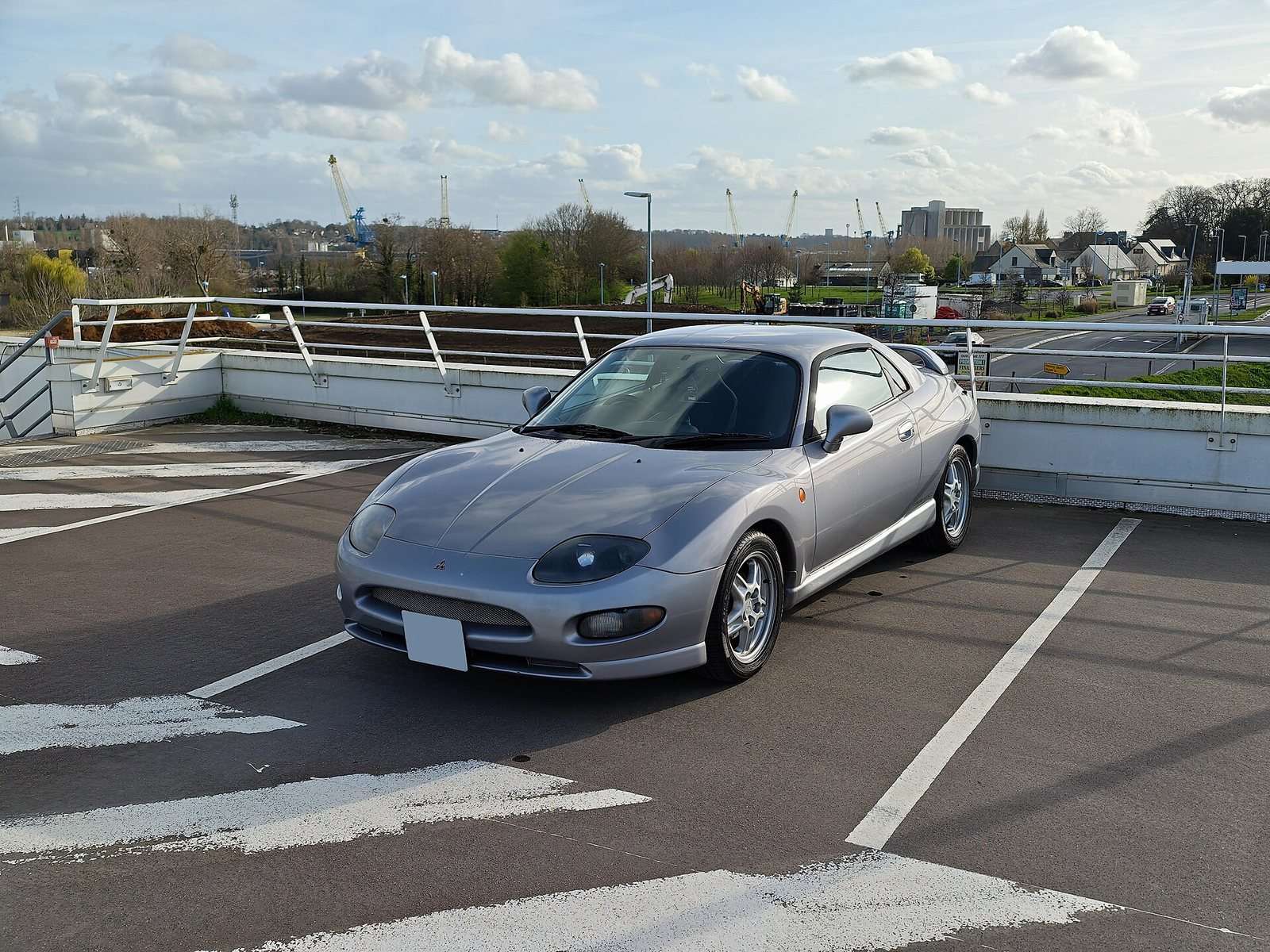
The Mitsubishi FTO is a compact front-wheel-drive Japanese coupé built from 1994 to 2000. It ranges from the economical 1.8-litre GS to the 2.0-litre V6 GR and the high-revving MIVEC V6 GPX and GP Version R. Its combination of curving styling, accessible performance and grey-import popularity made it one of Britain’s defining 1990s Japanese coupés.
Quick answer: enthusiasts usually seek a genuine MIVEC-equipped GPX or GP Version R, but a sound GR can be an appealing road car. Confirm the DE2A or DE3A identity, engine and transmission before buying, then prioritise structural condition, timing-belt history, cooling and gearbox behaviour.
Origins and design
Mitsubishi launched the FTO in October 1994 as the smaller and more approachable sibling to the GTO. It revived a badge previously used on the Galant FTO of the early 1970s, but the new car was a transverse-engined, front-wheel-drive coupé with its own rounded design character.
Short overhangs, a wide track and a low roof gave the FTO compact proportions. It won the 1994–95 Japan Car of the Year award and became known outside Japan largely through private imports.

GS, GR, GX and GPX engines
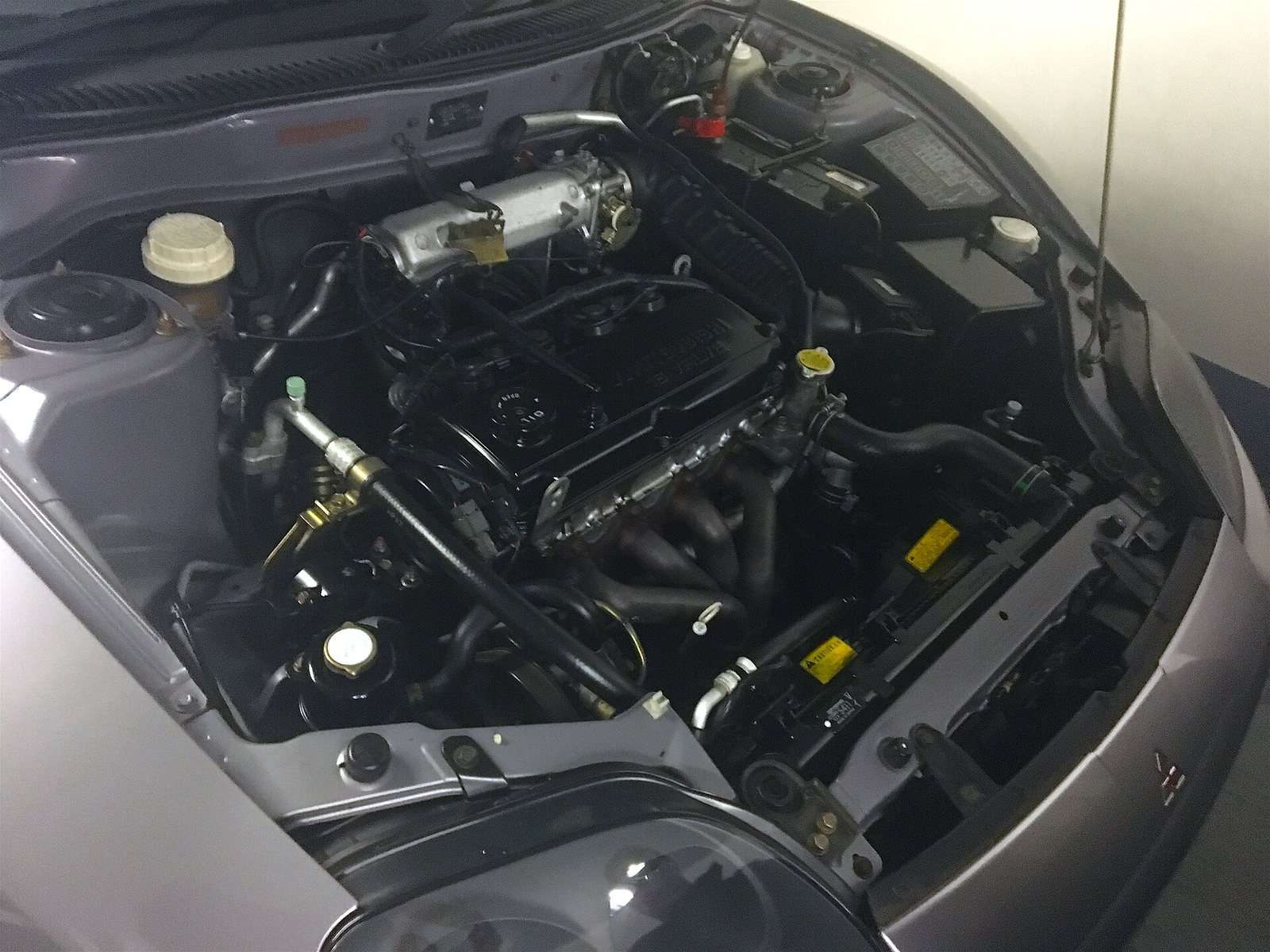
The entry-level GS used the 1.8-litre 4G93 four-cylinder engine. The GR and later GX used a non-MIVEC 2.0-litre 6A12 V6, while the GPX placed a MIVEC variable-valve-timing version of that V6 at the top of the regular range. Representative Japanese outputs were approximately 125PS, 170PS and 200PS respectively.
MIVEC changes the engine’s cam profiles at higher speed, giving the GPX a distinctly more urgent upper-rev character. It is not merely an ECU badge: the engine specification must match the model identity.
| Version | Engine | Representative output | Character |
|---|---|---|---|
| GS | 1.8-litre 4G93 four-cylinder | About 125PS | Lightest and simplest |
| GR | 2.0-litre 6A12 V6 | About 170PS | Smooth non-MIVEC V6 |
| GX | 2.0-litre 6A12 V6 | About 170PS | Later non-MIVEC grade |
| GPX | 2.0-litre 6A12 MIVEC V6 | About 200PS | High-revving flagship |
| GP Version R | 2.0-litre 6A12 MIVEC V6 | About 200PS | Lighter sporting derivative |

Manual and INVECS-II transmissions
Five-speed manual cars are prized, but many FTOs use Mitsubishi’s INVECS-II automatic. The system learned aspects of the driver’s behaviour and its Sport Mode allowed sequential manual selection. It was notable technology in 1994 and suits the car when maintained properly.
Early automatics used four forward ratios, with a five-speed version appearing later. Fluid condition and change quality matter; hesitation, flaring or harsh shifts should not be dismissed as normal ageing.

Facelift and GP Version R
The 1997 facelift brought a more assertive front bumper, revised lighting and detailed trim changes. The GP Version R sharpened the sporting end of the range with reduced equipment, firmer chassis tuning and distinctive trim, although exact equipment varied with options and production date.
Limited editions and owner modifications are common. Badges, spoilers and coloured seats are supporting evidence, not a substitute for a correct chassis plate and factory specification.

Four-cylinder FTOs
The 1.8-litre GS is often ignored because it lacks the V6 soundtrack and MIVEC headline. It nevertheless demonstrates the breadth of the original range and can be cheaper to maintain. Buyers should still establish whether an apparent GS has been modified or engine-swapped.
Love cars you don’t see every day?
Get forgotten cars, surprising motoring stories and the most interesting finds from Unusual Cars by email.
Free to join. No spam. Unsubscribe whenever you like. See our privacy policy.
Mitsubishi FTO buying guide
Body and structure
Corrosion is the decisive risk. Inspect both chassis rails, sills, rear arches, floors, front suspension turrets and the area around the engine-bay relay box. Fresh underseal should prompt closer investigation rather than reassurance.
Engine and cooling
Obtain proof of timing-belt, tensioner and water-pump work, particularly on the V6. Start from cold and check for smoke, overheating, coolant loss, tapping noises and evidence of neglected oil changes. Confirm that a claimed MIVEC engine changes character cleanly at higher revs.
Manual and automatic gearboxes
A manual should select cleanly without bearing noise or clutch slip. Test an automatic from cold and hot, including every ratio and Sport Mode. Dark fluid, delayed engagement or flaring changes justify specialist assessment.
Suspension, brakes and steering
Listen for worn bushes and joints, inspect wishbones carefully and feel for brake vibration. Modified ride height and unusual wheel offsets can create rubbing, poor geometry and accelerated tyre wear.
Import identity and trim
Check Japanese import documentation, chassis code and grade. Model-specific lamps, bumpers, interior panels and seats are increasingly difficult to replace, so completeness adds real value.
Frequently asked questions
Is the Mitsubishi FTO rear-wheel drive?
No. Every production FTO of this generation uses a front-mounted engine and front-wheel drive.
Which Mitsubishi FTO has MIVEC?
The best-known MIVEC models are the GPX and GP Version R, using the 2.0-litre 6A12 MIVEC V6. A badge alone does not confirm the engine.
Is an automatic FTO worth considering?
Yes, if its INVECS-II transmission changes cleanly and has evidence of correct fluid servicing. Manuals remain more sought after.
What is the difference between GR and GPX?
Both use a 2.0-litre V6, but the GPX has the higher-output MIVEC version. The GR uses the non-MIVEC 6A12.
What is the biggest FTO buying risk?
Structural corrosion can make an otherwise attractive car uneconomic. Timing-belt neglect and automatic-transmission faults are the other major concerns.
Research sources
- Mitsubishi Motors FTO heritage history
- Mitsubishi Motors MIVEC and INVECS-II history
- Autocar Mitsubishi FTO buying guide
- Mitsubishi Motors Facts and Figures 2000
Continue the Mitsubishi story
Explore the Rare & Performance Mitsubishis hub, compare the technology-led Mitsubishi GTO and 3000GT, or discover the twin-turbo Galant and Legnum VR-4.