UNUSUAL CARS MODEL GUIDE
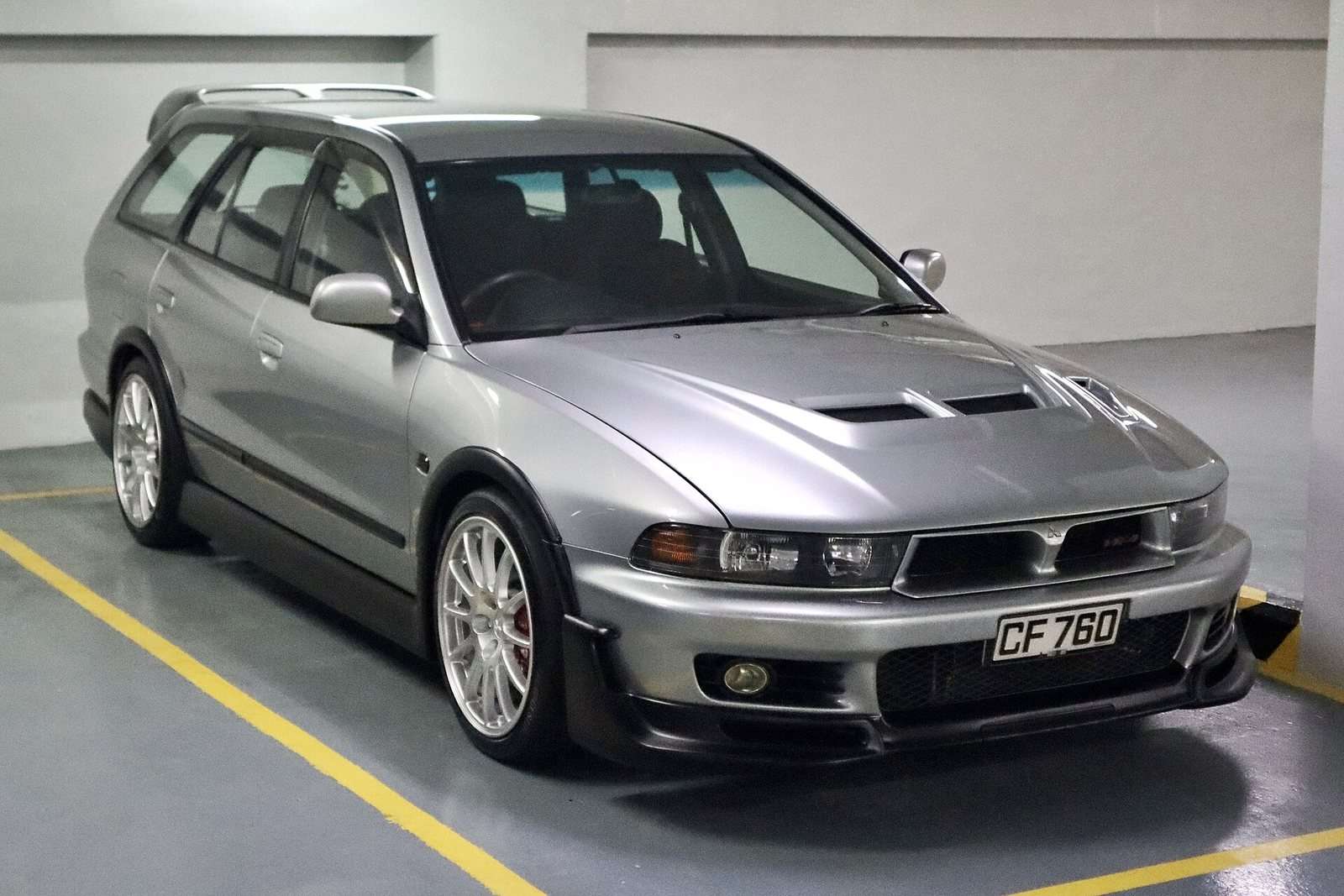
The eighth-generation Mitsubishi Galant VR-4 and its Legnum VR-4 estate sibling are discreet Japanese performance cars built around a 2.5-litre twin-turbo V6, full-time four-wheel drive and, on relevant versions, Active Yaw Control. Launched in 1996, they translated Mitsubishi’s rally-era drivetrain thinking into a fast saloon and practical estate.
Quick answer: Galant and Legnum VR-4s use the 6A13TT twin-turbo V6 and four-wheel drive, but transmission, AYC and trim specifications vary. Many surviving cars are Japanese imports with modifications, so buyers should verify the EC5A saloon or EC5W estate identity and prioritise servicing, cooling, transmission condition and suspension integrity.
From rally Galant to twin-turbo road car
The first Galant VR-4 was a Group A homologation model powered by the four-cylinder 4G63 and became the direct technical ancestor of the Lancer Evolution. The badge returned for the eighth-generation Galant in a different form: larger, more refined and powered by a V6.
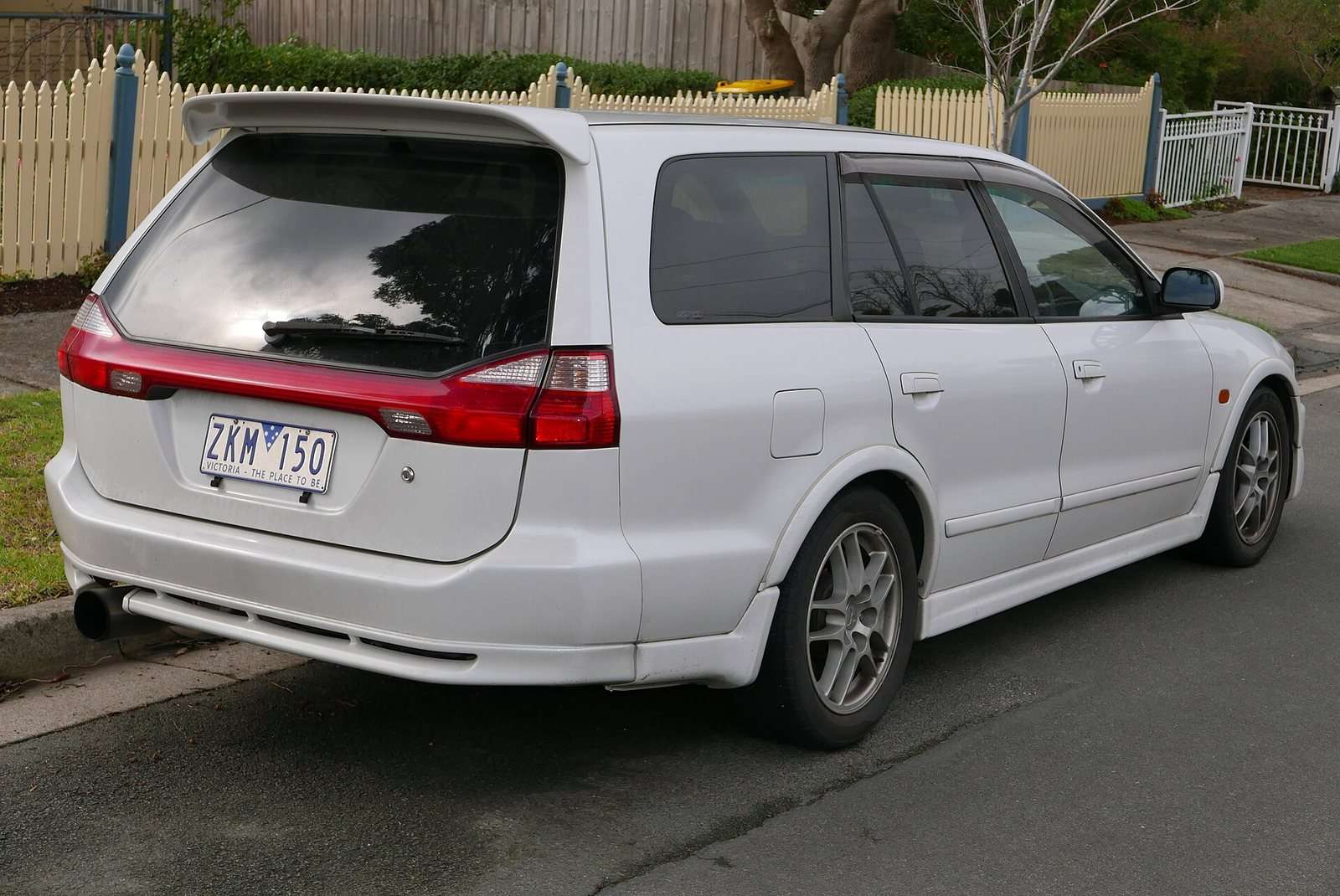
Mitsubishi launched the Galant and Legnum in August 1996. The Legnum was the estate-bodied member of the family, combining the new Galant platform with a long roof and substantial luggage space.

The 6A13TT twin-turbo V6
The VR-4’s defining engine is the 2,498cc 6A13TT: a transverse, intercooled, twin-turbocharged DOHC V6. Mitsubishi quoted 280PS and 37.0kg-m of torque for the Japanese model, equivalent to approximately 363Nm.
Its two small turbochargers were intended to give strong response rather than a dramatic single-turbo surge. The packaging is dense, making access and heat management important considerations for long-term ownership.
| Item | Galant and Legnum VR-4 |
|---|---|
| Launch | August 1996 |
| Body codes | EC5A Galant saloon; EC5W Legnum estate |
| Engine | 2,498cc 6A13TT DOHC twin-turbo V6 |
| Official Japanese output | 280PS and 37.0kg-m |
| Drive | Full-time four-wheel drive |
| Transmissions | Five-speed manual or INVECS-II automatic, depending on version |

Manual, automatic and Active Yaw Control
The five-speed manual is the enthusiast favourite and comparatively scarce. Many cars use Mitsubishi’s INVECS-II automatic with a manual-selection mode. Either transmission can work well when serviced correctly, but the automatic needs clean fluid, prompt engagement and consistent shifts under load.
Relevant versions use Active Yaw Control at the rear axle to alter torque distribution between the rear wheels. As with the contemporary Lancer Evolution, correct fluid servicing matters. Groaning, warning lights or an inactive display require diagnosis rather than assumption.

Type V, Type S and Super VR-4
Japanese catalogues divided the range into specifications including Type V and Type S. Type S cars carried the fuller performance chassis specification, while Type V versions provided a simpler route into the twin-turbo drivetrain. Exact equipment changed with the 1998 facelift and should be checked against the chassis record.
The visually distinctive Super VR-4 is a limited special version with prominent body styling and model-specific trim. Production totals are repeated inconsistently, so originality and documentary proof are safer than relying on an unsupported number.

Why the Legnum matters
The Legnum VR-4 occupies an unusual space between rally-derived performance saloons and large Japanese estates. It offers Evo-era drivetrain technology with six-cylinder refinement and genuine carrying capacity, while its understated form keeps it less obvious than an equivalent coupé.
Love cars you don’t see every day?
Get forgotten cars, surprising motoring stories and the most interesting finds from Unusual Cars by email.
Free to join. No spam. Unsubscribe whenever you like. See our privacy policy.
Galant and Legnum VR-4 buying guide
Identity and import history
Confirm the EC5A or EC5W chassis identity, grade, transmission and original equipment. Study Japanese auction sheets, export records and UK registration documents. Cosmetic conversions do not prove that a car is a Super VR-4 or Type S.
Engine and cooling
Obtain evidence of timing-belt, tensioner and water-pump replacement. Inspect the radiator top tank, hoses, turbo pipework and plastic blow-off valve. Persistent tappet noise, smoke, coolant loss or unstable idle require investigation.
Automatic and manual transmissions
Automatics need regular fluid servicing and benefit from careful temperature control. Test every shift under light and heavy throttle. Manuals should select cleanly without clutch slip, bearing noise or driveline vibration.
AYC, suspension and steering
Check AYC operation and maintenance records where fitted. Front lower control-arm ball joints, wheel bearings, CV boots, bushes and engine mounts are recognised age-related concerns. Knocks or uneven tyre wear justify a complete geometry inspection.
Body and completeness
Inspect sills, floors, arches, suspension mounting points, tailgate and roof seams. Model-specific bumpers, spoilers, lights, interior trim and the front tow-hook cover can be difficult to replace.
Frequently asked questions
What engine is in the Mitsubishi Legnum VR-4?
It uses the 2.5-litre 6A13TT twin-turbocharged DOHC V6, officially rated at 280PS in Japan.
Is the Legnum VR-4 four-wheel drive?
Yes. The VR-4 uses full-time four-wheel drive, with Active Yaw Control fitted to relevant higher-specification versions.
What is the difference between Galant and Legnum VR-4?
The Galant is the saloon and the Legnum is the estate. They share the same core 6A13TT drivetrain family but use different body codes and model ranges.
Were manual Legnum VR-4s made?
Yes. Five-speed manual cars were produced, although the INVECS-II automatic is more commonly encountered among imports.
What is the biggest buying risk?
Deferred maintenance across the engine, automatic gearbox, AYC and suspension can make a cheap car expensive. A complete service history is more valuable than modification claims.
Research sources
- Mitsubishi Motors 6A13 engine history
- Mitsubishi Motors car-history archive
- Unique Cars Galant and Legnum VR-4 buying guide
- OzVR4 recurring ownership issues
Continue the Mitsubishi story
Explore the Rare & Performance Mitsubishis hub, follow the rally lineage through the Lancer Evolution VI, or discover the compact Colt Ralliart Version-R and CZT.