UNUSUAL CARS MODEL GUIDE
The Nissan Skyline GT-R R34 was the final Skyline to combine the GT-R badge with the RB26DETT straight-six. Launched in January 1999, it placed the R32 formula in a shorter, stiffer body and added a six-speed Getrag gearbox, revised ATTESA E-TS four-wheel drive and a multifunction dashboard display.
From R33 to R34 GT-R
The tenth-generation Skyline arrived in 1998 and the GT-R followed in 1999. Nissan shortened the wheelbase and overall length relative to the R33, increased body rigidity and retained the 2,568cc twin-turbo RB26DETT. Nissan’s Heritage Collection lists the 2000 V-Spec II at 280PS and 392Nm, reflecting the Japanese manufacturers’ period power agreement rather than the output of every modified example.
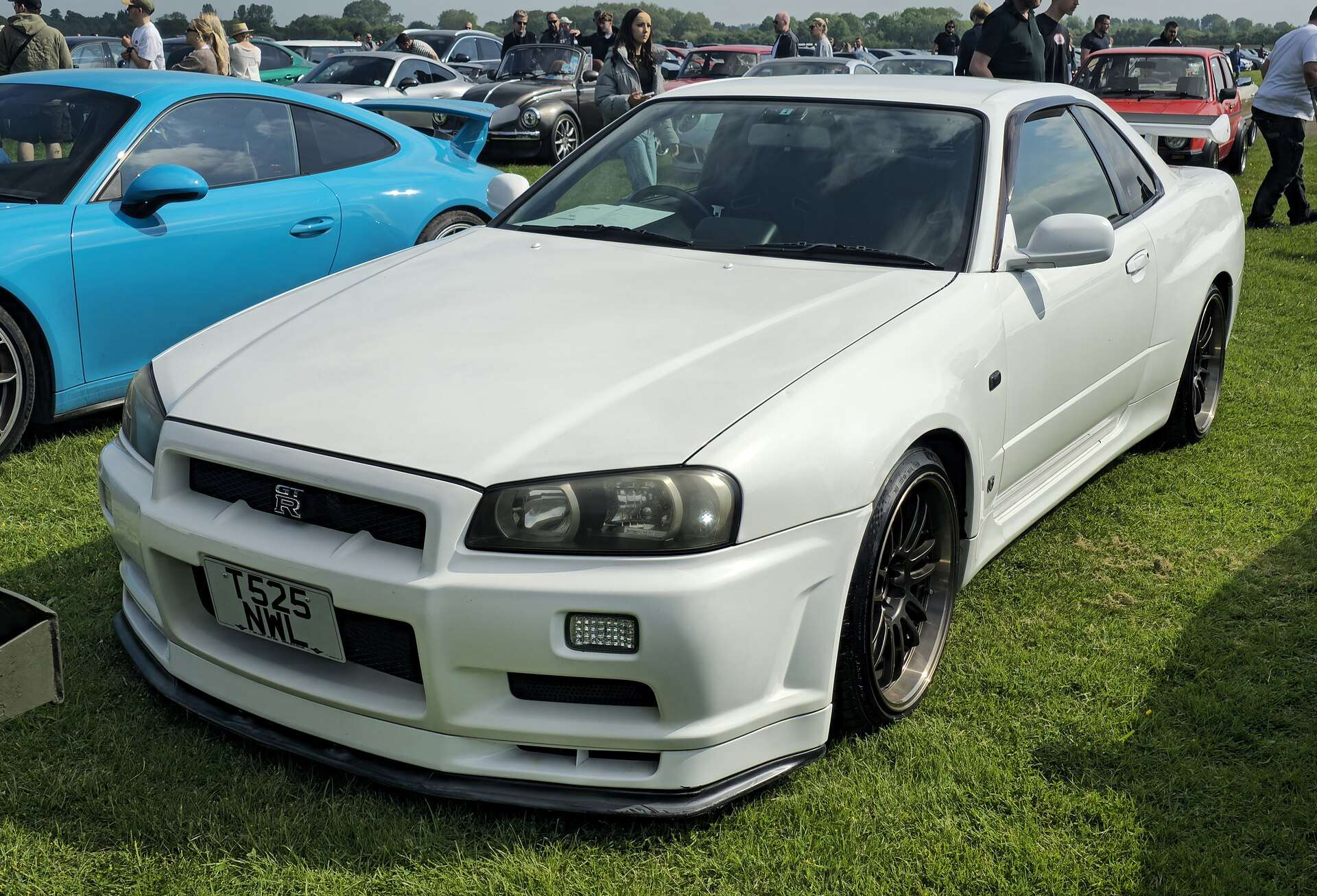
A six-speed Getrag manual replaced the R33’s five-speed gearbox. ATTESA E-TS Pro controlled torque distribution and, on V-Spec models, worked with an active rear limited-slip differential. Super HICAS rear steering remained part of the package. The dashboard’s centre display made boost, temperatures and other data visible in a way that reinforced the car’s technology-led identity.
R34 GT-R versions
| Version | Key distinction |
|---|---|
| GT-R | Core BNR34 with RB26DETT, six-speed manual and ATTESA E-TS. |
| V-Spec | More focused aero and chassis package with ATTESA E-TS Pro and active rear differential. |
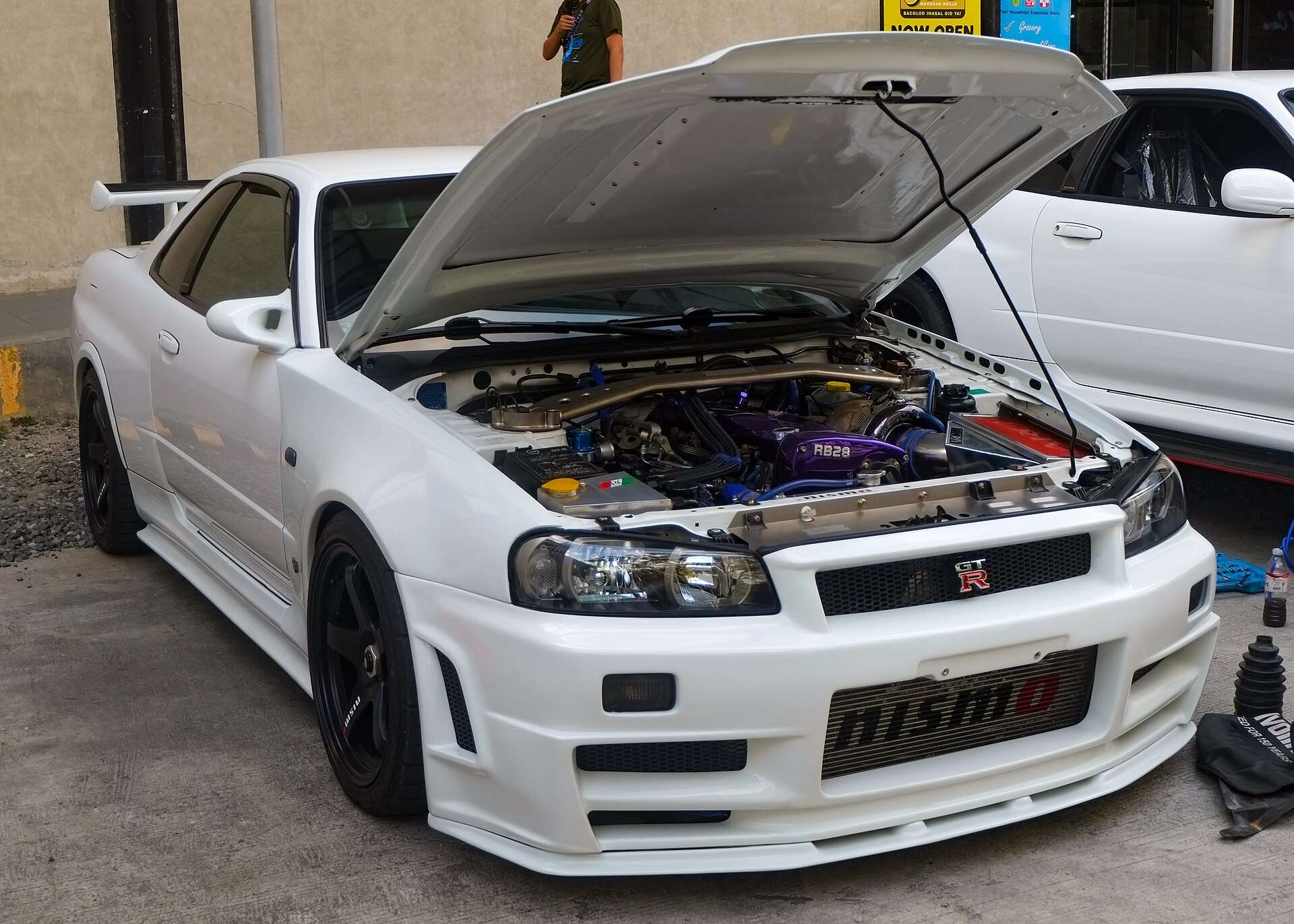
| V-Spec II | Introduced in 2000 with a carbon bonnet and NACA duct plus detail changes. |
| M-Spec | More road-oriented suspension and luxury trim while retaining GT-R hardware. |
| Nür editions | Late V-Spec II Nür and M-Spec Nür cars using the N1-based engine specification; authenticity is critical. |
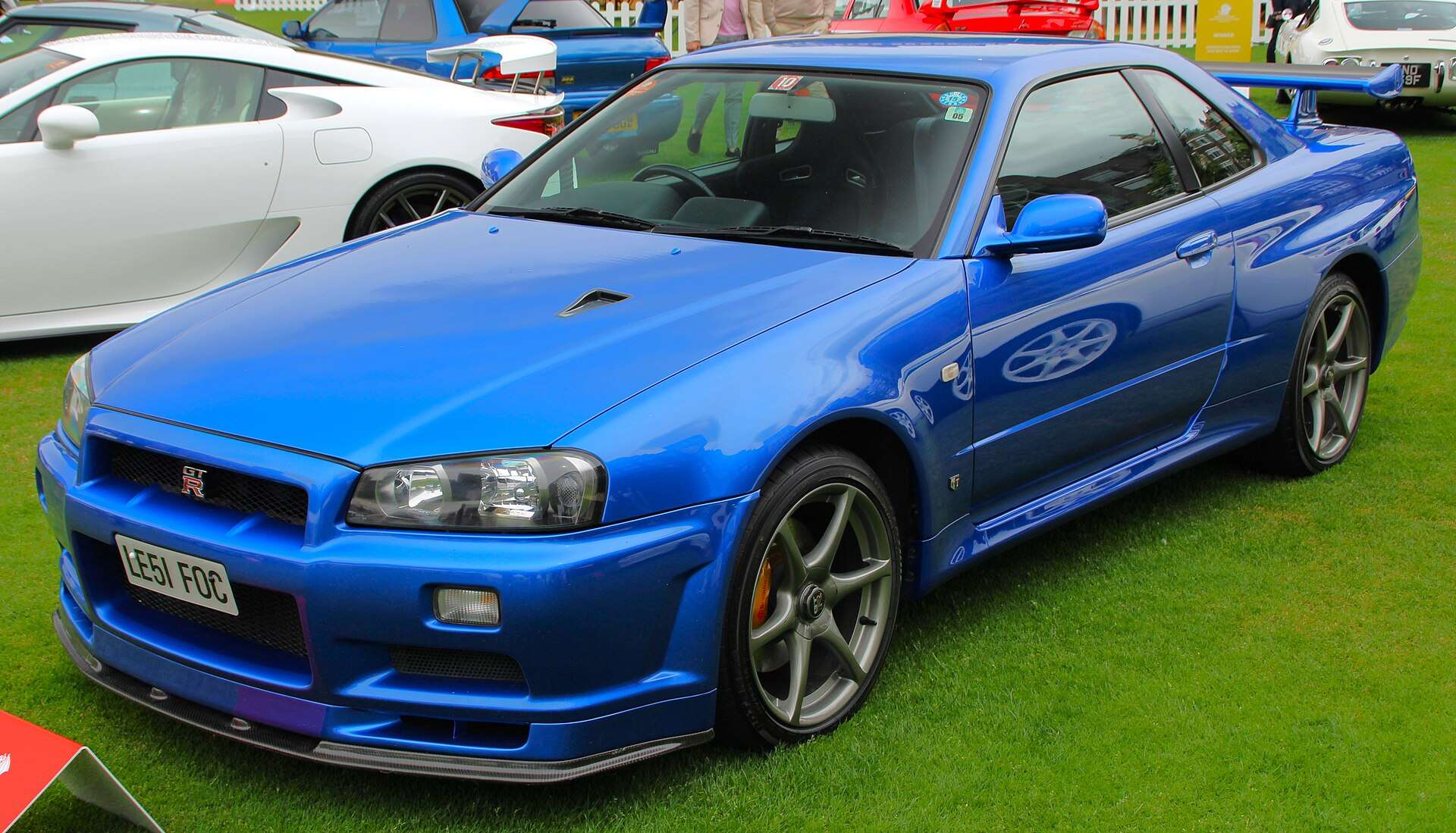
Limited editions command large premiums and are widely replicated. Check the model code, build plate, original colour, factory equipment and documentary trail. A genuine base GT-R is preferable to a car inaccurately presented as a Nür or V-Spec II.
Love cars you don’t see every day?
Get forgotten cars, surprising motoring stories and the most interesting finds from Unusual Cars by email.
Free to join. No spam. Unsubscribe whenever you like. See our privacy policy.
RB26DETT engine and modifications
The RB26DETT is exceptionally tuneable, but tuning history matters more than folklore. Insist on a cold start and check compression, oil pressure, smoke, coolant condition, crankcase breathing and evidence of timing-belt, tensioner and water-pump work. Original ceramic turbochargers are vulnerable when boost and exhaust temperature are pushed beyond their intended range.
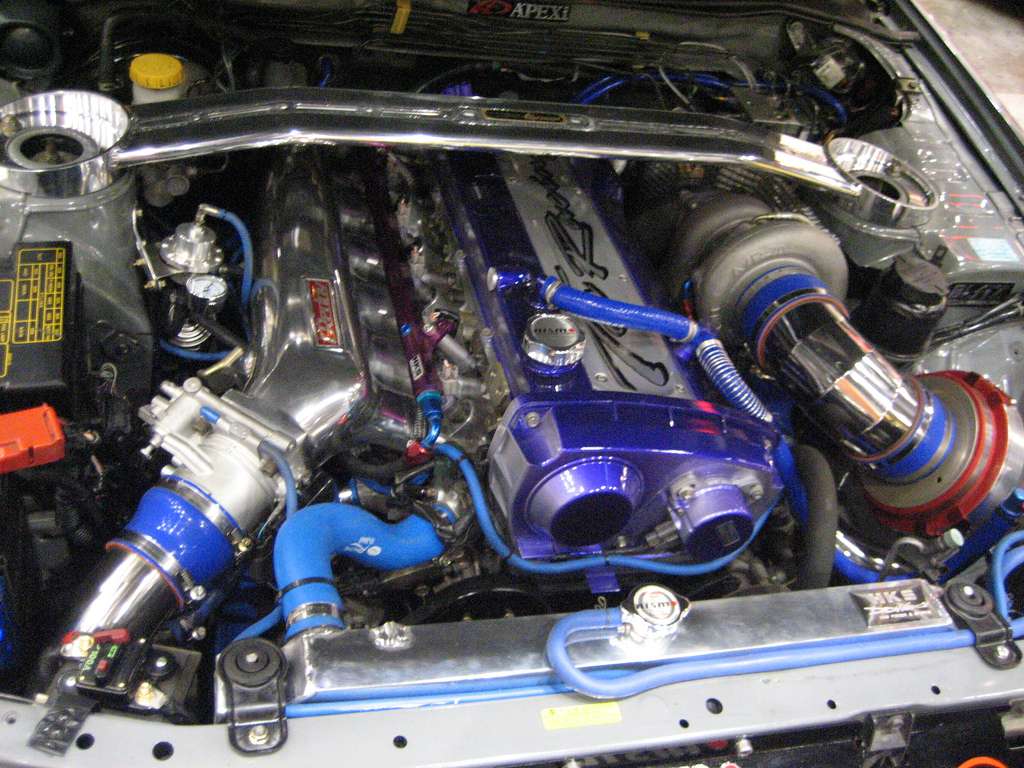
Fuel pumps, injectors, airflow meters, intercoolers, turbochargers and engine management are frequently changed. Require invoices and a calibration from a recognised specialist. A high headline output without fuel-pressure, boost-control and cooling evidence is a liability, not a benefit.
Transmission, ATTESA and chassis
The Getrag six-speed should engage every ratio cleanly when cold and hot. Listen for clutch, transfer-case and differential noise, and confirm that four-wheel-drive and HICAS warnings extinguish normally. Mismatched tyres can affect ATTESA operation. Check electronic diagnostics rather than accepting that a warning light is caused by an unimportant sensor.
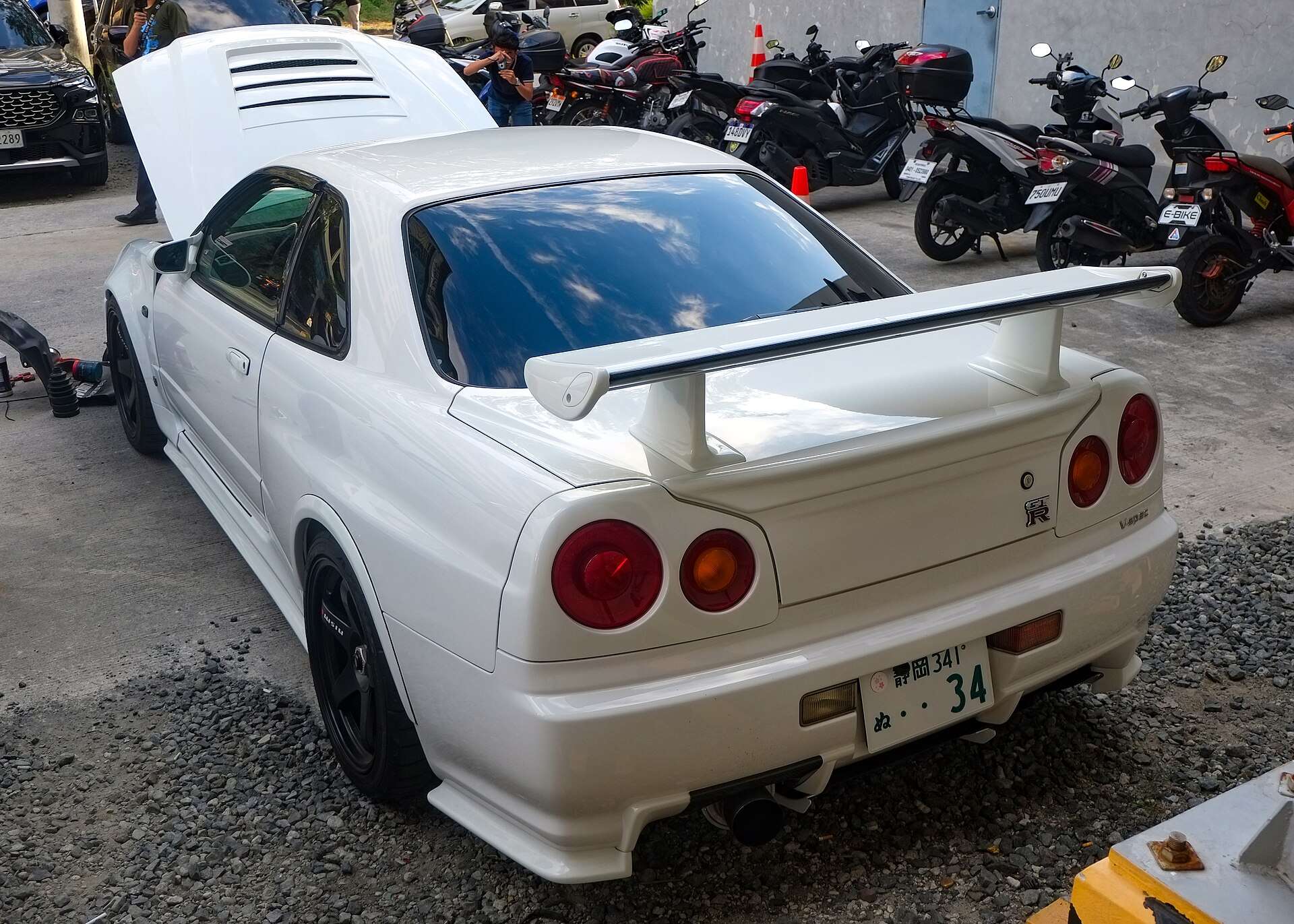
Inspect dampers, bushes, ball joints, wheel bearings, brakes and alignment hardware. Cars set up for drifting, drag racing or circuit use can still be worthwhile, but their shell, cooling, brakes and driveline must match that history.
Rust, accident damage and identity
Inspect sills, jacking points, floor seams, front chassis legs, strut towers, bulkhead, rear arches, boot floor and rear suspension mounts. Look behind trim for overspray, seam sealer changes and repaired creases. The value of the model has encouraged theft recovery, re-shelling and conversion work, so compare stamped identity, plates and import paperwork carefully.
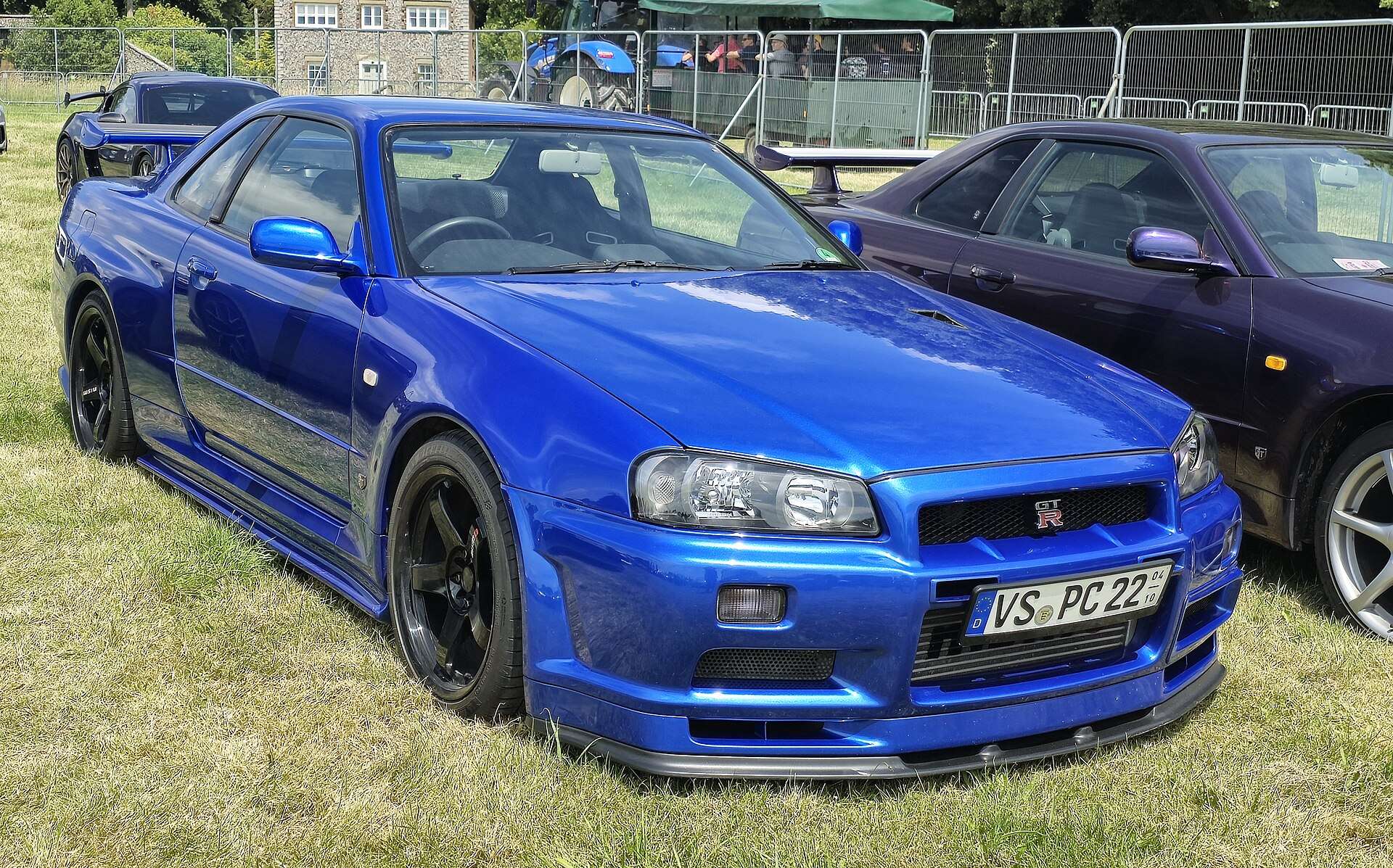
Check the Japanese export certificate, NOVA evidence, UK registration record, auction documentation and mileage history. Confirm whether the odometer remains in kilometres or has been converted. An independent marque specialist should examine the car before purchase.
Why the R34 remains important
The R34 became a cultural reference through games, films and tuning culture, but its engineering matters independently of that fame. It was the end point of the RB26-powered Skyline GT-R line and the last GT-R before Nissan separated the badge from the Skyline for the R35.
Sources and further reading
- Nissan Heritage Collection: Skyline GT-R V-Spec II
- Nissan Heritage Collection: Skyline family
- Nissan Global: GT-R history
Continue the Nissan story
The R34 completed the RB26 Skyline GT-R era that the R32 revived in 1989. Explore the complete Nissan hub and read the R32 GT-R guide.
Frequently asked questions
What engine is in the R34 GT-R?
The R34 GT-R uses the 2,568cc twin-turbo RB26DETT inline-six with a six-speed manual gearbox.
Is every R34 Skyline a GT-R?
No. The R34 range included rear-wheel-drive non-GT-R models. A genuine GT-R carries the BNR34 identity and its specific four-wheel-drive hardware.
What is the difference between V-Spec and V-Spec II?
V-Spec II arrived in 2000 and added a carbon bonnet with NACA duct plus detail revisions to the focused V-Spec package.
Where does an R34 GT-R rust?
Inspect sills, jacking points, floor seams, chassis legs, strut towers, rear arches, boot floor and rear suspension mounting areas.
What should be checked on a modified R34?
Require named components, specialist invoices, safe engine management, compression and oil-pressure evidence, and proof that cooling, fuel and driveline systems suit the claimed output.