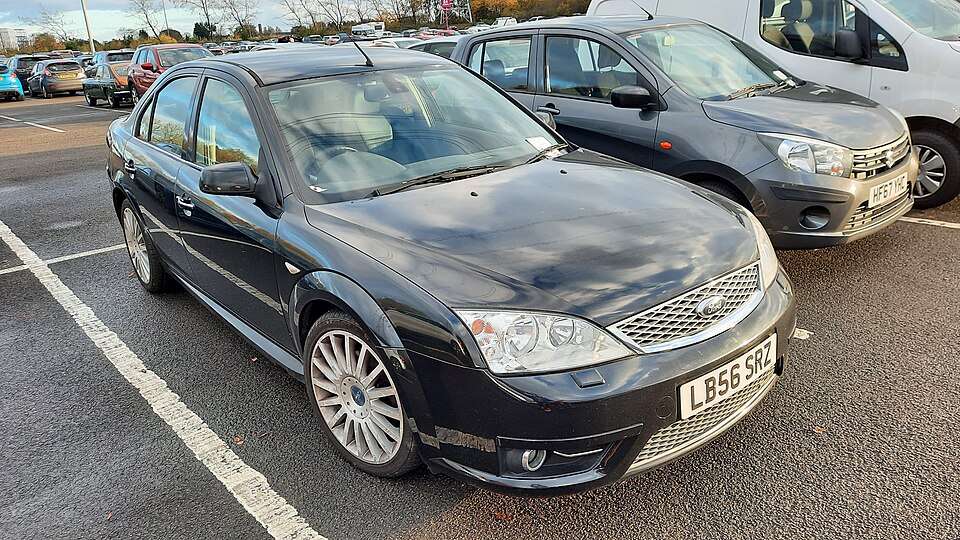
The Ford Mondeo ST220 combines a naturally aspirated 3.0-litre V6, manual gearbox and genuinely useful family-car space. It is an appealing route into an enthusiast Ford, but a modest purchase price can hide corrosion, worn suspension and expensive catch-up work. This guide covers the 2002–2007 Mk3 petrol ST220 in saloon, hatchback and estate form.
Our buying verdict
Buy the strongest shell and the best documented maintenance you can find. A healthy ST220 can make more sense than a tired, cheaper example whose clutch, brakes and underside all need attention. Start with an unmodified or carefully documented car, inspect it on a lift and get the V6 fully warm. Treat unexplained coolant loss, structural rust or a slipping clutch as a repair project requiring a written estimate.

ST220 versions: petrol V6, body styles and gearboxes
Ford’s original owner-manual specification tables distinguish the 3.0-litre Duratec-ST at 166 kW / 226 PS from the ordinary 3.0-litre Duratec-VE at 150 kW / 203 PS. They also list four-door, five-door and estate versions. That distinction matters: an ordinary V6, ST TDCi or later ST-Line is not an ST220 simply because it has similar trim or appears in the same classified category. PS and bhp are different units, and advert power fields are not authoritative identification.
| Choice | Reason to buy | Inspection emphasis |
|---|---|---|
| Four-door saloon | Traditional three-box shape and separate boot | Rear screen/boot seals, rear arches and load-space suitability |
| Five-door hatchback | Large opening and everyday flexibility | Hatch wiring, water ingress and rear seat/luggage fittings |
| Estate | Space with the same V6 character | Load-floor condition, tailgate, rear suspension and exact estate parts |
| Early / later cars | Different trim and gearbox specification | Identify actual build and transmission rather than assuming from registration |
Early cars used a five-speed manual; later examples have a six-speed. Confirm the actual gearbox, shift pattern and build details before ordering clutch or transmission components. A facelift appearance is useful context, but replacement bumpers, lamps and interiors can blur the picture. Check the VIN and documents, not just a gearknob or seller’s description.
Recaro seats, ST trim and the twin-exit exhaust contribute to the appeal, but missing or changed equipment should be assessed against the individual car. Prefer the body style that fits your needs rather than buying a less suitable car on rarity alone. Take a pushchair, sports equipment or other bulky item to a viewing if load access is part of the reason for choosing a Mondeo.
ST220 prices: separate genuine examples from mixed listings
Market snapshot, 4 November 2026: the PistonHeads Mondeo ST page displayed four classified cars, but only two were ST220s. A 2006 3.0-litre estate with 101,000 miles was advertised at £3,995; a 2005 estate with 152,000 miles was £2,895. The other two were an earlier ST200 and ST24, so they are excluded from our ST220 comparison. These two estate asking prices cannot establish a complete saloon, hatchback or collector-car valuation.
This small sample is useful evidence of available purchase options, not proof that every good ST220 belongs within that price band. Asking prices are not sale prices. Low-mileage, unusually original or restored cars need their own comparisons, while heavily modified cars should be evaluated on evidence and condition rather than the cost of their accessories.
Build a comparison sheet for the same body style and broadly similar mileage. Include rust findings, clutch history, brake condition, tyre age and the completeness of the original trim. A higher asking price is easier to justify when the seller can demonstrate completed work with invoices. A new MOT is useful evidence for the date of that test, but does not describe every upcoming mechanical expense.
Negotiate from the cost of ownership you can establish. Obtain fitted estimates for immediate work and allow for inspection, transport and fluids. Avoid bargaining over a few hundred pounds while accepting unidentified structural repairs. A sound, usable car is usually a better starting point than a cosmetic project and a mechanical project combined.
Rust and bodywork: where a good ST220 purchase starts
Arrange an inspection on a lift before purchase. Inspect the sills and jacking points, rear wheelarches, floor seams and subframes, together with suspension mounting areas and brake/fuel pipes. Check behind plastic trim and arch liners where access permits. Paint bubbles on an edge may be only the visible part of corrosion; ask for an assessment of the surrounding metal and repair access.
Open every door and examine the lower seams, drain openings and weather seals. Look at the boot lid or hatch, rear panel, spare-wheel well and load-floor joints. Wet insulation, rusty tools or staining beneath the boot carpet need an explanation. Water can come from seals, lamps or other joints; replacing a carpet does not repair the source. The estate adds a larger tailgate and more luggage-area trim to check.
Examine bumper alignment, headlamp mountings, inner wings and slam panels. Look for mismatched paint, masking edges, overspray, broken fixings and distortion in the boot floor. A properly repaired car can be usable, but the repair history and price should be transparent. A clean history report does not eliminate the need to inspect accident repairs.
Check the lower body kit and its attachments for damage from kerbs or incorrect lifting. Fresh underseal deserves a conversation about preparation and photographs; it is not automatically evidence of protection. Do not crawl beneath a vehicle supported only by a jack. Ask the inspecting garage to distinguish cosmetic corrosion, replaceable component deterioration and structural repairs in its written report.

V6, clutch, gearbox and suspension checks
Start with the engine cold. Check oil and coolant levels, inspect for leaks and ask what has needed topping up between services. Listen for persistent mechanical noise, check that the warning lamps operate normally and watch how the idle settles. A misfire should be diagnosed rather than dismissed as “just plugs”. Inspect ignition components, intake plumbing and related wiring, with fault codes and live data where appropriate.
Take a proper road test after the engine has warmed. The V6 should deliver cleanly across the rev range without hesitation or an engine warning light. If it feels unusually flat, have the intake controls, air leaks, fuel delivery and ignition assessed before replacing parts. Do not infer a healthy engine solely from a loud exhaust. An induction kit or remap can change noise and response while concealing a standard fault that still needs repair.
Cooling-system condition is a purchase priority. Check hoses, radiator, expansion tank, thermostat operation and signs of old leakage. A stable dashboard indication during a short test does not prove the system holds pressure. Unexplained coolant loss, previous overheating or oil/coolant contamination warrants a pressure test and further diagnosis. Never remove a hot coolant cap at a viewing.
The ST220 V6 uses chain timing rather than a routine cambelt. Good oil servicing still matters, and abnormal chain or tensioner noise needs specialist assessment. An invoice for an auxiliary belt is not evidence of engine timing work. Review actual oil-service dates and specifications, not just a row of stamps, particularly on cars that have spent long periods parked.
Test the clutch from cold and warm, using normal driving rather than abusive stall tests. Look for slip under load, judder, a difficult bite point or clutch-related noise. Check for vibration or rattle that may require assessment of the flywheel and mounts. Because access involves substantial work, obtain a complete fitted estimate covering the appropriate clutch, release system, flywheel condition, fluids and any related seals.
Check every gear for easy engagement, including second and third on a cold gearbox, then listen on acceleration and overrun. A six-speed badge is not a guarantee of a healthy transmission. Check driveshaft boots, joints and mounts on the lift. Steering pull, clunks or wandering need examination of the front arms, ball joints, anti-roll-bar links, rear bushes and subframe mountings, followed by geometry where necessary.
Pumaspeed’s own ST220 catalogue lists rear subframe bushes, suspension components, clutch/flywheel options, exhausts and transmission upgrades. That establishes a continuing specialist parts ecosystem, not a failure rate or a promise that every listed part fits your car. Its tuning package includes an intake and cat-back exhaust: a seller claiming such an upgrade should still provide the exact installed specification and any calibration evidence.

Interior, electrics and practicality
Inspect the Recaro seat bolsters, adjustment mechanisms and seat frames. Check that both front seats move correctly and sit securely. Worn bolsters may be cosmetic, while a broken frame or non-functioning adjustment changes usability and repair cost. Ensure the airbags and seat-belt systems have not been compromised by replacement seats, loose connectors or inappropriate wiring work.
Test the climate control from cold to hot, all fan speeds, heated features where fitted, electric windows, mirrors, central locking and both keys. Give the air conditioning time to produce properly cold air; “only needs a regas” is a diagnosis that still needs proving. Check dashboard illumination, gauges, warning lights and any factory or aftermarket audio equipment.
Check for damp beneath carpets and inside the boot or estate load area. Inspect hatch and tailgate wiring where it flexes, along with rear wiper, washer, number-plate lamps and boot release. Do not accept an intermittent electrical fault as normal simply because the car is old. Trace the issue and price the repair before purchase, especially where water ingress may have affected several systems.
Try the rear seats, folding mechanisms and actual luggage opening. An estate used for heavy loads may need careful rear suspension inspection; a tidy load mat can conceal damage underneath. Inspect the parcel shelf or load cover, spare-wheel equipment and locking wheel key. Small missing items add inconvenience and can be harder to source in the correct trim than routine service parts.

ST220 maintenance costs and parts to research
The figures below are editorial planning allowances for parts only, unless a fitted service is explicitly identified. They are not live eBay quotes: brand, specification, availability, delivery and VAT treatment vary. Obtain a registration/VIN-matched written estimate before committing to a repair. Cheap search results can include incompatible parts, deposits or single components rather than a complete kit.
Affiliate disclosure: the parts searches below use our eBay affiliate campaign. We may earn a commission if you buy, at no additional cost to you. Search results are not a recommendation of every seller or product; verify fitment, maker, returns and warranty.
| Maintenance item | Parts allowance / search | What to check |
|---|---|---|
| Oil-service filters | £20–£60 | Oil and labour extra; confirm the correct V6 application. |
| Spark plugs | £30–£80 | Correct specification; access and associated seals may add labour. |
| Ignition components | £45–£160 | Diagnose the misfire and match the actual ignition setup. |
| Alternator | £100–£260 | Check output, connector, pulley, warranty and exchange deposit. |
| Auxiliary belt drive | £40–£130 | Not a cambelt; assess pulleys and access labour. |
| Cooling-system pump | £40–£110 | Seals, coolant and labour additional; diagnose any overheating. |
| Thermostat / housing | £25–£90 | Confirm exact housing and pipe connections. |
| Clutch components | £170–£350+ | Gearbox-specific fitment; flywheel and removal/refitting extra. |
| Front brake refresh | £90–£220 | Quality and specification vary; inspect calipers and pipes too. |
| Rear subframe bushes | £50–£160 | Rubber/polyurethane, kit contents, fitting method and labour differ. |
A timing-belt replacement line would be misleading on this chain-driven V6. Plan the auxiliary drive separately, and investigate timing noise with a specialist instead of fitting a speculative kit. Service intervals and fluid specifications should come from the correct Ford documents and the car’s usage; low annual mileage does not make aged fluid or rubber parts new.
The clutch allowance is for components, not a complete fitted job. If a flywheel or exhaust system is required, research the exact ST220 flywheel options or ST220 exhaust system before accepting a verbal estimate. Single-mass conversions and performance systems may change noise and driving character. Choose them deliberately rather than assuming every aftermarket option is an equivalent standard replacement.
Hidden ownership costs: the cheap-V6 trap
Labour and access. A reasonably priced component can become a larger bill once access, corroded fasteners, replacement seals and fluids are included. This is particularly relevant to clutch work and jobs around a tightly packaged V6. Ask for an itemised fitted estimate and clarify what happens if dismantling reveals additional wear.
Exhaust completeness. Inspect the manifolds, joints, catalysts, flexible sections, hangers and rear system. The cost of a cat-back system tells you nothing about repairs ahead of it. A warning-light workaround or removed emissions equipment needs proper investigation and restoration to an appropriate road-use specification. Do not buy on the assumption that the next inspection will overlook modifications.
Four tyres and alignment. Allow for a matched, reputable set in the actual correct sizes, wheel repairs if required and geometry after worn suspension parts are replaced. Tread depth alone is not enough: inspect age, sidewalls, brands and damage. A lowered car with uneven wear may need more than a simple tracking adjustment.
Structural work and trim. Welding can involve removing interior pieces or body-kit sections, repairing adjacent metal and refinishing paint. A cheap patch quote may not cover a durable repair. Missing ST trim and tired Recaros are separate costs from mechanical servicing. Verify availability before agreeing that rare pieces are easy to replace.
Daily running. Obtain registration-specific insurance and tax checks before paying a deposit, declare modifications and budget for the fuel use of a petrol V6. Include recovery cover or alternative transport if the car will be your only vehicle. Maintenance allowances are not an annual ownership total: inspection findings and your mileage determine what is actually due.
Keep a first-year contingency separate from the asking price. A useful purchase budget is the car, immediate safety work, overdue servicing and a reserve for faults found during use. If that total exceeds what you can comfortably spend, a better-maintained example or a later purchase is preferable to ignoring an identified repair.
Ford Mondeo ST220 viewing checklist
- Verify VIN, petrol 3.0 ST engine, body style and actual gearbox; exclude ST TDCi, ST200 and ST-Line comparisons.
- Review dated invoices for oil services, cooling, clutch and major repairs; check mileage progression.
- Inspect sills, jacking points, rear arches, floors, subframes and pipes on a lift.
- Look for accident repairs, damaged body-kit attachments and damp beneath carpets/load-area trim.
- Start cold and investigate noise, smoke, misfires, leaks or coolant loss with proper diagnostics.
- Road-test the clutch and all gears cold and warm; listen for driveline and suspension noise.
- Check tyres, brakes, rear bush condition and alignment evidence, especially on modified cars.
- Test every electrical feature and obtain written fitted estimates before negotiating.
Ford Mondeo ST220 buying questions
Is an ST TDCi the same car as an ST220?
No. This guide covers the petrol 3.0-litre Duratec-ST V6. Diesel ST models, earlier ST24/ST200 cars and later ST-Line models need separate technical and market comparisons.
Does the Mondeo ST220 need a cambelt?
Its V6 has chain timing, rather than a routine engine cambelt. The auxiliary belt is separate. Review oil servicing and investigate abnormal timing noise; chain driven does not mean maintenance can be ignored.
Should I buy an estate or hatchback?
Choose the body style that suits your actual load and access needs, then compare cars of similar condition. Estates add load-area, tailgate and rear suspension checks. Body style alone does not establish value or condition.
Is a cheap ST220 worth buying?
Potentially, when the shell and mechanical condition are sound and you have money left for servicing. Two dated asking prices are not a guarantee of what a healthy car costs; an undiagnosed clutch, cooling or structural issue can change the total substantially.
Are modified ST220s a bad idea?
Not automatically. Require invoices, precise component and calibration details, a sound underlying car and insurance disclosure. Assess noise, ride, emissions equipment and drivability rather than valuing the car by accessory spending.
Sources, research method and image credits
Researched 4 November 2026. This guide combines original Ford documentation, specialist parts/tuning information and current classified observations. It is not a claim of driving or inspecting these cars. Inspection advice is our synthesis; catalogue listings do not establish how often a part fails. All parts figures are editorial planning allowances, not scraped seller quotes.
- Ford UK: period Mondeo owner-manual access and Ford original technical specification tables. The tables distinguish the 166 kW / 226 PS Duratec-ST and three body styles from other Mondeos.
- Pumaspeed: model-specific ST220 parts and service catalogue and Pumaspeed ST220 tuning package. Used to assess parts categories and modification evidence, not repeat performance guarantees.
- PistonHeads: Mondeo ST classified sample. Only the two identified ST220 estates were used in the dated market discussion; earlier ST cars were excluded.
Each photograph has its original file and licence linked in the caption. Images illustrate body styles and details; they are not photographs of the cars in the price sample. Compare other choices in the Buying Guides hub.