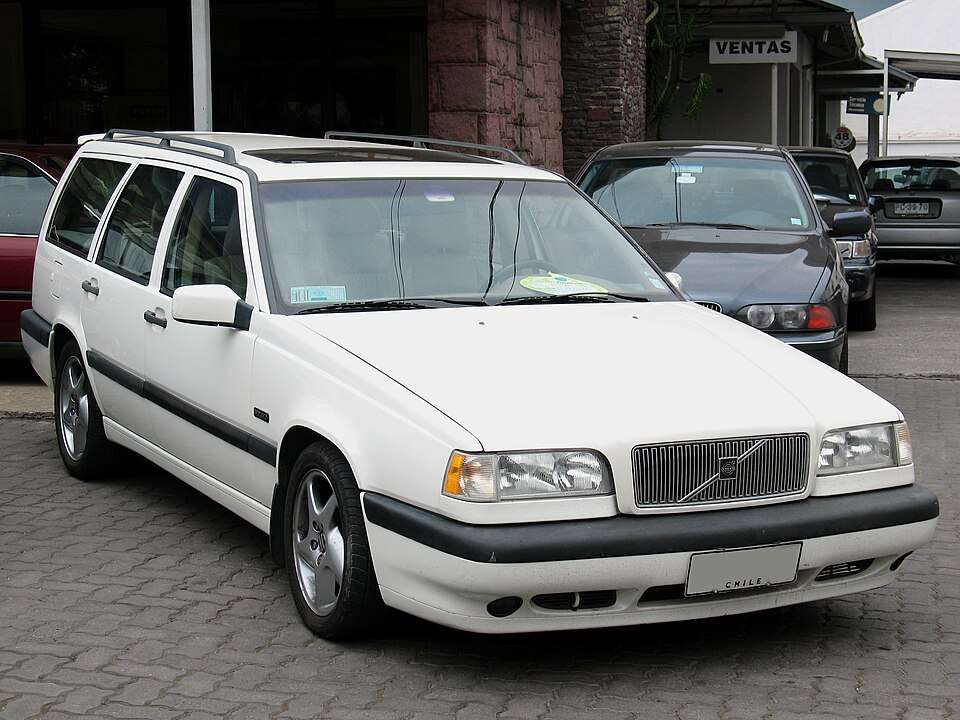
The Volvo 850 T5 combines a charismatic turbocharged five-cylinder with saloon or estate practicality and an understated performance-car identity. The attraction is obvious; the buying risk is assuming that Volvo durability cancels thirty years of wear, ageing hoses and neglected maintenance. This guide explains ordinary T5s, the separate T-5R and 850 R market, crankcase ventilation, cooling, gearboxes and the ownership costs that deserve a place beside the purchase price.
Our buying verdict
A well-maintained ordinary T5 can offer much of the experience without a collector premium. Buy on structure, service evidence, healthy cooling and a sound gearbox. Treat T-5R or R claims as an authentication task, and investigate oil leaks and boost modifications properly before assuming the car only needs a simple seal or service.

850 T5, T-5R and 850 R: know the difference
The 850 marked an important move to front-wheel drive and a transverse five-cylinder for Volvo. The turbocharged T5 added serious road performance while keeping the saloon and estate bodies that made the range useful. It is a different model from the later S70 and V70, even though owner guides and parts searches often combine them.
| Version | Main distinction | What to check |
|---|---|---|
| 850 T5 | Turbocharged five-cylinder, commonly 2.3 litres and around 225bhp in UK specification | Engine code, gearbox, service history and actual installed turbo/control system. |
| 850 T-5R | Limited-production performance version with distinctive trim and equipment | Documented authenticity; wheels, paint and badges are transferable. |
| 850 R | Later performance version; manual and automatic specifications differ | Do not assume identical engine/turbo/differential specification across gearboxes. |
| S70/V70 successors | Related but revised cars with further changes over time | Separate identification and maintenance requirements; not interchangeable with every 850. |
| Modified T5 | Potentially altered turbo, injectors, ECU, exhaust and boost control | Assess the complete combination and supporting invoices. |
An ordinary T5 can be a more approachable purchase than a rare T-5R or R. The premium for a special version should be supported by identity, original specification and condition, not merely a familiar paint colour or a set of desirable wheels. A replica may still be enjoyable, but it should be described and valued accurately.
Manual and automatic cars deliver different ownership experiences. An automatic suits the relaxed, rapid long-distance character; a manual may appeal more to an enthusiastic driver. Neither is automatically the better buy. Test the actual gearbox thoroughly and examine the service evidence appropriate to it.
The estate’s load space is a major advantage, but inspect for hard use. Towing, commercial duties, pets and heavy loads can leave clues in the rear suspension, trim and luggage floor. A saloon may suit a buyer who values a more discreet appearance and does not need the estate opening.
Self-levelling rear suspension was fitted to some cars, particularly estates, but not every example. Identify the fitted system before ordering dampers or planning a conversion. A car sitting at an attractive height in an advert may still have tired or mismatched suspension components.
Our editorial preference is an ordinary, documented T5 with good maintenance and a sensible specification. A special edition is attractive when you want that particular car and can fund authentication, correct parts and a higher purchase price. Avoid choosing solely from a claimed power output or a reputation for high mileages.
Volvo 850 prices: separate T5 from collector versions
Car & Classic listings checked on 3 November 2026 included a 1993 left-hand-drive T5 advertised with 278,000 kilometres at €3,900. The same search showed a 1995 T-5R estate advertised with 63,700 miles and an automatic gearbox at £14,995, and a manual T-5R estate with 215,000 kilometres at £20,500.
These are selected asking prices and seller descriptions, not verified sale values or authenticated cars. The euro-priced ordinary T5 is not a direct UK valuation benchmark, and the T-5Rs belong to a different part of the market. A live auction bid for an ordinary T5 was excluded because an unfinished auction does not establish a completed sale.
The available examples demonstrate a useful caution: special-version asking prices should not be used to value every turbocharged 850. Equally, a low-priced overseas advert does not establish what a sound UK car will cost after inspection, transport and any import-related work. Compare the same specification and location.
Ask for service invoices, belt evidence, PCV/crankcase ventilation work, cooling repairs and gearbox history. Check special-edition authenticity before travelling far or paying a deposit. A freshly detailed car with incomplete maintenance can be a larger commitment than a less immaculate example with properly documented recent work.
Build a first-year budget that includes inspection, necessary servicing, tyres, suspension, air conditioning and diagnosed leaks. Keep a reserve for unresolved faults. Purchase price is only one part of the decision, particularly on an old performance estate whose previous owners may have treated it as inexpensive transport.

Bodywork, underside and identity
Inspect sills, jacking points, floors, arches, seams and suspension mounting areas. The 850’s original reputation for a durable body does not remove the need for a lift inspection now. Accident repairs, damaged protection and years of trapped dirt can change the condition substantially.
Check front and rear structure, panel alignment, paint consistency and evidence of disturbed fasteners. A large estate can collect parking damage and load-related wear without necessarily having a major accident history. Establish which repairs were cosmetic and whether any structural work was performed.
Look beneath accessible carpets and in the spare-wheel/load areas for damp, corrosion or repairs. Inspect tailgate hinges, struts, locks and seals, then test its electrical functions. Missing or damaged luggage trim may be awkward to replace neatly. If additional seats are fitted, verify their proper installation and condition before planning to use them.
Inspect brake and fuel lines, exhaust supports and steel suspension components. A tidy upper body cannot establish their condition. Fresh underseal should be accompanied by evidence of preparation or repair. Ask the inspecting workshop to distinguish superficial corrosion from work affecting safety or mounting integrity.
Match VIN, registration, engine and service chronology. Check import history, mileage units and conversions where relevant. For a T-5R or R, obtain credible build/specification evidence rather than relying on badges, wheels or upholstery. Engine swaps and gearbox conversions require records showing the installed combination.
T5 engine problems: PCV, leaks and boost
Crankcase ventilation and rear main seal
The PCV/crankcase ventilation system deserves specific attention. Blockage can raise crankcase pressure and contribute to oil leakage, including from the rear main seal. Ask what components and passages were checked or renewed, not simply whether a hose was changed.
Oil around the engine/gearbox joint needs diagnosis because access to a rear main seal can be labour-intensive. Other leak sources, including turbo oil-return sealing, can produce different repair scopes. Do not assume every drip is the rear seal or that replacing one seal will resolve excessive crankcase pressure.
A specialist can assess ventilation operation using appropriate tests. Smoke or pressure at a dipstick is an observation requiring interpretation, not a complete diagnostic procedure on its own. Have the underlying cause established before ordering a breather kit or agreeing to gearbox removal.
Where a manual clutch and rear seal genuinely need work, access overlap may affect the plan. Ask the workshop which components are worn, which jobs are preventative and what the full quotation includes. Combining work can make sense, but replacing everything without assessment is not automatically economical.
Oil, cold running and turbo condition
Check oil level and ask about use over a measured distance. Start from cold and listen for abnormal mechanical noise. Observe exhaust smoke during start-up, warm running and the drive. Persistent blue smoke can have several causes, including turbo, valve or internal engine issues; diagnose it before accepting a repair budget.
Inspect the engine bay and turbo plumbing for leaks, cracked hoses and improvised repairs. A clean bay is useful but can hide recent washing, so recheck after the drive. Review regular oil changes and the correct oil requirement for the engine and use. High mileage with good records may be easier to judge than low mileage with long service gaps.
Assess turbo delivery progressively and safely. Whistling or a lack of response is not automatically proof that the turbo needs replacement; intake/boost leaks, control faults or fuelling issues can produce similar complaints. Conversely, an enthusiastic boost gauge is not proof that the system is calibrated safely.
Modifications and low-speed boost loading
Ask about ECU changes, turbo swaps, boost controllers, injectors, fuel pump and exhaust. The T5 can be tuned, but excessive or poorly controlled boost can impose serious loads on the engine. A manual bleed valve or unexplained control adjustment deserves careful investigation rather than admiration for a stronger surge.
Obtain mapping and build invoices, establish the intended fuel, and ask whether hardware changed after calibration. Avoid stressing a suspect engine in a high gear at low speed merely to demonstrate torque. A reputable specialist should assess the entire combination and present condition, not simply the advertised horsepower.
Confirm that modifications are declared to the insurer and that the exhaust/emissions arrangement is appropriate for the car’s road use. Returning to a known, documented specification can cost money where original parts have been discarded.
Timing belt and cooling system
The five-cylinder engine uses a timing belt. Obtain dated invoices showing mileage, correct kit and tensioning components, with water-pump assessment and related work explained. Volvo schedules and parts changed with production, so confirm the correct age/mileage requirements from suitable information for the actual engine and chassis.
Do not transfer a later S70/V70 schedule or a generic internet interval without checking applicability. If evidence is missing, plan the appropriate belt service before normal use. A low annual mileage does not preserve rubber indefinitely, and a belt-only invoice may omit ageing rollers or other relevant components.
Inspect radiator, expansion tank, hoses, thermostat behaviour and cooling-fan operation. Investigate coolant loss, overheating or contamination. Some moisture can arise from short-trip condensation, but it should not be used to dismiss unexplained oil/coolant mixing. A cooling-system test is preferable to guessing.
Check cabin heat and any coolant smell or damp. A heater leak needs a different repair plan from an under-bonnet hose. Likewise, a non-working air-conditioning system may involve condenser, compressor or more difficult access to an evaporator. A simple recharge should not be promised without leak diagnosis.
Automatic, manual and running gear
On automatics, check fluid/service evidence and test engagement, shifts and kickdown from cold through fully warm operation. Delays, flare, slipping, harsh changes or burnt-smelling fluid require investigation. A fresh fluid change immediately before sale is not a repair certificate for an already worn transmission.
Manual cars need clean selection, sensible clutch operation and no unexplained driveline noise. For an R or a converted car, confirm the actual gearbox and differential specification. Do not infer a limited-slip differential from an R badge or a seller’s broad description.
Inspect engine mounts, suspension arms, bushes, dampers, springs and wheel bearings. Excessive engine movement, knocks and uneven tyre wear may involve several components. Identify self-levelling rear equipment and assess whether it still works correctly. A damper conversion should use a suitable complete spring/damper arrangement, not simply the cheapest replacement units.
Inspect discs, pads, calipers, hoses and pipes, and verify the fitted front-disc size because upgrades are common. ABS/TRACS warning faults can involve module electronics or other causes. Diagnostic evidence is more useful than assuming a sensor or a dry solder joint will solve every warning.

Climate control, electrics and estate practicality
Test climate control, fan speeds, air conditioning, windows, mirrors, central locking, heated seats where fitted and every external light. Check warning lamps during the self-test. A missing bulb can hide a fault, while a lamp that stays on needs diagnosis rather than a seller’s reassurance.
Inspect seats, trim, dashboard and load-area fittings. Correct special-version upholstery and wheels can be expensive to replace, and ordinary trim can still be difficult to find in good condition. Test seat adjustment and memory functions where present. A durable interior is not immune to age, sun damage or poorly fitted accessories.
Check the odometer and mileage chronology against invoices and MOT history, then ask about any instrument repair. Inspect the cabin for damp and coolant smell. Air conditioning should be assessed as a complete system; budget for diagnosis before accepting a claim that it only needs gas.
For recalls or safety campaigns, ask a Volvo dealer to check the actual VIN rather than assuming an old forum reference proves applicability or current free repair terms. Obtain both keys and the correct security information, and make sure your insurer accepts the car’s specification and intended use.
850 T5 maintenance costs and useful parts
Affiliate disclosure: eBay parts links below are affiliate links using our campaign. We may earn a commission if you buy, at no extra cost to you. Links open search results rather than a verified individual product. Check engine, year, part number, seller, condition and returns; search results can contain incompatible items.
Set up a maintenance plan around the actual engine and gearbox. Track oil and filters, timing drive, plugs, coolant, brake fluid, transmission servicing and chassis inspection. Have the PCV system and leaks assessed together. A basic service is not the same as restoring years of deferred work.
As a parts-only example on 3 November 2026, an eBay listing from parts_monster advertised a timing-belt kit for specified 1993–1997 five-cylinder 20-valve petrol 850 applications from a stated chassis threshold at £70.30. Another search result even labelled a 10-valve kit as relevant to T5, illustrating why search compatibility is not proof. Compare 850 T5 timing-belt kits only after confirming engine, chassis and contents with the supplier.
| Item | Useful parts search | Check the complete scope |
|---|---|---|
| Alternator | 850 T5 alternators | Output, connector, mounting and exchange surcharge. |
| Routine service | 850 T5 service kits | Correct engine, oil requirements and kit contents. |
| Crankcase ventilation | 850 T5 PCV components | Hoses, oil trap and blocked passages; diagnose pressure first. |
| Cooling | 850 T5 cooling parts | Engine/chassis fitment, hoses, coolant and labour. |
| Turbo oil return | T5 turbo oil-return seals | Confirm leak source and access. |
| Ignition | 850 T5 ignition parts | Engine and tuning requirements; diagnose misfire first. |
| Rear suspension | 850 self-levelling dampers | Actual fitted system and compatible springs. |
| Brakes | 850 T5 brake parts | Fitted disc diameter, carriers, calipers and any conversion. |
Hidden ownership costs
Set a first-year budget before making an offer. Add the purchase price, fees and collection, independent inspection, immediate servicing, diagnosed repairs, insurance, storage and a reserve for unresolved work. Use quotations for the car in front of you; a percentage of the purchase price is a poor substitute for knowing what needs doing.
- PCV and seal access. A breather fault and rear seal leak may require related but different jobs. Diagnose the source and pressure before authorising work.
- Climate-control repairs. A hidden evaporator leak can involve far more labour than a simple recharge.
- Load-carrying suspension. Self-levelling dampers and suitable conversion parts can materially change the rear-suspension budget.
- Collector details. Correct R/T-5R trim, wheels and provenance should be priced and authenticated before paying a premium.
- Parts are only part of the bill. Access, diagnosis, fluids, alignment, seized fasteners and VAT can change the total. Ask the workshop what its quotation includes and how additional work will be agreed.
- Exchange units and delivery. Alternators, starters and other rebuilt components can require a returnable old unit. Compare the surcharge, return postage, deadline and warranty before choosing a supplier.
- Insurance and downtime. Obtain a quote for the actual specification and declared modifications. Allow for recovery and alternative transport if this will be your only car.

Viewing and test-drive checklist
Before travelling
- Confirm registration, exact version, seller identity and ownership history. Ask about accidents, insurance write-offs, engine changes and modifications.
- Read the MOT chronology and request invoices, not just a stamped service book. Agree a cold start, inspection access and a properly insured test drive.
- Get a written list of included keys, original parts and any outstanding faults. For a distant car, request current underside and engine-bay photographs.
At the car
- □ Confirm ordinary T5, T-5R or R identity, engine and gearbox.
- □ Review belt, oil-service, PCV and cooling invoices with dates and mileage.
- □ Inspect sills, jacking points, floors, mountings and brake/fuel lines.
- □ Diagnose oil leaks, crankcase pressure and persistent smoke.
- □ Check turbo/control modifications and mapping/fuel requirements.
- □ Test gearbox cold and hot, suspension, self-levelling equipment and brakes.
- □ Operate climate control, warning lamps, estate functions, locks and windows.
- □ Compare identification with documents, check panel alignment and inspect accessible structure on a lift. Never go beneath a car supported only by a jack.
- □ Try lights, wipers, washers, heater, locks and warning lamps. Inspect tyres for age and damage as well as tread.
- □ Drive from cold to fully warm, using gears and brakes progressively. Note smoke, overheating, vibration, warning lights or hesitant acceleration; stop if a serious fault develops.
- □ Recheck hot starting and visible leaks afterwards. Record unresolved faults and obtain specialist estimates before paying a deposit.
Proceed when identity, structure and maintenance evidence fit the description. Investigate when a fault has a plausible cause but no diagnosis. Walk away when crucial inspection is refused, identity remains uncertain or the budget depends on a serious fault being cheap. Put any inspection condition and deposit terms in writing.
Buying questions answered
Is an ordinary 850 T5 worth buying instead of a T-5R?
Yes. A sound ordinary T5 delivers the core five-cylinder performance and practicality. A special version is a separate purchase where provenance and correct details must justify the premium.
Why is the PCV system important?
Blocked crankcase ventilation can raise pressure and contribute to oil leaks. A specialist should assess the system and leak source before replacing seals or ordering a kit.
Does an 850 T5 have a timing belt?
Yes. Confirm the correct engine/chassis schedule and dated replacement evidence, including tensioning components. Missing history should be treated as work to plan before normal use.
Is an automatic 850 T5 a bad choice?
Not inherently. Test cold and hot operation and review fluid/service history. Delayed engagement, slipping or harsh shifts need diagnosis and a realistic quotation.
Can I use every S70/V70 buying tip on an 850?
No. The models share useful context but specifications and later systems differ. Identify the actual car before applying intervals, electronic-throttle warnings or parts lists.
Sources and research method
Independently written desk research by Unusual Cars UK, checked on 3 November 2026. We have not road-tested or inspected the illustrated cars or independently authenticated sellers’ claims. Buying recommendations and inspection priorities are our editorial assessment. Historical guides inform technical context; their old price bands are not current valuations. Confirm service requirements against the actual vehicle and suitable workshop information.
- Volvo Owners Club: buying an 850 or 70-series car — Primary owner-community context; historical prices and broad durability claims not used as current guarantees.
- Volvo Owners Club forum: 850/70/T5 buying guide — Dated owner evidence for PCV, leaks, gearbox and suspension; later-model issues separated and old prices excluded.
- Car & Classic: Volvo 850 listings — Selected asking examples checked 3 November 2026; bids excluded and special-version claims unverified.
- GOV.UK used-car checks and MOT history — document and test-history checks.
Images are illustrative surviving vehicles, not the advertised cars discussed in the market section. Individual credits and licence links accompany each photograph. No endorsement by a photographer, club, supplier or seller is implied. Prices and availability can change.