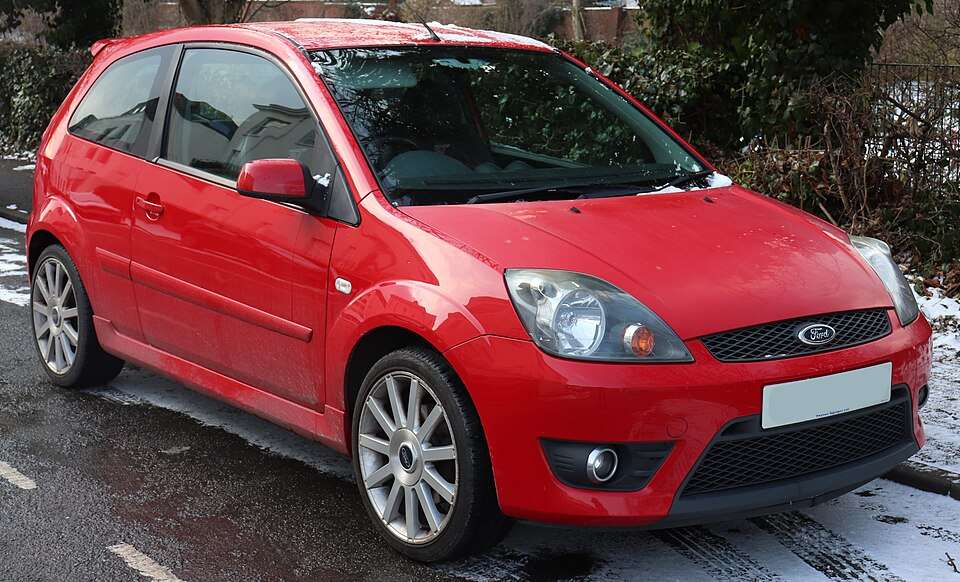
The first Fiesta ST pairs a naturally aspirated 2.0-litre engine with a light, practical three-door hatchback and an entertaining chassis. It can still make an approachable enthusiast car, but rust, tired steering, gearbox wear and poor modifications can undermine the apparent bargain. This guide covers the 2000s ST150, with checks that distinguish it from the later turbocharged ST and from ordinary ST-Line cars.
Our buying verdict
Buy an honest, structurally sound ST150 with a healthy engine, clean shift and documented maintenance. An original or sensibly modified car is easier to assess than one with unexplained cams, boost conversions or wiring changes. Keep money for tyres, brake pipes, suspension and diagnosis; a low purchase price does not make neglected safety-critical work optional.

Which Fiesta ST is this guide about?
This is the three-door, front-wheel-drive Fiesta ST with a naturally aspirated 2.0-litre Duratec engine, five-speed manual gearbox and nominal 150PS output, approximately 148bhp. It is commonly called ST150. Different publications count Fiesta generations differently, so Mk5 and Mk6 labels can refer to the same car in buying searches.
| Description | What to establish | Buying relevance |
|---|---|---|
| Original ST150 | 2.0-litre naturally aspirated engine and five-speed manual | Core model covered here; identify by actual engine and build. |
| Late-2005 facelift onward | Revised lamps, dashboard and equipment details | Useful changes, but not a fundamentally different engine. |
| ST500 | Limited special specification, not a 500bhp model | Authenticate build, trim, wheels and provenance before paying a premium. |
| Mountune or other upgrades | Specific documented performance packages or later modifications | Invoices, installed hardware and calibration matter more than stickers. |
| Later turbo ST / ST-Line | Different generations, engines or trim levels | Do not use their cambelt, turbo or parts advice for an ST150. |
The standard car’s appeal is its response and chassis rather than a huge power figure. A properly maintained example can feel much better than a worn one carrying expensive tuning parts. Try the standard driving character before deciding that a modified car offers better value.
Facelift equipment and interior colours vary. Heated windscreens, climate-control arrangements, mirrors and audio options should be checked physically. A desirable feature is valuable only if it works or its repair cost is understood. Do not let stripes or an attractive colour displace an underside inspection.
ST500 claims need records, not merely black paint, decals or red calipers. Likewise, a Mountune badge does not establish the exact package, its installer or whether later modifications changed it. Ask for the original invoice and compare it with the components currently fitted.
If considering a track-prepared example, decide whether you actually want that specification. Seats, harnesses, suspension, stripped interiors and exhaust changes can add work when returning to road use. The cost of standard parts, installation and insurance changes should be known before purchase.
ST150 prices and current asking evidence
The focused Car & Classic ST150 search checked on 3 November 2026 showed a car advertised as Ford Fiesta ST150 at £6,995. The visible listing did not provide enough mileage and condition detail to build a meaningful like-for-like price band. We therefore treat it as one asking-price observation, not a valuation or evidence that every ST150 commands that amount.
Historical buying guides describe much lower entry prices, but those figures relate to their publication dates and condition assumptions. They are not current quotations. Compare fresh adverts for the correct 2.0-litre car and exclude later turbo STs, ST-Line models and ordinary Fiestas appearing in the same search.
Request registration, mileage, MOT chronology, service invoices and underside photographs before travelling. Ask about oil use, steering noise, gearbox symptoms and current warning lamps. A seller’s description of a cheap fix needs evidence before it becomes part of your budget.
Separate original road cars, documented upgrades, track cars and unfinished projects. A modified car’s claimed build cost is not its market value. A tidy original car may justify more money when the expensive maintenance and bodywork are documented, but presentation alone is not proof.
Build an acquisition total: purchase, inspection, initial service, tyres, diagnosed mechanical work and corrosion repairs. On a modestly priced hatchback, several apparently small jobs can represent a large fraction of its value. Compare the repaired total with a better example before assuming the cheapest advert is the best route.

Rust, water ingress and accident damage
Inspect rear arches, sill ends, jacking points, floors, door bottoms and tailgate edges. Age and exposure matter more than the original economy-car reputation. A patch of bubbling paint can be the visible part of a larger repair, particularly where moisture has been trapped behind trim.
Check front inner-wing areas and behind wheelarch liners where appropriate access is agreed. Fast Car highlights trapped muck and moisture behind insulation as a concern. Do not remove trim destructively at a viewing; arrange a lift inspection or return visit if the hidden condition cannot be assessed.
Inspect underside seams, suspension mounting points, subframes and brake/fuel lines. Rear brake-pipe corrosion is a specific priority. A fresh coating or recent MOT pass does not establish that every area will remain sound through the next ownership period. Ask for repair photographs and invoices.
Look for damp in the boot and front footwells. Blocked door drains, sealing faults and the pollen-filter area can be relevant, but the source should be diagnosed rather than guessed. A dried carpet does not show whether floor corrosion or damaged wiring has been addressed.
Check panel gaps, paint texture, overspray, disturbed bolts and underbody creases. These cars can have had hard use or impacts, and a clear database check cannot assess every repair. If an accident is disclosed, establish the scope and quality of work. Do not rely on a vague claim that a car was approved as proof of present condition.
Match VIN, registration and service chronology, then investigate engine swaps or unusual specification claims. A standard-looking shell can still have a changed drivetrain or wiring. Record what is actually fitted, which original parts are included and whether modifications were declared to the insurer.
Duratec engine checks and timing chain
Oil level, smoke and abnormal noise
Check oil level before starting and ask about consumption over distance. Arrange a true cold start and observe the exhaust, warning lamps and idle. Persistent blue smoke or bottom-end knocking requires diagnosis, not reassurance that all performance Fords sound that way.
Inspect visible oil leaks, coolant staining and service evidence. Oil-starvation damage can be expensive relative to the value of the car. A recent oil change does not establish how the engine was treated before it, and a clean engine bay should be rechecked after the drive.
The ST150 uses a timing chain. There is no routine cambelt kit to buy for its standard engine. Rattling from the timing-drive area needs assessment of chain, tensioning and related components; a seller’s description cannot distinguish every possible noise. External auxiliary belts are separate maintenance items.
Cold starting, idle and electronic controls
Poor starting, hunting idle, rev hang or hesitation can involve throttle condition, software, sensors, air leaks or modifications. Some cars received software updates, but an update claim does not prove every current symptom is cured. Ask for diagnostic evidence and test from cold through fully warm operation.
Do not assume a throttle-body clean is the answer to every running fault. A workshop should establish the cause and any reset/relearn requirements. Warning lamps and stored faults should be interpreted in context rather than cleared immediately before the viewing.
Check that engine, airbag and ABS lamps illuminate during the self-test and extinguish appropriately. A seat connector may be one cause of an airbag warning, but it is not a reason to ignore the lamp. Restraint-system faults deserve proper diagnosis and repair.
Modifications and cooling
Ask about intake, exhaust, cams, throttle bodies, ECU changes and forced-induction conversions. Record who installed and calibrated them and whether the hardware changed afterwards. A claimed power gain does not establish that the engine, clutch or gearbox can tolerate the intended use.
Standard cars can be easier to assess, but a documented quality upgrade may suit your plans. Avoid buying an unexplained combination on the assumption that you can simply return the software to standard. Missing original components, emissions requirements and wiring changes may make that more involved.
Inspect radiator, hoses, thermostat behaviour, coolant condition and fan operation. Overheating or repeated topping up needs diagnosis before purchase. A car that only runs hot in traffic still has a fault. Stop the test if a serious temperature or oil-pressure concern appears.
IB5 gearbox, linkage and clutch
The five-speed should select cleanly and feel appropriately precise. Test all gears cold and hot, especially the second-to-third change, without forcing it. Crunching and bearing noise should be investigated rather than accepted as a normal feature of an old hot hatch.
A stiff or vague linkage can create poor selection without the same repair as an internal gearbox fault. Conversely, a seller’s linkage explanation cannot rule out worn synchromesh. Have the cause established and compare the full installed repair cost, not only the price of a bush kit.
Higher-power and heavily used cars put additional load through the standard differential and transmission. Ask about previous rebuilds and read the scope. A stronger clutch alone does not establish that the rest of a modified drivetrain is suitable.
Check clutch slip, judder, pedal return and hydraulic leakage. A detached pedal linkage or retention-clip problem can differ from a worn clutch or hydraulic fault. Confirm any applicable recall or campaign status with Ford using the VIN; an old magazine reference cannot establish present eligibility or repair terms.
Power steering, suspension and brakes
Autocar’s original buying report highlights power-steering fluid overheating and pump concerns. Test assistance once the car is warm, listening for unusual whine and noting heaviness. Inspect fluid condition and leaks using the correct procedure. A cold, short test may miss a temperature-related fault.
Check front arms, bushes, joints, springs, dampers, top mounts and wheel bearings. The car should feel composed rather than loose or unsettled. Excessive lowering, poor coilovers and mismatched tyres can damage the driving experience. Inspect wheel damage, balance symptoms and clearance.
Look at tyre age, tread, inner-edge wear and suitability across the car. A loud exhaust does not compensate for a tired chassis. Include alignment after relevant work and ask whether seized fixings or worn components prevented correct adjustment.
Inspect rear calipers, parking-brake operation, discs, hoses and pipes. A weak handbrake can involve cable, mechanism or caliper faults, so establish the cause. Brake-pipe replacement can involve awkward routing and labour beyond the price of a short length of pipe.

Interior, heated glass and electrics
Check seat bolsters, folding catches, belts, adjustment and mounting security. Worn plastics and rattles may be cosmetic, but loose seats or restraint warnings need a different response. If seats have been changed, confirm correct installation and safety-system compatibility.
Test the heated windscreen across its useful area, heated mirrors where fitted, rear demister, air conditioning, fan speeds, locks, windows and all lights. Repairing a damaged heated screen can cost far more than replacing a switch. A claim that air conditioning only needs gas should be supported by leak diagnosis.
Inspect alarm, audio and accessory wiring. Power-fold mirrors that keep clicking, erratic automatic functions or battery-drain complaints deserve diagnosis. Check both keys and security information. A charging warning should lead to battery, earth and charging-system tests before an alternator is condemned.
Match interior and equipment claims to the build, particularly for an ST500. Correct trim and original components can matter to buyers, but a rare upholstery colour should not displace the structural or mechanical work that makes the car dependable.
ST150 maintenance costs and useful parts
Affiliate disclosure: eBay parts links below are affiliate links using our campaign. We may earn a commission if you buy, at no extra cost to you. Links open search results rather than a verified individual product. Check engine, year, part number, seller, condition and returns; search results can contain incompatible items.
Plan servicing for the 2.0-litre Duratec and the actual use. Track engine oil and filters, plugs, coolant, brake fluid, gearbox attention, auxiliary drive and chassis inspection. A recent basic service does not clear overdue pipework, tyres or warning-lamp faults.
On 3 November 2026, an eBay listing from aapoldham advertised a new 105A alternator for specified ST150 2.0-litre applications at £134.95. This is a parts-only seller price, not a fitted quote or independent fitment verification. The same search returned later ST180/ST200 units, demonstrating the need to compare ST150 2.0-litre alternators by part number, connector and mounting.
| Item | Useful search | Confirm first |
|---|---|---|
| Routine service | ST150 service kits | 2.0 engine, correct oil and actual contents. |
| Timing drive | ST150 timing-chain components | Diagnose noise; this is not routine cambelt servicing. |
| Auxiliary drive | ST150 auxiliary belts and tensioners | Accessory layout and pulley condition. |
| Clutch | ST150 clutch and hydraulic parts | Correct gearbox, full scope and labour. |
| Power steering | ST150 steering pumps | Diagnose hot behaviour, fluid and leaks first. |
| Rear brakes | ST150 rear brake parts | Caliper versus cable fault, side and exchange terms. |
| Suspension | ST150 arms and bushes | Quality, joint condition and alignment. |
| Cooling | ST150 cooling parts | Exact engine, fittings and coolant/labour scope. |
Hidden ownership costs
Set a first-year budget before making an offer. Add the purchase price, fees and collection, independent inspection, immediate servicing, diagnosed repairs, insurance, storage and a reserve for unresolved work. Use quotations for the car in front of you; a percentage of the purchase price is a poor substitute for knowing what needs doing.
- Brake pipes and corrosion. Routing, seized unions and associated repairs can outweigh the component price.
- Undoing poor tuning. Standard engine parts, exhaust, wiring and insurance changes need a budget before purchase.
- Heated glass and electrics. Test costly equipment rather than assuming every failure is a cheap switch.
- Tyres and steering. A suitable tyre set and diagnosed hot steering fault can materially change the first-year total.
- Parts are only part of the bill. Access, diagnosis, fluids, alignment, seized fasteners and VAT can change the total. Ask the workshop what its quotation includes and how additional work will be agreed.
- Exchange units and delivery. Alternators, starters and other rebuilt components can require a returnable old unit. Compare the surcharge, return postage, deadline and warranty before choosing a supplier.
- Insurance and downtime. Obtain a quote for the actual specification and declared modifications. Allow for recovery and alternative transport if this will be your only car.

Viewing and test-drive checklist
Before travelling
- Confirm registration, exact version, seller identity and ownership history. Ask about accidents, insurance write-offs, engine changes and modifications.
- Read the MOT chronology and request invoices, not just a stamped service book. Agree a cold start, inspection access and a properly insured test drive.
- Get a written list of included keys, original parts and any outstanding faults. For a distant car, request current underside and engine-bay photographs.
At the car
- □ Confirm ST150 2.0 identity, build and any ST500 or performance-package claim.
- □ Inspect arches, sills, inner wings, floors and rear brake pipes on a lift.
- □ Arrange a cold start and investigate oil use, smoke, chain rattle or knocking.
- □ Test hot idle, cooling and steering assistance through a proper drive.
- □ Check all gears, linkage, clutch return and any drivetrain noise.
- □ Inspect tyres, wheel damage, suspension and rear-caliper/handbrake operation.
- □ Test heated glass, air conditioning, charging, warning lamps and seat catches.
- □ Compare identification with documents, check panel alignment and inspect accessible structure on a lift. Never go beneath a car supported only by a jack.
- □ Try lights, wipers, washers, heater, locks and warning lamps. Inspect tyres for age and damage as well as tread.
- □ Drive from cold to fully warm, using gears and brakes progressively. Note smoke, overheating, vibration, warning lights or hesitant acceleration; stop if a serious fault develops.
- □ Recheck hot starting and visible leaks afterwards. Record unresolved faults and obtain specialist estimates before paying a deposit.
Proceed when identity, structure and maintenance evidence fit the description. Investigate when a fault has a plausible cause but no diagnosis. Walk away when crucial inspection is refused, identity remains uncertain or the budget depends on a serious fault being cheap. Put any inspection condition and deposit terms in writing.
Buying questions answered
Is the ST150 turbocharged?
The standard car has a naturally aspirated 2.0-litre engine. Later turbo STs and conversions have different requirements, so identify the actual car before using parts or maintenance advice.
Does the ST150 need a cambelt kit?
No, the standard engine uses a timing chain. Abnormal chain noise needs diagnosis; auxiliary belts remain separate maintenance items.
Why do guides call it Mk5 and Mk6?
Generation counting differs between publications and markets. Use ST150, 2.0-litre engine, build details and VIN to identify parts rather than the Mk label alone.
Should gearbox crunching be accepted as normal?
No. Test cold and hot and distinguish linkage problems from internal wear. Obtain a diagnosis before budgeting for a cheap repair.
What makes a cheap ST150 expensive?
Corrosion, brake pipes, tired steering, poor modifications and several worn chassis components can accumulate. Compare the purchase plus diagnosed work with a better car.
Compare the Clio 172/182 guide and MINI Cooper S R53 guide for alternative hot hatches.
Sources and research method
Independently written desk research by Unusual Cars UK, checked on 3 November 2026. We have not road-tested or inspected the illustrated cars or independently authenticated sellers’ claims. Buying recommendations and inspection priorities are our editorial assessment. Historical guides inform technical context; their old price bands are not current valuations. Confirm service requirements against the actual vehicle and suitable workshop information.
- Fast Car: Fiesta ST150 buying guide — Engine, linkage, rust and equipment inspection context; historical price claims excluded.
- Autocar: ST150 buying guide — Original owner/reporting evidence and hot power-steering checks; old asking prices not reused as current values.
- Car & Classic: ST150 listings — One dated asking observation; insufficient detail for a comprehensive market valuation.
- GOV.UK used-car checks and MOT history — document and test-history checks.
Images are illustrative surviving vehicles, not the advertised cars discussed in the market section. Individual credits and licence links accompany each photograph. No endorsement by a photographer, club, supplier or seller is implied. Prices and availability can change.