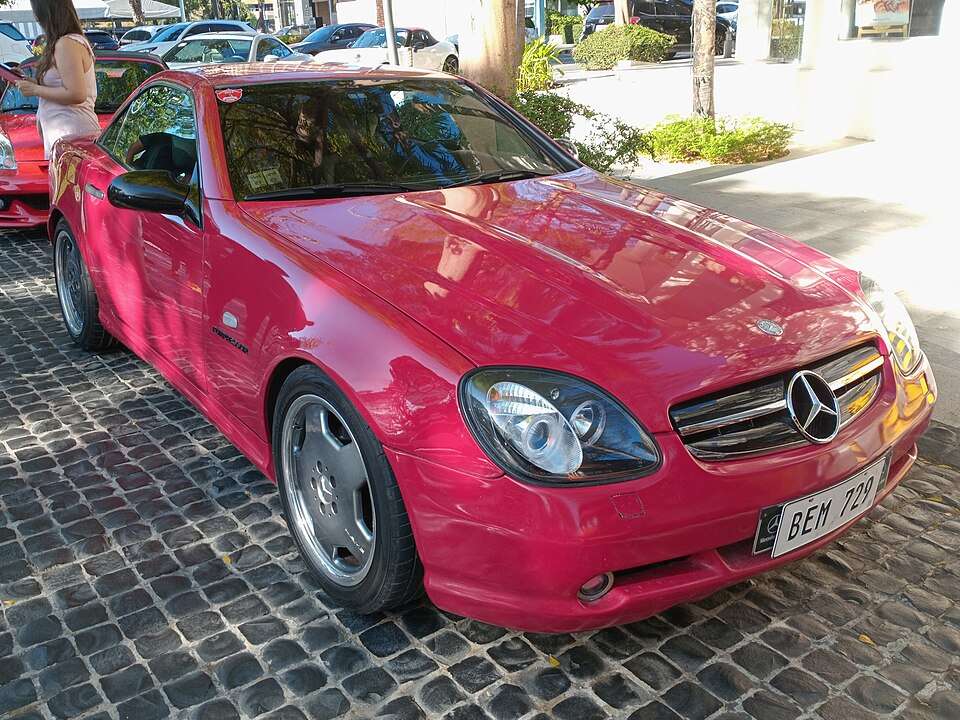
The first Mercedes-Benz SLK offers compact dimensions, a folding metal roof and a choice of supercharged four-cylinder or V6 engines. It can be an appealing everyday roadster, but a modest purchase price does not make roof repairs, corrosion or neglected automatic transmissions inexpensive. This UK guide explains the R170 versions, the checks that matter and how to build a realistic maintenance budget.
Our buying verdict
Buy a sound, dry car with a demonstrably working roof and clear maintenance history. A well-kept 200 or 230 Kompressor is a sensible starting point; choose the 320 for its V6 character. Treat the SLK32 AMG as a separate specialist purchase. Structural corrosion, water-damaged electrics and an undiagnosed roof fault can outweigh a cheap asking price.

SLK 200, 230 Kompressor, 320 and SLK32 AMG
The R170 is the original SLK generation, introduced in the 1990s and replaced by the R171 in 2004. It is important to identify the generation before ordering parts or following online advice: later cars have different engines, electronics and roof components.
| Version | Character | Buying focus |
|---|---|---|
| 200 / 200 Kompressor | Market and year determine naturally aspirated or supercharged specification | Check the actual engine and build data rather than the boot badge. |
| 230 Kompressor | M111 supercharged four-cylinder; a common R170 choice | Cooling, oil leaks, clean boost delivery and correct service parts. |
| 320 | M112 naturally aspirated V6 | Smooth running, cooling, ignition-service scope and gearbox maintenance. |
| SLK32 AMG | Supercharged performance V6 with specific running gear | Authenticate identity and obtain an AMG-aware inspection and cost plan. |
| Facelift around 2000 | Appearance, equipment and mechanical details changed | Useful differences do not provide immunity from age, rust or neglect. |
For many buyers, the 230 Kompressor provides the most familiar R170 experience. The 200 Kompressor can also make a useful roadster. Try the actual car: transmission choice, tyre condition and suspension wear influence how it feels at least as much as the badge.
The 320 offers a different engine character, but a V6 badge does not guarantee better care. Ask what a full ignition service includes, and compare whole-job costs with the four-cylinder cars. The SLK32 AMG has substantially different performance and specialist costs; this guide is not a substitute for a dedicated AMG assessment.
Manual and automatic cars both exist, with differences across years. Buy the transmission you want after a proper test rather than assuming a manual is necessarily cheaper to put right. Identify the exact gearbox and any replacement history before ordering service components.
Check seat travel, visibility and luggage space with the roof raised and lowered. The hardtop occupies boot space when folded, so take the luggage you actually use. A summer test with the roof down will not reveal all the wind-noise and sealing issues of winter use.
R170 prices: compare condition and specification
Car & Classic listings checked on 3 November 2026 included a 2002 SLK200 Kompressor automatic with 125,000 miles advertised at £1,995, a 2000 SLK230 automatic with 32,971 miles at £4,400, and a 2002 SLK230 automatic with 52,000 miles at £2,700. A separate SLK200 listing claimed 20,998 miles and asked £7,995.
These are seller descriptions and asking prices, not verified sales or independent condition assessments. They are a small observation set rather than a market valuation. Overseas cars, AMG versions and unusual conversions should not be mixed into a UK standard-car comparison.
Request underside photographs, roof-operation evidence and maintenance invoices before travelling. A short video can establish that a roof moved on one occasion, but it does not prove that it seals, locks correctly or has no hydraulic leak. Inspect in person and allow time for diagnosis where symptoms exist.
Compare purchase plus immediate work. A car needing roof repair, bodywork and a transmission service may exceed the cost of a better example even if each individual fault initially sounds modest. Ask for written repair scopes rather than relying on a seller’s optimistic estimate.
Low mileage is useful only alongside evidence of care. Storage can leave old tyres, corroded brakes, weak batteries and damp interiors. Equally, a higher-mileage car with documented servicing still needs structural and mechanical checks; receipts reduce uncertainty but do not eliminate it.

Rust, bodywork and water ingress
Inspect every panel, with particular attention to front wings, wheelarches, sill ends and the areas around lamps. Bubbling may indicate more deterioration behind the visible surface. Access behind trim and lamps can be valuable when an experienced inspector can arrange it without damage.
Look around the windscreen, screen pillars, bonnet edges and boot lid. Check panel gaps and paint differences for accident or corrosion repairs. Replacement panels are not automatically bad news, but the work should be consistent, documented and protected.
Put the car on a lift and inspect floors, jacking points, suspension attachments, spring mounts and the rear structure. Do not allow the reputation of the Mercedes badge or a tidy cabin to substitute for an underside examination. A recent MOT is not a comprehensive restoration assessment.
Inspect brake pipes and accessible fluid lines. Corroded fittings can turn an apparently simple replacement into a larger job. Ask whether a body quote includes inner metal, adjacent repairs, paint blending and corrosion protection rather than just the visible outer patch.
Water matters because it can damage electrical equipment as well as trim. Check the boot, accessible carpets, roof lining and storage areas. Look for stains, a musty smell, damp insulation and evidence that water has been directed away from components without its entry point being repaired.
Inspect seals, drain areas and previous sealant work. A roof specialist can assess alignment and water entry. Avoid indiscriminate seal replacement or forcing drainage tools into unseen routes: the correct diagnosis is more useful than a collection of newly fitted parts.
Match VIN and documentation, review the MOT history and establish whether the advertised engine, gearbox and trim agree with build information. AMG badges and wheels do not establish AMG identity. Imported cars need particular care over specification, mileage units and parts selection.

Roof, engines and gearbox problems
Test the Vario roof properly
Ask the seller to demonstrate the roof through a complete opening and closing cycle under the correct operating conditions. Keep clear of moving panels. Check the boot divider and relevant interlocks are in their proper positions, and confirm that the roof finishes locked with no warning indication.
Listen for unusual noise and watch for hesitation, uneven movement or a stop partway through. The period guide describes normal operation in roughly half a minute, but timing alone cannot diagnose a system. A roof that moves slowly or works only after repeated attempts needs investigation.
Hydraulic cylinders, hoses, pump operation, switches, wiring and control functions can all be involved. A seller saying it is “just a microswitch” has not established the cost unless testing supports that conclusion. Do not buy a pump or seal kit solely from the visible symptom.
Look for hydraulic-fluid staining around the roof lining and accessible mechanism areas, as well as in the boot. A recent top-up without a leak repair is not a lasting solution. Ask what was rebuilt, which seals or hoses were addressed and what warranty or test evidence accompanied the work.
Cayman Autos’ specialist material covers several SLK generations and describes hydraulic, alignment, switch and water-entry faults. Its broad list should not be read as proof that every listed component or symptom applies to every R170. An R170-specific diagnosis should precede a repair estimate.
After the roof is closed, drive the car and check for wind noise, rattles and secure locking. If a controlled water test is offered, do it appropriately and with permission. A dry viewing immediately after the car has been stored indoors proves little about heavy-rain performance.
M111 and M112 engine checks
The principal R170 engines use timing chains rather than a routine cambelt replacement. Good oil-service history remains important. Persistent chain noise, poor running or low oil pressure is a diagnostic issue, not an excuse to assume every chain lasts indefinitely.
Start the engine genuinely cold. Check oil and coolant levels first, then observe idle, smoke, leaks and warning lamps. Repeat the assessment fully warm. A recently cleaned engine bay should prompt a careful look after the road test for fresh leakage.
On Kompressor cars, assess smooth power delivery and listen for abnormal supercharger or belt-drive noise. Do not confuse a normal operating sound with a failure, but do not accept a new noise without explanation. Check for unrecorded pulley, intake or engine-management changes.
Inspect cooling hoses, radiator and water-pump areas for seepage. Confirm stable temperature and fan operation. A coolant loss needs its source identified; the price of a water pump is irrelevant if the actual problem lies elsewhere.
Oil can migrate through affected electrical connections and wiring on some cars. Ask a Mercedes specialist to inspect the relevant engine connectors and any evidence of oil contamination, especially where unexplained running or control faults exist. Cleaning one connector does not establish that the wider problem is resolved.
For the V6 and AMG, request invoices showing the actual maintenance scope. Parts counts, access and specific components differ from the four-cylinder engines. The service book’s brief stamp cannot show which plugs, fluids or ancillary items were renewed.
Automatic and manual transmissions
Test an automatic from cold and once hot, including engagement, gentle acceleration, changes under load and manoeuvring. Delays, flares, harsh changes, slipping or limp mode require proper diagnosis. Do not accept the idea that all old automatics behave badly.
Check for fluid leakage and inspect cooler lines and relevant electrical connections. Ask about the fluid and filter history, the specification used and the scope of any repair. Have a specialist set the appropriate service plan rather than interpreting “sealed for life” as a reason to ignore a decades-old unit.
Manuals should engage all gears without excessive noise or resistance. Check clutch action and pedal behaviour. A clutch quote should address related hydraulic or mounting issues where relevant, rather than assuming a friction disc will solve every difficult shift.
Inspect differential leaks, driveshaft joints and mounts. Worn suspension bushes, ball joints and dampers can produce vague handling. Check spring condition and mounting areas, then evaluate alignment and tyre wear together rather than replacing parts at random.
Test braking for pulling, vibration and sticking. Check the parking brake, pipework and warning lamps. A car used only in good weather can still develop seized or corroded components during storage. Tyre age, quality and correct sizing also matter on a rear-wheel-drive roadster.
Cabin wear and electrical checks
Peeling or damaged interior coatings can make a sound SLK look tired. Decide whether the finish is acceptable, then price the actual restoration or replacement route. Cosmetic wear is different from wet carpets or damaged electrical equipment.
Test windows, mirrors, locking, seat functions where fitted, ventilation, air conditioning, lighting and instruments. Verify that warning lamps perform their normal check. Diagnostic scanning with suitable Mercedes-capable equipment can reveal faults beyond a generic engine-code reader.
Water in the boot can affect the pneumatic locking equipment. Problems with several apparently unrelated functions may share a supply, moisture or control issue. Buying multiple used modules before diagnosis is an expensive way to troubleshoot.
Check both keys, boot access and evidence of alarm or immobiliser modifications. Look for unsupported wiring and missing trim fasteners. A cleanly repaired system with documentation is preferable to a car that only works through an unexplained sequence of switches.
Maintenance costs and useful parts searches
Affiliate disclosure: eBay parts links below are affiliate links using our campaign. We may earn a commission if you buy, at no extra cost to you. Links open search results rather than a verified individual product. Check engine, year, part number, seller, condition and returns; search results can contain incompatible items.
An eBay search checked on 3 November 2026 showed an Apec alternator listing advertised for the SLK230 R170 2.3 at £165.97 before any conditional coupon or installation cost. That is a seller’s parts price and fitment claim, not a complete charging-system repair quote. Used units, regulators and different engine applications also appeared, so compare like with like.
| Maintenance item | What the quote must establish | Parts comparison |
|---|---|---|
| Alternator | Test charging, battery and wiring; match output, pulley and connections. | Compare SLK230 R170 alternators |
| Timing chain | No routine cambelt kit; diagnose noise before deciding on chain-system work. | Compare M111 chain components |
| Automatic service | Correct fluid, filter, gasket, level procedure and leak inspection. | Compare identified 722.6 service parts |
| Cooling | Confirm engine and fault before matching pump and thermostat. | Compare SLK230 cooling parts |
| Roof hydraulics | Identify failed component and compare repair versus replacement; labour and testing separate. | Compare R170 roof-cylinder listings |
| Routine service | Engine-specific filters, fluids and ignition-service scope. | Compare SLK230 service filters |
| Brakes | Identify standard or AMG hardware and inspect all components. | Compare SLK230 brake parts |
| Suspension | Price matched components, fasteners and alignment. | Compare R170 suspension arms |
These links lead to searches, not guaranteed compatible products. Verify VIN, engine, gearbox and fitted equipment with the supplier. A SLK230 search is not a parts prescription for a 320 or AMG. Check VAT, delivery, return rights, warranty and exchange surcharges.
Obtain complete workshop quotes for roof work and body repairs. Ask what diagnosis, dismantling, fluid, calibration or testing is included. A component price cannot predict the labour required to access it or the cost of correcting water damage around it.
After purchase, establish a baseline with fluid and leak checks, brakes, tyres, battery condition and roof inspection. Record the work and keep roof drains and seals under an appropriate maintenance plan. Avoid lubricants or hydraulic fluids selected without the correct specification.
Hidden ownership costs
Set a first-year budget before making an offer. Add the purchase price, fees and collection, independent inspection, immediate servicing, diagnosed repairs, insurance, storage and a reserve for unresolved work. Use quotations for the car in front of you; a percentage of the purchase price is a poor substitute for knowing what needs doing.
- Roof diagnosis, transport and weatherproof storage can add to the cost of a car whose hardtop is stuck open.
- Water-damaged locking or control equipment may need more than drying or a used replacement module.
- Peeling interior coatings, damaged seals and worn trim can turn a cosmetically tired car into a larger refurbishment project.
- AMG parts and servicing need a separate budget; standard SLK230 examples do not represent those costs.
- Parts are only part of the bill. Access, diagnosis, fluids, alignment, seized fasteners and VAT can change the total. Ask the workshop what its quotation includes and how additional work will be agreed.
- Exchange units and delivery. Alternators, starters and other rebuilt components can require a returnable old unit. Compare the surcharge, return postage, deadline and warranty before choosing a supplier.
- Insurance and downtime. Obtain a quote for the actual specification and declared modifications. Allow for recovery and alternative transport if this will be your only car.

Viewing and test-drive checklist
Before travelling
- Confirm registration, exact version, seller identity and ownership history. Ask about accidents, insurance write-offs, engine changes and modifications.
- Read the MOT chronology and request invoices, not just a stamped service book. Agree a cold start, inspection access and a properly insured test drive.
- Get a written list of included keys, original parts and any outstanding faults. For a distant car, request current underside and engine-bay photographs.
At the car
- □ Demonstrate a complete roof cycle and secure locking; investigate any hesitation or warning.
- □ Inspect wings, sill ends, screen surround, floors and spring or suspension mounting areas.
- □ Check boot and cabin for water and hydraulic-fluid staining.
- □ Test the gearbox cold and hot and request fluid-service evidence.
- □ Inspect engine electrical connections for relevant oil contamination with a specialist.
- □ Verify exact generation, engine, gearbox and any AMG identity claim.
- □ Compare identification with documents, check panel alignment and inspect accessible structure on a lift. Never go beneath a car supported only by a jack.
- □ Try lights, wipers, washers, heater, locks and warning lamps. Inspect tyres for age and damage as well as tread.
- □ Drive from cold to fully warm, using gears and brakes progressively. Note smoke, overheating, vibration, warning lights or hesitant acceleration; stop if a serious fault develops.
- □ Recheck hot starting and visible leaks afterwards. Record unresolved faults and obtain specialist estimates before paying a deposit.
Proceed when identity, structure and maintenance evidence fit the description. Investigate when a fault has a plausible cause but no diagnosis. Walk away when crucial inspection is refused, identity remains uncertain or the budget depends on a serious fault being cheap. Put any inspection condition and deposit terms in writing.
Buying questions answered
Is the R170 SLK reliable?
A maintained example can be a useful roadster, but age makes roof condition, rust, water ingress and servicing central to the decision. Inspect the individual car rather than relying on the badge.
Should I buy an SLK with a broken roof?
Only with an established diagnosis and a complete repair plan you can fund. Similar symptoms can result from different hydraulic or electrical faults.
Does an R170 need a cambelt?
Its principal M111 and M112 engines use timing chains. They still require appropriate oil servicing and investigation of abnormal noise or running.
Which is better, SLK230 or SLK320?
The 230 offers supercharged four-cylinder character; the 320 offers a V6. Try both and compare condition and complete service costs before choosing.
Are facelift SLKs rust-free?
No. Later build or facelift status does not guarantee the condition of a particular car. Inspect visible panels and the underside.
For alternatives, read our BMW Z3 guide and Porsche Boxster 986 guide.
Sources and research method
Independently written desk research by Unusual Cars UK, checked on 3 November 2026. We have not road-tested or inspected the illustrated cars or independently authenticated sellers’ claims. Buying recommendations and inspection priorities are our editorial assessment. Historical guides inform technical context; their old price bands are not current valuations. Confirm service requirements against the actual vehicle and suitable workshop information.
- Classics World R170 guide — Technical cross-check; old prices and ambiguous model-price wording are excluded.
- Cayman Autos SLK roof repairs — Primary specialist description covering multiple generations; not every listed fault applies to the R170.
- Car & Classic R170 listings — Dated asking evidence, not verified sale prices.
- GOV.UK used-car checks and MOT history — document and test-history checks.
Images are illustrative surviving vehicles, not the advertised cars discussed in the market section. Individual credits and licence links accompany each photograph. No endorsement by a photographer, club, supplier or seller is implied. Prices and availability can change.