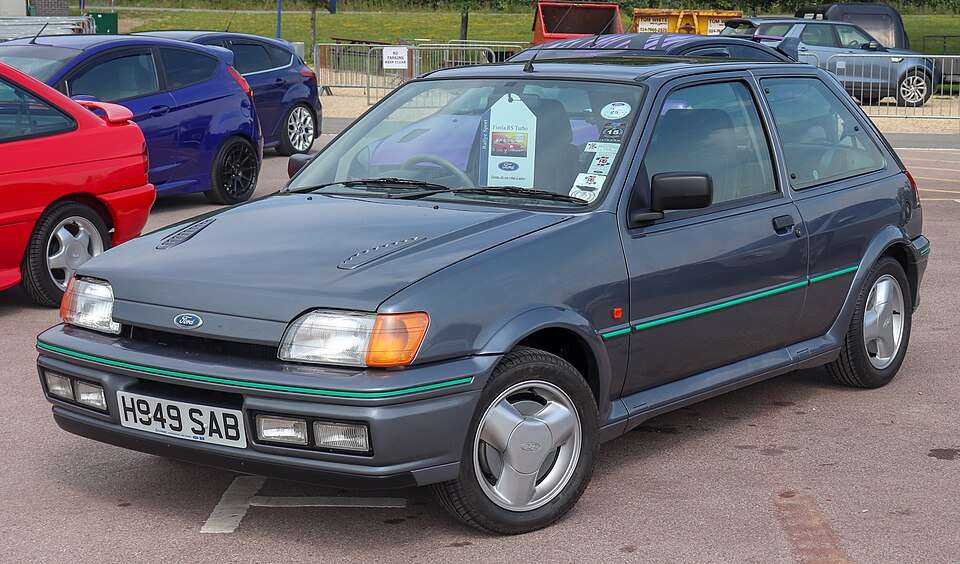
The Mk3 Fiesta RS Turbo puts a turbocharged 1.6-litre CVH engine into a compact, lightweight hatchback. It shares a family name with the Escort RS Turbo, but its injection, turbo installation and original transmission specification are different. This UK guide covers identity, rust, mechanical condition, modifications, maintenance and the less obvious costs of buying a surviving 1990–1992 car.
Our buying verdict
Buy an authenticated, structurally sound car with a coherent engine specification and documented maintenance. Prioritise the shell, cold-to-hot engine health and gearbox before paint, boost or rare trim. An apparently inexpensive converted or unfinished car can cost more to complete than a better documented original example.

What makes a genuine Fiesta RS Turbo?
The Fiesta RS Turbo was the Mk3 performance model using a 1,596cc eight-valve CVH engine, electronic fuel injection, turbocharging and intercooling. Standard output is generally quoted at 133bhp, transmitted to the front wheels through a five-speed manual gearbox.
| Car or installation | Key distinction | Buying implication |
|---|---|---|
| Original Fiesta RS Turbo | EFI turbocharged CVH installation | Confirm chassis identity and installed mechanical specification. |
| Escort RS Turbo | Different injection and turbo installation | Do not assume Escort service parts or diagnostic procedures apply. |
| XR2i or other converted Fiesta | May closely resemble an RS | Assess as a conversion and verify documentation; trim is not authentication. |
| ZVH or Zetec-turbo conversion | Different engine architecture or hybrid installation | Require a complete build specification and a workshop that supports it. |
| Modified original engine | Turbo, fuelling, management and gearbox may differ | Judge the whole installation rather than an isolated power claim. |
The original Fiesta did not have the Escort RS Turbo’s factory limited-slip differential arrangement. Some surviving cars now have a replacement gearbox or aftermarket differential. Establish what is fitted and how it affects maintenance and road behaviour.
Bonnet vents, body kit, green moulding inserts, Recaro seats and other familiar features are useful detail checks, but they can be transferred. Match the VIN and registration information and obtain specialist help with authenticity before paying a collector premium.
The car is basic by modern standards. Try the driving position, pedal spacing, steering effort and ride before deciding. A large turbo or aggressive clutch can change the character substantially from the original responsive road-car brief.
For a first purchase, favour a complete car with clear records and modest, documented changes. Buying an unfinished project and planning to source every missing original item can involve far more time and expense than the advert suggests.
Fiesta RS Turbo prices: use valid comparisons
The Car & Classic Fiesta RS Turbo search reviewed on 3 November 2026 returned unrelated Fiesta adverts, including a Mk2 Zetec conversion, a Mk1 conversion and a Mk3 Ghia automatic. Those were excluded from direct RS Turbo valuation evidence.
This guide therefore does not invent a current price band from unsuitable results or recycle old buying-guide figures. Before making an offer, compare current authenticated RS Turbos with the same level of originality, condition and repair evidence.
Separate asking prices from completed sales. A seller’s restoration expenditure or claimed horsepower does not automatically establish value. An original-looking car can still need substantial structural or mechanical work.
Request underside photographs, engine and gearbox specification, belt invoices and restoration records before travelling. Ask about overheating, engine rebuilds, reshelling and accident repairs. Establish what remains to be done after any claimed restoration.
Calculate purchase plus immediate work, including transport, overdue servicing, tyres, brakes, corrosion and diagnosis. A low headline price can be misleading if the car needs several trades and scarce trim before it is usable.
Read mileage and ownership chronology across invoices and MOT records. A replacement engine or instrument cluster needs explanation rather than automatic rejection, but its history should be coherent and the car priced accordingly.

Rust, shell repairs and authenticity
Inspect the bulkhead, battery-tray area, inner wings, suspension turrets, sills and jacking points on a lift. A tidy engine bay and newly painted outer panels cannot show the condition of every concealed seam.
Look at footwells, floorpans, rear wheelarches, fuel-filler area, door pillars and the base of the windscreen. Check the boot floor and tailgate as well. Rust can extend behind trim and into adjoining layers.
Body kits and sill covers can hide deterioration. Ask for appropriate access with the seller’s permission and use a specialist who knows where to look. Do not assume a freshly fitted outer sill establishes sound inner structure.
Request photographs of welding before finishing. A repair invoice should explain what was cut out and replaced, not merely say “rust treated”. Agree the scope of remaining work, including inner panels, paint, sealing and protection.
Check panel gaps, paint differences, seams and fasteners for accident or reshell history. A database check can identify recorded events, but cannot prove every unrecorded repair is sound. Geometry and tyre wear can provide further clues.
Match chassis identification and documents. Investigate discrepancies before paying a deposit. A car built from another shell may be enjoyable, but its provenance, legal description and value need to be understood independently of its RS appearance.
Inspect doors, glass, sunroof where fitted, opening rear-quarter windows and seals. Water entry can damage carpets, trim and structure. A dry interior after storage does not establish that the leak has been repaired.
Price missing or damaged original trim before agreeing an offer. Cosmetic parts that once seemed disposable may now take sustained searching. The cost of a complete set can differ greatly from buying one readily available clip.
CVH, turbo, EFI and transmission checks
Understand the actual engine
The Fiesta’s EFI arrangement differs from the Escort’s original mechanical-injection setup. Begin diagnosis and parts selection from the fitted Fiesta system, not a generic RS Turbo label. Surviving cars may have aftermarket management or a different engine.
Ask for the engine specification, builder, turbo identity, injectors, sensors, intercooler, management and map provider. A list of brand names does not establish that the components work together. Confirm required fuel and who will support the car after purchase.
For a rebuild, request invoices identifying machining, internal parts and subsequent running-in or servicing. “Forged”, “rebuilt” or “low miles on engine” needs a date and a documented scope. A new cam cover cannot reveal internal condition.
Cold start, oil pressure and engine noise
Check oil and coolant levels before a genuine cold start. Observe starting, idle, warning lamps, smoke and mechanical noise. Repeat the assessment when fully warm, including hot restarting and a leak check after the road test.
Knocking or persistent top-end noise needs diagnosis. CVH cam and follower wear is a relevant concern, but not every noise has the same cause. Ask a specialist to distinguish lubrication, valvetrain, accessory and bottom-end issues.
Ask about measured oil consumption and inspect for leaks. Blue smoke can involve valve sealing, rings, turbo or other causes. Do not price the car on the assumption that the cheapest seal will resolve it.
Compression, leak-down or oil-pressure checks may be appropriate when symptoms or history justify them. One satisfactory test does not establish the health of the entire engine and turbo installation.
Cambelt and cooling maintenance
The CVH uses a timing belt. Request an invoice showing date, mileage and the components renewed. Have a knowledgeable workshop confirm the appropriate current age-and-distance schedule for the engine and fitted parts.
If evidence is missing or unclear, budget for a complete appropriate service before relying on the car. Low annual mileage does not stop belts, tensioners and hoses ageing. An invoice for a loose belt is not proof of a correctly completed job.
Inspect radiator, hoses, water-pump area, thermostat behaviour and coolant condition. Confirm stable temperature and fan operation during a sensible warm-up and road test. Do not open a hot pressurised system.
Ask about previous overheating and repeated topping up. Oil and coolant contamination, persistent loss or excessive pressurisation needs a proper diagnosis. A seller calling it a head gasket does not establish what caused the failure or what else needs checking.
The specialist parts catalogue reviewed lists a Fiesta EFI-specific water pump and gasket. That is a useful reminder to verify the actual application rather than assuming all CVH cooling components are identical.
Turbo and boost delivery
Assess boost only after the engine is properly warm and during a lawful, appropriately insured road test. Look for clean, progressive delivery without hesitation, surging or unexplained smoke. Do not treat a high gauge reading as evidence of performance quality.
Inspect accessible turbo oil and coolant connections where fitted, exhaust joints, intercooler plumbing and vacuum or pressure hoses. A small leak can affect running, but a pressure-test diagnosis is more useful than replacing hoses by guesswork.
Turbo upgrades change the operating demands on fuelling, cooling and the engine. There is no universal safe horsepower figure for every old CVH installation. Calibration, hardware, assembly, fuel and usage all matter.
Ask why the turbo or engine was replaced, and what was done to address the original cause. A replacement component without the surrounding repair history can leave the same problem unresolved.
EFI and electrical running faults
Check idle, throttle response and starting from cold and hot. Hesitation can involve ignition, fuel delivery, air leaks, control wiring or mechanical condition. A chip or reset is not proof that an underlying fault has been repaired.
Inspect sensor and management wiring, grounds, fuel-pump modifications and added relays. Changes should be identifiable, protected and supported by a coherent diagram or installation record. Avoid a car that only runs through an unexplained sequence of switches.
Match plugs, leads and other ignition components to the engine and tune through the supporting workshop. An upgraded component is not automatically the right one. Repeated fouling or misfire needs its cause investigated.
Gearbox, clutch and driveshafts
Test all gears from cold and hot without forcing shifts. Listen for bearing growl and assess synchromesh, gear retention and clutch disengagement. A vague linkage may be repairable, but it does not prove the gearbox itself is sound.
Check clutch slip, noise and engagement. Identify any paddle clutch, different flywheel or gearbox conversion. Some aftermarket parts change drivability, but that should not excuse every harsh or noisy symptom.
Inspect driveshaft boots, joints and mounting condition. Vibration can have several causes, including tyres, shafts, mounts or installation problems. Ask for diagnosis rather than accepting one convenient explanation.
Identify the fitted differential. An aftermarket limited-slip unit needs the correct service and use assumptions. A seller claiming factory Escort-style equipment should explain whether it was added and provide supporting records.
Suspension, steering and brakes
Check bushes, ball joints, dampers, springs, wheel bearings and surrounding structure. Lowering and brake conversions need a coherent installation and setup. A collection of new parts can still produce poor road behaviour.
Inspect tyres for correct sizing, age, damage and uneven wear. Check clearance at full lock and through suspension movement. Rubbing or excessive geometry changes are issues to assess, not just styling choices to ignore.
Inspect discs, pads, rear drums where fitted, hoses, pipes and parking brake. Verify any optional or altered braking system. Test for pulling, vibration and sticking during a safe road test.

Recaros, trim, water entry and electrics
Inspect seats, bolsters, recline mechanisms, runners, belts and mounting security. Original Recaro trim can be expensive to restore correctly. A good-looking cover does not establish a sound seat frame or mounting.
Test windows, locking, mirrors, heating, ventilation, lighting and instruments. Check warning-lamp behaviour and the condition of aftermarket alarms or immobilisers. Obtain all keys and information needed to maintain them.
Look for damp under accessible carpets, around the sunroof and in the boot. Establish the source of staining or a musty smell. Water can affect wiring and concealed structure as well as appearance.
Check dashboard, door cards, parcel shelf, switches and unique trim for completeness. A car stripped for track use may need much more than a pair of seats to return to original road specification.
Maintenance costs, timing kits and alternators
Affiliate disclosure: eBay parts links below are affiliate links using our campaign. We may earn a commission if you buy, at no extra cost to you. Links open search results rather than a verified individual product. Check engine, year, part number, seller, condition and returns; search results can contain incompatible items.
Matt Lewis Motorsport’s Fiesta RS Turbo engine-parts catalogue, checked on 3 November 2026, displayed the EFI 1.6 water pump and gasket at £30, with an ex-VAT figure of £25. This is a supplier parts price, not a fitted cooling repair or a guarantee of compatibility with a converted engine.
| Job | What to establish | Compare parts |
|---|---|---|
| Cambelt service | Correct CVH kit, component scope, installation and labour. | Compare Fiesta RS Turbo timing kits |
| Alternator | Diagnose charging; match output, pulley, brackets and connections. | Compare Fiesta RS Turbo alternators |
| Water pump | Correct EFI application, gasket, coolant and leak checks. | Compare Fiesta EFI water pumps |
| Ignition | Correct tune-specific plugs, leads and tested connections. | Compare Fiesta RS Turbo ignition parts |
| Turbo service | Identify actual turbo and cause of smoke or leakage. | Compare Fiesta turbo and gasket listings |
| Clutch | Match actual gearbox and flywheel; include fitting and diagnosis. | Compare Fiesta RS Turbo clutch kits |
| Brakes | Identify standard or converted hardware before ordering. | Compare Fiesta RS Turbo brake parts |
| Routine service | Correct filters and specified fluids for the installed engine. | Compare Fiesta RS Turbo service parts |
Search results are not fitment guarantees. Verify engine, build details and fitted components with the supplier. Compare manufacturer, condition, VAT, delivery, warranty, returns and exchange charges. An Escort or modern EcoBoost Fiesta listing may be irrelevant despite sharing words in the title.
Establish a maintenance baseline after purchase and keep records of belts, cooling, oil use, brakes and tyres. Document every modification and retain the map and hardware specification. This prevents future servicing from relying on a factory specification that no longer exists.
Hidden ownership costs
Set a first-year budget before making an offer. Add the purchase price, fees and collection, independent inspection, immediate servicing, diagnosed repairs, insurance, storage and a reserve for unresolved work. Use quotations for the car in front of you; a percentage of the purchase price is a poor substitute for knowing what needs doing.
- Original mouldings, seats, glass and other RS-specific trim can require searching and restoration.
- Corrosion repairs may extend behind the body kit and into inner structure once dismantled.
- A hybrid or engine-converted car needs a maintenance plan for its actual components, not a standard Fiesta parts list.
- Turbo access, seized fasteners, mapping diagnosis and supporting fuelling work can exceed the price of the apparent failed part.
- Parts are only part of the bill. Access, diagnosis, fluids, alignment, seized fasteners and VAT can change the total. Ask the workshop what its quotation includes and how additional work will be agreed.
- Exchange units and delivery. Alternators, starters and other rebuilt components can require a returnable old unit. Compare the surcharge, return postage, deadline and warranty before choosing a supplier.
- Insurance and downtime. Obtain a quote for the actual specification and declared modifications. Allow for recovery and alternative transport if this will be your only car.

Viewing and test-drive checklist
Before travelling
- Confirm registration, exact version, seller identity and ownership history. Ask about accidents, insurance write-offs, engine changes and modifications.
- Read the MOT chronology and request invoices, not just a stamped service book. Agree a cold start, inspection access and a properly insured test drive.
- Get a written list of included keys, original parts and any outstanding faults. For a distant car, request current underside and engine-bay photographs.
At the car
- □ Authenticate chassis identity and distinguish original RS from a converted shell.
- □ Inspect bulkhead, battery area, sills, floors, arches and suspension mounts on a lift.
- □ Obtain dated belt evidence and a complete engine/turbo/management specification.
- □ Observe cold start, warm running, oil and coolant behaviour and hot restart.
- □ Test gearbox, clutch, driveshafts and identify the fitted differential.
- □ Price missing RS trim and investigate damp or altered electrical systems.
- □ Compare identification with documents, check panel alignment and inspect accessible structure on a lift. Never go beneath a car supported only by a jack.
- □ Try lights, wipers, washers, heater, locks and warning lamps. Inspect tyres for age and damage as well as tread.
- □ Drive from cold to fully warm, using gears and brakes progressively. Note smoke, overheating, vibration, warning lights or hesitant acceleration; stop if a serious fault develops.
- □ Recheck hot starting and visible leaks afterwards. Record unresolved faults and obtain specialist estimates before paying a deposit.
Proceed when identity, structure and maintenance evidence fit the description. Investigate when a fault has a plausible cause but no diagnosis. Walk away when crucial inspection is refused, identity remains uncertain or the budget depends on a serious fault being cheap. Put any inspection condition and deposit terms in writing.
Buying questions answered
Is it mechanically the same as an Escort RS Turbo?
No. The Fiesta’s original EFI and turbo installation differ, and its factory differential specification is different. Identify the actual components.
Did the Fiesta RS Turbo have the Escort’s limited-slip differential?
Not as the original standard arrangement. Surviving cars may have upgraded gearboxes or differentials, which need documentation.
Does the CVH need a cambelt?
Yes. Obtain date-and-mileage evidence and confirm the appropriate current schedule and complete job with a specialist.
Are bonnet vents and green trim proof of authenticity?
No. They are useful details but can be transferred. Verify the chassis, documents and provenance.
Is a converted Zetec-turbo car a better buy?
That depends on workmanship, condition, documentation and intended use. Assess it as its actual build, with a workshop willing to support it.
Compare the Escort RS Turbo flagship guide and our Fiesta ST150 guide.
Sources and research method
Independently written desk research by Unusual Cars UK, checked on 3 November 2026. We have not road-tested or inspected the illustrated cars or independently authenticated sellers’ claims. Buying recommendations and inspection priorities are our editorial assessment. Historical guides inform technical context; their old price bands are not current valuations. Confirm service requirements against the actual vehicle and suitable workshop information.
- Fast Car Fiesta buying guide — Period RS Turbo technical context. Generic power recipes and automatic modification recommendations are not adopted.
- Matt Lewis Motorsport Fiesta engine parts — Primary EFI-specific component and dated parts-price evidence.
- Car & Classic Fiesta RS Turbo search — Unrelated returned cars excluded from valuation comparisons.
- GOV.UK used-car checks and MOT history — document and test-history checks.
Images are illustrative surviving vehicles, not the advertised cars discussed in the market section. Individual credits and licence links accompany each photograph. No endorsement by a photographer, club, supplier or seller is implied. Prices and availability can change.