The third-generation Toyota MR2 trades the earlier car’s coupe body and luggage space for a light, compact, mid-engined roadster. It can deliver a great deal of driving pleasure, but buying one properly means looking beyond Toyota’s reliability reputation. Oil consumption, exhaust history, hidden rear-subframe rust, roof drainage and an unfamiliar SMT gearbox can change an apparently cheap purchase into a substantial repair project.
Our buying verdict
Start with a healthy, honestly documented engine and a sound rear subframe. For most buyers, a good manual with appropriate tyres, a dry interior and clear maintenance evidence is the easiest route. A later facelift is attractive, but it does not excuse smoke, low oil, corrosion or unresolved warning lights.

Which MR2 Roadster should you buy?
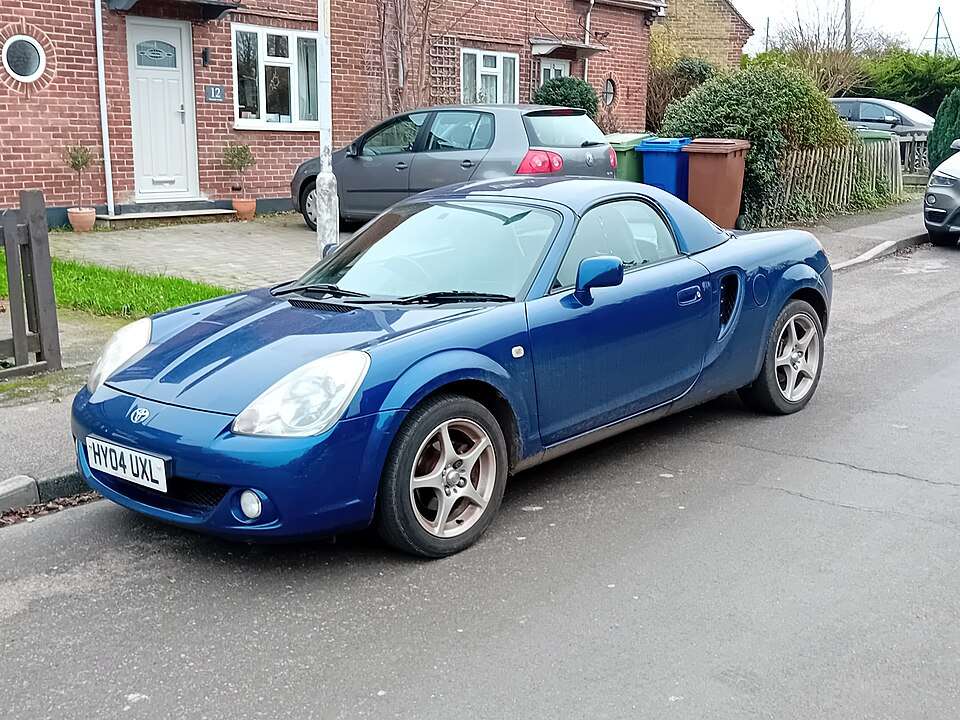
The W30/ZZW30 generation appeared in Japan in 1999 as the MR-S and reached UK buyers in 2000 as the MR2 Roadster. It is known as the MR2 Spyder in some markets. The standard engine is the naturally aspirated 1.8-litre 1ZZ-FE VVT-i four, mounted behind the seats and driving the rear wheels. It is not the earlier SW20 coupe and does not share that car’s complete maintenance and parts specification.
Early cars have a five-speed manual; the facelift around late 2002/2003 brought a six-speed transmission and changes to styling, wheels, bracing and equipment. Build date and market matter, so identify the actual car rather than relying on a registration plate. Imported MR-S cars can differ from UK examples in equipment and drivetrain details.
| Version | Buying appeal | What to verify |
|---|---|---|
| Early five-speed manual | Simple, light roadster character | Oil consumption, exhaust history, rear subframe and age-related recommissioning. |
| Facelift six-speed manual | Later development and a useful extra ratio | Actual build, tyre sizes, service record and engine condition; no blanket immunity from faults. |
| SMT automated manual | Different shifting experience without a conventional clutch pedal | Hydraulic/control-system health, clutch adjustment, hot operation and diagnostic support. |
| Japanese MR-S import | Potentially interesting specification | History, mileage units, equipment, corrosion and actual differential/transmission. |
| TF300 or other special version | Collectability and distinctive trim | Documented identity and original details rather than badges or seat embroidery alone. |
Do not assume every UK manual car has a limited-slip differential, or that an import has the same equipment as a UK car. Published accounts of fitment can conflict. If the differential matters to your purchase, establish it through the car’s build information, component identification and specialist inspection. An advert’s equipment list is not sufficient evidence.
The SMT is an automated manual, not a torque-converter automatic. It needs a deliberate buying decision and access to suitable diagnostics and expertise. A healthy example may suit an enthusiast, but a non-selecting or intermittently faulting car is not a routine clutch-cable repair. Drive one before deciding whether its shifting behaviour suits you.
Engine swaps, turbo conversions and extensive chassis modifications are common. A 2ZZ conversion is not a factory standard MR2 engine, and not every 2ZZ installation is supercharged. Ask for the exact components, management, cooling, exhaust and gearbox specification, installer records and insurance disclosure. This guide’s standard 1ZZ parts searches do not automatically fit a converted car.
MR2 Roadster prices and dated asking evidence
Car & Classic results checked on 3 November 2026 included a 2003 six-speed car with a stated 93,836 miles at £3,250, a 2001 five-speed with 63,106 miles at £4,000, a 2005 six-speed with 46,300 miles at £7,500 and a 2000 five-speed with 39,000 miles at £7,995. These are asking prices and seller descriptions, not verified condition or achieved sale values.
The spread illustrates why a national fixed price band is less useful than a comparison of actual condition. Engine health, subframe work, roof condition, tyres and service history can outweigh mileage. A high asking price does not establish that a car has been inspected, while a low one does not cap its repair costs.
Separate manual and SMT cars, imports, conversions and special editions. One result described a semi-automatic in its title while its summary called it manual, showing why the full advert and actual car must be checked. Confirm whether a hardtop, fitting kit and all keys are included rather than assuming everything visible in an advert comes with the sale.
Request service and repair invoices before travel and ask the owner for a measured account of oil use. Arrange an independent inspection with access to the underside and appropriate diagnostics. Budget for the purchase, transport, baseline service and necessary work. Do not let the attraction of a low-priced sports car consume the reserve needed to make it dependable.
Rear-subframe rust, structure and roof drainage
The rear subframe is a priority inspection item. It carries important engine and suspension loads and can corrode in areas obscured by undertrays. Have it examined on a lift by someone familiar with the model, with covers removed where necessary and authorised. Looking at a small visible corner is not a complete assessment of its condition.
Ask whether a replacement or repair has been carried out, by whom and with what protection. A receipt for a loose used subframe does not establish that installation was completed or that the replacement was sound. Moving suspension and drivetrain components can reveal seized fixings and worn related parts, so obtain a fitted estimate rather than budgeting only for the frame itself.

Inspect sills, floor edges, jacking and suspension areas, front structure, brake pipes and the metal around previous repairs. The model’s age now matters more than old descriptions that treat body rust as unusual. Exterior panels can be relatively straightforward to replace, but that does not make concealed structural damage or poor geometry harmless.
Check panel gaps, seam condition, overspray and evidence of impacts at both ends. The front compartment and rear engine area should not show unexplained distortion. A documented repair may be acceptable; an unrecorded mismatch between the shell, panels and alignment needs investigation. Do not assume a new bumper proves there was no underlying damage.
Inspect behind the seats for dampness, water marks and floor corrosion. Roof drains can block and allow water into the storage and cabin areas. Ask how drainage has been maintained and have the source of any leak identified. Drying a carpet without resolving the source and checking consequential damage is incomplete work.
Inspect the hood fabric, seams, rear glass and its surrounding material. Have the seller demonstrate folding and latching correctly. Cold or aged material can be damaged by forcing it into position. Check seals and side windows for alignment, and assess a fitted hardtop and its mountings separately. A hardtop can conceal a neglected soft top rather than replacing the need to inspect it.
1ZZ engine, exhaust, SMT and chassis problems
Oil consumption and pre-catalyst history
Check oil level before starting and ask how much the owner adds over a stated distance. “They all use a bit” is not a measured answer. Persistent smoke, low oil, loss of performance or a history of repeated topping-up warrants a proper engine assessment. A car that has been run short of oil can have damage beyond the original cause of consumption.
The exhaust manifold contains pre-catalyst material on the original installation. Published guides describe deterioration and its association with engine damage, particularly on earlier cars, while later cars are not automatically immune. Oil consumption and catalyst condition need to be assessed together. The direction of cause and extent of damage cannot reliably be established from one dashboard code or a look at the tailpipe.
Ask exactly what was replaced or modified and why, with dated invoices and any photographs. A pre-cat-free manifold does not repair worn bores or rings, undo previous damage or prove that emissions requirements are met. Do not accept a claim that a car will always pass its MOT solely because the main catalyst remains. Have a specialist establish the appropriate compliant exhaust arrangement for the vehicle.
An inspection may include suitable diagnostic scans, compression or leakage testing and examination of relevant components. Even a satisfactory compression result does not provide a guarantee about future oil consumption; the service history, observed behaviour and owner’s measured records still matter. A replacement engine needs its own provenance and maintenance evidence.
Chains, cooling and normal engine servicing
The standard 1ZZ uses a timing chain, so it does not need the routine cambelt kit used by some earlier MR2 engines. That does not make abnormal rattling, poor lubrication or a worn tensioner acceptable. Investigate symptoms rather than replacing a chain at an invented universal mileage. Confirm the current oil and service requirements for the engine actually fitted.
Inspect coolant, radiator, hoses, pump and fan operation. The radiator is at the front while the engine is behind the cabin, so the system has more plumbing than a simple front-engine layout. Coolant loss, overheating history and air in the circuit need proper diagnosis and correct filling procedures. Do not remove a hot pressure cap.
Check water-pump leakage or bearing symptoms, auxiliary-belt condition, oil leaks and ignition components. Misfires and oxygen-sensor codes need diagnosis across wiring, air leaks, fuelling, exhaust and the sensors themselves. A sensor code is not proof that the sensor is the only failed part. Ask whether warning codes have recently been cleared and why.
Manual and SMT transmissions
A standard manual should select cleanly in every gear without pronounced crunching, jumping out or bearing whine. Test cold and hot operation and assess clutch slip and release. A vague lever can involve cables or linkage, but it does not excuse a damaged gearbox. Obtain a diagnosis before assuming the cheapest adjustment will cure it.
On SMT cars, test the complete system with appropriate equipment and a knowledgeable specialist. Check fault history, hydraulic operation, clutch-related settings and both cold and thoroughly warm behaviour. Intermittent refusal to engage, warning lights and abnormal shifts require investigation before purchase. A conventional manual clutch estimate does not cover every possible SMT repair.
If the transmission or engine has been changed, identify the actual gearbox, driveshafts, mounts and management. A conversion that drives around a car park may still have cooling, calibration or geometry problems on longer journeys. Ask for meaningful road mileage since completion and supporting installation records.
Tyres, steering, suspension and brakes
The MR2 is sensitive to tyre specification and pressure. Check the correct front/rear arrangement for the actual year and wheels; later cars commonly have a different rear wheel size from the front. Do not fit four identical tyres simply because one online selector suggests them. Suitable matching quality, load/speed ratings, age and condition matter alongside tread depth.
Inspect dampers, springs, links, bushes, balljoints and alignment adjusters. A car with poor geometry can feel unsettled without needing a dramatic driving test to prove it. Seized adjustment hardware and corrosion can add labour to an apparently simple alignment. Lowering and wide-wheel modifications need a coherent setup and proper clearance.
Check steering for smooth assistance and any notchiness or play, including the column joints where indicated. Investigate noises rather than accepting a generic power-steering diagnosis. On the road, use normal progressive inputs and assess straight-line tracking and braking; do not deliberately provoke mid-engined handling behaviour during a viewing.
Rear calipers and handbrake cables deserve attention, especially on little-used cars. Check even braking, release and effective parking-brake operation, plus discs, hoses and lines. Cable access can make a low-priced part a more involved fitted job. A fresh MOT is not evidence that every suspension component and brake service item is new.
Interior, roof and practical ownership
Inspect seats, carpets, door cards, trim, switches and the storage spaces behind the seats. Try your actual luggage if touring is part of the plan. The lack of a conventional rear boot is a major difference from the earlier MR2, and a photograph cannot establish whether your bags fit. Do not load the car in a way that obstructs roof operation or visibility.

Test windows, mirrors, central locking, heater, blower, demister, lights, wipers, audio and air conditioning where fitted. Check all supplied keys and warning-lamp behaviour. A poor stereo installation or old alarm can create electrical faults, while dampness can affect connections. Diagnose charging and battery condition before condemning expensive equipment.
Hardtops should be trial-fitted and checked for correct mountings, catches, seals and rear-window electrical connection where applicable. Establish what storage and lifting arrangements you will use at home. Buying a top and complete fitting kit later may cost more than expected, but an included damaged or incomplete top is not a reason to overlook engine problems.

Maintenance costs, service parts and alternators
Affiliate disclosure: eBay parts links below are affiliate links using our campaign. We may earn a commission if you buy, at no extra cost to you. Links open search results rather than a verified individual product. Check engine, year, part number, seller, condition and returns; search results can contain incompatible items.
MR2-BEN listed a new water pump with gasket for the 1.8-litre Mk3/MR-S, 1999–2007, at £45.45 when checked on 3 November 2026. That is a supplier parts-page snapshot, not a fitted quote; confirm tax treatment, delivery, current stock and application. Pump replacement does not by itself diagnose a cooling fault or establish correct system bleeding.
| Job / item | What the estimate should include | Model-specific search |
|---|---|---|
| 1ZZ timing-chain diagnosis | Assess noise, lubrication and actual component wear; no routine cambelt package. | Search 1ZZ chain components |
| Alternator | Test battery, earths and charging; confirm mounting, pulley and access labour. | Search Mk3 alternators |
| Water pump and cooling | Pump/gasket example £45.45 parts only; include coolant, labour and diagnosis. | Search Mk3 water pumps |
| Routine service | Correct oil, filters and plugs; track oil use between services. | Search Roadster service kits |
| Rear brakes and handbrake | Inspect calipers and cables and include access labour. | Search Mk3 rear-brake parts |
| Rear subframe | Confirm condition, quality and included fittings; price transfer labour and seized hardware. | Search Roadster rear subframes |
| Roof and seals | Match the body and part location; assess frame and drainage first. | Search Roadster roof parts |
These eBay links are separate shopping searches and may return used items, wrong MR2 generations or incomplete kits. Verify part numbers, condition, compatibility, VAT, delivery and returns with the supplier and workshop. The specialist’s quoted pump price does not promise an identical eBay offer. Converted cars need their own parts specification.
Set up a baseline service after purchase, covering engine oil and filters, coolant, brake fluid, tyres, transmission requirements, hoses, brakes and roof drains. Keep dated invoices and mileage records. A stored car needs assessment of rubber, fluids and brake operation rather than just a battery charge and fresh fuel.
Hidden Roadster ownership costs
Set a first-year budget before making an offer. Add the purchase price, fees and collection, independent inspection, immediate servicing, diagnosed repairs, insurance, storage and a reserve for unresolved work. Use quotations for the car in front of you; a percentage of the purchase price is a poor substitute for knowing what needs doing.
- A replacement rear subframe can involve substantial transfer labour, seized bolts, suspension parts and alignment.
- High oil consumption or prior catalyst-related damage may require engine work, not merely a manifold or sensor.
- SMT diagnosis and repair need suitable expertise; transport can be necessary if gears cannot be selected.
- A hardtop, complete fittings, roof repair, handbrake cables and a correct tyre set can change the first-year budget substantially.
- Parts are only part of the bill. Access, diagnosis, fluids, alignment, seized fasteners and VAT can change the total. Ask the workshop what its quotation includes and how additional work will be agreed.
- Exchange units and delivery. Alternators, starters and other rebuilt components can require a returnable old unit. Compare the surcharge, return postage, deadline and warranty before choosing a supplier.
- Insurance and downtime. Obtain a quote for the actual specification and declared modifications. Allow for recovery and alternative transport if this will be your only car.
MR2 Mk3 viewing checklist
Before travelling
- Confirm registration, exact version, seller identity and ownership history. Ask about accidents, insurance write-offs, engine changes and modifications.
- Read the MOT chronology and request invoices, not just a stamped service book. Agree a cold start, inspection access and a properly insured test drive.
- Get a written list of included keys, original parts and any outstanding faults. For a distant car, request current underside and engine-bay photographs.
At the car
- □ Confirm build, UK/import specification, five/six-speed manual or SMT and any engine conversion.
- □ Check oil before starting, request measured consumption and inspect cold/hot running and exhaust history.
- □ Have the rear subframe and hidden underside inspected properly on a lift, including behind covers where authorised.
- □ Inspect roof fabric, drains, rear glass, storage compartments and floors for moisture and damage.
- □ Test transmission, brakes, handbrake, steering and tyre/geometry suitability without aggressive handling demonstrations.
- □ Read repair invoices and price a complete baseline service, any engine concern and missing hardtop fittings before committing.
- □ Compare identification with documents, check panel alignment and inspect accessible structure on a lift. Never go beneath a car supported only by a jack.
- □ Try lights, wipers, washers, heater, locks and warning lamps. Inspect tyres for age and damage as well as tread.
- □ Drive from cold to fully warm, using gears and brakes progressively. Note smoke, overheating, vibration, warning lights or hesitant acceleration; stop if a serious fault develops.
- □ Recheck hot starting and visible leaks afterwards. Record unresolved faults and obtain specialist estimates before paying a deposit.
Proceed when identity, structure and maintenance evidence fit the description. Investigate when a fault has a plausible cause but no diagnosis. Walk away when crucial inspection is refused, identity remains uncertain or the budget depends on a serious fault being cheap. Put any inspection condition and deposit terms in writing.
MR2 Roadster buying questions
Does the Mk3 MR2 need a timing belt?
The standard 1ZZ engine uses a chain. Investigate noise and lubrication concerns, and confirm the actual engine on a converted car.
Are facelift cars immune to oil consumption?
No. Later development is attractive, but assess the individual engine, oil-use records, exhaust history and inspection findings.
Does removing the pre-cats prove the engine is healthy?
No. It does not reverse existing engine wear or establish emissions compliance. Obtain a proper diagnosis and suitable compliant repair advice.
Is SMT a conventional automatic?
No. It is an automated manual with control and hydraulic requirements. Have a specialist assess it and confirm repair support before buying a faulty example.
What rust matters most?
The rear subframe is a priority, but inspect sills, floors, mounting areas, pipes and previous repairs too. Undertrays and trim can conceal the relevant metal.
Sources and research method
Independently written desk research by Unusual Cars UK, checked on 3 November 2026. We have not road-tested or inspected the illustrated cars or independently authenticated sellers’ claims. Buying recommendations and inspection priorities are our editorial assessment. Historical guides inform technical context; their old price bands are not current valuations. Confirm service requirements against the actual vehicle and suitable workshop information.
- Classic & Sports Car: W30 guide — Mechanical, subframe, roof and transmission context; historic values and blanket catalyst-removal assurances excluded.
- Classics World: Mk3 MR2 guide — Version and ownership cross-check; conflicting details not treated as definitive specifications.
- MR2-BEN: Mk3 water pump — Primary application, gasket and displayed parts price checked 3 November 2026.
- Car & Classic: Roadster listings — Dated asking examples; manuals, SMT, imports and generations separated.
- GOV.UK used-car checks and MOT history — document and test-history checks.
Images are illustrative surviving vehicles, not the advertised cars discussed in the market section. Individual credits and licence links accompany each photograph. No endorsement by a photographer, club, supplier or seller is implied. Prices and availability can change.