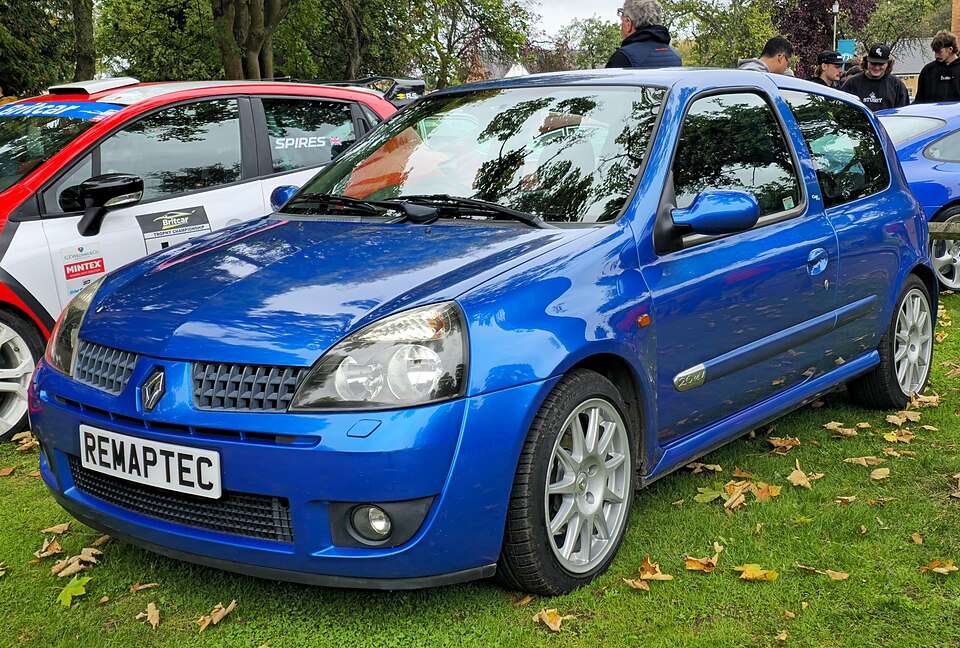
The best Clio 172 or 182 is the one with a sound shell, convincing belt-service history and the right suspension fitted correctly. A badge, polished wheels or a low odometer reading cannot substitute for those things. This guide covers the naturally aspirated, front-wheel-drive Mk2 Renaultsport cars, including Cup and Trophy versions; the Clio V6 and later 197/200 are different buying propositions.
Our buying verdict
For road use, start with a well-maintained standard 182 or a documented car with the Cup chassis specification. A 172 is equally worth considering if its condition is better. Buy a Trophy because you value its particular hardware and history, with provision for specialist damper work. For a track car, assess the quality and legality of the complete conversion before valuing the upgrades.

172, 182, Cup and Trophy: which Clio are you buying?
The names refer to metric horsepower designations, not a guarantee of measured output from a surviving car. Both main versions use a naturally aspirated 1,998cc F4R-family four-cylinder, five-speed manual gearbox and front-wheel drive. Workshop identification matters more than assuming every engine, auxiliary drive and exhaust is interchangeable.
| Version | What defines the proposition | Buying consequence |
|---|---|---|
| 172 Phase 1 | Early body styling, with the original compact-wheel presentation | Check early-specific trim and fitted components. Age alone should not discount a well-kept example. |
| 172 Phase 2 | Facelifted car with revised styling and equipment | Often the sensible route into ownership; verify the actual equipment and maintenance. |
| 172 Cup | Lighter, more focused version; originally without ABS | Inspect identity and braking specification carefully. Do not confuse it with an ordinary car wearing Cup wheels. |
| 182 | Later version, recognisable by the twin rear exhaust outlets | Standard cars and optional Cup packs need distinguishing; exhaust routing and parts differ from the 172. |
| 182 Cup | A distinct model, alongside Cup options on standard 182s | Ask which car it is and obtain build/specification evidence rather than accepting “full fat Cup” as an exact model description. |
| 182 Trophy | Special edition associated with Sachs remote-reservoir front dampers and Recaro seats | Check numbered identity, correct hardware and rebuild records. A cheaper substitute damper changes the proposition. |
The important distinction is between a Cup model and a standard car fitted with Cup option packs. A splitter or spoiler does not prove that the chassis specification is present. Wheels can be replaced and paint colours copied. Ask a Renaultsport specialist to reconcile the car’s identity, records and physical installation where a premium depends on it.
Choose your intended use before choosing a version. A car on hard mounts, stiff coilovers and track tyres might suit weekend circuit use but become tiring in town. Conversely, a complete standard cabin and working air conditioning may be worth more to a road buyer than expensive modifications. Sit in the car, adjust the seat and steering position, and judge whether you can live with it.

Clio 172/182 prices: use comparable evidence
Do not use a decade-old magazine’s bargain prices as today’s budget. Separate standard 172s and 182s from Cups, Trophys, restoration projects and track builds. Mileage matters, but the immediate belt service, structural condition and completeness can matter more to the money you actually spend.
| Evidence checked 3 November 2026 | What the record actually says | How to use it |
|---|---|---|
| PistonHeads 2003 172 Cup, advert 15475746 | £8,950 displayed; 84,000 miles; extensively track prepared. The description explicitly says “now sold” and the advert is old. | An archived advertised figure, not a verified transaction or current stock. It illustrates why live-looking adverts need reading. |
| Collecting Cars 2005 Trophy, lot ending 17 April 2025 | Marked sold; 40,573 miles advertised, with modifications and extensive recent mechanical work. Price requires login and is not reproduced here. | Useful specification and maintenance evidence. It cannot provide a publicly verified sale price for this guide. |
These records are linked in the sources. We deliberately do not turn an archived asking price or a hidden result into a market average. Before making an offer, collect current examples of the same version, record asking versus achieved prices and fees, and compare the work each needs. A Trophy with documented original equipment belongs in a different comparison set from a stripped-out 172.
Ask the seller to separate evidence from adjectives. “Belts done” should lead to a dated invoice specifying the job and workshop. “Fully rebuilt” should lead to the components, clearances or scope, mileage since work and warranty. A significant refurbishment bill is valuable evidence of attention, but does not automatically add its full amount to resale value.
Rust, accident repairs and identity
A small car with modest replacement-panel prices can still be expensive to repair structurally. Book a dry viewing and a lift inspection. Examine rear arches, sill ends, jacking areas and the underside of the rear structure. Plastic skirts can hide corrosion; fresh paint around them does not settle the condition underneath.
| Inspection area | Look for | Decision to make |
|---|---|---|
| Rear arch/sill junctions | Bubbles, cracked seam sealer, patch edges, dampness or thick new coating | If hidden metal determines value, agree a specialist inspection with permission to remove appropriate trim. |
| Boot floor and rear structure | Distortion, inconsistent seams, water, unexpected welding | Seek accident or corrosion-repair records; inspect the same area from underneath. |
| Front structure and suspension mounts | Unequal panel gaps, disturbed fasteners, poorly finished repairs | Have geometry and structure assessed rather than assuming an alignment will cure pulling. |
| Bonnet, latch and safety catch | Free movement, secure engagement and evidence of maintenance/recall attention | Resolve latch concerns before driving; check outstanding recalls against the registration. |
| Body-kit fixings and underseal | Missing clips, new coating hiding texture, overspray | Ask for before-and-during photographs and invoices explaining the repair. |
Match the V5C, visible vehicle identification and service history, and investigate inconsistencies. Use the official vehicle and MOT checks, remembering that a pass does not authenticate a Trophy or prove the condition behind a sill cover. Check the seller’s right to sell and run a suitable finance/write-off history check before committing.
On a restored example, the useful photographs show corroded metal removed and replacement sections being fitted. A glossy finished underside is only the final stage. Ask who did the repairs and whether the invoice identifies the car. Avoid destructive probing yourself; an owner’s refusal to let you damage paint is reasonable, whereas refusal of an agreed professional inspection leaves an uncertainty to price or avoid.
Engine, belt drive and common mechanical problems
Start with the belt-service evidence
A correctly performed belt job is central to this purchase. Ask about the timing belt, tensioners, auxiliary drive and the dephaser pulley, with the work identified on an invoice. Historical Renaultsport references quote five years/72,000 miles for the timing belt; confirm the applicable current schedule and any stricter specialist advice for the actual car. Track use and unknown components require an individual plan.
Do not treat a paint mark on a cover or a new belt visible from one angle as proof of a complete service. Ask which locking tools and procedure were used, who set the timing and whether the engine has been modified. If history is missing, obtain a complete quotation and discuss whether collection by transporter is appropriate.
Cold start, idle and warm running
Arrange a genuine cold start. Observe how promptly it fires, whether the warning lamps extinguish, and whether smoke or persistent mechanical noise continues as it warms. A slightly uneven cold idle is not permission to dismiss a misfire. Compare behaviour before and after full warm-up, including a hot restart.
| Symptom | Investigation to request | Buying response |
|---|---|---|
| Persistent startup rattle or disappointing power | Belt timing, dephaser condition, oil history and suitable diagnostics | Do not accept “they all do that” in place of diagnosis. |
| Hesitation, misfire or warning lamp | Fault codes plus ignition, intake, sensor and mechanical checks | A code identifies a direction for testing; it does not prove the named component needs replacing. |
| Clunk under acceleration or gear changes | Engine/gearbox mounts, exhaust contact and driveline condition | Have the cause established before pricing it as a cheap mount. |
| Smoke, coolant loss or temperature rise | Leak tests and engine/cooling assessment as appropriate | Stop a drive that overheats; do not open a hot pressurised system. |
| Crunching gears or persistent whine | Linkage, clutch operation, synchros and bearings | Budget on a diagnosed repair, not a promise that an oil change will cure it. |
Check the dipstick when safely accessible and examine oil-service evidence. Watch for leaks and makeshift hose or wiring repairs. The engine should pull progressively once warm without requiring an aggressive demonstration. Never repeatedly load an engine that is misfiring or showing a temperature problem.
Gearbox, clutch and exhaust
Try every gear at suitable speeds, listen on acceleration and overrun, and check reverse when stationary. Assess clutch engagement without abusive stall tests. A heavy or altered pedal needs explanation; do not assume a racing clutch is desirable for road use.
Inspect the entire exhaust, its mounts and clearances. On a 182 the twin-tailpipe layout changes the rear packaging; a 172 system is not an equivalent replacement. A quality stainless system can be sensible, but check noise, catalyst provision, leaks and whether the installation has been declared to the insurer. A new rear silencer does not fix failed supporting mounts.
Suspension, steering and brakes
Verify spring and damper specification before ordering replacements. Hub-to-strut mounting differences mean an advert labelled simply “182 coilovers” is insufficient. Measure and confirm the fitted hardware with the supplier. On a Trophy, establish whether the Sachs units are present, who last inspected them and what servicing is now required.
Look for broken springs, leaking dampers, worn bushes and uneven tyres. A car that wanders may need more than alignment. During gentle braking, assess pedal consistency and straight stopping. Check brake pipes, handbrake function and rear wheel-bearing noise. Confirm the 172 Cup’s original lack of ABS when interpreting its equipment, and establish that any changes have been competently executed.

Interior, electrics and modified-car checks
Inspect seat bolsters, rails and adjusters, steering-wheel covering, pedals and the gear lever. Wear should fit the history, but a retrimmed wheel can conceal it. Try the driving position for more than a minute: comfort and control matter as much as the reputation of a particular seat.
Test air conditioning where fitted, blower speeds, windows, mirrors, central locking and both keys. Look for damp under accessible carpets and around rear seating. Operate washers and inspect lights; a warning lamp bypassed with tape or an improvised resistor is not an acceptable repair. Have airbag and ABS warnings investigated correctly.
For track conversions, ask for the seat, harness, roll-cage and mounting specification, plus evidence of competent fitting. Check that the configuration suits your actual road or circuit use. Look for cut wiring, unsecured batteries, poor fuel-line routing and holes left after equipment removal. Obtain insurance acceptance before buying.
Keep a written current specification with the invoices. An old dyno graph has limited value if the intake, exhaust, engine calibration or engine itself has changed. Pay for a healthy, usable package rather than adding up the advertised retail prices of modifications.

Maintenance costs, timing kits and useful parts
Affiliate disclosure: eBay parts links below are affiliate links using our campaign. We may earn a commission if you buy, at no extra cost to you. Links open search results rather than a verified individual product. Check engine, year, part number, seller, condition and returns; search results can contain incompatible items.
Separate a bare timing kit from a complete belt-service package. Renault Parts Direct displayed £685.33 for its air-conditioned 172/182 full change kit when checked, marked out of stock. The listed contents include timing kit, dephaser, water pump, auxiliary kit, crank bolt, seals and end plugs. That is a dated supplier reference, not an eBay offer, fitted cost or availability promise. Its original listing is in the sources.
| Part/search | Budgeting and fitment advice |
|---|---|
| 172/182 timing and dephaser kits | Compare complete contents, correct auxiliary layout and provenance. Ask the fitter which components their quotation requires. |
| 172/182 alternators | Confirm output, connections, pulley, mounting and air-conditioning arrangement; test battery, earths and drive first. |
| 172/182 starter motors | Diagnose an intermittent non-start before ordering; compare exchange deposit and warranty. |
| F4R service kits | Check oil specification, filter contents and plug application rather than buying on the lowest headline price. |
| Engine and gearbox mounts | Choose road-appropriate stiffness; rigid upgrades can add vibration. |
| Rear brake discs and bearings | Check bearing/ABS provisions and the exact braking installation. |
| Radiators and thermostats | Find coolant loss or fan-control faults before assuming a new radiator solves overheating. |
| Suspension parts | Confirm hub spacing and Cup/Trophy application. Specialist Sachs work is a separate quotation. |
The eBay search checked for a 182 timing kit also returned products labelled for later Clios and other engines. This is why “fits Clio” is not enough. Obtain part-number and application confirmation; do not interpret an automated compatibility badge as a workshop diagnosis.
Before regular use, establish a baseline for oil, filters, plugs, belts, cooling, brakes and tyres. Keep dated records of mileage and parts. Discuss frequency with a Renaultsport specialist if the car sees circuit use. Allow separately for labour and fluids; buying the parts yourself may change a workshop’s warranty arrangements.
Hidden ownership costs
Set a first-year budget before making an offer. Add the purchase price, fees and collection, independent inspection, immediate servicing, diagnosed repairs, insurance, storage and a reserve for unresolved work. Use quotations for the car in front of you; a percentage of the purchase price is a poor substitute for knowing what needs doing.
- Trophy hardware. Specialist front-damper inspection or rebuilding can change the ownership budget. Ask for a current quote rather than repeating historical magazine figures.
- Putting a track car back on the road comfortably. Seats, trim, airbags, exhaust and suspension may require more work than the advert suggests.
- Missing equipment. Keys, air-conditioning repairs, correct wheels and a tidy interior can turn a cheap purchase into several separate jobs.
- Parts are only part of the bill. Access, diagnosis, fluids, alignment, seized fasteners and VAT can change the total. Ask the workshop what its quotation includes and how additional work will be agreed.
- Exchange units and delivery. Alternators, starters and other rebuilt components can require a returnable old unit. Compare the surcharge, return postage, deadline and warranty before choosing a supplier.
- Insurance and downtime. Obtain a quote for the actual specification and declared modifications. Allow for recovery and alternative transport if this will be your only car.
Viewing and test-drive checklist
Before travelling
- Confirm registration, exact version, seller identity and ownership history. Ask about accidents, insurance write-offs, engine changes and modifications.
- Read the MOT chronology and request invoices, not just a stamped service book. Agree a cold start, inspection access and a properly insured test drive.
- Get a written list of included keys, original parts and any outstanding faults. For a distant car, request current underside and engine-bay photographs.
At the car
- □ Identify Phase, Cup model versus Cup options, and any Trophy-specific equipment.
- □ Verify the timing, auxiliary belt and dephaser history against invoices.
- □ Inspect rear arches/sills and body-kit-covered structure.
- □ Check cold and hot running, all gears, mounts and exhaust support.
- □ Confirm suspension fitment and obtain a Trophy damper assessment where applicable.
- □ Compare identification with documents, check panel alignment and inspect accessible structure on a lift. Never go beneath a car supported only by a jack.
- □ Try lights, wipers, washers, heater, locks and warning lamps. Inspect tyres for age and damage as well as tread.
- □ Drive from cold to fully warm, using gears and brakes progressively. Note smoke, overheating, vibration, warning lights or hesitant acceleration; stop if a serious fault develops.
- □ Recheck hot starting and visible leaks afterwards. Record unresolved faults and obtain specialist estimates before paying a deposit.
Proceed when identity, structure and maintenance evidence fit the description. Investigate when a fault has a plausible cause but no diagnosis. Walk away when crucial inspection is refused, identity remains uncertain or the budget depends on a serious fault being cheap. Put any inspection condition and deposit terms in writing.
Buying questions answered
Which is the best first Clio Renaultsport?
Our road-use preference is a well-kept standard 182 or verified Cup-chassis car, but a better 172 should win over a neglected 182. Condition, history and your intended use decide the purchase.
Is a 182 with Cup packs the same as a 182 Cup?
No. Model identity and optional equipment are separate questions. Check the build information and fitted chassis parts; wheels, spoilers and online descriptions are not sufficient proof.
Should I buy without belt invoices?
Only with a clear plan and budget for specialist assessment and any immediate replacement. Treat the history as unknown, rather than assuming the last owner’s recollection proves the job.
Is a modified car a bad buy?
Not automatically. Assess documentation, installation, calibration, insurance and road manners. Track use increases the questions to ask but does not, by itself, establish poor condition.
Are Trophy prices a guide to ordinary 182 values?
No. Compare Trophys with equivalent verified examples, and compare ordinary 182s with their own specification and condition group. Hidden auction results and archived asking prices should not become invented averages.
Sources and research method
Independently written desk research by Unusual Cars UK, checked on 3 November 2026. We have not road-tested or inspected the illustrated cars or independently authenticated sellers’ claims. Buying recommendations and inspection priorities are our editorial assessment. Historical guides inform technical context; their old price bands are not current valuations. Confirm service requirements against the actual vehicle and suitable workshop information.
- PistonHeads: Clio 172/182 guide — historical model and inspection reference; prices not adopted as current.
- Autocar: Renault Sport Clio — independent historical version and ownership context.
- Renault Parts Direct: full belt-change kit — dated parts-only price, contents and air-conditioning application.
- Collecting Cars: Trophy sold 17 April 2025 — attributed specification and maintenance case; price not publicly shown.
- PistonHeads advert 15475746 — archived track-prepared 172 Cup; explicitly marked sold.
- GOV.UK used-car checks and MOT history — document and test-history checks.
Images are illustrative surviving vehicles, not the advertised cars discussed in the market section. Individual credits and licence links accompany each photograph. No endorsement by a photographer, club, supplier or seller is implied. Prices and availability can change.