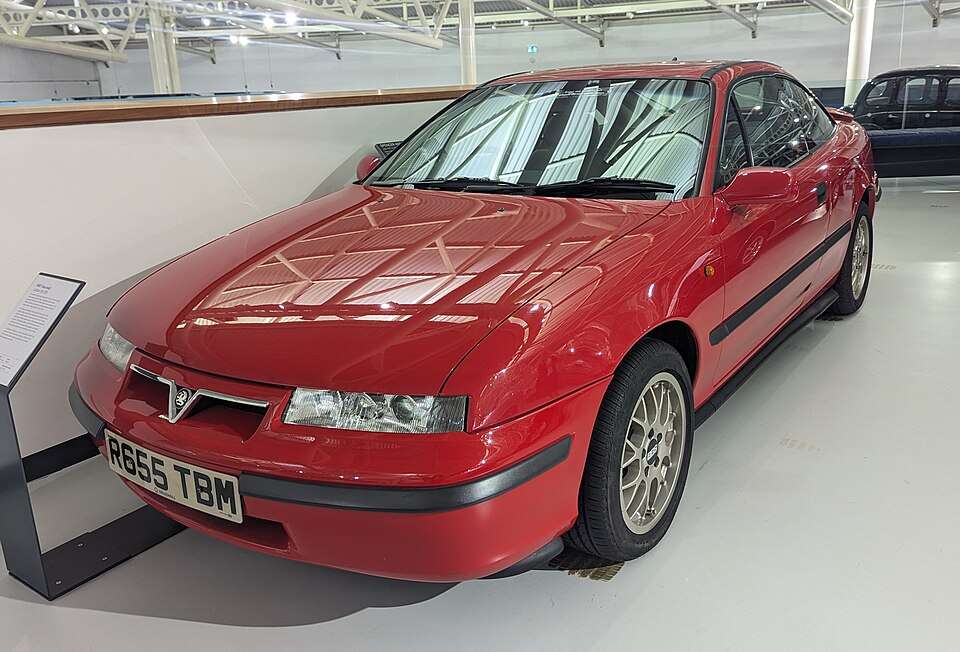
The Calibra offers a distinctive coupe shape, useful hatchback access and a choice of four-cylinder, V6 and Turbo 4×4 powertrains. Those versions can lead to very different ownership costs. This UK guide explains how to identify the car, assess corrosion and repairs, check the engine and transmission, and build a maintenance budget that respects the actual specification.
Our buying verdict
Choose structural condition and documented maintenance before engine badge or special-edition trim. A sound front-wheel-drive car is the simpler entry point; a Turbo 4×4 deserves a specialist drivetrain assessment and a separate repair reserve. Missing trim, questionable engine swaps and an untested four-wheel-drive system can outweigh an attractive purchase price.

8V, red-top 16V, Ecotec, V6 and Turbo 4×4
The Calibra arrived around the turn of the 1990s using familiar Cavalier-related mechanical components beneath a much more aerodynamic coupe body. That shared ancestry helps with some routine parts, but it does not make every engine, gearbox or body component interchangeable.
| Version | Key distinction | Buying focus |
|---|---|---|
| 2.0 8-valve | Simpler naturally aspirated four-cylinder | Belt evidence, cooling, leaks and structural condition. |
| 2.0 16V red-top | C20XE family; early and later component details differ | Identify the installed engine and timing arrangement. |
| 2.0 16V Ecotec | Later X20XEV family | Correct engine-specific service parts and running-fault diagnosis. |
| 2.5 V6 | Naturally aspirated V6, front-wheel drive | Complete belt-service scope, cooling and access-related labour. |
| Turbo 4×4 | C20LET turbo engine, F28 six-speed and four-wheel drive | Authenticate drivetrain, transfer-system condition, tyres and modifications. |
| Special editions | Equipment and trim packages vary | Verify provenance and completeness; badges alone are insufficient. |
A front-wheel-drive 8V or 16V can suit buyers who want the shape and usability without the Turbo’s drivetrain complexity. The V6 adds its own character but needs a service budget appropriate to the extra cylinders and access.
The Turbo 4×4 is more than a naturally aspirated car with extra boost. Its transmission and four-wheel-drive system need knowledgeable inspection. A converted front-wheel-drive car, disabled system or altered transfer arrangement should be assessed as its actual specification, not sold on the factory model’s reputation.
Engine swaps are common enough to make identification essential. Read codes and invoices and inspect the installed hardware. A red cam cover is not proof of a correct C20XE or a particular cylinder-head casting.
Try the driving position, rear-seat access, luggage opening and visibility. Frameless windows and a large hatch are part of the design’s appeal, but they add sealing and adjustment checks. Decide whether an automatic suits your intended use before chasing a manual simply for desirability.
For a first purchase, favour a complete, documented car close to the specification you want. Returning a modified or incomplete coupe to original condition can involve scarce trim and several specialist jobs.
Calibra prices: current asking evidence and limitations
The Car & Classic Vauxhall Calibra page checked on 3 November 2026 included a 1995 Turbo 4×4 described with 170,650 miles at £8,995. Its summary also labelled the gearbox as five-speed, inconsistent with the factory Turbo’s F28 six-speed specification. That detail needs clarification with the seller and inspection.
A 1997 V6 automatic with 99,320 miles was listed at price on application. Neither advert provides a completed-sale value or an independently verified condition grade. The sample is too narrow and inconsistent to support a comprehensive current range-wide price band.
Compare the same engine, transmission, drivetrain, market and condition. Keep Opel imports, converted cars and special editions distinct until their specifications are understood. A high restoration bill does not automatically translate into equivalent market value.
Request underside photographs, belt invoices, engine identity and four-wheel-drive maintenance records where relevant. Ask what a seller means by restoration and whether photographs show inner repairs before coatings and paint.
Calculate purchase plus immediate work. The apparent saving on a cheap Turbo can disappear through transfer-system, gearbox and structural repairs. Equally, a high asking price only makes sense when the condition and evidence support it.

Rust, bulkhead condition and body repairs
Inspect the entire shell on a lift rather than relying on a tidy upper body. Sills, jacking points, floors, wheelarches and suspension mounting areas are priorities. Age and previous repairs matter more than a broad claim about later corrosion protection.
Look at the bulkhead and steering-rack mounting region for corrosion or cracking. Trapped moisture around sound-deadening material can conceal deterioration. A replacement steering component does not repair weakened structure around it.
Check the panel behind the rear bumper and accessible rear structure. Inspect door bottoms, hatch edges, lower wings and seams. Cosmetic bubbling can be the visible edge of a larger affected area.
Ask for repair photographs before finishing, particularly where fresh sealant or underbody coating limits access. A neat outer panel does not establish the condition of inner layers. A written repair scope should include access, adjoining metal, paint and protection.
Check panel gaps, paint match, front structure and rear repair areas for accident history. A database check is useful but cannot establish the quality of every unrecorded repair. Tyre wear and geometry can provide further clues.
Open the hatch and inspect the boot and accessible trim for damp. Check drain areas and seals, then establish the source of any water entry. Drying the car does not solve blocked drainage or damaged sealing surfaces.
Test frameless windows and door closure. Look for glass damage, poor alignment and wind noise. Replacement glass, seals and cosmetic trim may take more searching than a routine filter, so price missing or damaged items before agreeing the purchase.
Match VIN and registration documents and review the MOT chronology. Investigate repeated corrosion advisories and ask what work occurred when they disappeared. A later clean MOT is not a photographic record of the repair.
Engine, cambelt, gearbox and four-wheel-drive checks
Identify the fitted engine
Confirm whether the car has an 8V, C20XE, X20XEV, V6 or C20LET installation. Service parts differ, and replaced engines may not match the original registration-year assumption. Obtain the engine number and installation records where changes have been made.
On a red-top engine, identify the actual timing arrangement and cylinder-head details rather than choosing parts by appearance. Courtenay Sport lists an early 2.0XE kit with steel rollers and round belt teeth, illustrating the need to match the installed system.
Do not turn discussion of particular head castings into an automatic diagnosis. Oil and coolant contamination can have several causes, including gasket or casting concerns. An engine specialist should establish the fault before you price it as a simple gasket replacement.
Timing-belt maintenance
The main Calibra engine choices use timing belts. Request invoices showing date, mileage and the complete component scope. Have a specialist confirm the appropriate current age-and-distance schedule for the exact engine and fitted parts.
If evidence is missing, budget for a complete appropriate job before relying on the car. A low-mileage vehicle can still be overdue by age. A fresh belt without attention to associated rollers or tensioners is not necessarily a complete service.
The V6 needs its own procedure, tools and labour allowance. Do not transfer the early four-cylinder kit price to a V6 quotation. Ask what pump, seals, auxiliary components, fluids and installation checks are included where relevant.
Cold start, cooling and oil health
Check oil and coolant levels before a genuine cold start. Observe idle, warning lamps, smoke and mechanical noise, then reassess fully warm. Ask about measured oil consumption, coolant top-ups and previous overheating.
Inspect radiator, hoses, thermostat and water-pump areas for leakage and confirm stable temperature and fan operation. Repeated coolant loss needs an explanation. Do not open a hot pressurised system.
Look for contamination and fresh leaks after the road test. A cleaned engine bay is useful only if the car remains dry in use. Persistent smoke or abnormal noise requires diagnosis rather than an assurance that every old Vauxhall behaves the same way.
Running faults on later engines can involve sensors and control systems, but do not buy a car on the assumption that one inexpensive sensor will solve an undiagnosed problem. Check ignition, air leaks, fuel delivery and mechanical condition as appropriate.
Turbo and modifications
On a Turbo, assess smoke and boost behaviour only once properly warm. Inspect accessible lines, hoses, manifold areas and cooling connections. A leaking gasket and a worn turbo can have different repair scopes despite similar seller descriptions.
Request the turbo specification, engine-management details, map provider, boost setting and required fuel. A dyno graph does not establish safe operation in every condition or engine health today. Supporting fuelling, cooling and drivetrain changes need coherent records.
Inspect converted cars carefully. A strong engine in an inadequately documented installation can be harder to maintain than an original car. Confirm wiring, mounts, exhaust, brakes and transmission compatibility with a workshop willing to support the setup.
Manual and automatic gearboxes
Test all gears from cold and hot. Listen for bearing noise, assess synchromesh without forcing shifts and ensure gears remain engaged. A linkage explanation should be verified rather than accepted as proof of a healthy gearbox.
The Turbo’s F28 six-speed needs particular attention because correct repair parts and sound replacement units may not be easy to obtain. Ask for detailed invoices for previous work and identify what was actually rebuilt.
Check clutch engagement, slip, noise and operation. A new clutch does not establish the condition of the gearbox or four-wheel-drive system. Obtain a complete quote that includes access-related work and any non-standard flywheel or clutch specification.
For an automatic, check engagement, shift quality, kickdown and available modes fully warm. Review fluid and repair history. Do not assume that a low purchase price makes an automatic fault economical to rectify.
Turbo 4×4: assess the whole system
Have a Calibra Turbo specialist verify that the four-wheel-drive system is present, operating correctly and maintained. Warning-lamp behaviour alone does not establish the condition of every hydraulic or mechanical component.
Tyre size, pressure, wear and rolling circumference matter to the original system. Check all four tyres and seek model-specific advice on acceptable matching and maintenance. Do not assume four tyres bearing the same nominal size are equivalent in condition.
Ask about transfer-box work, hydraulic servicing and any modifications or disconnection. Establish exactly what a “locked”, converted or uprated arrangement means and how it changes operation and servicing. This guide does not prescribe bypassing the original system.
A car advertised as 4×4 but operating only through the front wheels needs a documented diagnosis and repair plan. The cost of one used transfer component is not a complete ownership budget. Obtain a written quote and realistic parts lead time.
Suspension, steering and brakes
Inspect struts, springs, dampers, bushes, joints and mounting structure. Check steering leaks and play alongside the bulkhead condition. New rubber cannot compensate for structural damage.
Assess tyre wear and tracking. Lowered or oversized-wheel cars may have rubbing, poor ride or geometry problems. Decide whether the setup suits road use and budget for returning it to a coherent specification if necessary.
Inspect brakes, pipes, hoses, calipers and parking brake. Check for pulling, vibration, sticking and warning lamps during a safe test. Identify the actual hardware before ordering parts, especially on converted cars.

Interior, electrical equipment and scarce trim
Check seat bolsters, adjustment, runners, belts and mountings. Special-edition upholstery and original fittings can be harder to replace than common mechanical wear items. Price a complete repair rather than assuming used trim will be readily available.
Inspect dashboard vents, plastics, door cards and hatch trim for damage. A car that looks complete may still have broken clips or brittle fittings. Owners’ clubs can help identify parts, but current supply should be verified before buying a restoration project.
Test windows, mirrors, locking, ventilation, heating, air conditioning where fitted, lights and instruments. Confirm normal warning-lamp checks. Multiple electrical faults need diagnosis rather than a blanket claim that one relay will cure them.
Look for damp carpets and aftermarket alarm or stereo wiring. Poorly supported joins and undocumented engine-conversion wiring can cause intermittent problems. Obtain all keys, codes and any information needed to maintain the installation.
Maintenance costs and relevant parts searches
Affiliate disclosure: eBay parts links below are affiliate links using our campaign. We may earn a commission if you buy, at no extra cost to you. Links open search results rather than a verified individual product. Check engine, year, part number, seller, condition and returns; search results can contain incompatible items.
Courtenay Sport’s early-type 2.0XE cambelt kit was listed at £122.40 including UK VAT when checked on 3 November 2026. Its description specifies steel rollers and round belt teeth. This is a particular parts kit, not a fitted service quote or a kit for every 16V, V6 or Turbo installation.
| Item | What the quotation must establish | Compare parts |
|---|---|---|
| Early C20XE timing kit | Exact timing arrangement, kit contents, pump and labour scope. | Compare early C20XE belt kits |
| V6 timing service | Separate V6 kit, correct procedure and complete access labour. | Compare Calibra V6 timing kits |
| Alternator | Engine-specific output, mounting and connections; diagnose charging first. | Compare 2.0 16V alternators |
| Cooling | Identify engine and fault before choosing pump or thermostat. | Compare C20XE cooling parts |
| Clutch | Match actual gearbox and flywheel; Turbo F28 differs. | Compare Turbo F28 clutch kits |
| Brakes | Identify standard or converted equipment and wheel fitment. | Compare Calibra brake listings |
| Routine service | Correct engine filters, plugs and fluid specifications. | Compare C20XE service parts |
| Suspension | Correct variant, bushes, fasteners and alignment. | Compare Calibra bushes |
Search links are not fitment guarantees. Verify VIN, engine, gearbox and fitted components with the supplier. Compare condition, manufacturer, warranty, VAT, delivery, returns and exchange charges. The example 2.0 searches are not prescriptions for a V6 or Turbo.
After purchase, establish a baseline for belts, fluids, cooling, brakes, tyres and leaks. A Turbo also needs a knowledgeable four-wheel-drive service plan. Keep component identities and modification records with the invoices.
Hidden ownership costs
Set a first-year budget before making an offer. Add the purchase price, fees and collection, independent inspection, immediate servicing, diagnosed repairs, insurance, storage and a reserve for unresolved work. Use quotations for the car in front of you; a percentage of the purchase price is a poor substitute for knowing what needs doing.
- Turbo transfer-system and F28 repairs can involve scarce parts and specialist lead times.
- Four correctly matched tyres may be needed even when only one looks obviously worn; obtain model-specific advice.
- Frameless-window adjustment, seals, glass and missing special-edition trim can accumulate into a significant refurbishment.
- A V6 or converted engine can have substantially different labour and parts needs from a basic four-cylinder car.
- Parts are only part of the bill. Access, diagnosis, fluids, alignment, seized fasteners and VAT can change the total. Ask the workshop what its quotation includes and how additional work will be agreed.
- Exchange units and delivery. Alternators, starters and other rebuilt components can require a returnable old unit. Compare the surcharge, return postage, deadline and warranty before choosing a supplier.
- Insurance and downtime. Obtain a quote for the actual specification and declared modifications. Allow for recovery and alternative transport if this will be your only car.

Viewing and test-drive checklist
Before travelling
- Confirm registration, exact version, seller identity and ownership history. Ask about accidents, insurance write-offs, engine changes and modifications.
- Read the MOT chronology and request invoices, not just a stamped service book. Agree a cold start, inspection access and a properly insured test drive.
- Get a written list of included keys, original parts and any outstanding faults. For a distant car, request current underside and engine-bay photographs.
At the car
- □ Identify engine, gearbox, drivetrain and any special-edition claim.
- □ Inspect bulkhead/rack region, sills, rear structure, floors and suspension attachments on a lift.
- □ Obtain dated belt-service evidence for the actual engine and timing arrangement.
- □ Test cooling, cold and hot running and all transmission functions.
- □ For a Turbo, verify full four-wheel-drive operation, tyre matching and service records with a specialist.
- □ Price damaged glass, seals, trim and undocumented modifications before buying.
- □ Compare identification with documents, check panel alignment and inspect accessible structure on a lift. Never go beneath a car supported only by a jack.
- □ Try lights, wipers, washers, heater, locks and warning lamps. Inspect tyres for age and damage as well as tread.
- □ Drive from cold to fully warm, using gears and brakes progressively. Note smoke, overheating, vibration, warning lights or hesitant acceleration; stop if a serious fault develops.
- □ Recheck hot starting and visible leaks afterwards. Record unresolved faults and obtain specialist estimates before paying a deposit.
Proceed when identity, structure and maintenance evidence fit the description. Investigate when a fault has a plausible cause but no diagnosis. Walk away when crucial inspection is refused, identity remains uncertain or the budget depends on a serious fault being cheap. Put any inspection condition and deposit terms in writing.
Buying questions answered
Which Calibra is the simplest to own?
A sound front-wheel-drive naturally aspirated car generally avoids the Turbo’s four-wheel-drive complexity. Condition and the exact engine still determine costs.
Does every 16V use the same cambelt kit?
No. Engine families and timing arrangements differ. Identify the installed components before ordering.
Is a Turbo 4×4 with disabled four-wheel drive a bargain?
Only a specialist diagnosis and complete repair plan can establish that. Do not value the fault at the price of one used component.
Are late Calibras rust-free?
No. Build year does not guarantee the condition of an ageing shell or previous repairs. Inspect the underside and concealed areas.
Can I trust a special-edition badge?
Treat it as a clue. Authenticate build details, provenance and original equipment before paying a premium.
Compare our Celica Gen 7 guide and Nissan S14 guide for different coupe ownership choices.
Sources and research method
Independently written desk research by Unusual Cars UK, checked on 3 November 2026. We have not road-tested or inspected the illustrated cars or independently authenticated sellers’ claims. Buying recommendations and inspection priorities are our editorial assessment. Historical guides inform technical context; their old price bands are not current valuations. Confirm service requirements against the actual vehicle and suitable workshop information.
- Classics World Calibra guide — Technical context; historic prices, investment claims and broad production generalisations are not adopted.
- Courtenay Sport early 2.0XE kit — Primary component specification and dated parts price.
- Car & Classic Calibra listings — Dated seller asking evidence, including an unresolved gearbox-summary inconsistency.
- GOV.UK used-car checks and MOT history — document and test-history checks.
Images are illustrative surviving vehicles, not the advertised cars discussed in the market section. Individual credits and licence links accompany each photograph. No endorsement by a photographer, club, supplier or seller is implied. Prices and availability can change.