UNUSUAL CARS MODEL GUIDE
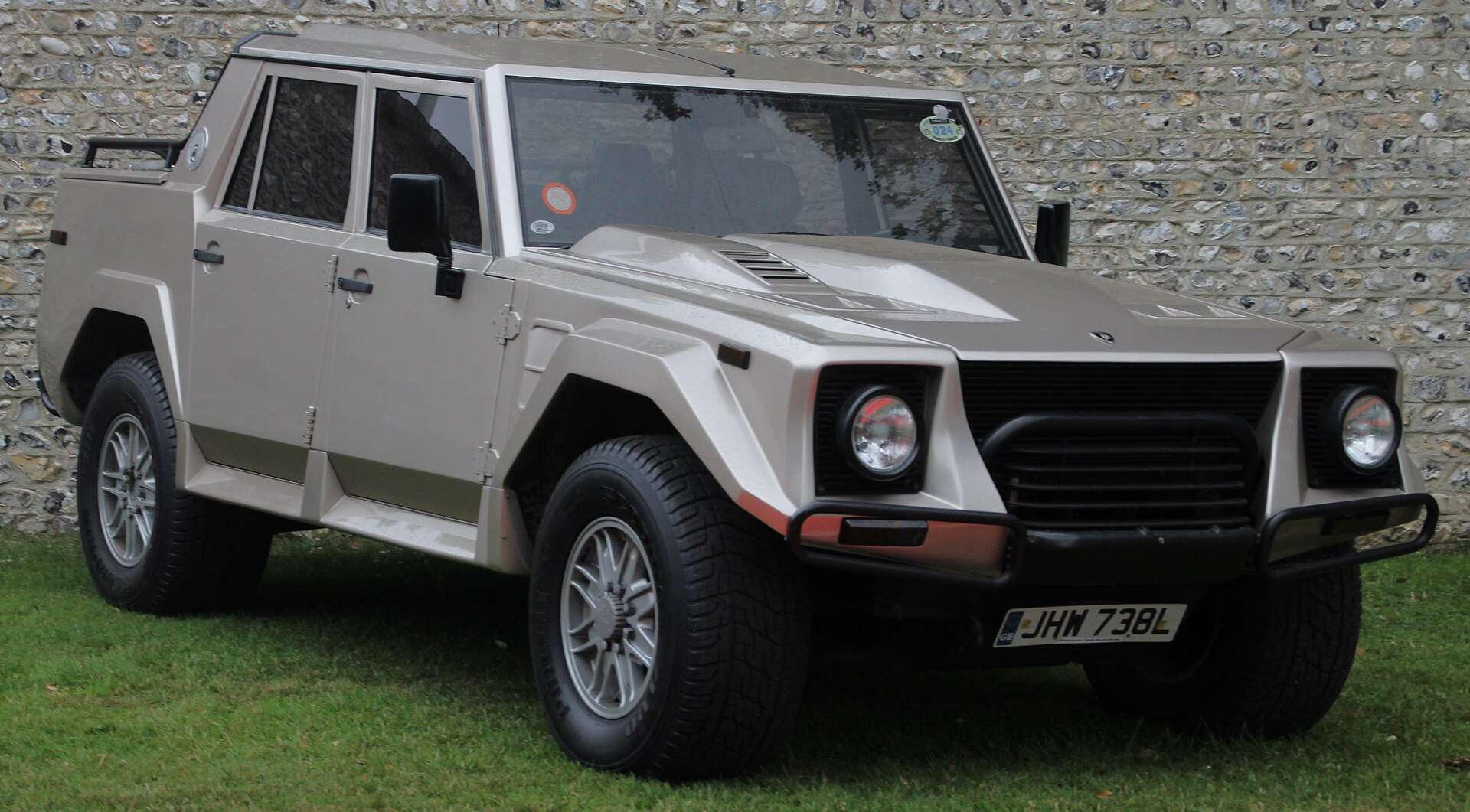
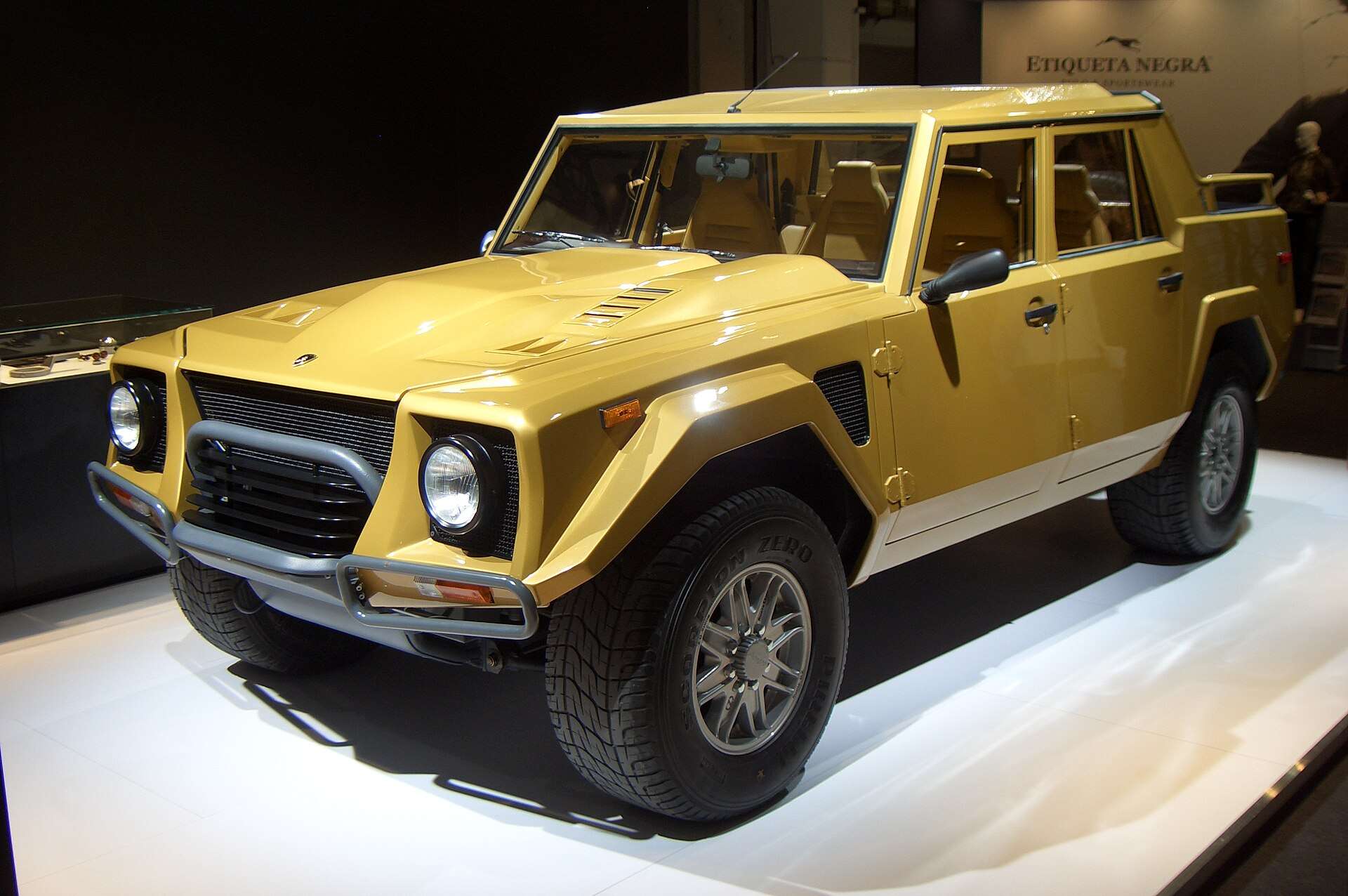
The Lamborghini LM002 is a front-engined, V12 four-wheel-drive utility vehicle created from Lamborghini’s military-prototype experiments and sold from 1986 into the early 1990s. Its Countach-derived engine, immense tyres, angular aluminium-and-fibreglass body and leather-lined cabin made it one of the strangest production Lamborghinis.
Quick answer: Lamborghini’s own current history records “300 + 1” examples, while auction catalogues often cite 328 depending on how prototypes and late vehicles are counted. Every survivor requires chassis-number research and a specialist inspection of the tubular frame, bespoke body, 5.2-litre V12, carburettors or fuel injection, five-speed gearbox, four-wheel-drive system, three differentials, suspension, brakes and scarce model-specific parts.
Featured image: silver Lamborghini LM002. Photograph by MrWalkr, CC BY-SA 4.0, via Wikimedia Commons; locally hosted.
From military prototypes to the LM002
Lamborghini’s Cheetah prototype placed an American V8 behind the cabin and was not adopted for military use. The LM001 continued the rear-engined idea, but weight distribution remained unsuitable. The LMA002 moved the engine to the front and established the arrangement that reached production as the LM002 at the 1986 Brussels motor show.
The 5,167cc V12 was related to the Countach Quattrovalvole unit and drove through a five-speed manual gearbox. Selectable four-wheel drive, low range and three lockable differentials gave real mechanical ability, although the LM002’s size, weight and road-focused luxury separated it from ordinary working vehicles.
Specifications and rarity
| Feature | LM002 specification |
|---|---|
| Production | 1986–early 1990s; Lamborghini states 300 + 1 |
| Engine | 5,167cc four-cam V12 |
| Transmission | Five-speed manual, selectable 4WD and low range |
| Differentials | Front, centre and rear with locking capability |
| Tyres | Purpose-developed Pirelli Scorpion 325/65 VR17 |
| Body | Aluminium and fibreglass over a tubular steel frame |
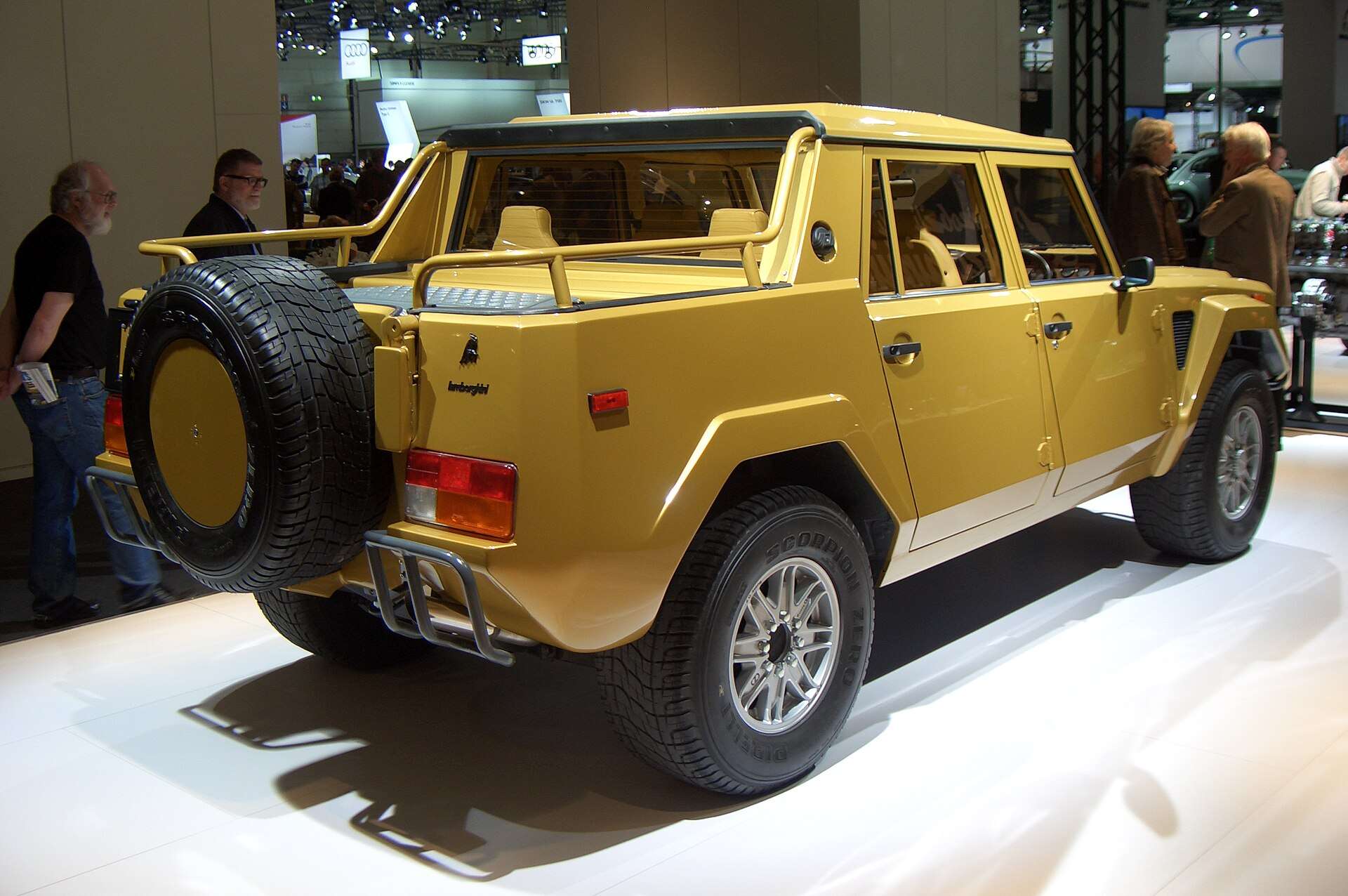
European carburettor cars and fuel-injected examples differ in output and bonnet detail. American-market LM/American vehicles have federal lighting, bumpers, emissions equipment and interior changes. A few special bodies and one-off conversions exist, but their identity must be supported by period evidence. Rarity makes even small missing trim pieces a serious concern.
Love cars you don’t see every day?
Get forgotten cars, surprising motoring stories and the most interesting finds from Unusual Cars by email.
Free to join. No spam. Unsubscribe whenever you like. See our privacy policy.
Frame, body and accident history
Inspect the tubular steel frame on a lift, concentrating on suspension mountings, outriggers, lower tubes and areas where mud or moisture can collect. The aluminium and fibreglass body can conceal corrosion, cracked mounts and poor reshaping. Door alignment, glass, tailgate operation and the fit of the rear compartment matter because replacement panels are not normal catalogue items.
Many LM002s have lived in hot climates or been used on rough ground. Look for bent protection bars, damaged underbody hardware and cracks around heavy components. Check the exact bumper, lamp, wheel, mirror and cabin specification against early photographs and documentation rather than assuming that all trucks left the factory alike.
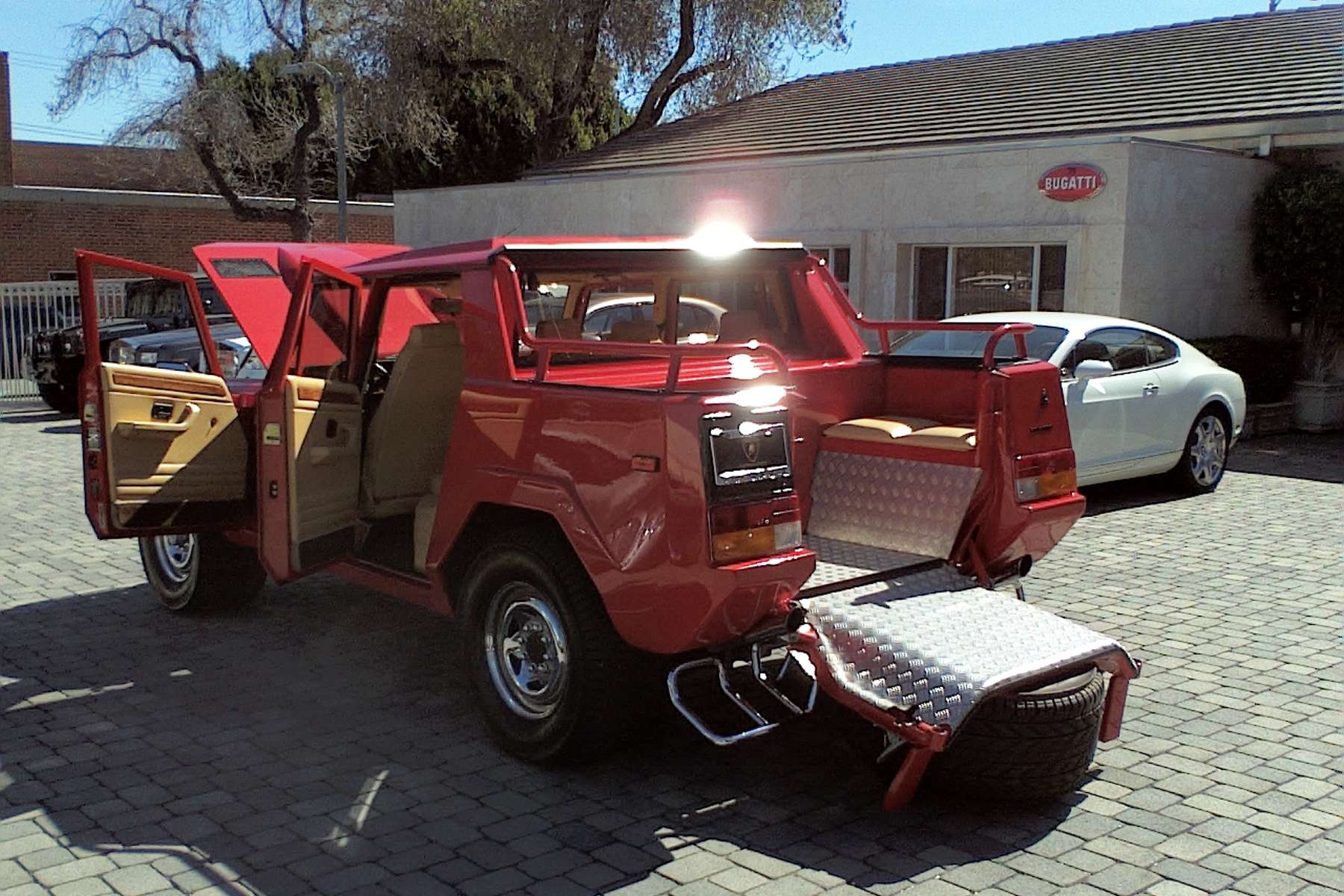
V12, fuel and cooling systems
A cold start should show prompt oil pressure and an even twelve-cylinder idle after enrichment settles. Carburettors require careful synchronisation; injected vehicles need period-correct diagnostics. Compression, leak-down, ignition, fuel pumps, tanks, hoses and breathers deserve detailed inspection. With a very large fuel capacity and lines close to a hot V12, leaks cannot be treated casually.
Radiator, fans, water pump, hoses and coolant passages must control temperature at low speed as well as on the road. Check for oil contamination, persistent smoke and overheating history. Exhaust manifolds and heat shields should be intact. Access is better than in a mid-engined Lamborghini, but parts scarcity can make apparently routine work slow and expensive.
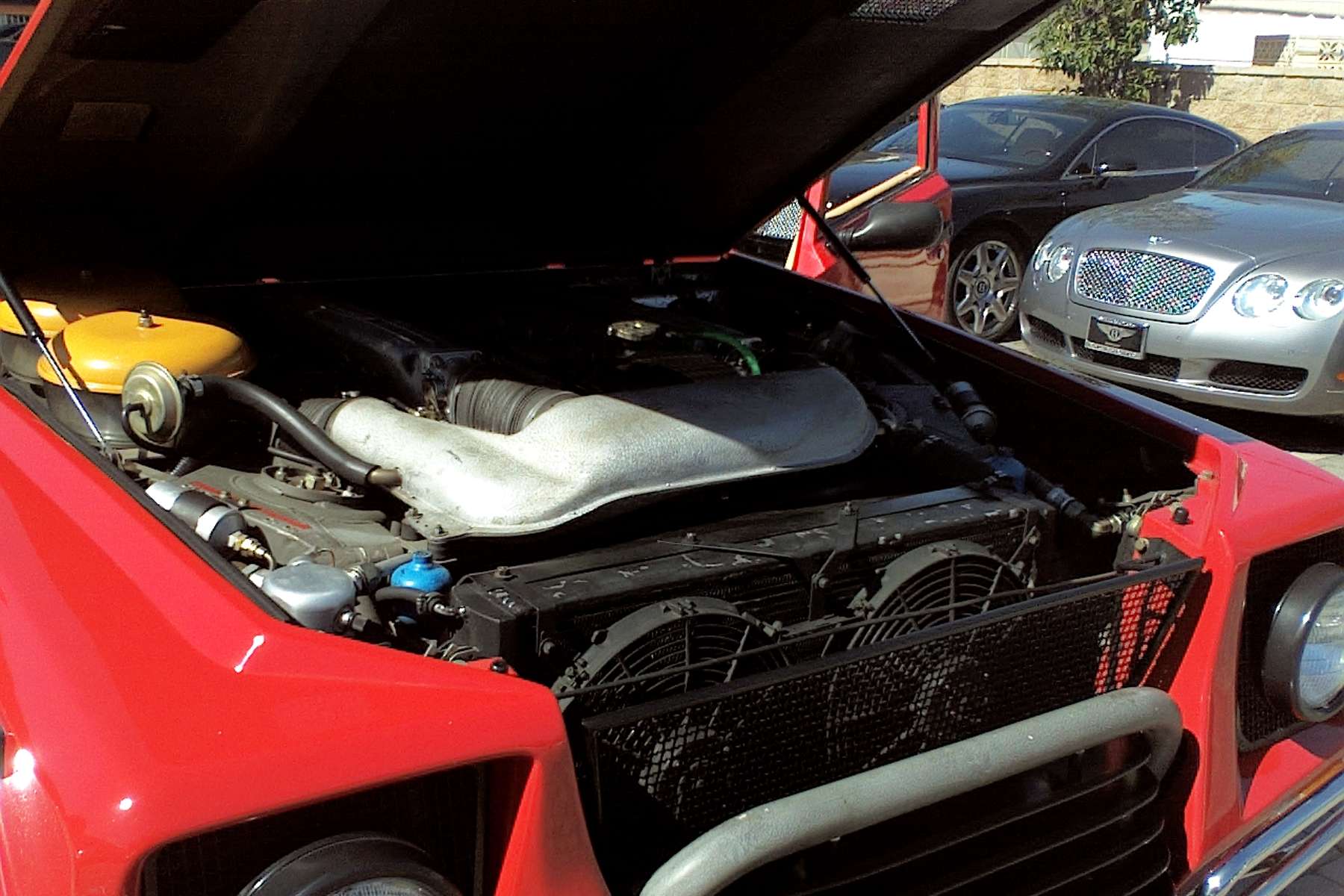
Driveline, tyres and road test
Operate high and low ranges and every differential control on an appropriate surface. Selection must be positive; driveline wind-up, clunks or persistent noise suggest misuse or wear. Inspect propshafts, universal joints, transfer case, differentials and axle seals. The clutch and gearbox must cope with substantial mass, so slipping, baulking or jumping out of gear is significant.
The special Pirelli Scorpion tyres are central to the LM002’s appearance and gearing. Check size, date codes, damage and availability before purchase. Inspect wheels for cracks or poor repairs. Steering, suspension, dampers and brakes should be judged by a specialist who knows how a healthy LM002 feels; expecting a modern SUV can mask genuine faults or create false alarms.


Documentation and specialist support
Because so few LM002s exist, a continuous history is unusually important. Establish its original market, engine type, colours and equipment, then trace restorations and parts substitutions. Books, tools, luggage, rear-seat fittings and period photographs can materially strengthen identity. Before purchase, identify the specialist who will maintain it and confirm parts availability; postponing that conversation until after delivery can leave a seemingly usable vehicle immobilised for months.
Arrange a long road test only after the static checks are satisfactory. Monitor oil pressure and coolant temperature, repeat hot starting and listen for changes as the driveline warms. Photograph the underside and note every non-original component before agreeing a value.
Sources and further reading
- Lamborghini: LM002 history and specifications
- Lamborghini: company milestones
- RM Sotheby’s: 1988 LM002 catalogue history and specifications
- Lamborghini Polo Storico
Continue the Lamborghini story
Explore the complete Lamborghini hub. Continue with the Lamborghini Countach and Lamborghini Murciélago.
Frequently asked questions
When was the Lamborghini LM002 built?
The production LM002 was introduced in 1986 and continued into the early 1990s.
How many Lamborghini LM002s were made?
Lamborghini’s current history page states 300 + 1; some auction sources cite 328 depending on what is included.
What engine does the LM002 use?
It uses a 5.2-litre four-cam V12 related to the Countach Quattrovalvole engine.
Is the LM002 four-wheel drive?
Yes. It has selectable four-wheel drive, low range and three differentials with locking capability.
What should be checked before buying an LM002?
Authenticate the chassis and specification, then inspect the frame, body, V12, fuel and cooling systems, gearbox, transfer case, differentials, suspension, brakes, tyres and scarce trim.