UNUSUAL CARS MODEL GUIDE
The Lamborghini Countach is the mid-engined V12 supercar that turned Marcello Gandini’s 1971 LP500 show car into a production icon. Built from 1974 to 1990, it combined a tubular chassis, aluminium body panels, a longitudinal V12, dramatic scissor doors and visibility compromises that became part of its legend.
Quick answer: Lamborghini records 1,999 production Countachs across the LP400, LP400 S, 5000 S, 5000 Quattrovalvole and 25th Anniversary generations. Buying one is an exercise in identity, originality and engineering condition: commission a recognised specialist to authenticate the chassis and specification and inspect corrosion, accident repairs, cooling, fuel system, V12, gearbox, clutch, suspension, brakes, wheels and electrical system.
Featured image: yellow Lamborghini Countach LP400 Periscopio with its scissor doors raised. Photograph by MrWalkr, CC BY-SA 4.0, via Wikimedia Commons; locally hosted.
From LP500 prototype to production LP400
The Countach name first appeared on the wedge-shaped LP500 at the 1971 Geneva Motor Show. Bertone designer Marcello Gandini abandoned the flowing curves of the Miura for straight edges, a cab-forward windscreen and upward-opening doors. Paolo Stanzani led the engineering development, while test driver Bob Wallace helped turn the show car into something that could survive road use.
The production LP400 reached customers in 1974. Its designation referred to the longitudinal rear-mounted 4.0-litre engine: Longitudinale Posteriore. The gearbox sat ahead of the engine between the seats, with a driveshaft running back through the engine’s sump to the final drive. This unusual arrangement concentrated mass near the centre of the car, but it also made maintenance labour-intensive.

Versions and specifications
| Version | Years | Engine | Factory-rated power |
|---|---|---|---|
| LP400 | 1974–1978 | 3,929cc V12 | 375 CV |
| LP400 S | 1978–1982 | 3,929cc V12 | 345 CV |
| 5000 S | 1982–1985 | 4,754cc V12 | 345 CV |
| 5000 Quattrovalvole | 1985–1988 | 5,167cc V12 | 455 CV in European carburettor form |
| 25th Anniversary | 1988–1990 | 5,167cc V12 | 455 CV in European carburettor form |
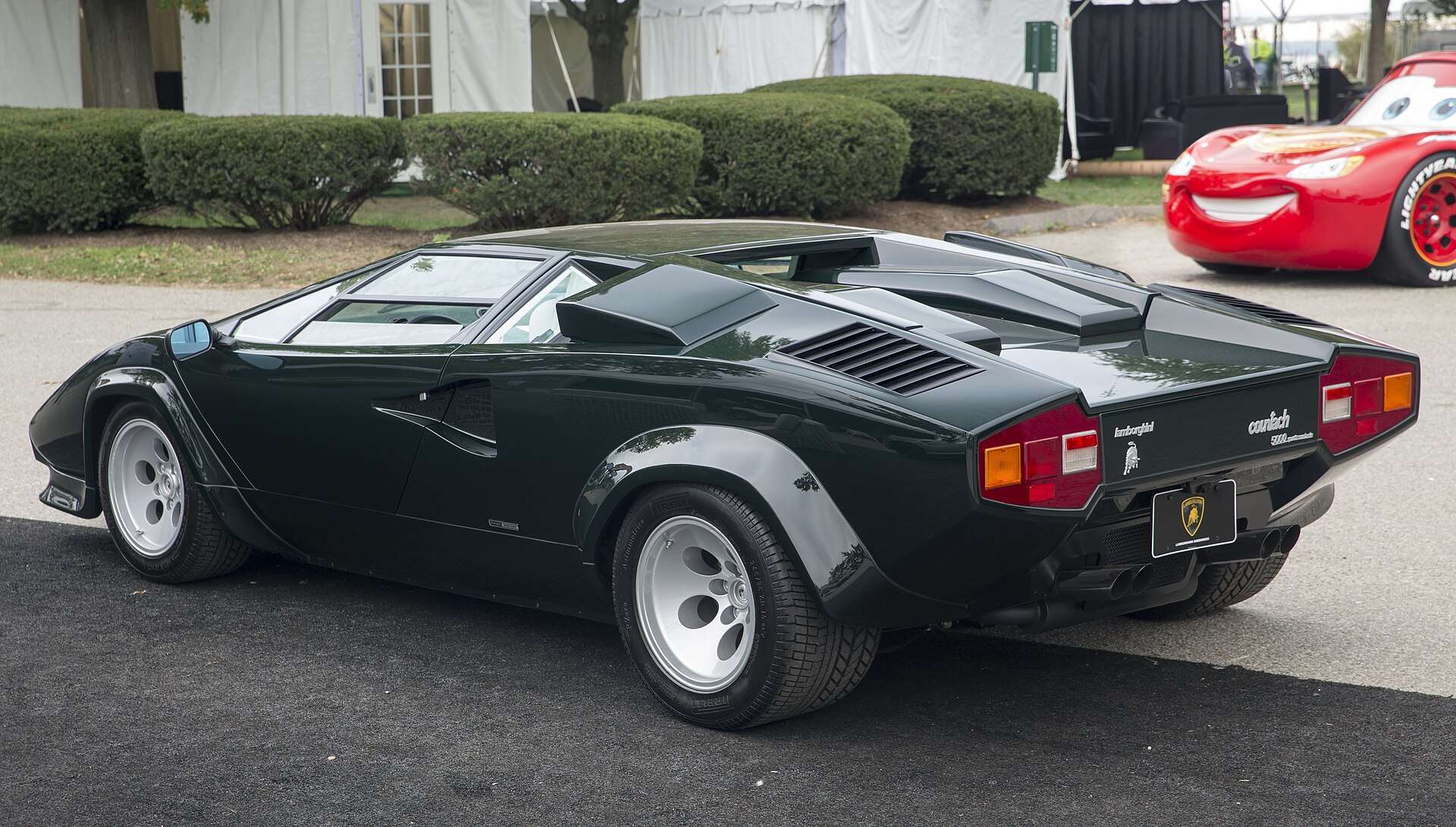
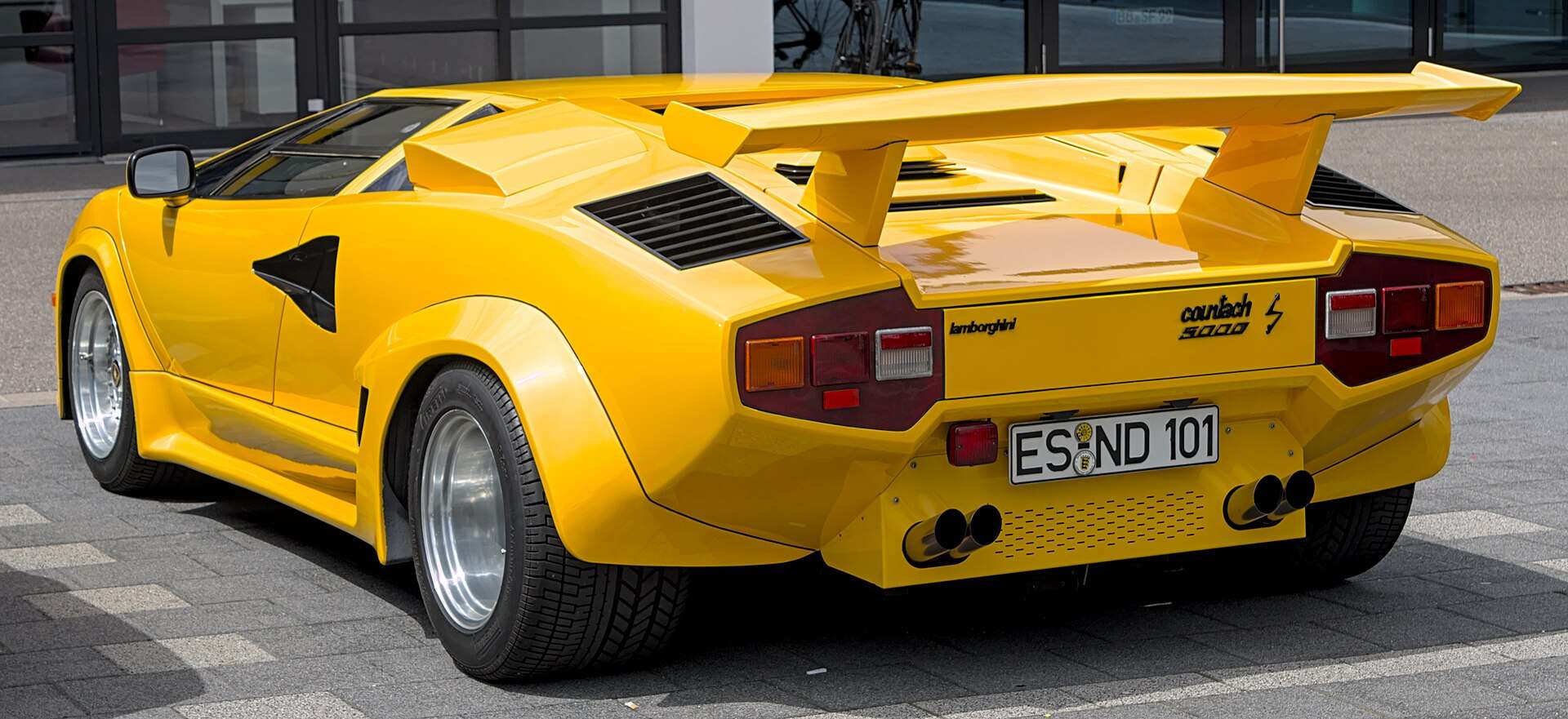
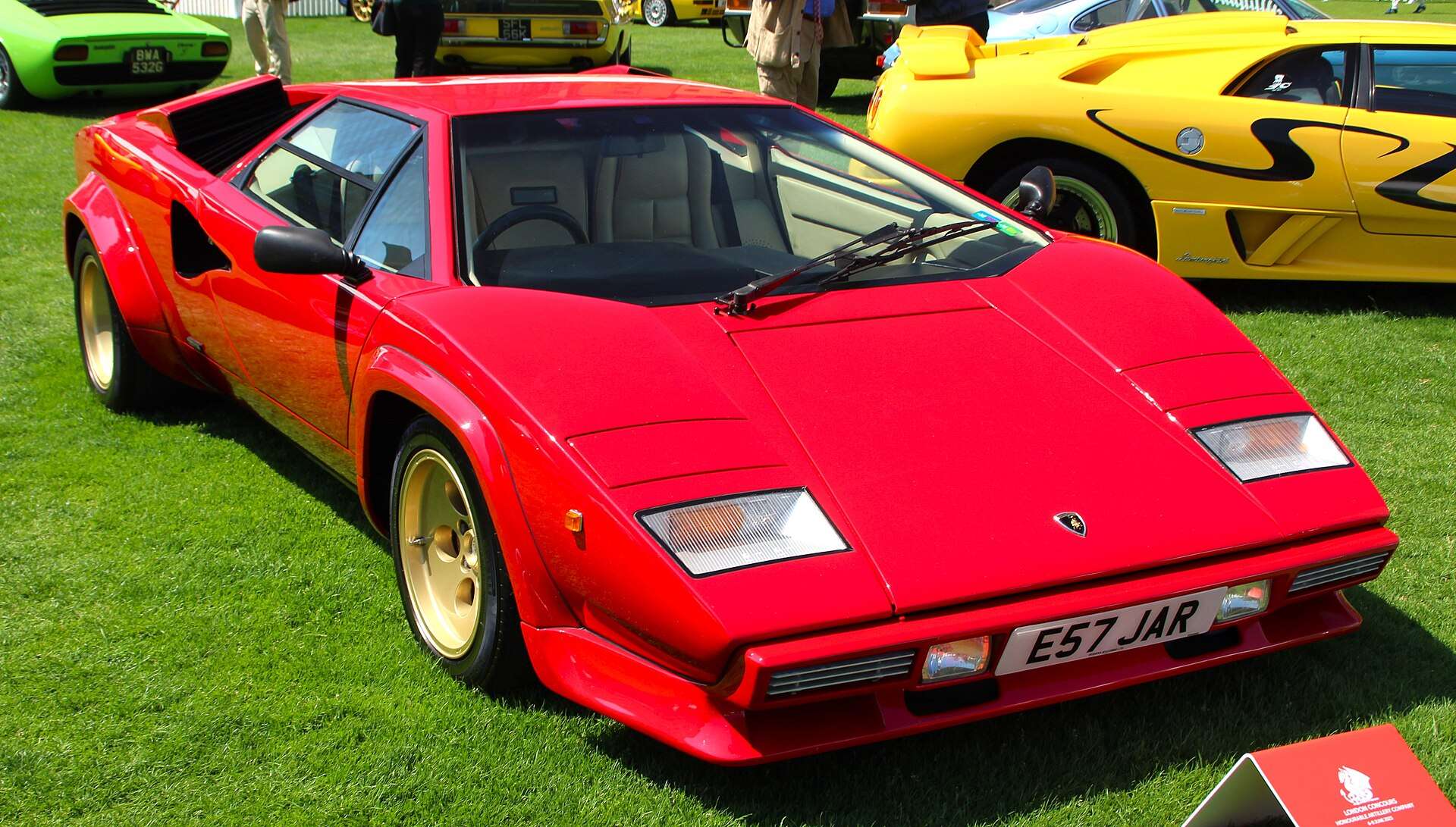
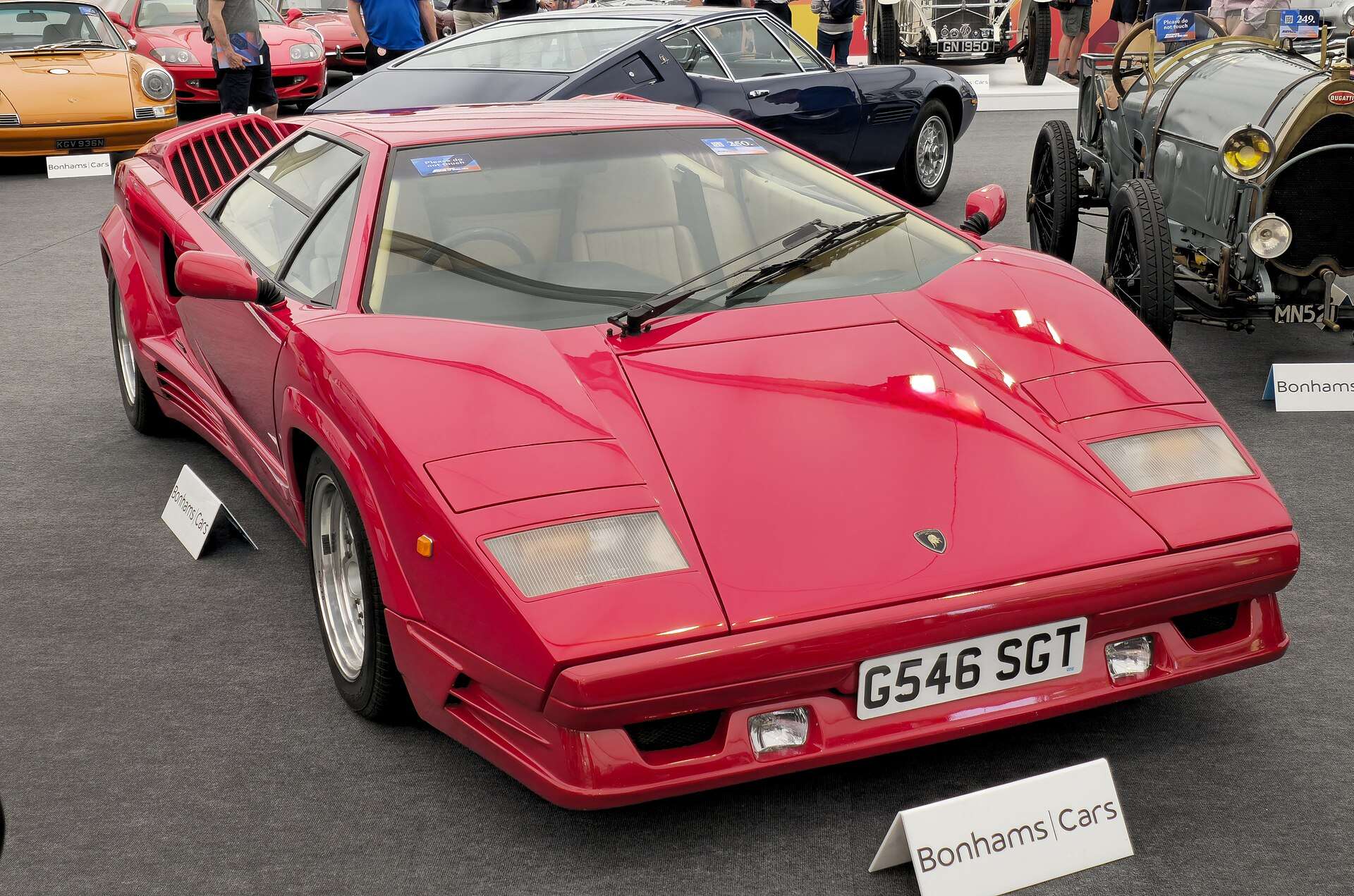
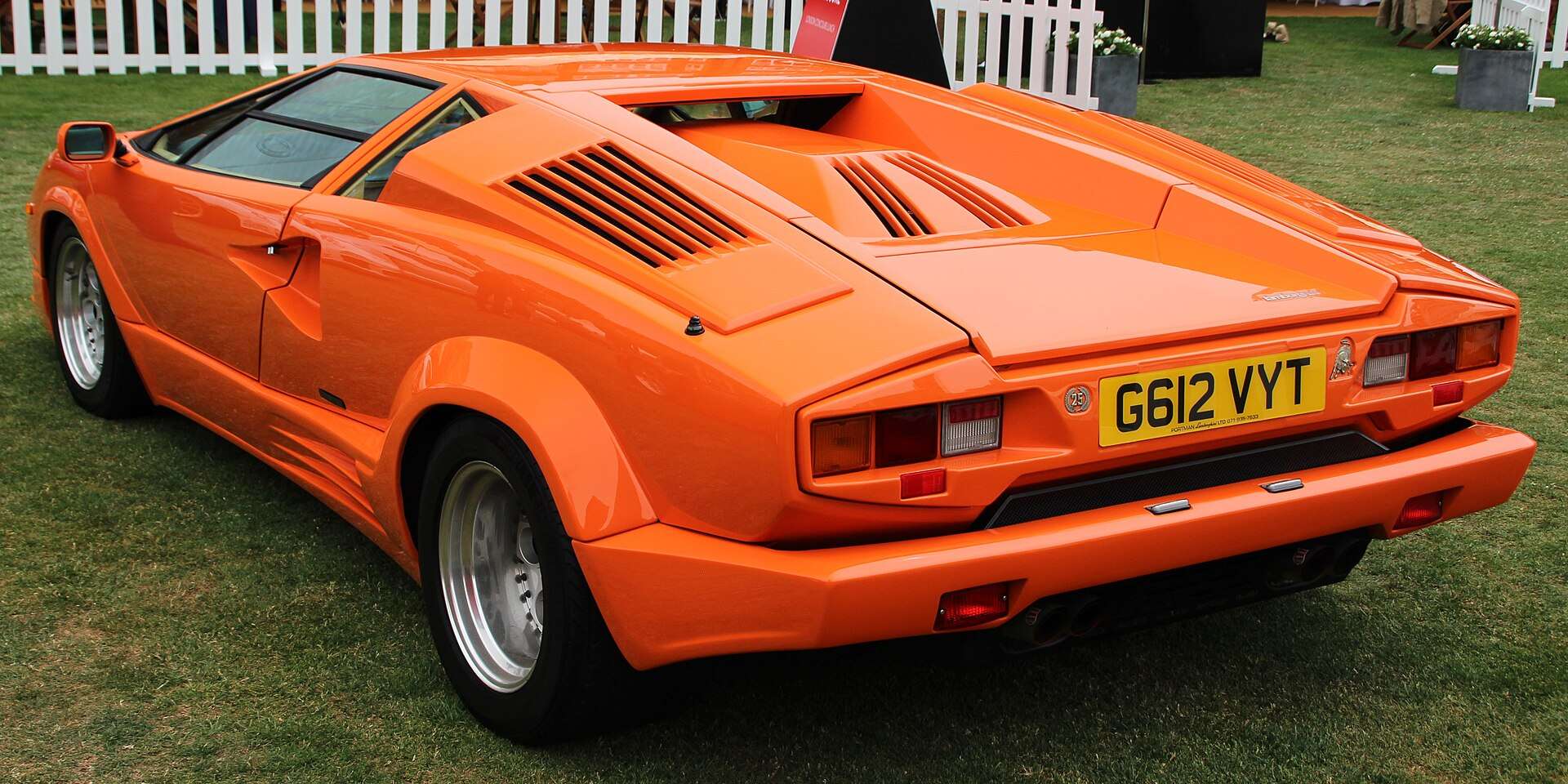
The slim LP400, often called Periscopio because early cars have a roof channel associated with rearward visibility, is the purest expression of Gandini’s shape. The LP400 S adopted much wider Pirelli tyres and the famous arch extensions. The 5000 S enlarged the engine, while the Quattrovalvole introduced four valves per cylinder and carburettors mounted above the V12. US-market injected cars differ in output and appearance. The 25th Anniversary revised cooling, body details and cabin finish under Horacio Pagani’s direction.
Love cars you don’t see every day?
Get forgotten cars, surprising motoring stories and the most interesting finds from Unusual Cars by email.
Free to join. No spam. Unsubscribe whenever you like. See our privacy policy.
What is original and what was added later?
Large rear wings became inseparable from the Countach image, but they were not fitted to every car and were frequently added after delivery. Bumpers, side skirts, cooling ducts, mirrors, wheels and interiors also changed between markets and production periods. A car wearing later visual parts is not automatically wrong, but its current form must be described honestly and compared with factory records.
Begin with the chassis number, original engine number, build date, market, colour and trim. Lamborghini Polo Storico can provide archival help and certification, while period registration documents, invoices and photographs establish continuity. Restorations often mix parts from several generations. Original Campagnolo or OZ wheels, glazing, lamps, switches and trim can be difficult and expensive to replace.
Chassis, body and cooling
The multi-tube steel frame needs inspection on a lift. Look at lower rails, suspension pick-up points, floor edges, door apertures and areas contaminated by trapped moisture. Aluminium outer panels can hide poor previous accident repairs, while the glassfibre floor and aerodynamic pieces crack around mounting points. Check symmetry, door operation and evidence that the car has been lifted incorrectly.
Cooling is critical. Radiators, fans, hoses, header tanks and coolant pipes must work together, particularly in traffic. Overheating can damage an expensive V12. The cabin becomes hot even when everything is correct, so confirm that ventilation and air conditioning function. Scissor-door gas struts weaken, window mechanisms are slow and the driving position, pedal box and rear visibility should be accepted before purchase rather than treated as defects later.
V12, gearbox and road test
Insist on a cold start. Oil pressure should rise promptly, the engine should settle as twelve cylinders warm and exhaust smoke should clear. Compression and leak-down tests, carburettor balance, ignition condition and fuel-hose inspection are sensible. Ageing lines above a hot engine are a serious fire risk. On carburettor cars, poor tuning can disguise worn internals or create damagingly lean mixtures.
The clutch is heavy but should take up cleanly. Second gear can baulk when cold; persistent crunching when warm points to synchromesh or linkage work. Listen for final-drive whine and inspect driveshaft joints, wheel bearings and steering. Tyres must be correct in size, speed rating and age; replacements for the widest wheels can be hard to source. Magnesium wheels require specialist crack and corrosion assessment rather than cosmetic refinishing alone.
Sources and further reading
- Lamborghini: Countach history and model chronology
- Lamborghini: 50 years since the first Countach entered production
- Gooding & Company: Countach LP400 history and auction analysis
- Gooding & Company: Countach 5000 S specifications and provenance study
- Lamborghini Polo Storico: archives, restoration and certification
Continue the Lamborghini story
Explore the complete Lamborghini hub. Continue with the Lamborghini Miura and Lamborghini Diablo.
Frequently asked questions
When was the Lamborghini Countach built?
Production ran from 1974 to 1990, following the LP500 concept shown at Geneva in 1971.
How many Lamborghini Countachs were made?
Lamborghini states that 1,999 production Countachs were built across all main versions.
What does LP400 mean?
LP means Longitudinale Posteriore, describing the longitudinal rear engine, while 400 refers to the original engine’s approximate four-litre capacity.
Did every Countach have a rear wing?
No. Wings were optional on some later cars and many were installed after delivery, so each car’s original specification needs checking.
What should be checked before buying a Countach?
Authenticate the chassis, engine and original specification, then inspect the frame, body, cooling, fuel system, V12, gearbox, clutch, suspension, brakes, tyres, wheels and electrics with a marque specialist.