UNUSUAL CARS MODEL GUIDE
The Lamborghini Miura placed a transversely mounted V12 behind its two seats and wrapped it in one of the most influential bodies of the 1960s. Revealed as a bare chassis in 1965 and as a complete Bertone-bodied car at Geneva in 1966, it established the architecture and drama expected of a modern supercar.
Quick answer: the Miura evolved through P400, P400 S and P400 SV forms before production ended in 1973. Surviving cars vary greatly in originality and restoration quality. A prospective purchase needs chassis-specific archive research plus expert inspection of the steel structure, aluminium body, transverse V12 and gearbox, cooling and fuel systems, suspension, brakes and irreplaceable trim.
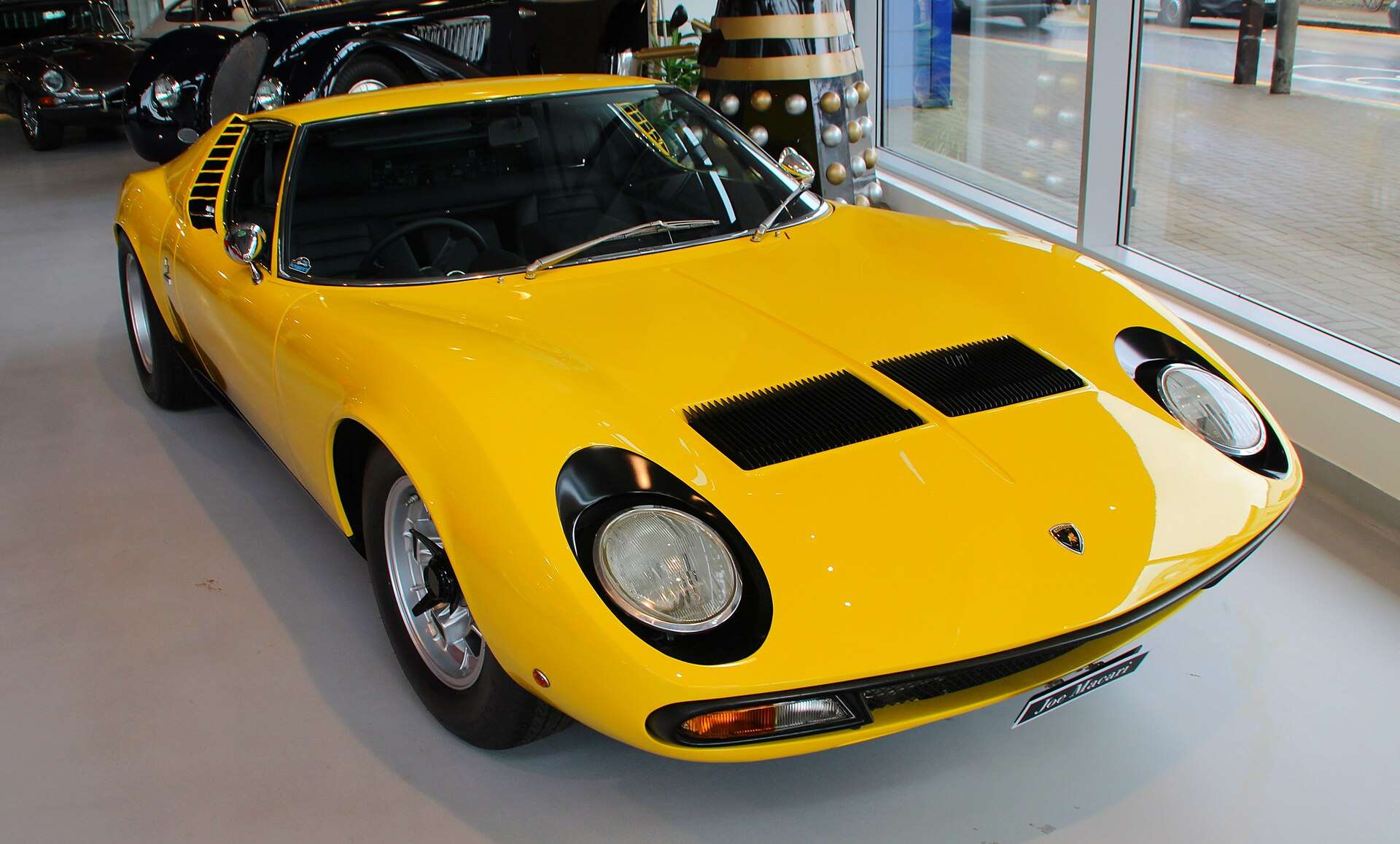
Featured image: gold Lamborghini Miura P400 SV front three-quarter view. Photograph by Chelsea Jay, CC BY-SA 4.0, via Wikimedia Commons; locally hosted.
A secret chassis that changed Lamborghini
Engineers Gian Paolo Dallara, Paolo Stanzani and Bob Wallace developed the rolling chassis after hours because founder Ferruccio Lamborghini favoured fast grand tourers rather than an uncompromising racing-derived road car. The frame displayed at Turin in 1965 attracted enough attention for Lamborghini to commission a body from Bertone.
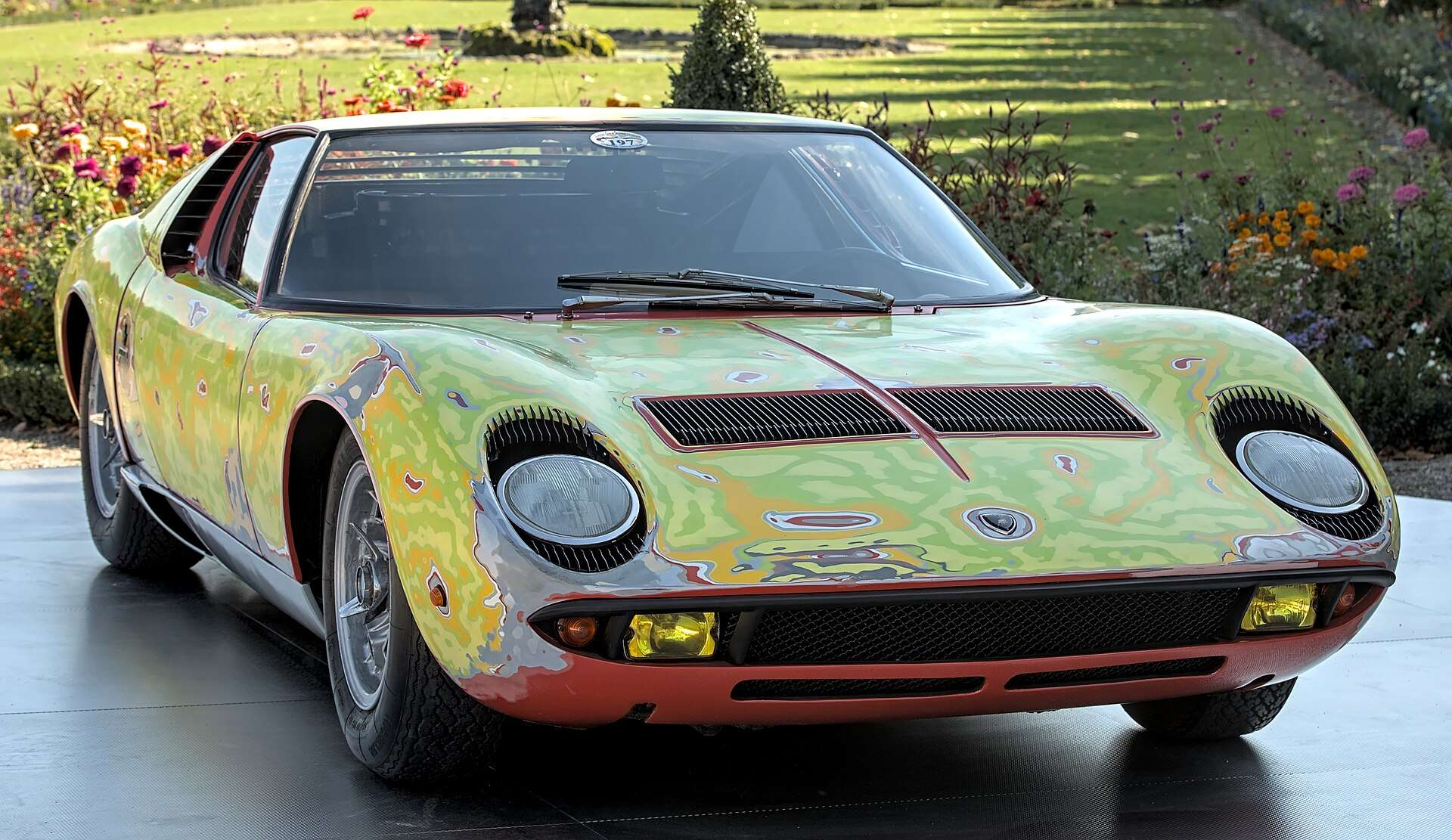
Marcello Gandini, newly installed as Bertone’s chief designer, produced a shape defined by a low nose, eyelashes around the headlamps, deeply curved side glass and black rear-window louvres. The engine and five-speed transmission formed one transverse assembly behind the cabin. That compact layout helped keep the wheelbase to 2,500mm and put the visual mass between the axles.
P400, S and SV differences
| Version | Approximate production | Power | Key distinctions |
|---|---|---|---|
| P400 | 265 | 350 CV | Original specification, eyelashes, narrower rear body |
| P400 S | 338 | 370 CV | More power, electric windows and richer cabin detailing |
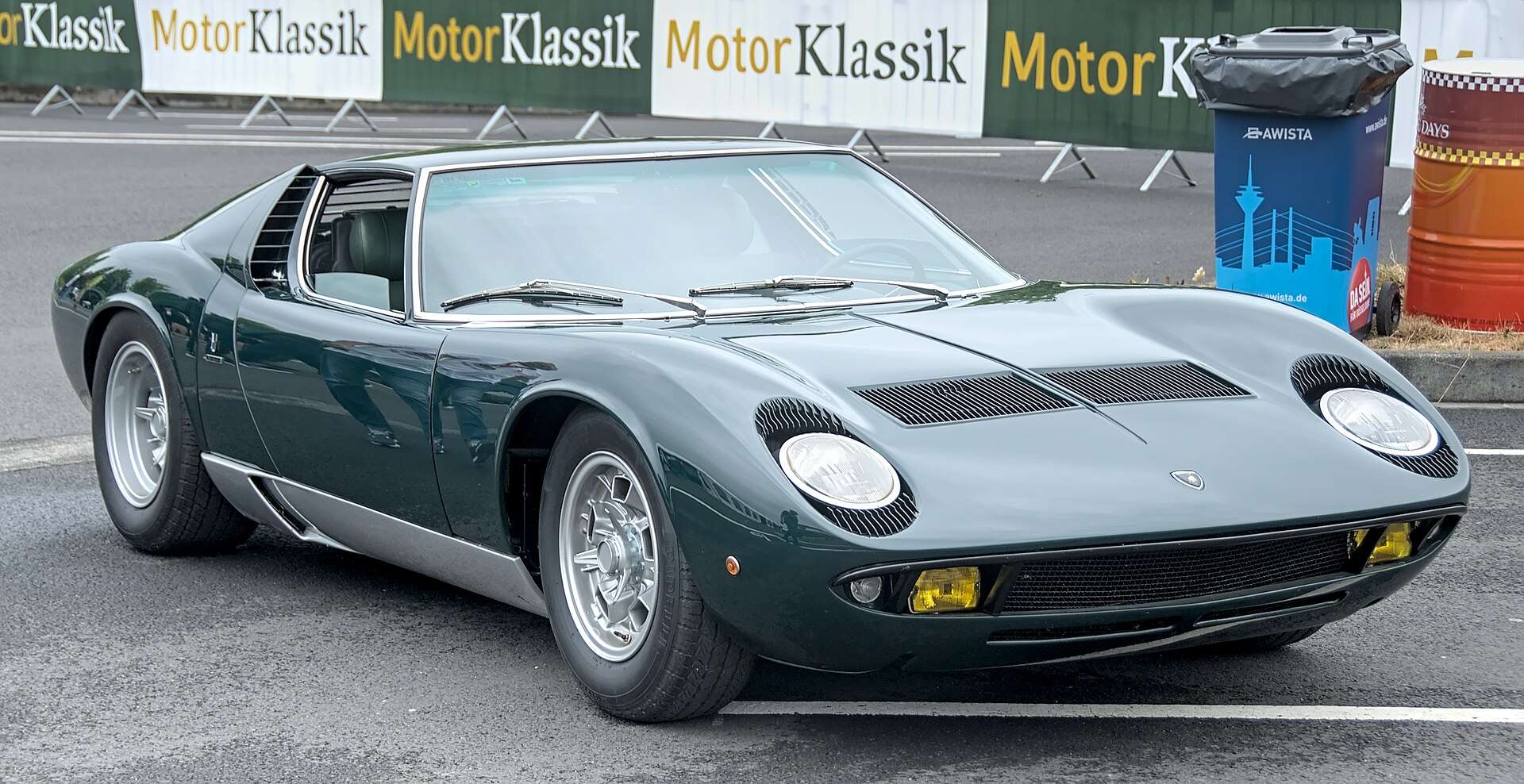
| P400 SV | 150 | 385 CV | Wider rear track and tyres, revised suspension and body, no eyelashes |
Lamborghini’s published model summaries list 265 P400s, 338 S models and 150 SVs, with a handful of special SVJ-related cars beyond the normal series. Totals in reference books can differ because prototypes, conversions and late cars are counted in different ways. The SV is not merely a cosmetic final edition: it has a stiffer chassis, revised rear suspension geometry, broader rear bodywork and, on later examples, separate lubrication for the engine and gearbox.
Love cars you don’t see every day?
Get forgotten cars, surprising motoring stories and the most interesting finds from Unusual Cars by email.
Free to join. No spam. Unsubscribe whenever you like. See our privacy policy.
Identity, conversions and restoration
Record the chassis, engine and body numbers before judging appearance. Many P400 and S cars were modified to look like an SV, while some Miuras have replacement engines or reconstructed bodies. A conversion may still be enjoyable, but it must not be represented or valued as a factory SV. Lamborghini Polo Storico records, period ownership files and restoration photographs are essential.
Original colours and materials matter because recovering a Miura accurately is specialist work. The slim seats, steering wheel, switches, gauges, glass, louvres, lights and distinctive wheels are difficult to reproduce convincingly. The body uses aluminium panels over a steel structure, so an apparently smooth finish can conceal corrosion, electrolytic reaction or poorly reshaped accident damage.

Structure, fuel system and cooling
Inspect the central tub, sills, floor, bulkheads, suspension mountings and windscreen surrounds. The front and rear clamshells should open and locate correctly without fouling. Uneven shut lines, stressed hinges or distorted apertures warrant chassis measurement. Check the fuel tank, pumps, carburettor hoses and breathers carefully: old fuel lines above the hot V12 create an obvious fire hazard.
Early Miuras can suffer front-end lift at high speed, while worn dampers, incorrect ride height and unsuitable tyres make the car feel nervous at much lower speeds. Cooling fans, radiator, water pipes and thermostat must control temperature in traffic. A hot cabin and heavy controls are characteristic, but overheating, fuel smell and unstable handling are not.

Engine, gearbox and road test
A cold start should bring prompt oil pressure without persistent smoke or mechanical clatter. Compression and leak-down results help assess the V12, but carburettor balance, ignition timing and valve clearances also shape how it runs. On cars with a common engine and gearbox oil supply, contamination or internal wear can affect both systems. Verify whether a claimed split-sump conversion is documented and correctly executed.
The five-speed gearbox should improve as the oil warms and should not jump out of gear. Test the clutch, driveshafts and limited-slip differential, then examine wheel bearings, steering joints, suspension bushes and brakes. Original-type tyres with the correct dimensions materially affect behaviour. A short urban test is inadequate; the car needs to reach full operating temperature under the supervision of someone who understands Miuras.

Sources and further reading
- Lamborghini: Miura history, specifications and production summaries
- Lamborghini: Miura SV engineering and 50th anniversary
- Bonhams Cars: chassis-specific Miura P400 S history and specification
- Lamborghini Polo Storico: archive, restoration and certification services
Continue the Lamborghini story
Explore the complete Lamborghini hub. Continue with the Lamborghini Countach and Lamborghini Diablo.
Frequently asked questions
Who designed the Lamborghini Miura?
Marcello Gandini designed the Miura at Bertone, working around the mid-engined chassis developed by Lamborghini engineers Gian Paolo Dallara, Paolo Stanzani and Bob Wallace.
What is the difference between a Miura P400, S and SV?
The S adds power and equipment to the P400, while the SV has wider rear bodywork and tyres, revised suspension, a stiffer chassis, 385 CV and no headlamp eyelashes.
How many Lamborghini Miuras were built?
Lamborghini’s model summaries list 265 P400s, 338 P400 S cars and 150 SVs, plus a very small number of specials; published totals vary according to how prototypes and conversions are counted.
Does every Miura have separate engine and gearbox oil?
No. Earlier cars share lubricant between the engine and gearbox. Separate lubrication appeared on later SVs and has also been retrofitted to some earlier cars.
What should be checked before buying a Miura?
Confirm identity and original specification, then have a specialist inspect the steel structure, aluminium body, fuel and cooling systems, transverse V12, gearbox, suspension, brakes, tyres and provenance.