UNUSUAL CARS MODEL GUIDE
The Volkswagen Bora V6 4Motion was the discreet four-door relative of the Mk4 Golf R32: a 204PS narrow-angle six-cylinder saloon with a six-speed manual gearbox and Haldex-based four-wheel drive. Sold in Britain in tiny numbers, it looked much like an ordinary Bora while combining a distinctive engine, substantial equipment and genuine all-weather performance.
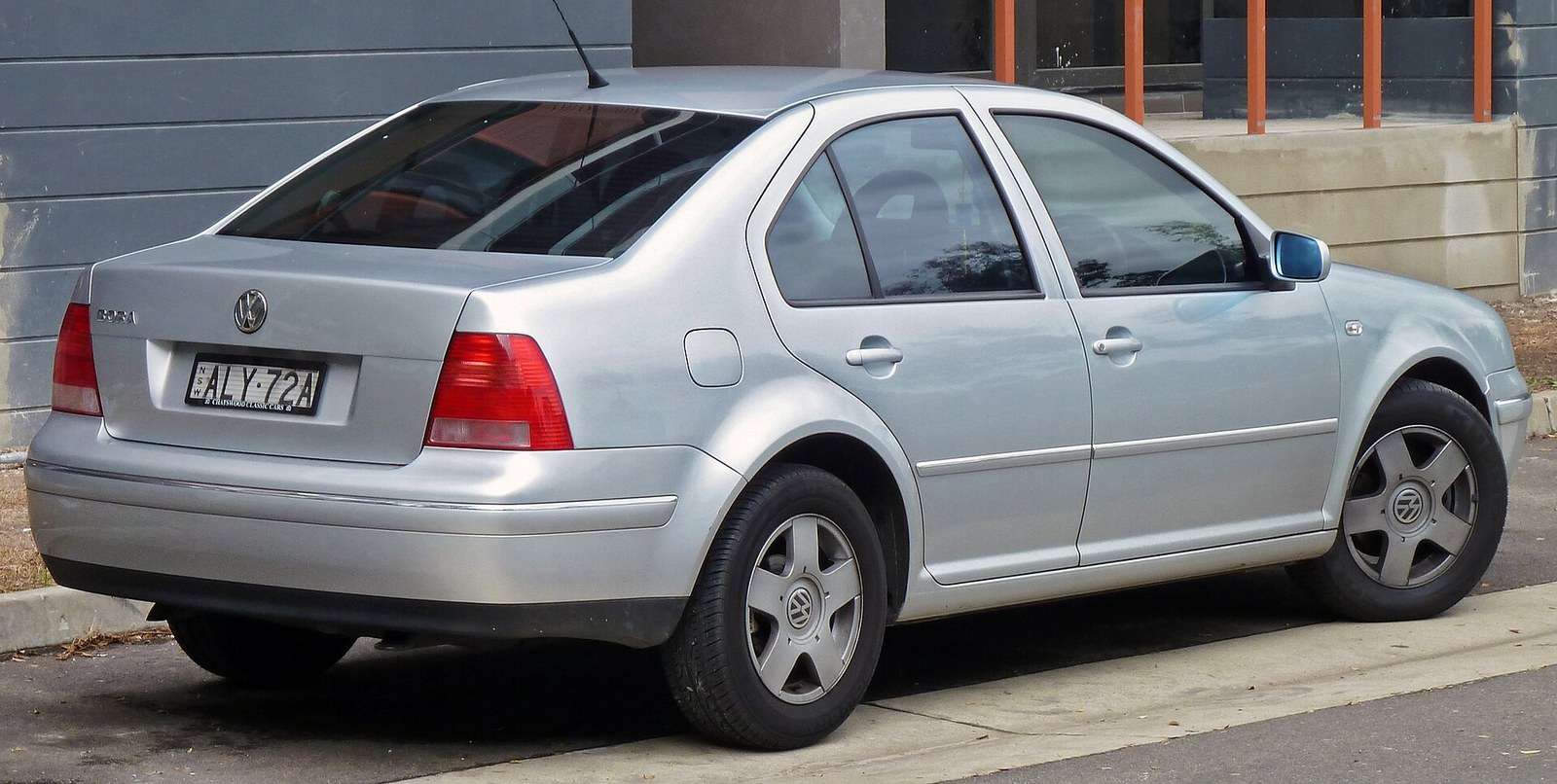
Featured image: Volkswagen Bora 1J saloon front three-quarter view. Photograph by OSX, Public domain, via Wikimedia Commons; locally hosted.
A Golf Mk4 in formal clothes
Volkswagen introduced the Bora in 1998 as the saloon counterpart to the fourth-generation Golf. Its longer boot, more formal styling and higher-quality positioning aimed at buyers who wanted compact dimensions without a hatchback shape. The V5 previewed the idea of an unusually cultured Bora, but the 2.8-litre V6 4Motion became the engineering flagship.
The result was intentionally understated. Deeper equipment and discreet V6 and 4Motion badges did little to reveal that the drivetrain was related to Volkswagen’s contemporary high-performance models. The Bora never developed the Golf GTI’s following, which is precisely why the surviving V6s now fit the Unusual Cars brief so well.
| Specification | Detail |
|---|---|
| Production period | 1999–2003 |
| Engine | 2,792cc naturally aspirated narrow-angle V6 |
| Output | 150kW / 204PS; approximately 270Nm |
| Transmission | Six-speed manual; Haldex-based 4Motion |
| Body | Four-door saloon; Variant estate in selected markets |
The 2.8-litre VR6 and 4Motion drivetrain
Volkswagen’s narrow-angle six-cylinder displaced 2,792cc and produced 150kW, or 204PS, with about 270Nm. A six-speed manual gearbox was standard in the European specification, while the Haldex coupling sent torque to the rear axle when the front wheels could not use it. Official records place production of the V6 4Motion derivative between 1999 and 2003.
The tightly packaged VR6 gave the Bora a smooth, compact power unit without the width of a conventional V6. Performance was brisk rather than dramatic: period figures put 0-62mph in roughly seven seconds and top speed near 146mph. Its appeal lies in the engine note, traction and inconspicuous body rather than sharp-edged track behaviour.

Love cars you don’t see every day?
Get forgotten cars, surprising motoring stories and the most interesting finds from Unusual Cars by email.
Free to join. No spam. Unsubscribe whenever you like. See our privacy policy.
Saloon, estate and UK rarity
The four-door saloon was the principal Bora shape, but Volkswagen also offered the 204PS V6 with four-wheel drive in the Variant estate in some markets. UK survivors are exceptionally scarce and may include later imports, so specifications, registration histories and equipment can vary. Verify the VIN, engine code and market origin instead of relying on exterior badges.
A standard car is difficult to find because the VR6 responds easily to exhaust, intake and suspension changes. Modifications are not automatically harmful, but the buyer should establish who carried them out and whether the brakes, tyres and driveline remain correctly matched. Missing factory trim can be harder to replace than routine Golf-based service parts.

Engine, cooling and timing-chain checks
Listen from a cold start for prolonged rattling from the gearbox end of the engine. The VR6 uses chains whose guides and tensioners can wear; camshaft correlation faults or persistent noise require specialist diagnosis. Check also for uneven running, oil leaks, ignition-coil faults and poorly repaired breather hoses.
Inspect the thermostat housing, water pump, radiator, hoses and electric fans. Plastic cooling components age, and overheating can damage an otherwise durable engine. The temperature should rise normally and remain stable. Evidence of regular oil changes matters more than a low mileage unsupported by invoices.

Haldex, gearbox and chassis
The early Haldex system needs its own fluid and filter maintenance. Matching tyres are essential because significant circumference differences can make the coupling work continuously. Scan the all-wheel-drive controller, check for leaks and listen for bearing noise from the transfer box, propshaft and rear differential.
A heavy clutch, high biting point or vibration can indicate clutch and dual-mass flywheel wear. The six-speed gearbox should select cleanly without crunching. Check front suspension bushes, rear-arm bushes, springs, dampers, wheel bearings and brake condition; deferred maintenance across several areas can turn an inexpensive Bora into an R32-sized bill.

Body, cabin and documentation
Inspect the sills, floor, jacking points, subframes, wheel arches and boot floor for corrosion and poor repairs. Water can enter through door membranes, sunroof drains or the pollen-filter housing, damaging carpets and electrical connectors. Check that the boot and doors shut cleanly and that accident repairs have not disturbed panel gaps.
Test the climate control, heated seats, central locking, windows, mirrors, instruments and warning lamps. The original sports interior and wheels add value, but condition and service evidence come first. A Volkswagen specialist should scan every control module and confirm the car’s exact drivetrain identity before purchase.
Buying checklist
Start from cold
Ask the seller not to warm the car before inspection. Cold behaviour exposes chain, bearing, fuelling and warning-light problems that may disappear later.
Inspect underneath
Use a lift where possible. Check structure, suspension, braking, leaks and previous repairs rather than judging only paint and interior presentation.
Verify the exact car
Match the VIN, engine code, drivetrain, market specification and service history. Badges, wheels and online descriptions are not proof of a rare derivative.
Use a Volkswagen specialist
A diagnostic scan and pre-purchase inspection cost far less than correcting hidden engine, gearbox or four-wheel-drive faults after purchase.
References
Continue the Volkswagen story
Explore the complete Volkswagen hub, then read the Golf Mk4 R32 guide and the Passat R36 guide.
Frequently asked questions
What engine does the Volkswagen Bora V6 4Motion use?
It uses a 2,792cc narrow-angle six-cylinder producing 204PS and approximately 270Nm.
Is the Bora V6 the same as a Golf R32?
No. They share Mk4-platform and narrow-angle-engine ideas, but the Bora uses a 2.8-litre 204PS engine rather than the R32’s 3.2-litre unit.
Does every Bora V6 have four-wheel drive?
The European 204PS flagship was paired with Volkswagen 4Motion, using an early Haldex coupling.
Why is the Bora V6 4Motion rare in Britain?
It was expensive, discreet and sold beside better-known Golf performance models, so UK demand and survival were both limited.
What should be checked before buying one?
Prioritise timing-chain noise, cooling-system condition, Haldex servicing, clutch and flywheel wear, corrosion, electrical equipment and proof of the exact specification.