UNUSUAL CARS MODEL GUIDE
The 2002 Volkswagen Golf R32 turned the mature Mk4 Golf into the fastest production Golf yet. Its 3.2-litre narrow-angle VR6, Haldex-based 4MOTION system and deep exhaust note created a character that later four-cylinder Golf Rs never quite repeated. It also introduced the dual-clutch DSG gearbox to a production Volkswagen in 2003.
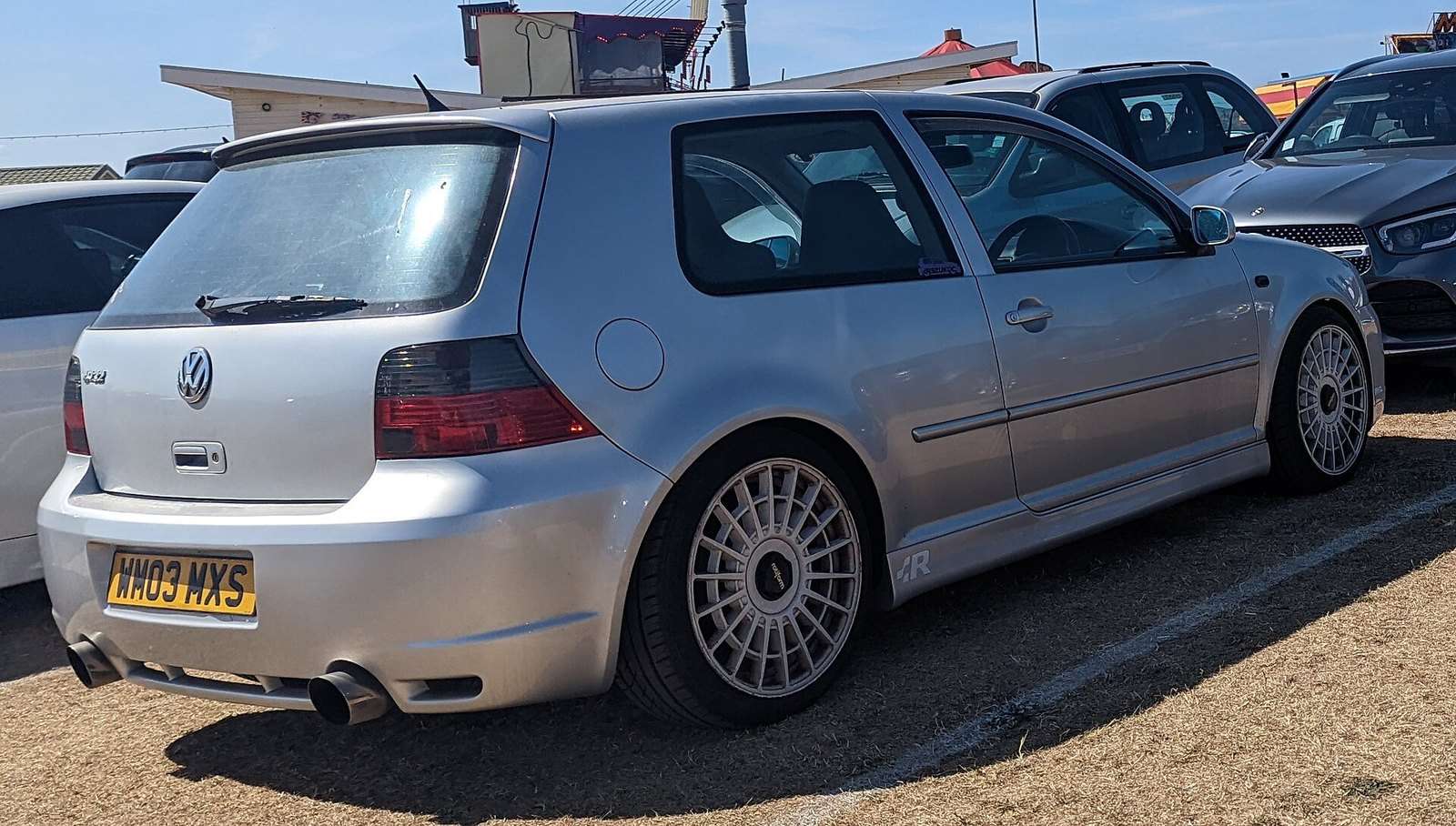
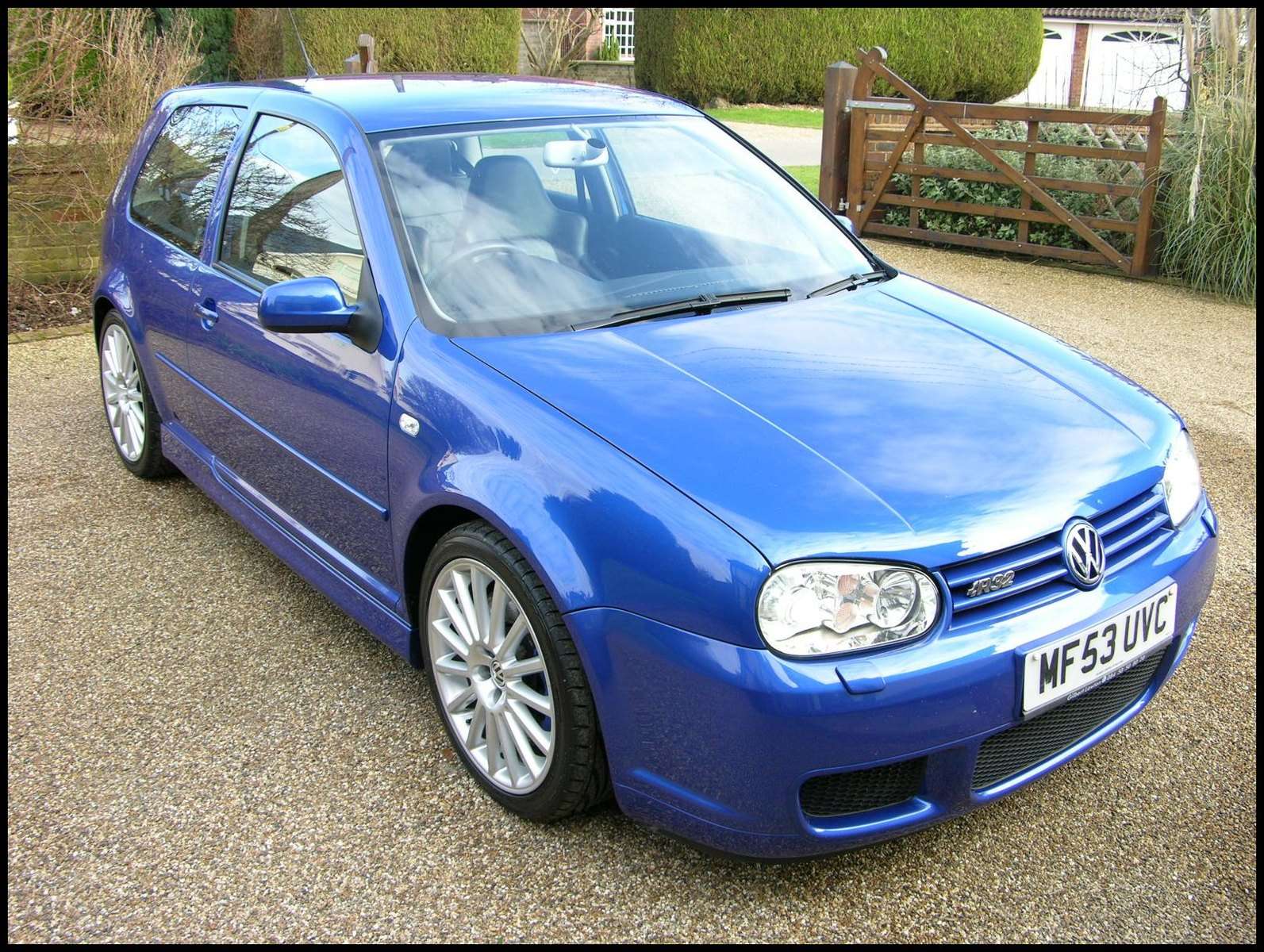
Featured image: Volkswagen Golf Mk4 R32 front three-quarter view. Photograph by Calreyn88, CC BY-SA 4.0, via Wikimedia Commons; locally hosted.
How the first R32 was created
Volkswagen placed the R32 above the 150PS Golf GTI. The 3,189cc VR6 produced 241PS and 320Nm, driving all four wheels through a six-speed manual gearbox or, from 2003, the optional six-speed DSG. Volkswagen quoted 0–62mph in 6.6 seconds for the manual and 6.4 seconds for DSG, with a 153mph maximum.
The visual changes were purposeful rather than theatrical: deeper bumpers, side skirts, twin exhaust outlets, 18-inch wheels and a 20mm lower suspension. Inside, aluminium trim and heavily bolstered seats made it feel special without abandoning the Golf’s everyday usability.

Production and UK significance
Volkswagen built roughly 12,000 Mk4 R32s between 2002 and 2004, around 7,000 for Europe and 5,000 for the United States. UK cars were sold in both three- and five-door form, although surviving specifications vary. Deep Blue Pearl is strongly associated with the model, but black, silver and red cars are also genuine.
The R32 mattered beyond its modest production total. It established the R badge as Volkswagen’s performance flagship and gave DSG its first showroom application. It also proved that a Golf could be marketed as an all-weather premium performance car rather than merely a faster family hatchback.
| Specification | Mk4 R32 |
|---|---|
| Engine | 3,189cc naturally aspirated VR6 |
| Output | 241PS and 320Nm |
| Transmission | Six-speed manual or six-speed DSG |
| Drive | Haldex 4MOTION all-wheel drive |
| Production | Approximately 12,000 worldwide |

Love cars you don’t see every day?
Get forgotten cars, surprising motoring stories and the most interesting finds from Unusual Cars by email.
Free to join. No spam. Unsubscribe whenever you like. See our privacy policy.
Engine, timing chains and cooling
The VR6 is durable when serviced, but its timing chains sit at the gearbox end of the engine and replacement is labour-intensive. Listen from cold for prolonged rattling, check diagnostic camshaft adjustment values and look for evidence of correct oil use. A brief noise does not prove failure, but a seller should not dismiss persistent chain or tensioner symptoms.
Inspect the thermostat housing, radiator, fans, expansion tank and water pump. Misfires can come from coils, plugs, vacuum leaks or injectors. Oil leaks, damaged sump pans and careless induction kits are common on modified cars. A compression test and specialist scan are sensible when history is incomplete.
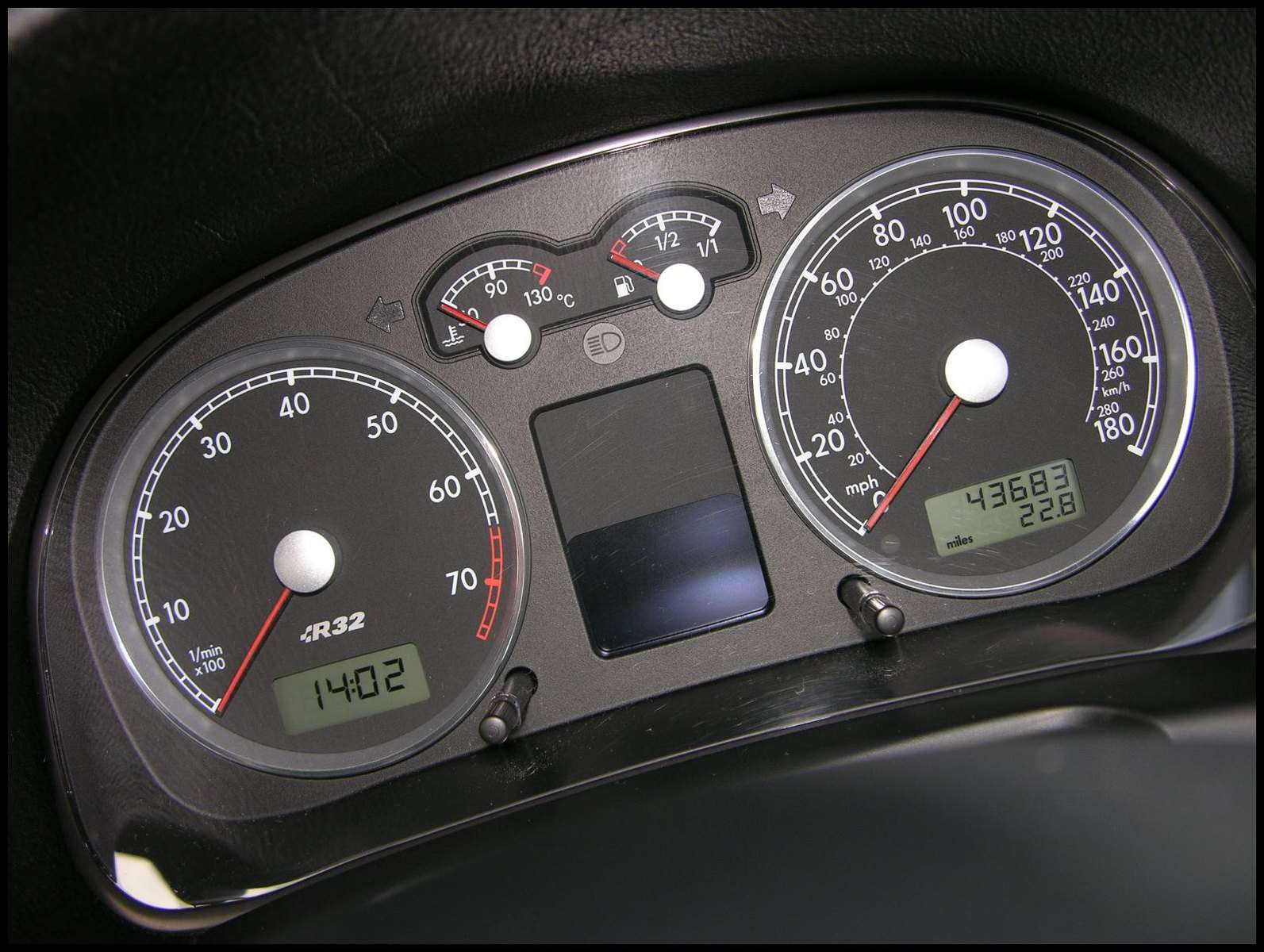
Manual, DSG and 4MOTION
A manual should engage every ratio cleanly without clutch slip or dual-mass-flywheel vibration. DSG cars require documented oil and filter changes; hesitation, shudder, warning lights or harsh engagement need specialist diagnosis. Early DSG can work extremely well, but age and neglect make proof of care essential.
The Haldex coupling also needs regular oil and filter service. Test for binding, warning lights and front-wheelspin inconsistent with the conditions. Four matching tyres of similar tread depth protect the all-wheel-drive system. The site’s Mk4 R32 diagnostic guide explains useful VCDS and OBD checks.
Body, cabin and chassis
Inspect front wings, rear arches, sills, jacking points, tailgate, floor seams and the area behind plastic trims. Poorly repaired crash damage is a greater concern than stone chips. Check xenon lamps, headlamp washers, climate control, window regulators, locks, seat bolsters and the pixel display.
Worn bushes, top mounts, dampers, wheel bearings and brake calipers blunt the chassis. The car should track straight without knocks or steering vibration. Correct wheels are often refurbished badly or replaced, while original seats, exhaust and trim are increasingly important to value.

Buying checklist
Start it completely cold
Listen for chain noise and check that the idle settles without warning lights.
Demand separate DSG and Haldex evidence
General service stamps do not prove that these systems received their specialist fluid and filter changes.
Buy originality carefully
Reversible upgrades are common, but missing factory parts and poor structural repairs are expensive to correct.
References
Continue the Volkswagen story
Explore the complete Volkswagen hub for more rare, sporting and technically unusual models.
Frequently asked questions
What engine is in the Mk4 Golf R32?
A naturally aspirated 3,189cc narrow-angle VR6 producing 241PS and 320Nm.
Was the Mk4 R32 available with DSG?
Yes. It became the first production Volkswagen offered with DSG in 2003; a six-speed manual was also available.
How many Mk4 R32s were built?
Volkswagen states that about 12,000 were produced worldwide between 2002 and 2004.
Does the Mk4 R32 have permanent four-wheel drive?
It uses Haldex-based 4MOTION, which varies torque distribution according to conditions rather than using a fixed split.
What is the biggest buying risk?
A combination of timing-chain wear, neglected DSG or Haldex servicing and structural corrosion can make a cheap car very expensive.