UNUSUAL CARS MODEL GUIDE
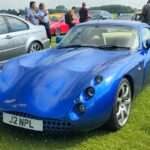
The TVR Cerbera is a front-engined 2+2 coupé produced from 1996, first with TVR’s own AJP8 V8 and later with the Speed Six straight-six. It was the car that moved TVR beyond tuned Rover engines and proved that the Blackpool company could design its own high-performance powertrain.
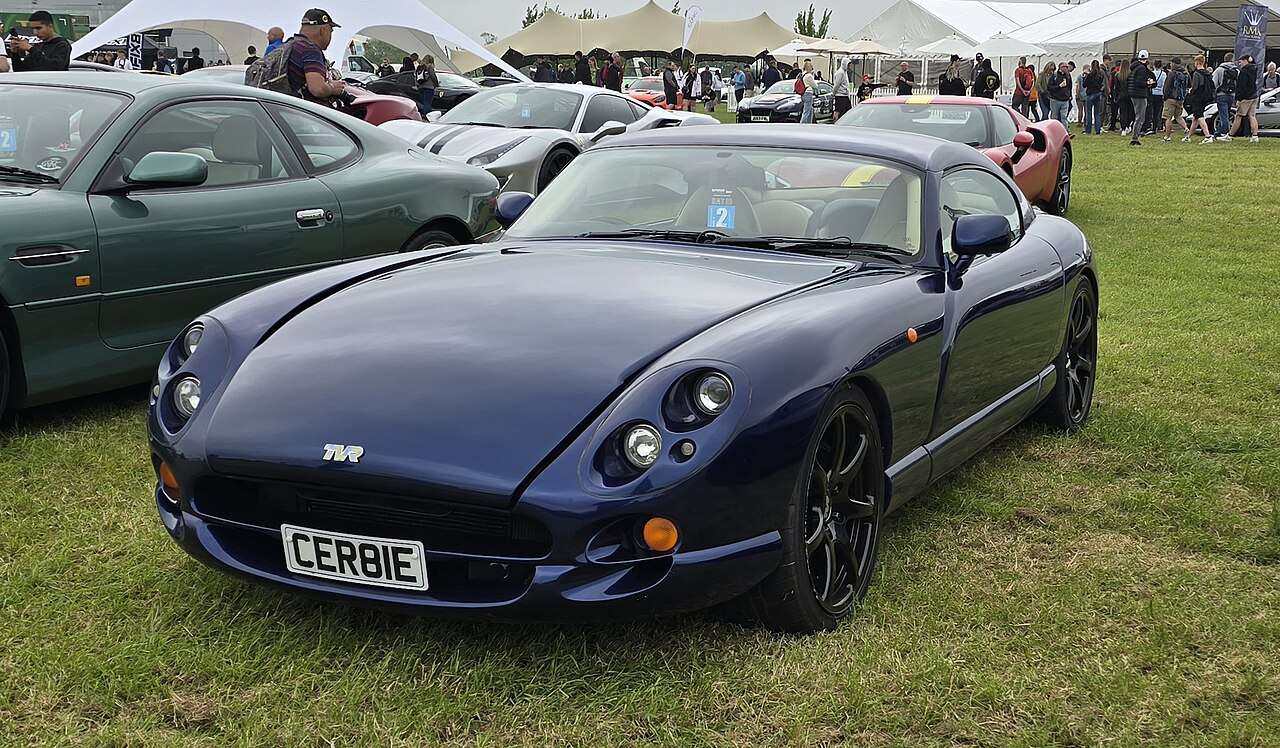
Featured image: 1996 TVR Cerbera 4.2, photographed by Calreyn88, CC BY-SA 4.0, via Wikimedia Commons; locally hosted.
From motor-show sculpture to production coupé
The Cerbera began as a styling exercise in 1993 and appeared as a running prototype at that year’s London Motor Show. Its name refers to Cerberus, the multi-headed guardian of the underworld. The body was developed through full-size modelling rather than conventional mass-production design procedures.
Unlike the two-seat Griffith and Chimaera, the Cerbera was a fixed-roof 2+2. Its longer wheelbase created occasional rear seating and genuine luggage capacity, making it a very fast grand tourer rather than simply a roadster with a roof.
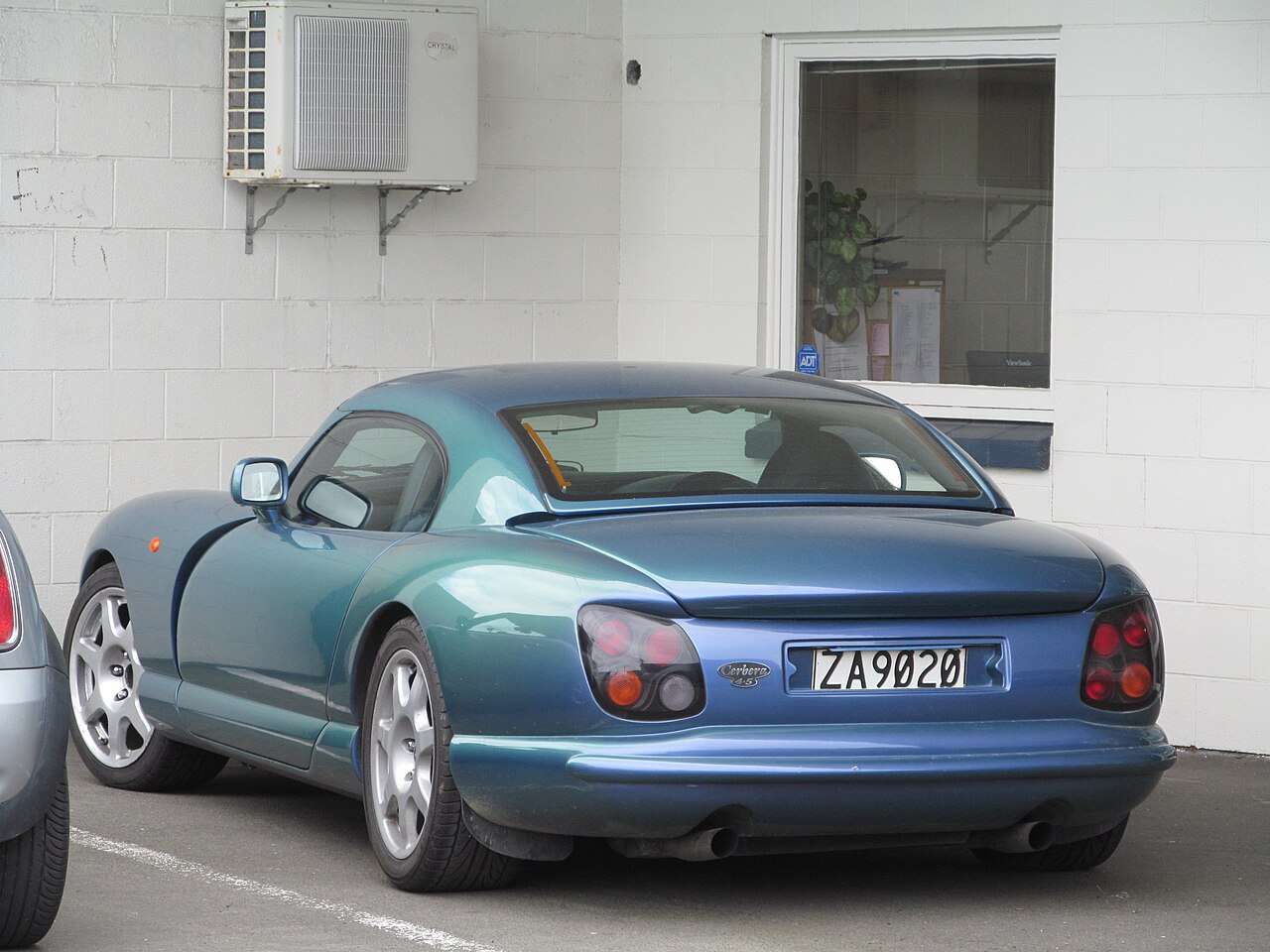
AJP8 and Speed Six versions
| Version | Engine | Period factory figure |
|---|---|---|
| Cerbera 4.2 | 4,185cc AJP8 V8 | About 360bhp and 320lb ft. |
| Cerbera 4.5 | 4,475cc AJP8 V8 | About 420bhp and 380lb ft. |
| Cerbera 4.5 Lightweight / Red Rose | Higher-output AJP8 specifications varied | Verify the exact factory or specialist build from records. |
| Cerbera Speed Six | 3,996cc TVR straight-six | About 350bhp and 330lb ft. |
Quoted power varies between period material, later summaries and individual cars. Rebuilds and upgrades are common, so a current dynamometer figure is not evidence of original factory specification.

Why the AJP8 was different
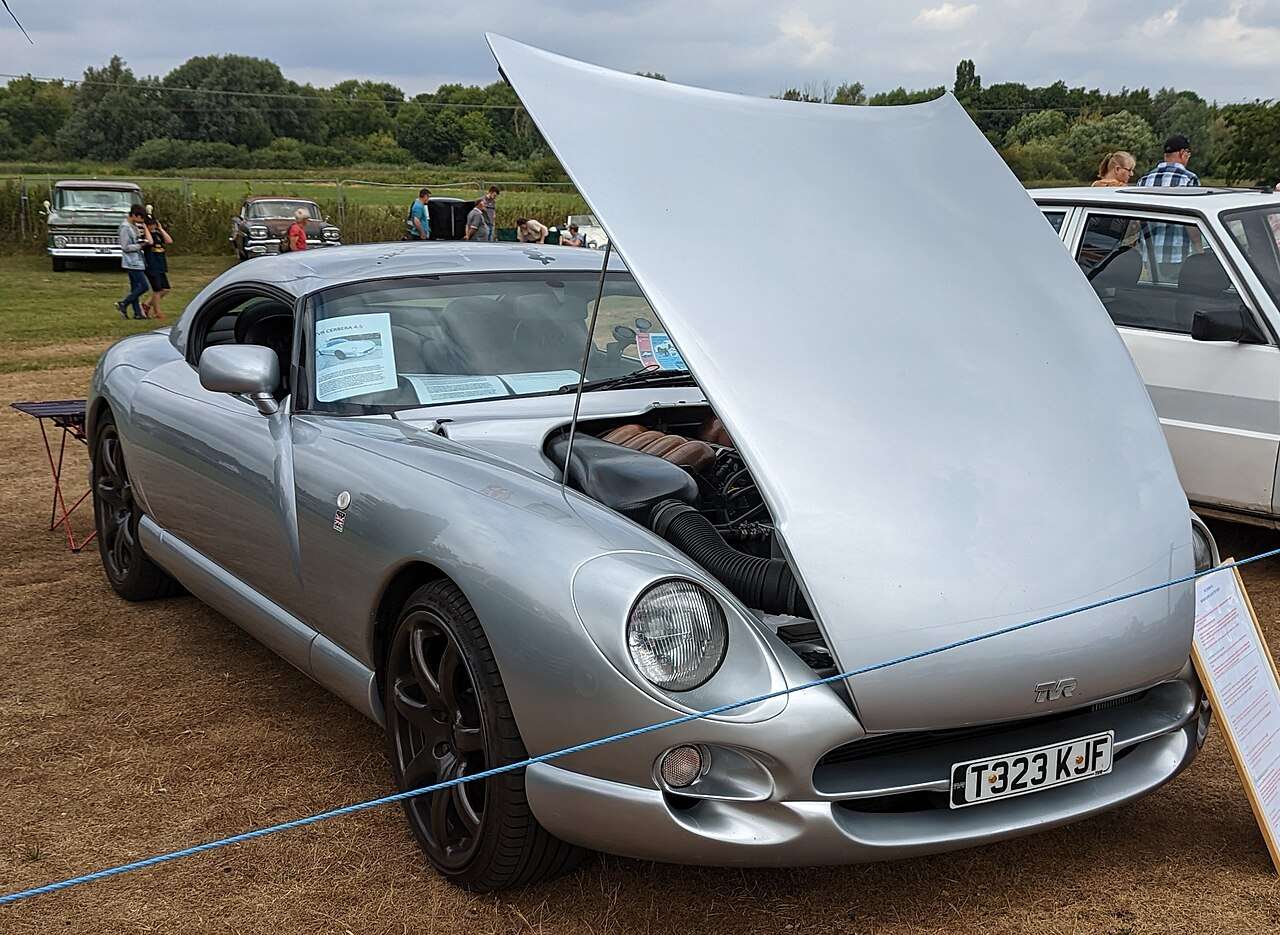
The AJP8 was an all-aluminium, flat-plane-crank V8 created for TVR. Its compact dimensions, light weight and rapid response were central to the Cerbera’s identity. The 75-degree bank angle and racing-influenced layout distinguished it from the cross-plane Rover V8 used in earlier TVRs.
The later Speed Six gave buyers a different character: a 24-valve dry-sump straight-six with strong top-end performance. It also connected the Cerbera to the engine family used in the Tuscan, Tamora, T350 and Sagaris.
Love cars you don’t see every day?
Get forgotten cars, surprising motoring stories and the most interesting finds from Unusual Cars by email.
Free to join. No spam. Unsubscribe whenever you like. See our privacy policy.
Performance and significance
TVR Car Club period specifications quote 0–60mph in around 4.2 seconds for the 4.2, 3.9 seconds for the 4.5 and 4.4 seconds for the Speed Six. Those figures placed the Cerbera among the fastest road cars of its time, particularly when its price and small-scale manufacture are considered.
The Cerbera also matters because it was unusually complete as an in-house project. TVR designed the chassis, body, cabin and engines, rejecting the safety electronics and shared platforms that were becoming normal elsewhere.
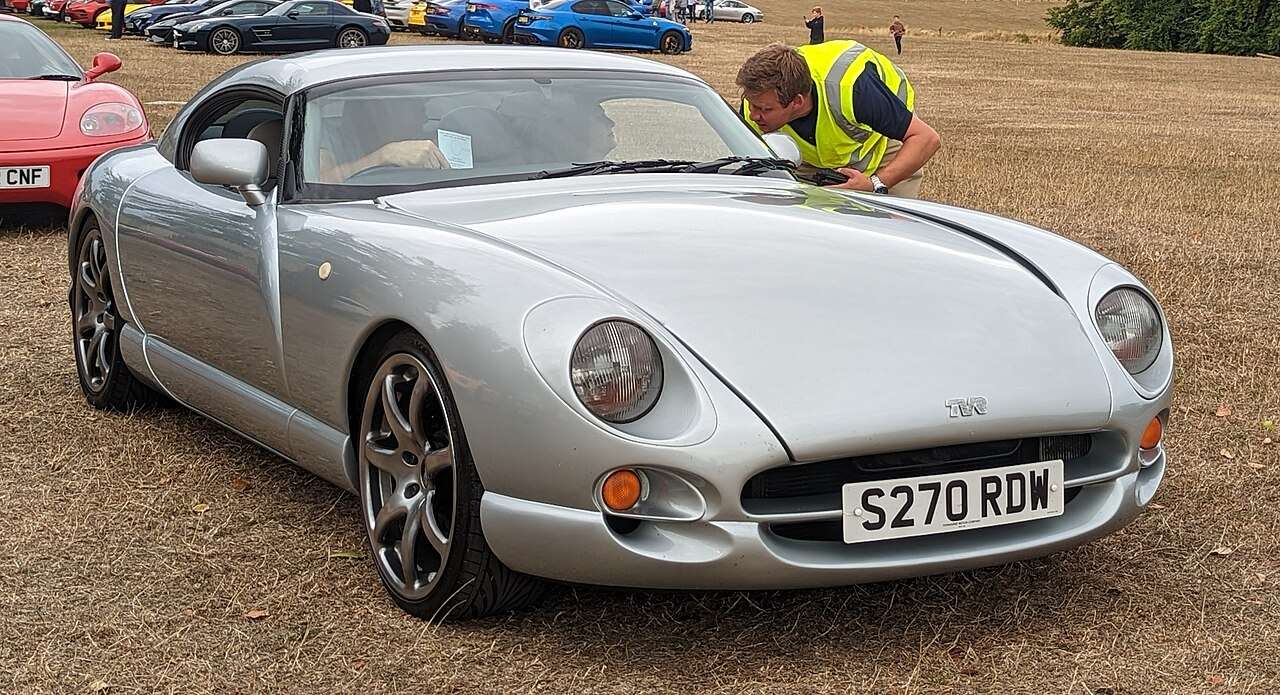
TVR Cerbera buying guide
Chassis and structure
Inspect the outriggers, central frame, seat-belt mounting areas, suspension pickups and tubes exposed to exhaust heat. Powder coating can fail beneath apparently presentable surfaces. A lift inspection and documentary evidence of repairs are essential.
AJP8 and Speed Six engines
Identify the exact engine and obtain invoices for rebuilds or upgrades. Check cold start, oil pressure, valvetrain noise, leaks, cooling, throttle operation and compression or leak-down results where appropriate. An AJP8 specialist and a Speed Six specialist may focus on different failure patterns.
Clutch, gearbox and differential
The clutch is heavy and replacement is labour-intensive. Check selection from cold and hot, driveline vibration, differential noise and evidence of abuse. A short test drive may not reveal heat-related issues.
Electrics, trim and body
Test every switch, display, window, door release, fan and lighting circuit. Water ingress affects connectors and control modules. Inspect the glassfibre for star cracks, stress marks and accident repairs, and confirm that Cerbera-specific trim remains complete.
Sources and further reading
- TVR heritage history
- TVR Car Club Cerbera history and specifications
- TVR period press information
- TVR Cerbera service and workshop introduction
Continue the TVR story
The Cerbera was TVR’s leap from tuned proprietary engines to its own powertrains. Explore the complete TVR hub, then trace the preceding Griffith 500 and follow the Speed Six into the Tuscan.
Frequently asked questions
What engine is in the TVR Cerbera?
Cerberas used TVR’s own 4.2- and 4.5-litre AJP8 V8 engines or the later 4.0-litre Speed Six straight-six.
Is the TVR Cerbera a four-seater?
It is a compact 2+2. The rear seats are useful for children or luggage, but access and adult space are limited.
What is an AJP8 engine?
The AJP8 is TVR’s light, flat-plane-crank V8, developed specifically for the company rather than adapted from the Rover V8.
Was the Cerbera Speed 12 a normal production model?
No. The Speed 12 was an extreme competition and development programme, not a regular showroom Cerbera derivative.
What should be checked before buying a Cerbera?
Obtain a specialist inspection covering chassis corrosion, engine health and rebuild history, cooling, clutch and gearbox, electrics, body repairs and complete service documentation.