UNUSUAL CARS MODEL GUIDE
The first-generation Škoda Kodiaq vRS was Britain’s first performance Škoda SUV. Launched for the 2019 model year with a 239 PS twin-turbo diesel, seven-speed DSG and four-wheel drive, it combined seven seats and family-car space with 500 Nm of torque. A 2021 facelift replaced the diesel with a 245 PS petrol engine, creating two distinctly different versions of the same discreet flagship.
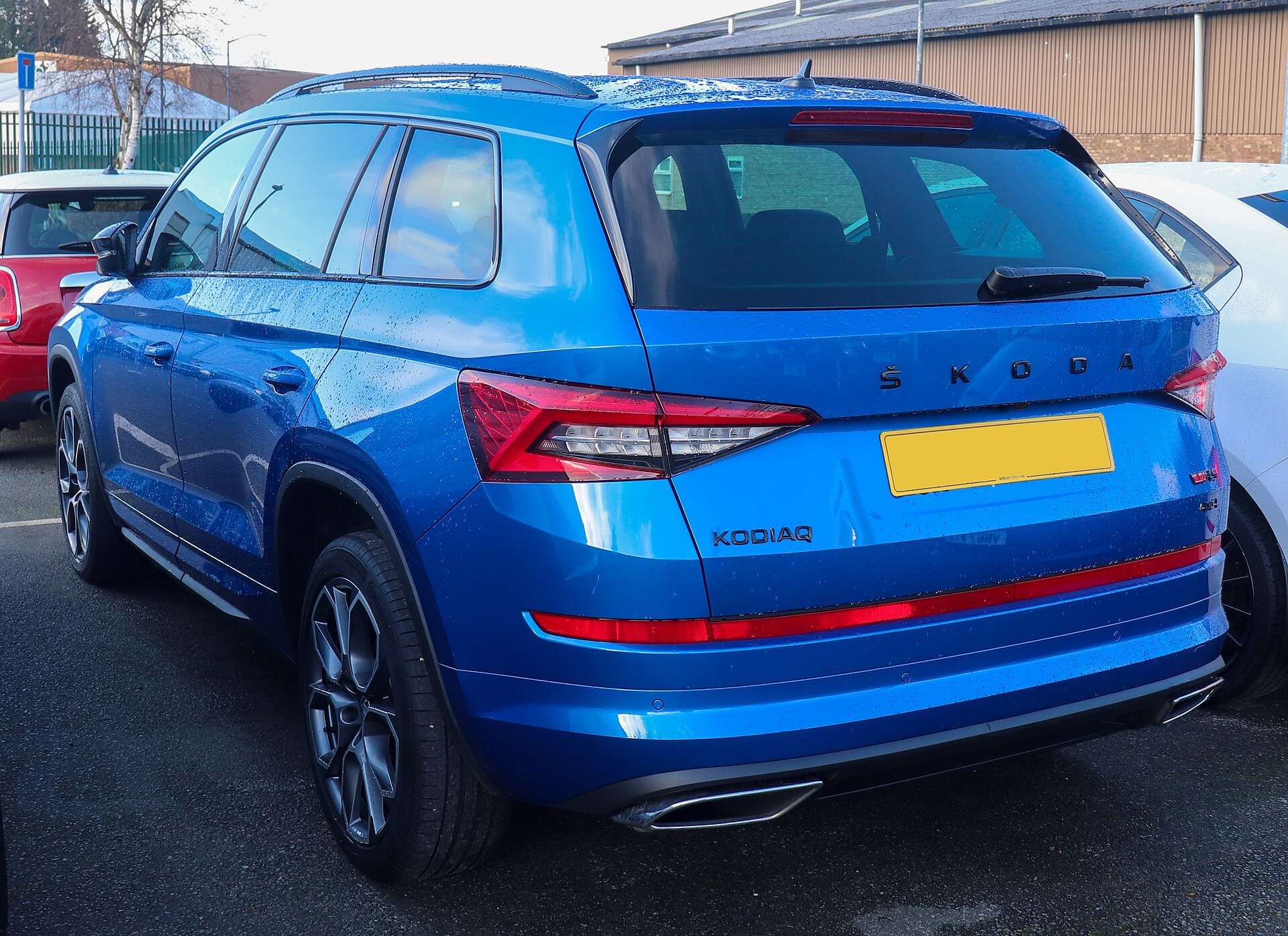
Featured image: 2020 UK-market Škoda Kodiaq vRS TDI. Photograph by Vauxford, CC BY-SA 4.0, via Wikimedia Commons; locally hosted.
Why Škoda built a vRS SUV
The Kodiaq arrived as Škoda’s first large SUV and quickly became a major UK model. Applying the vRS badge to it extended a formula established by the Octavia and Fabia: meaningful performance without sacrificing the space and usefulness expected from the standard car. The result was not simply an appearance package. The vRS received its own powertrain, chassis calibration, brakes, exterior details and cabin treatment.
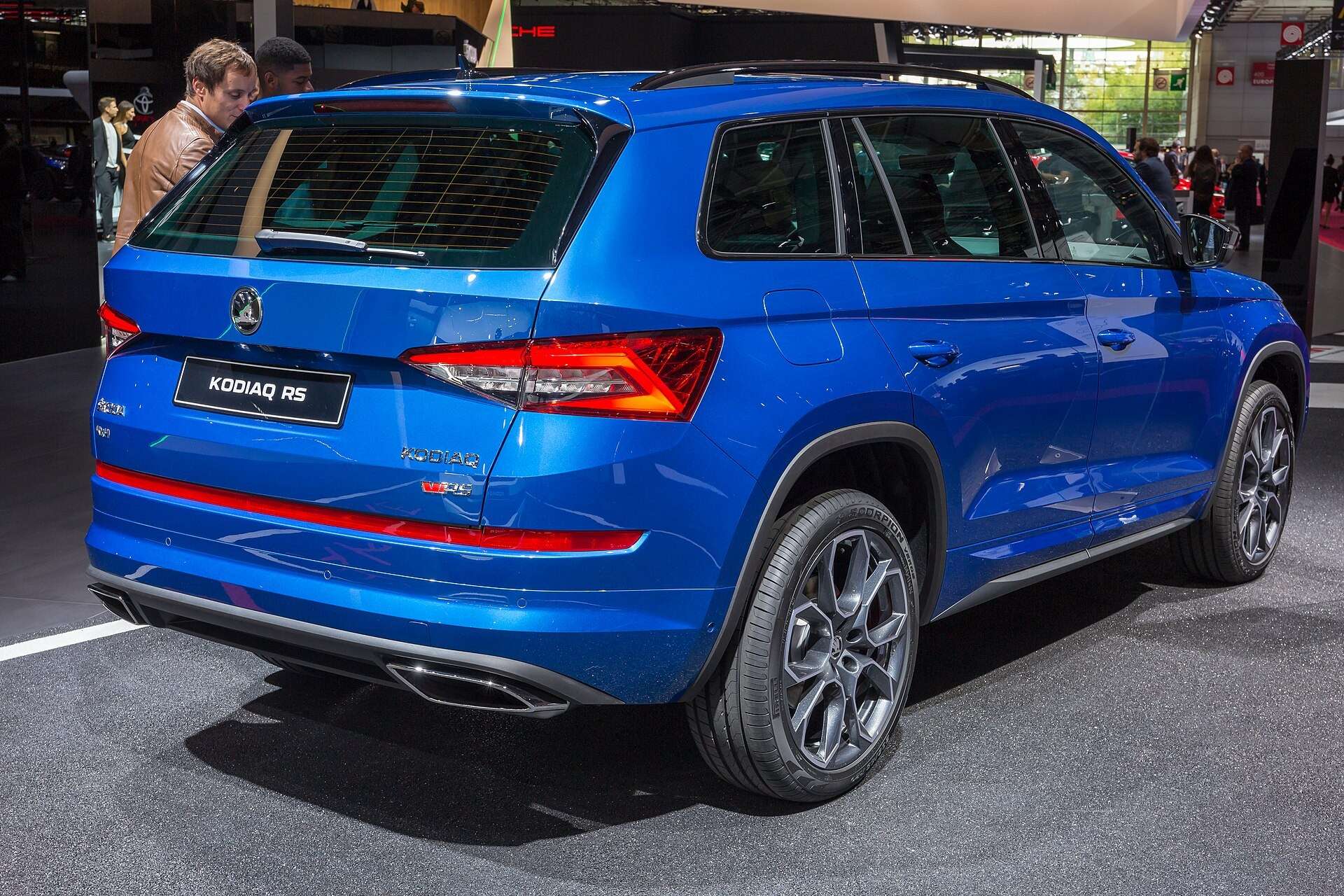
Škoda revealed the production model in 2018 after setting a Nürburgring Nordschleife record for a seven-seat SUV. UK deliveries followed in 2019. The blue launch colour, gloss-black details, full-width rear reflector and red vRS badges made the flagship recognisable without turning it into an overtly styled sports utility vehicle.

Diesel and petrol versions
| UK version | Output | Character |
|---|---|---|
| 2019–2020 2.0 BiTDI | 239 PS and 500 Nm | Twin-turbo diesel, strong low-speed torque and relaxed long-distance pace. |
| 2021–2024 2.0 TSI | 245 PS | Facelift petrol, lighter engine and a more conventional performance-car power delivery. |
| Transmission | Seven-speed DSG | Four-wheel drive was standard on UK vRS models. |
The diesel vRS
The original 2.0 BiTDI was the most powerful diesel then fitted to a production Škoda. Sequential turbocharging helped it provide useful response across a wide engine-speed range, while 500 Nm suited a large car carrying people and luggage. Its rarity and short production window make it the version most likely to interest future collectors, but the same emissions and boost hardware demands disciplined servicing and regular longer journeys.
Love cars you don’t see every day?
Get forgotten cars, surprising motoring stories and the most interesting finds from Unusual Cars by email.
Free to join. No spam. Unsubscribe whenever you like. See our privacy policy.
The petrol facelift
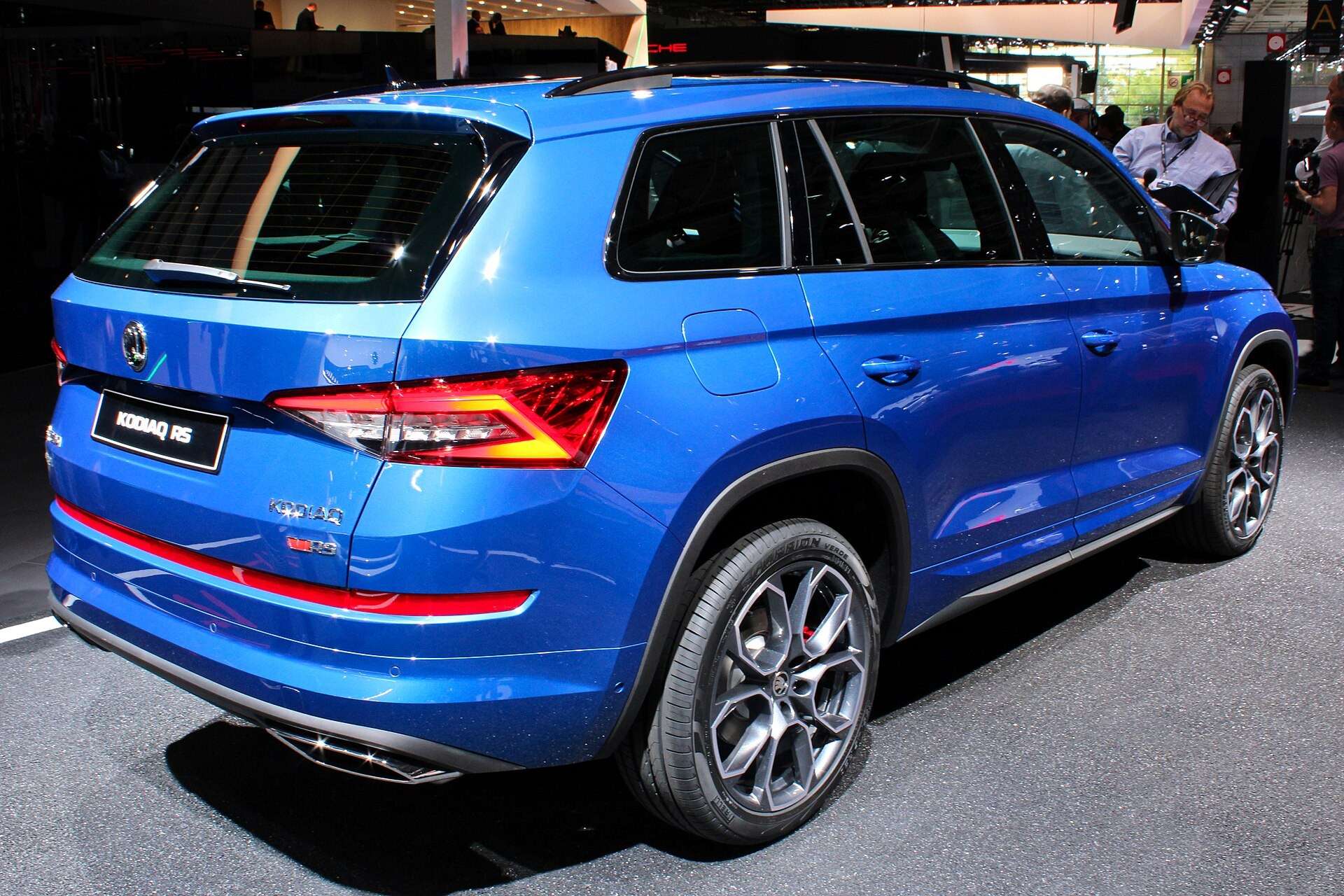
For the facelift, tightening emissions rules and changing buyer demand ended the twin-turbo diesel. The replacement 2.0 TSI produced 245 PS and removed more than 60 kg from the engine bay according to Škoda. Revised styling, lighting and cabin technology accompanied the powertrain change. The petrol is not automatically the safer used purchase: cooling-system leaks, ignition faults, oil history and evidence of tuning still require attention.
Cabin, practicality and equipment
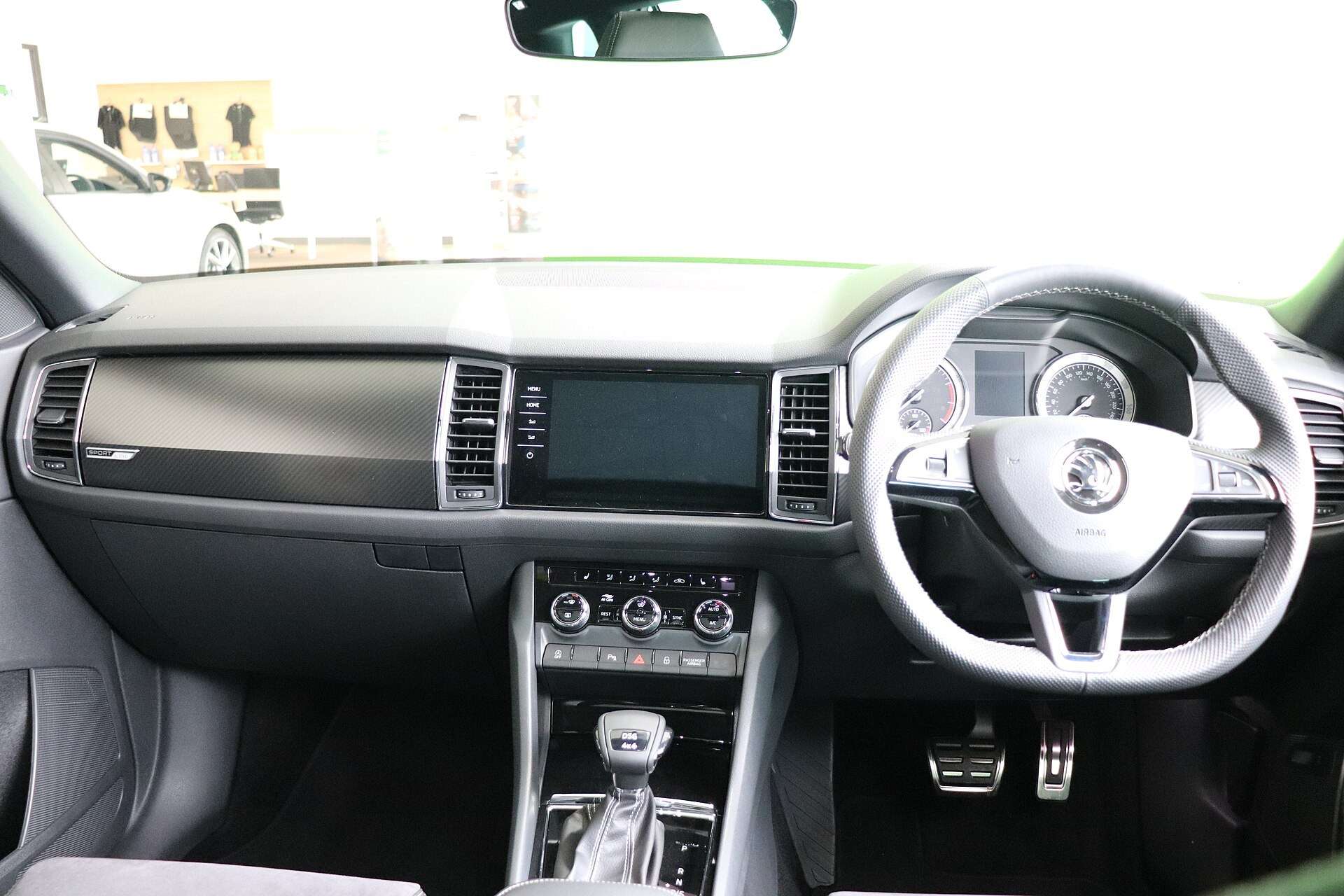
The vRS remained a Kodiaq first. The second row offers generous room and sliding flexibility, the third row folds into the boot floor and the driving position is conventional rather than aggressively sporting. UK specifications were high, but equipment changed with model year. Verify adaptive dampers, camera systems, heated seats, infotainment, driver assistance and tow-bar wiring individually rather than relying on an advert’s trim description.
Buying guide
Diesel engine and emissions hardware
Start from cold and check for uneven running, smoke, coolant loss and oil leaks. Confirm the car regularly completed journeys long enough for its diesel particulate filter to regenerate. EGR, DPF, AdBlue and turbocharger faults can be expensive, and warning lights should be diagnosed before purchase rather than cleared. A complete digital or invoiced service record matters more than low annual mileage.
Petrol engine
Check coolant level and evidence of water-pump or thermostat-housing work, then listen for timing, accessory-drive or turbo noises. The engine should pull cleanly without misfires. Modified software should be supported by reputable invoices, appropriate maintenance and an insurer that has been told.
DSG and four-wheel drive
The DSG should select drive and reverse promptly, creep smoothly and change cleanly when cold and fully warm. Confirm scheduled gearbox servicing. Check the four-wheel-drive coupling’s fluid-service history and inspect for mismatched tyres, because unequal rolling circumferences can stress the system.
Chassis, brakes and body
A heavy seven-seat SUV works tyres, brakes, bushes and dampers hard. Check inner tyre shoulders, wheel damage, brake vibration, suspension knocks and adaptive-damper warnings. Examine the underside, bumper corners, tailgate and panel gaps for poor accident repair. Test every powered seat, camera, sensor, lamp and infotainment function.
Why it matters
The Mk1 Kodiaq vRS documents a brief moment when a manufacturer used a twin-turbo diesel as the centrepiece of a performance flagship. The later petrol shows how quickly that strategy changed. Together they make a useful, genuinely unusual UK model story rather than merely another fast SUV.
Sources
- Škoda UK: 25 years of vRS in Britain
- Škoda UK: facelifted Kodiaq specification
- Škoda UK: SUV production history
Continue the Škoda story
The Kodiaq vRS took the vRS idea into a seven-seat SUV. Explore the complete Škoda hub, then compare the Octavia vRS Mk2, then read the Škoda Yeti guide.
Frequently asked questions
Was the first-generation Škoda Kodiaq vRS sold in the UK?
Yes. UK sales began with the 239 PS twin-turbo diesel for the 2019 model year. The facelifted first-generation vRS used a 245 PS petrol engine.
Is the Kodiaq vRS diesel or petrol?
Both existed. Early Mk1 cars use a 2.0-litre biturbo diesel with 500 Nm; the facelift replaced it with a lighter 2.0-litre TSI petrol engine.
Does every Kodiaq vRS have four-wheel drive?
UK-market Mk1 vRS models use a seven-speed DSG gearbox and electronically controlled four-wheel drive.
How many seats does the Kodiaq vRS have?
The UK Kodiaq vRS was specified as a seven-seat SUV, although the rearmost pair is best suited to occasional use.
What should be checked before buying?
Check complete servicing, DSG and four-wheel-drive maintenance, diesel emissions equipment or petrol cooling and ignition systems, brakes, tyres, suspension, electronics and evidence of accident repair.