UNUSUAL CARS MODEL GUIDE
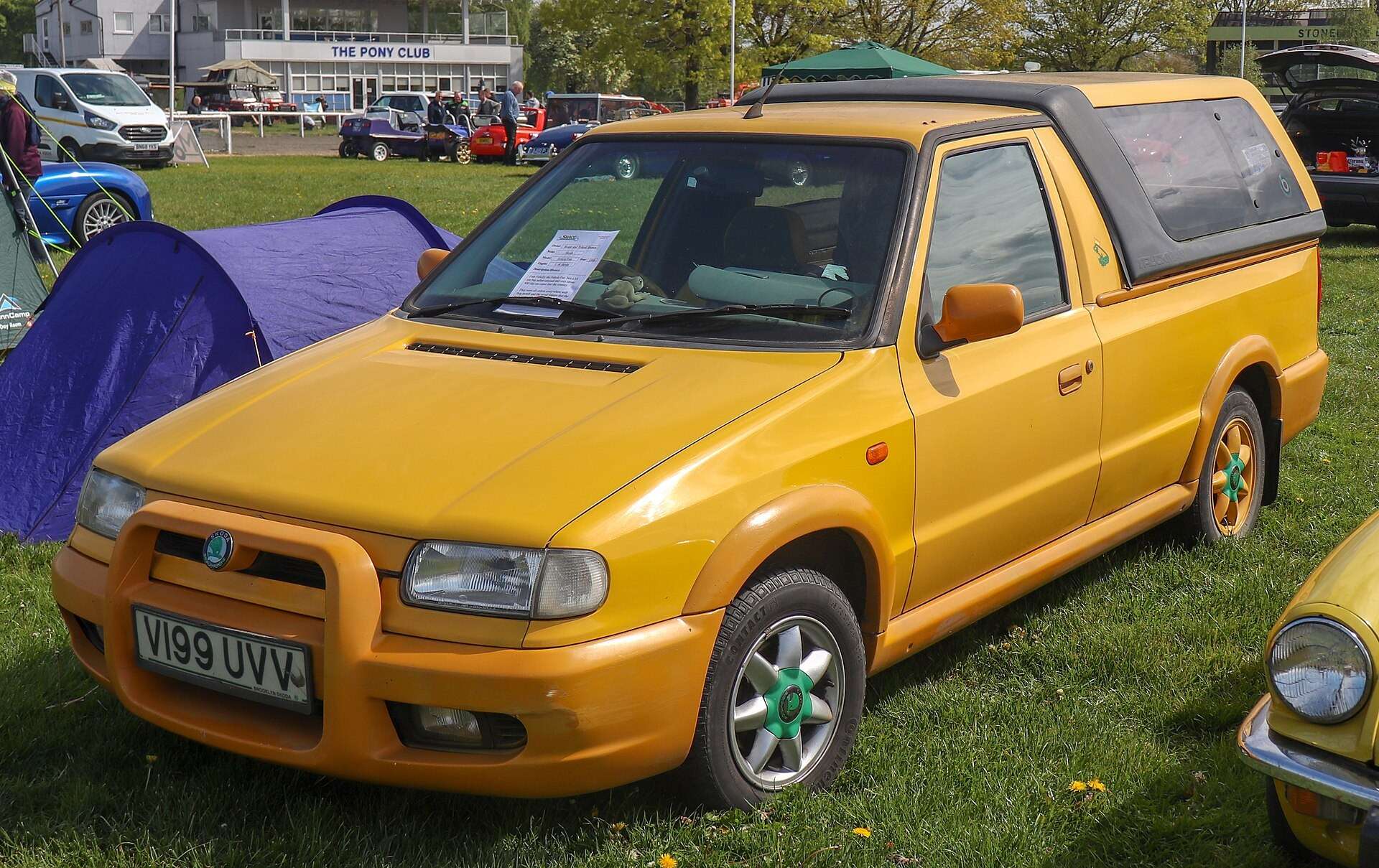
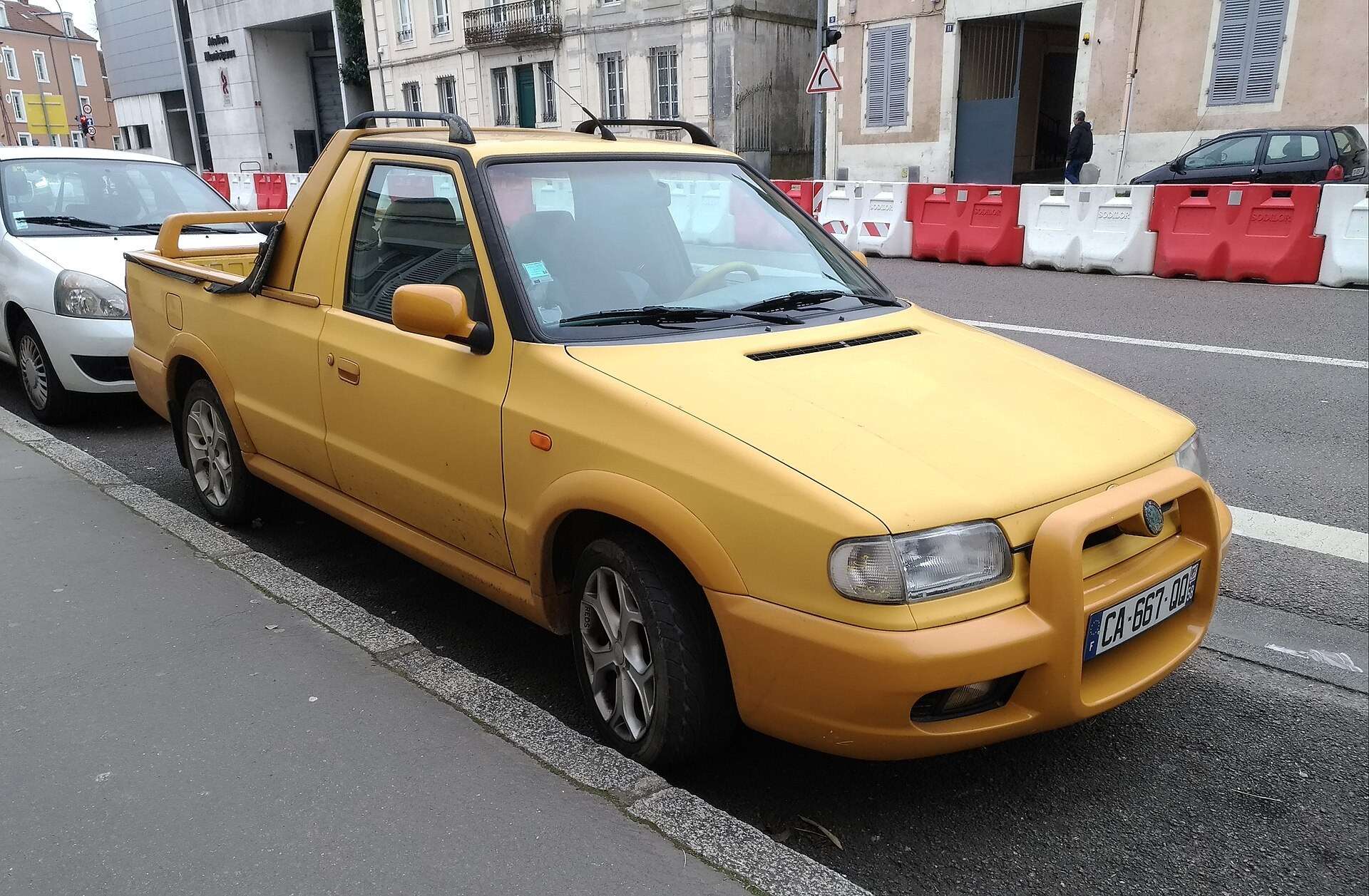
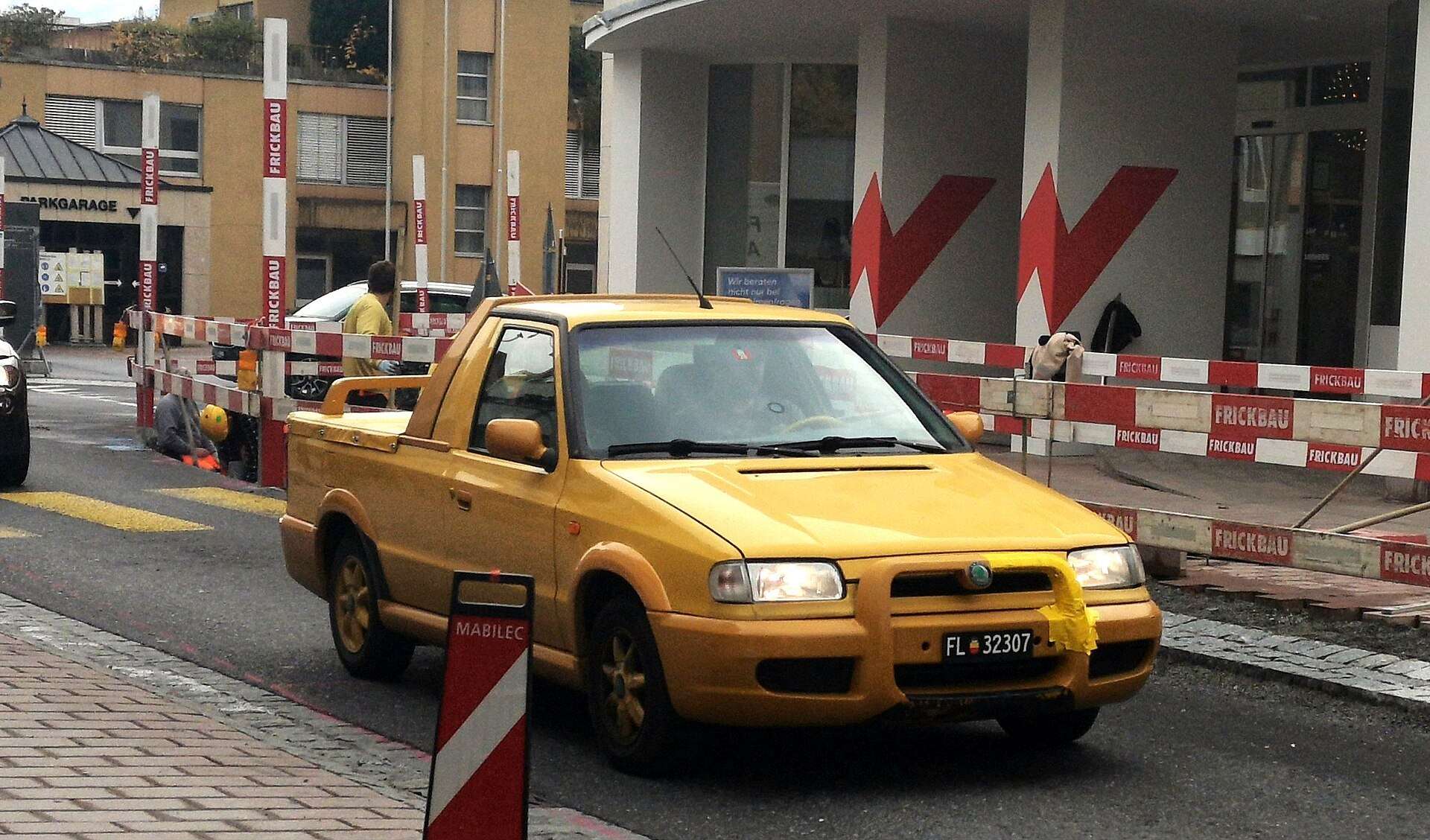
The Škoda Felicia Fun is a bright-yellow lifestyle pickup with a sliding rear bulkhead that converts part of the load bed into two open-air occasional seats. Built from 1995 to 2000, it turned the practical Felicia Pickup into one of Škoda’s most playful and collectible production models.
Featured image: Škoda Felicia Fun pickup. Photograph by Vauxford, CC BY-SA 4.0, via Wikimedia Commons; locally hosted.
From Felicia Pickup to lifestyle car
The Felicia launched in 1994 as Škoda’s first new model developed under Volkswagen Group ownership. A practical pickup joined the family, and the Fun derivative reframed it for leisure rather than purely commercial work.
Škoda’s designers used bright yellow paint, contrasting trim and a flexible cabin to create something with no direct equivalent in the ordinary hatchback range. Production began in October 1995 and ended in August 2000.

The sliding rear wall and extra seats
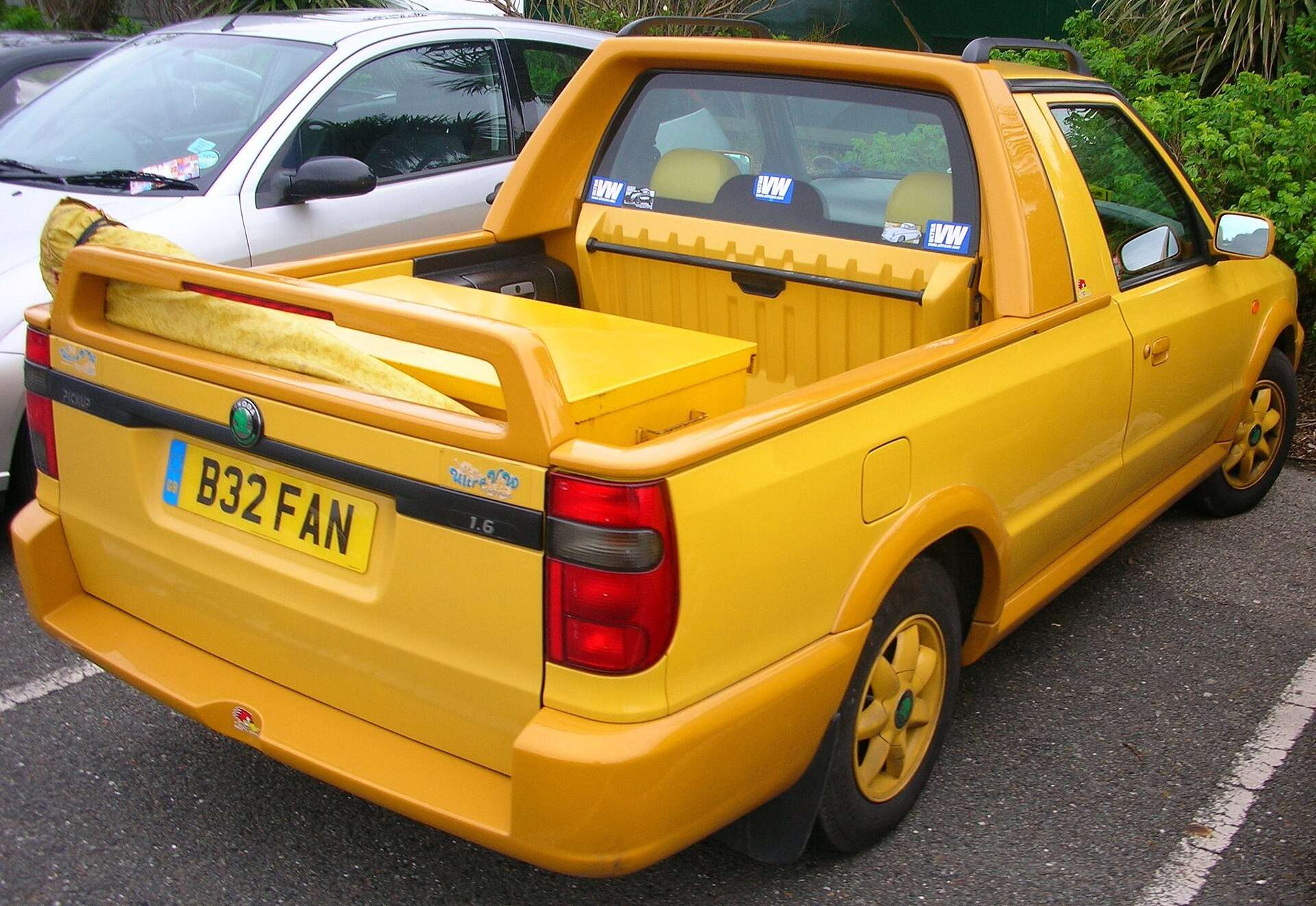
The Fun’s signature mechanism allows the rear wall of the two-seat cab to fold and slide backwards into the load area. Two occasional rear seats are then exposed to the open air. According to Škoda, the load-floor length reduces from 1,370 mm to 850 mm in this configuration.
It is ingenious, but completeness matters. Hinges, catches, seals, belts, trim and seat components are specific to the model and should all be inspected carefully.
Engines and specifications
| Engine | Fuel | Character |
|---|---|---|
| 1.3-litre | Petrol | Traditional Škoda four-cylinder; simple and modest in performance. |
| 1.6-litre | Petrol | Volkswagen Group engine with greater road performance. |
| 1.9-litre | Diesel | Naturally aspirated diesel focused on economy rather than speed. |
Engine and equipment availability differed by market, so original documents and the vehicle identification details should guide any individual-car assessment.
Love cars you don’t see every day?
Get forgotten cars, surprising motoring stories and the most interesting finds from Unusual Cars by email.
Free to join. No spam. Unsubscribe whenever you like. See our privacy policy.
Why the Fun became collectible
Rarity alone does not explain the appeal. Every production car was yellow, the graphics and trim are immediately recognisable, and the rear-seat transformation gives the vehicle a story that can be demonstrated in seconds. It also represents a short period when a mainstream manufacturer treated a small pickup as a recreational car.
Škoda Felicia Fun buying guide
Body, bed and corrosion
Inspect sills, floors, arches, jacking points, suspension mounts, cab-to-bed seams and the load floor. A bed liner can conceal corrosion or repairs. Check drain paths and evidence that heavy loads have distorted the structure.
Fun mechanism and trim
Operate the sliding rear wall fully. Check locks, hinges, seals, rear seats, belts, head restraints and model-specific trim. Missing yellow components, graphics or conversion parts can be difficult to replace correctly.
Engine and transmission
Apply normal Felicia checks for cooling, leaks, timing-belt history where applicable, clutch operation, gearbox selection and driveshaft joints. Diesel cars should start cleanly from cold; petrol cars should idle and pull without hesitation.
Cabin and water entry
Test windows, locks, instruments, heater and wipers. Inspect under carpets and behind trim for moisture, especially around the movable rear structure. Confirm that repairs have preserved the seals and safe operation.

Sources and further reading
Continue the Škoda story
The Felicia Fun is one of Škoda’s most imaginative production cars. Explore the complete Škoda hub, then explore the rear-engined Rapid coupé, then read about the diesel Fabia vRS.
Frequently asked questions
When was the Škoda Felicia Fun built?
Production ran from October 1995 to August 2000 after the model’s 1995 debut.
How many Felicia Fun pickups were made?
Škoda states that 4,016 examples were produced.
How does the Felicia Fun rear seat work?
The sliding rear wall folds and moves into the load bed, creating two occasional rear seats while reducing the load-floor length from 1,370 mm to 850 mm.
Was every Felicia Fun yellow?
Škoda’s official history says every production example was finished in bright yellow, with matching exterior and interior details.
Which engines were available?
The range included 1.3- and 1.6-litre petrol engines and a 1.9-litre diesel. Market availability and equipment varied.