UNUSUAL CARS MODEL GUIDE
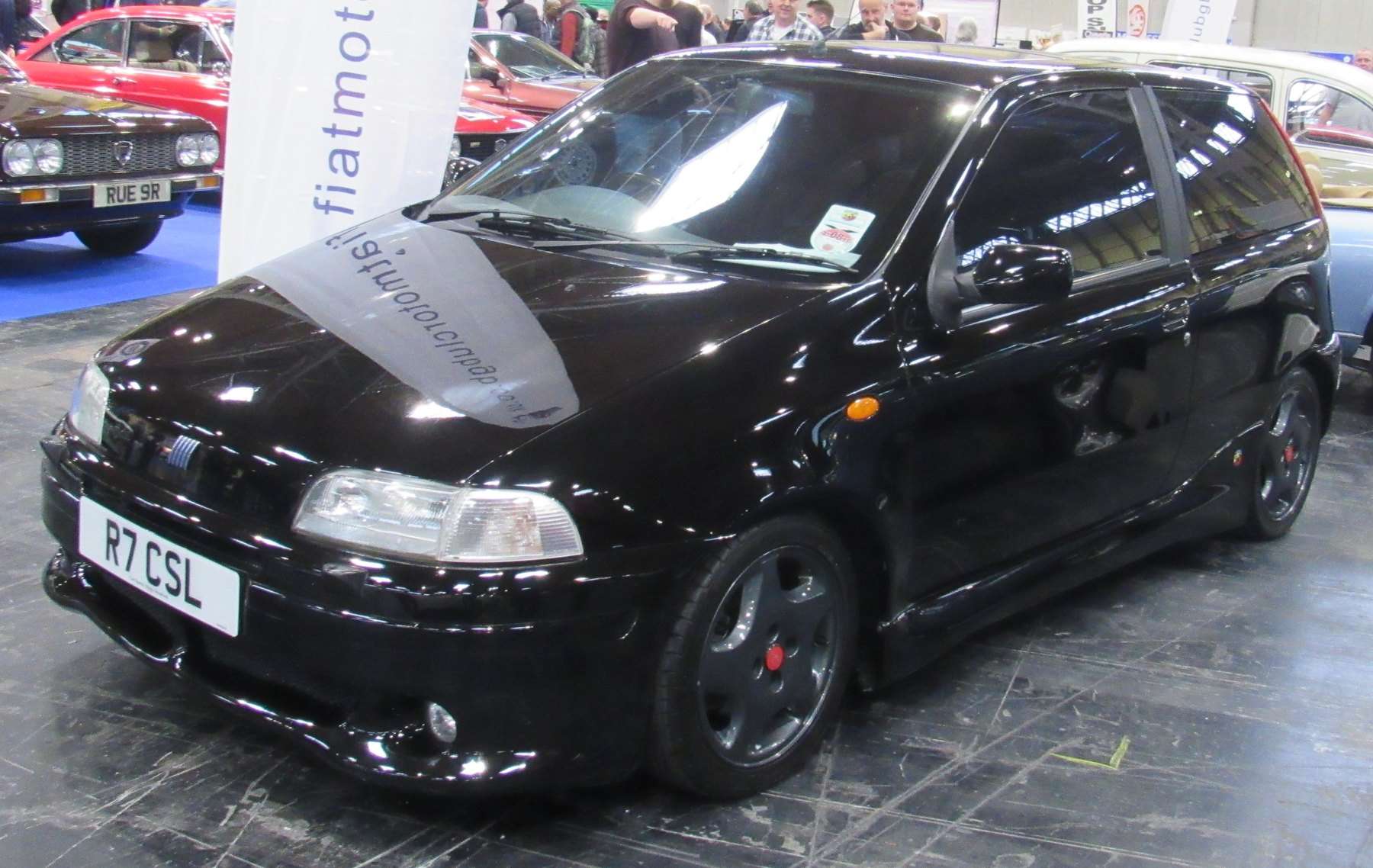
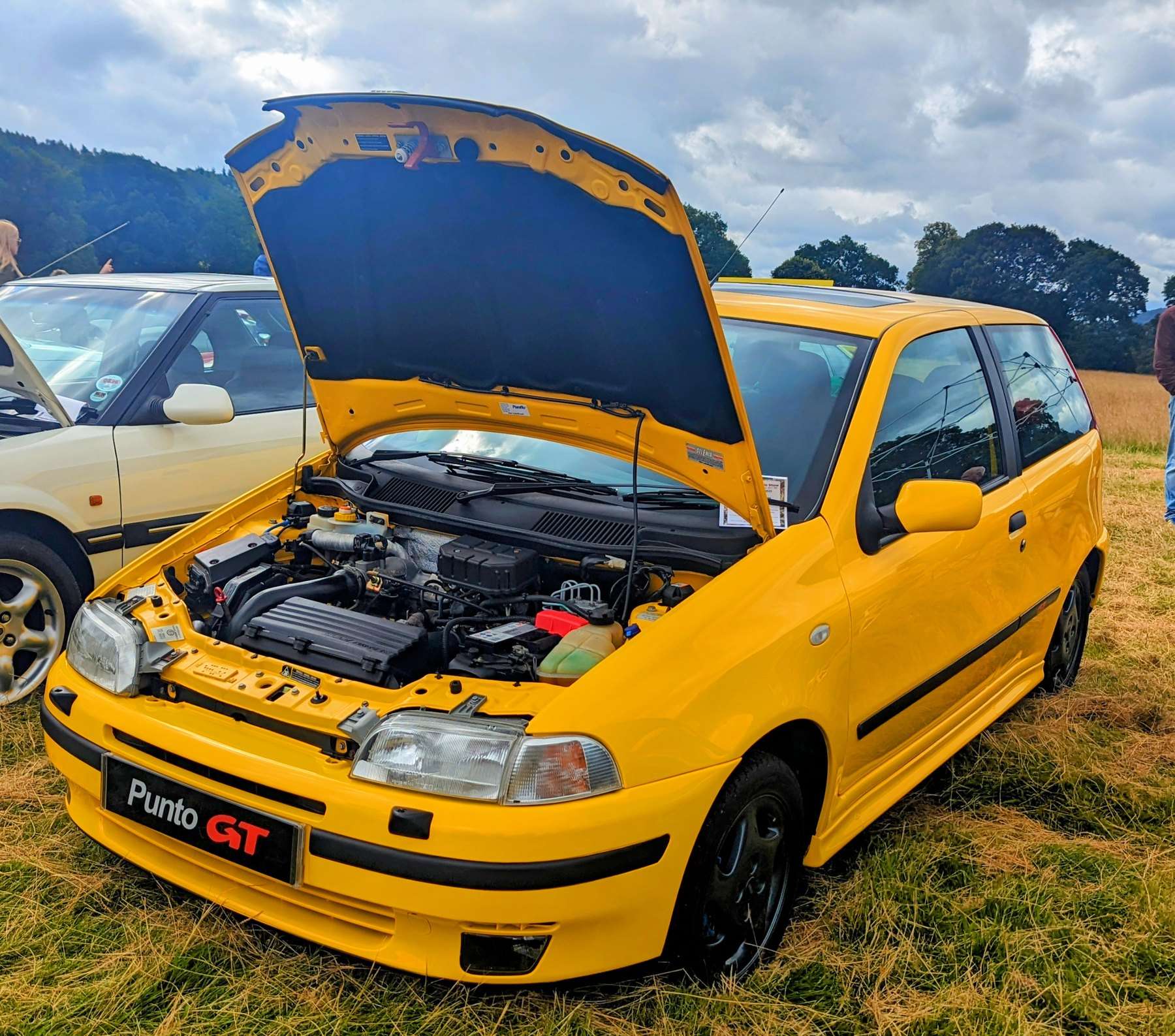
The Fiat Punto GT was one of the smallest and most dramatic turbo hatchbacks of the 1990s. It put the proven 1.4-litre turbo engine from the Uno Turbo into Giugiaro’s curving first-generation Punto, adding four-wheel disc brakes, useful cabin space and performance that could embarrass larger cars.
Quick answer: the Punto GT is a 1.4-litre intercooled turbocharged three-door produced through the first-generation Punto’s life. Fiat quoted up to 136 hp for the original version, with later emissions and range revisions bringing detail changes. Buy the most standard, structurally sound car you can find and inspect its cooling, turbo, fuel system, gearbox, brakes and modification history carefully.
From Uno Turbo to Punto GT
Fiat launched the Punto in 1993 as the Uno’s replacement. Giorgetto Giugiaro’s tall-roofed shape made excellent use of a short footprint, and the range quickly became one of Europe’s most important small cars. The GT sat at the top of the three-door line-up before the later HGT took a different, naturally aspirated route.
The Punto GT’s engine belonged to Fiat’s long-running 1,372 cc family. A turbocharger and intercooler helped the early car produce 136 hp, while fuel injection and engine management gave it far more flexibility than the badge’s modest capacity suggested. It retained front-wheel drive and used a five-speed manual gearbox.

Performance and chassis
Official anniversary material records the GT at 136 hp, supported by an intercooler, ventilated front discs and disc brakes at the rear. Contemporary road tests varied with market and model year, but acceleration to 62 mph was in the region of eight seconds and top speed was a little over 125 mph.
The Punto’s relatively light body made the boost feel urgent. Below the turbo’s working range it behaved like a small 1990s hatchback; once boost arrived it demanded care with the throttle, especially on wet or uneven roads. Good dampers, bushes, engine mounts and matched tyres are essential if the chassis is to work as intended.

GT1, GT2 and GT3: what do the names mean?
Owners commonly describe Punto GTs as GT1, GT2 and GT3. These are useful enthusiast labels for the original car and its successive revisions, but Fiat’s documentation and market specifications do not always use them consistently. The important production change was the wider Punto range update for 1997, with later cars receiving revised styling, equipment, engine management and emissions hardware.
Power figures quoted for the different phases vary by country and test standard. Do not identify a car from an online list alone. Check its VIN, build date, engine-management components, original handbook and market specification before ordering parts or judging authenticity.
Why standard cars are now rare
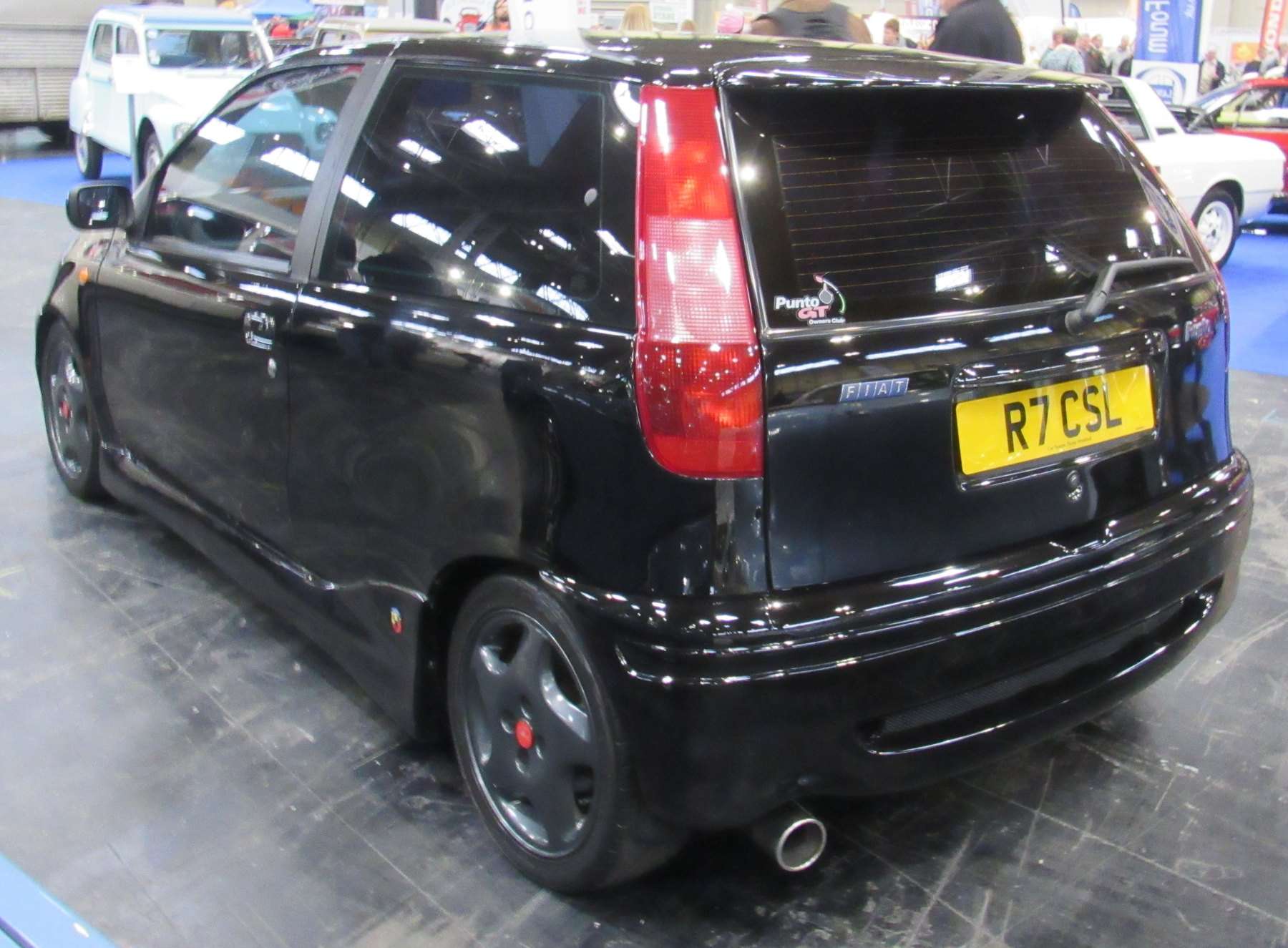
The GT was inexpensive performance at a time when boost controllers, dump valves, lowered suspension and larger wheels were fashionable. Many cars were tuned, crashed, broken for parts or modified several times. A modification is not automatically harmful, but undocumented increases in boost or fuelling changes can shorten engine and turbo life.
Original bumpers, side skirts, lamps, wheels, seats and engine-bay fittings now matter. A sympathetically upgraded car with invoices and rolling-road evidence may be safer than a supposedly standard example that has been hurriedly returned to factory appearance before sale.
Love cars you don’t see every day?
Get forgotten cars, surprising motoring stories and the most interesting finds from Unusual Cars by email.
Free to join. No spam. Unsubscribe whenever you like. See our privacy policy.
Fiat Punto GT buying guide
Body, identity and accident damage
Inspect sills, floors, jacking points, wheelarches, inner wings, front chassis legs and suspension mounts. Check VIN markings against the documents and confirm that GT-specific trim is consistent. Uneven paint, distorted seams and mismatched lamps can reveal previous crash repairs.
Cooling and turbo system
Start from cold and allow the engine to reach temperature. Look for stable coolant level, a working fan and no oil contamination. Inspect intercooler and boost hoses, listen for unusual turbo noise and watch for blue smoke after idling or under load. Any unexplained overheating or coolant loss needs diagnosis before purchase.
Fuel, ignition and engine management
Hesitation or uneven boost can come from tired sensors, ignition components, injectors, fuel-pressure faults or poorly matched modifications. Warning lamps should illuminate and extinguish normally. Ask who mapped the car, what boost it runs and whether there is evidence to support the claimed setup.
Gearbox, clutch and mounts
Use full throttle only after the engine is warm. Check for clutch slip as boost rises, baulking on quick changes, differential noise and movement from worn mounts. A hard-driven gearbox can sound acceptable at low speed but complain when hot.
Brakes, steering and suspension
Confirm that all four brakes work evenly and the ABS self-test is correct. Knocking, wandering or torque steer worse than expected may reflect worn bushes, mounts or poor alignment. Oversized wheels and aggressive lowering can damage ride quality and geometry.

Which Punto GT should you buy?
Choose on history and integrity rather than enthusiast phase name. A later car may be easier to use, while an early, unmodified example has particular collector appeal. The best purchase is a structurally sound car with clear ownership, conservative tuning or factory specification, correct cooling and fuelling, and evidence of recent preventative maintenance.
A specialist inspection is sensible. Scarcity makes another car hard to find, but it also makes missing trim and damaged mechanical parts more expensive to correct. Budget for tyres, brakes, fluids and a full baseline service even when the car appears healthy.

Frequently asked questions
What engine is in the Fiat Punto GT?
It uses a 1,372 cc turbocharged and intercooled petrol engine from Fiat’s long-running small-engine family, driving the front wheels through a five-speed manual gearbox.
How much power does a Fiat Punto GT have?
Fiat’s heritage material quotes 136 hp for the original model. Later versions and different markets are often listed with slightly lower figures because equipment, emissions systems and measurement standards changed.
What are Punto GT1, GT2 and GT3?
They are widely used enthusiast labels for the original Punto GT and its successive revisions. For parts and authentication, the VIN, build date and market specification are more reliable than the nickname alone.
Is the Punto GT the same as a Punto HGT?
No. The first-generation GT uses a 1.4-litre turbo engine. The later second-generation HGT uses a larger naturally aspirated 1.8-litre 16-valve engine.
What should I check before buying a Punto GT?
Check corrosion and accident repairs, cooling and turbo health, fuelling and mapping, clutch and gearbox condition, four-wheel disc brakes, suspension geometry and the quality of every modification.
Research sources
- Stellantis Heritage: Fiat Punto 30th anniversary
- Fiat Portugal: Punto 30th anniversary
- Featured image: 1998 Fiat Punto GT by Vauxford, CC BY-SA 4.0; resized and compressed for web display.
Continue the Fiat story
Explore the Rare & Performance Fiats hub, meet the ingenious Fiat Multipla, or enjoy the Fiat Barchetta.