UNUSUAL CARS MODEL GUIDE
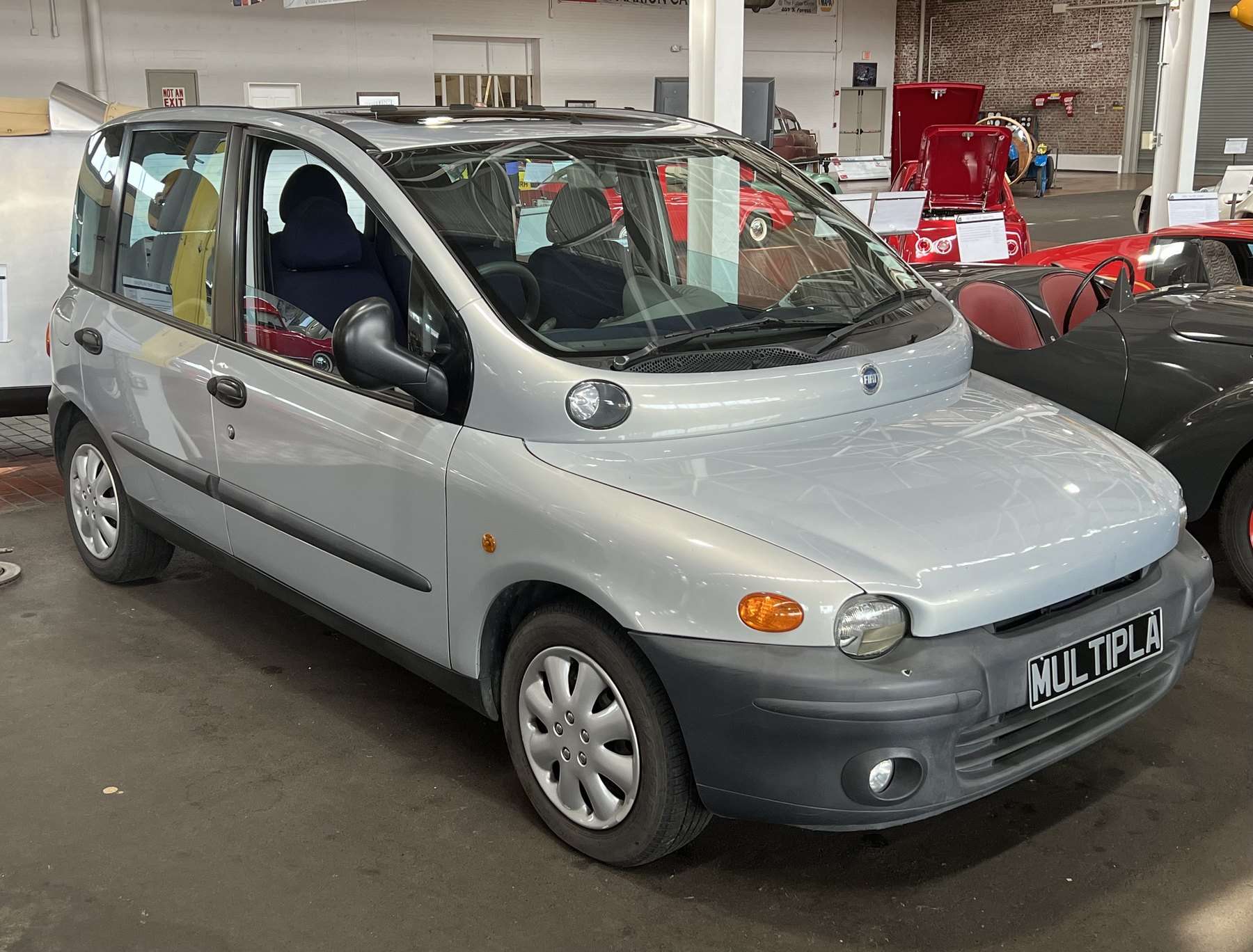
The Fiat Multipla was one of the bravest family cars of the 1990s. Its wide, two-row cabin seated six adults in a body shorter than many contemporary hatchbacks, while its extraordinary split-level nose made it instantly recognisable. It was clever, practical and controversial in almost equal measure.
Quick answer: the 1998–2004 Multipla is the visually distinctive original; the 2004 facelift has a more conventional front but retains the same ingenious six-seat layout. Petrol 1.6 and 1.9 JTD diesel versions are the most familiar in Britain. Buy on structural condition, suspension health, cooling-system maintenance and working electrics rather than mileage alone.
Why the Fiat Multipla mattered
Fiat launched the Multipla in Italy in late 1998, with wider European sales following in early 1999. Roberto Giolito’s design put three equal-sized seats in each of two rows, not the narrower occasional centre places used by many rivals. At only 3.99 metres long, it occupied little more road space than a small family hatchback.
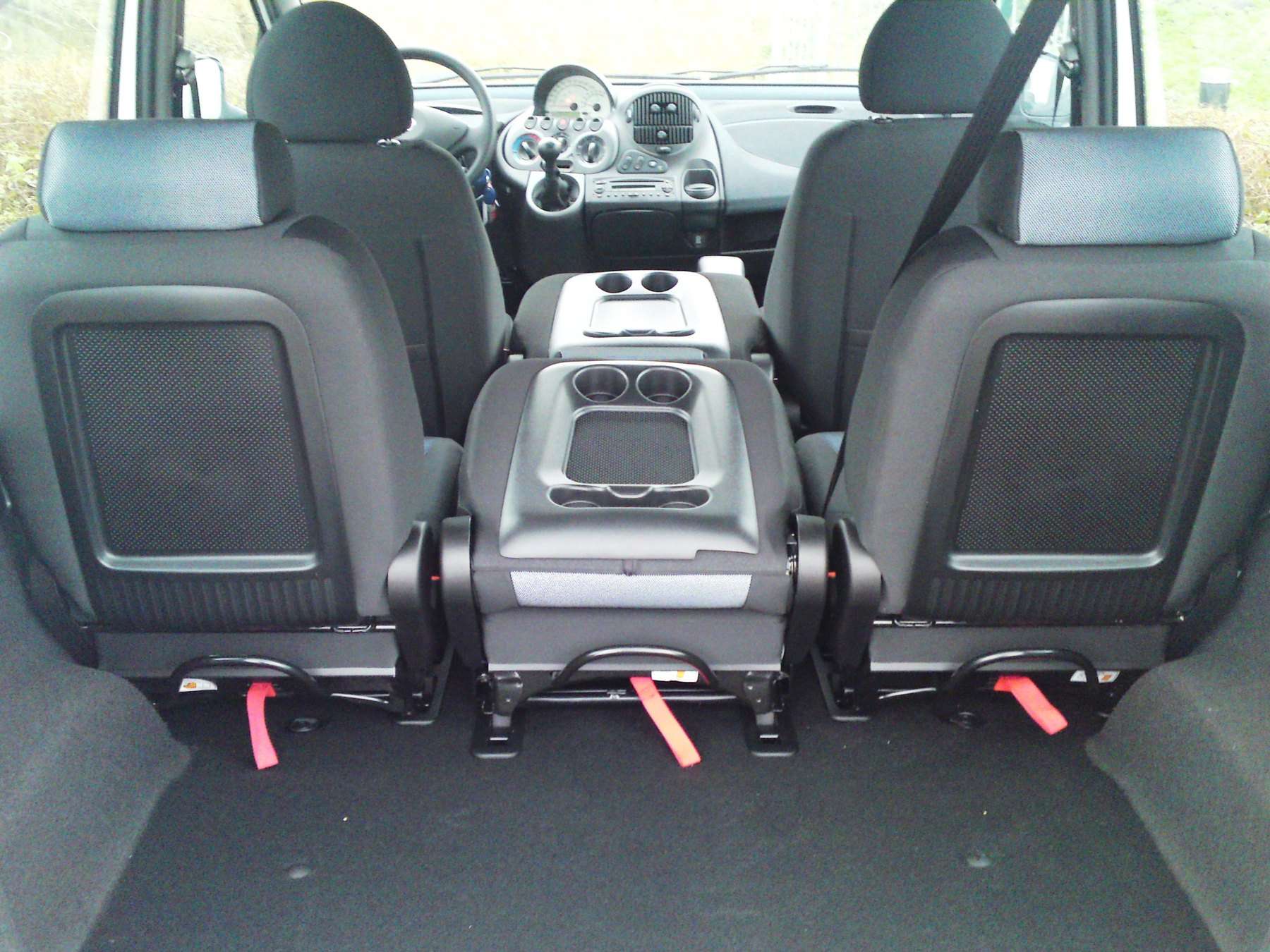
The unusual proportions were functional. A broad track and near-vertical sides created enough shoulder room for six, while the elevated central instrument pod and dashboard-mounted gear lever freed useful cabin space. The rear seats could be folded, tumbled or removed individually, turning the car from a six-seater into a remarkably roomy load carrier.

The design that divided opinion
The original Multipla’s windscreen began above a separate band containing the main lamps, leaving the sidelights and Fiat badge on a raised shelf beneath the glass. Its deep windows, swollen arches and broad stance made the engineering obvious from outside. Critics focused on the styling, but the Museum of Modern Art included the Multipla in its 1999 exhibition Different Roads: Automobiles for the Next Century.
The shape also gave the driver an airy view and kept the car unusually compact. With all six seats installed Fiat quoted 430 litres of luggage capacity; removing the rear row released far more space. Unlike longer seven-seat MPVs, every occupied seat still had reasonable access and visibility.
Engines and versions
British buyers mainly encountered the 1.6-litre 16-valve petrol and the 1.9-litre JTD turbodiesel. The petrol is smoother and suits lower annual mileages, while the diesel’s stronger low-speed torque better matches a fully laden car. Outputs and emissions equipment changed during production, so parts should always be ordered against the VIN and engine code.
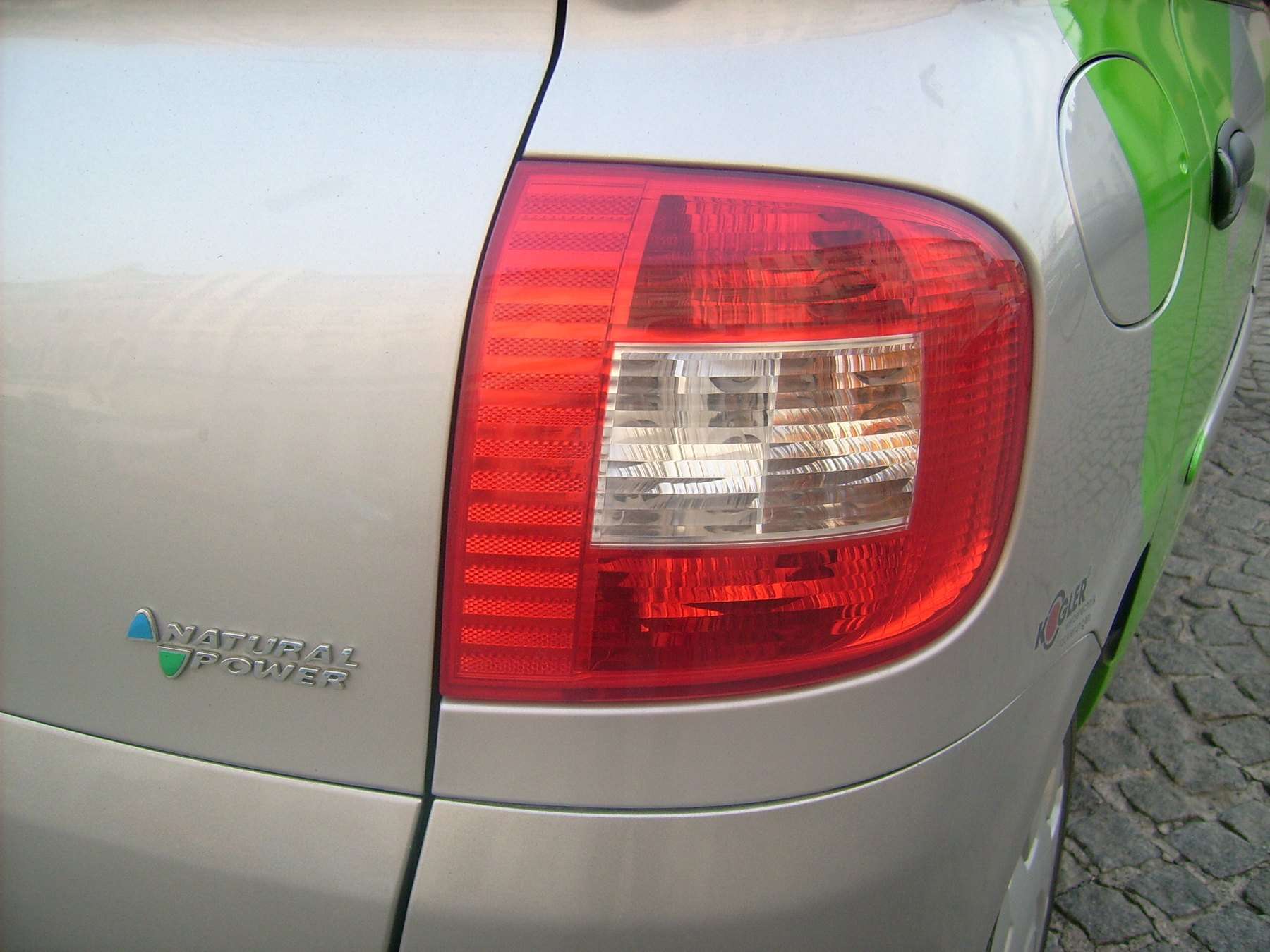
Fiat also used the Multipla to develop alternative-fuel models. The BluPower ran on methane, while BiPower versions could use either petrol or compressed natural gas. These are unusual survivors and can be fascinating, but a buyer needs access to someone who understands their tanks, valves and fuel-control equipment.
The 2004 facelift
For 2004 Fiat replaced the original nose with a smoother, more conventional front. New lamps, grille, bonnet and bumpers made the car easier for conservative buyers to accept, while the core structure and two-by-three seating philosophy remained. UK cars continued with a 103 bhp 1.6 petrol or 115 bhp 1.9 JTD diesel at launch.
The facelift lost some of the original’s visual theatre but gained a cleaner dashboard treatment, revised trim and improved specification. It is often the easier version to find in everyday condition. Enthusiasts increasingly value the early car precisely because its design was never repeated.

What a Multipla is like to drive
The Multipla feels smaller than it looks. The wide track gives reassuring stability, the steering is light and the glass area makes it easy to place. It is not a sporting car, but the low seating rows avoid the top-heavy sensation of some MPVs. Ride quality depends heavily on sound suspension and correctly specified tyres.
The middle front passenger sits close to the driver, so six adults make the cabin sociable rather than serene. With fewer passengers, the centre seat can be folded into a useful table. Road noise and trim rattles are part of the experience, especially in older diesels, but the packaging remains exceptional.
Love cars you don’t see every day?
Get forgotten cars, surprising motoring stories and the most interesting finds from Unusual Cars by email.
Free to join. No spam. Unsubscribe whenever you like. See our privacy policy.
Fiat Multipla buying guide
Body and corrosion
Inspect the sills, jacking points, floor edges, wheelarches, subframes and suspension mounting areas. Check behind plastic covers and beneath the boot floor. Uneven panel gaps or overspray may indicate accident repair, and neglected underbodies can turn a cheap car into a difficult restoration.
Suspension, steering and brakes
Front wishbone bushes, drop links and rear suspension components wear, producing knocks, imprecise steering and uneven tyres. During a test drive, listen on broken surfaces and check that the car tracks straight. Confirm that the ABS warning light completes its normal self-test and that the handbrake works evenly.
Petrol engines
Ask for evidence of timing-belt and water-pump replacement at the correct interval. Check for coolant loss, oil leaks, rough idling and warning lights. A neglected cooling system is a reason to walk away, because overheating can turn a serviceable engine into an expensive problem.
JTD diesels
Look for clean starting from cold, steady boost and limited exhaust smoke. Turbo hoses, airflow metering, EGR equipment and injectors can all cause poor running. Clutch and dual-mass flywheel work is significant, so listen for rattles and check for slipping under load.
Cabin and electrics
Test every window, lock, mirror, lamp, fan speed and dashboard display. Check that all six seats are present, secure and easy to move; missing head restraints, trays and model-specific trim are surprisingly hard to replace. Damp carpets can point to blocked drains or failed seals.
Which Fiat Multipla should you buy?
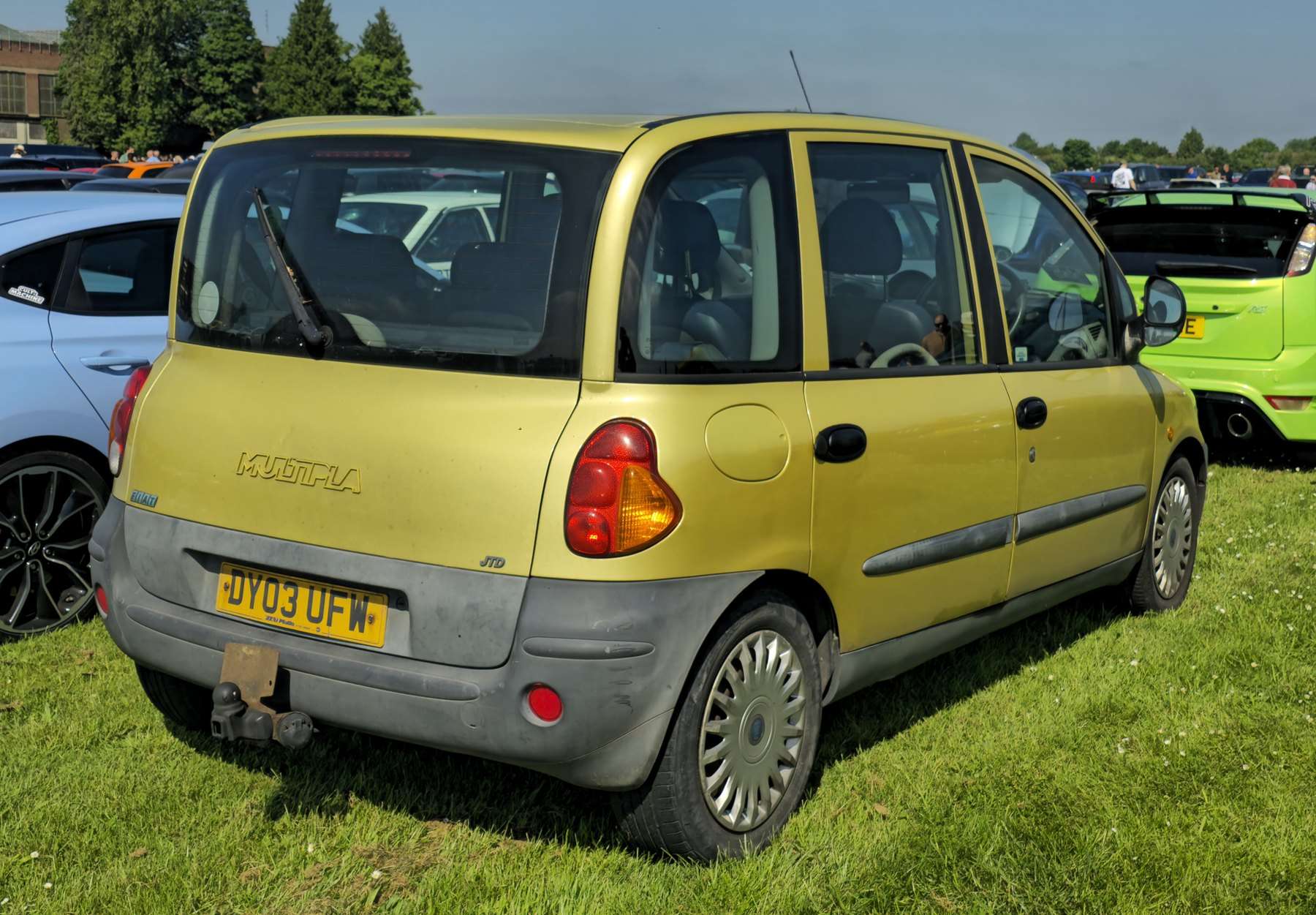
Choose an original-nose car if design significance and character matter most. A later facelift is less visually startling and can be easier to use as everyday transport. The 1.6 petrol suits shorter journeys and simpler ownership; a healthy JTD is more relaxed when carrying people or covering distance.
Condition overwhelms specification. A complete, rust-free car with a thick maintenance history is worth paying for, even if it is not the colour or trim level you first wanted. Modified or alternative-fuel cars demand additional specialist checks.

Frequently asked questions
How many seats does a Fiat Multipla have?
It has six full-size seats arranged as two rows of three. The rear seats can be folded or removed individually to increase luggage space.
Why does the early Fiat Multipla look so unusual?
Its body was shaped around a very wide, compact six-seat cabin. The separate lamp band and raised windscreen base made that packaging visible and gave the car its distinctive two-tier nose.
When was the Fiat Multipla facelifted?
Fiat introduced the smoother-fronted facelift in 2004. It kept the fundamental six-seat layout but replaced the original split-level nose with more conventional styling.
Is a Fiat Multipla a future classic?
The original version has strong design significance, increasing rarity and a place in MoMA’s automotive design history. Survival, originality and condition are likely to matter more than trim level.
What should I check before buying a Fiat Multipla?
Prioritise corrosion, suspension noise, timing-belt and cooling history, diesel clutch and turbo health, working electrics, damp carpets and the presence of all six complete seats.
Research sources
- Fiat: Multipla in brief
- Stellantis Heritage: Fiat Multipla 25th anniversary
- Fiat UK: new Multipla in the UK
- Honest John: Fiat Multipla review and owner reports
- Featured image: 1998 Fiat Multipla by TaurusEmerald, CC BY-SA 4.0; resized and compressed for web display.
Continue the Fiat story
Explore the Rare & Performance Fiats hub, enjoy the Fiat Barchetta, or discover the turbocharged Fiat Punto GT.