UNUSUAL CARS MODEL GUIDE
The Fiat 126 condensed rear-engined motoring into a car little more than three metres long. Launched in 1972 as the 500’s successor, it became far more than an Italian city car: Polish production turned the 126p, affectionately called Maluch, into one of Central Europe’s defining family cars.
Quick answer: the 126 is simple, economical and full of character, but it is also slow, noisy and extremely vulnerable to corrosion. Italian-built cars have rarity appeal; Polish 126p models offer the richest social history and generally better parts availability. Buy the most structurally sound, correctly identified example you can find and treat restoration economics with care.
From Fiat 500 to Fiat 126
Fiat revealed the 126 at the Turin Motor Show in 1972. Beneath its more angular body remained the familiar rear-mounted, air-cooled two-cylinder layout and rear-wheel drive. The early 594 cc engine produced roughly 23 hp, but the squarer cabin, improved luggage space and revised suspension made the car a more practical successor to the Nuova 500.
Italian production began at Cassino, while assembly and manufacture spread to other markets. The most important partnership was with Poland’s FSM. Assembly started in 1973 and full production followed at Bielsko-Biała, later joined by Tychy.

The Polski Fiat 126p and Maluch
The Polski Fiat 126p was built under licence and gradually became a Polish national institution. For families who had previously relied on public transport or motorcycles, it offered enclosed, independent mobility at an attainable price. Its tiny size did not prevent owners loading it for holidays, towing small trailers or using it through severe winters.
The name Maluch—“little one”—was used informally for years and became an official designation late in production. Manufacture in Poland continued until 2000. Across all factories, more than 4.6 million Fiat 126s were built, with the great majority coming from Poland.

Engines and main versions
| Version | Engine | Notes |
|---|---|---|
| Early 126 | 594 cc air-cooled twin | Original 1972 specification |
| 126 Personal / 126p 650 | 652 cc air-cooled twin | Later bumpers, trim and useful torque increase |
| 126 BIS | 704 cc water-cooled twin | Horizontal engine created a rear hatch and extra luggage space |
| 126p EL / ELX | 652 cc air-cooled twin | Late Polish cars with revised body and electrical equipment |
The engine grew from 594 to 652 cc during the 1970s. The 1987 126 BIS was the largest technical departure: its 704 cc water-cooled engine lay on its side, permitting a rear hatch above it. The BIS was more versatile but mechanically more complex and less plentiful than the air-cooled car.

What a Fiat 126 is like to drive
A 126 is best approached on its own terms. Acceleration is leisurely, motorway use is tiring and crosswinds demand attention. Yet direct steering, a tiny turning circle and almost no surrounding bodywork make it delightful in towns and on quiet lanes. Momentum, anticipation and smooth gear changes matter more than outright speed.
The rear engine provides useful traction, while the light nose means braking and cornering feel unlike a modern front-engined hatchback. Correct tyre pressures are essential. A healthy car should feel busy but coherent, not vague, violently noisy or reluctant to select gears.

Love cars you don’t see every day?
Get forgotten cars, surprising motoring stories and the most interesting finds from Unusual Cars by email.
Free to join. No spam. Unsubscribe whenever you like. See our privacy policy.
Buying checks
Corrosion and previous repairs
Rust is the decisive issue. Check the floors, sills, suspension mounts, inner wings, wheelarches, door bottoms, screen surrounds, front luggage compartment and rear engine bay. Look underneath fresh underseal and carpets. Panel availability does not make major structural work cheap.
Engine and cooling
An air-cooled twin should start readily, idle consistently when warm and pull without heavy smoke or alarming knocks. Check oil leaks, crankcase breathing, ignition, fuel hoses and the cooling-air ducting. On a BIS, inspect the radiator, hoses, fan and signs of overheating.
Gearbox and driveline
Synchromesh wear, jumping out of gear, clutch judder and worn driveshaft couplings are common. Test every ratio on a long drive and listen for wheel-bearing or differential noise. Early gearboxes require a deliberate technique and should not be judged against a modern car, but severe grinding is not normal.
Brakes, steering and suspension
Pulling under braking, seized cylinders and perished hoses require attention. Excessive steering play, tired dampers and worn kingpins or bushes can make the car unstable. Confirm that the tyres are correct, matched and not simply old with good tread.
Identity, parts and modifications
Match the VIN and papers, especially on imported 126p cars. Later panels and trim are often fitted to earlier shells. Modified engines and Abarth-inspired styling can be fun, but ask who performed the work and whether the brakes, cooling and suspension were upgraded intelligently.

Original or modified?
There is a long tradition of making the 126 faster, from period tuning parts to modern engine swaps. A modified car may be better suited to modern roads, but originality, reversibility and documented engineering matter. The safest purchase is a sound car whose specification you fully understand.

Frequently asked questions
What is the difference between a Fiat 126 and a Polski Fiat 126p?
The basic design is the same, but the 126p was produced under licence in Poland and developed through Polish-built versions. Trim, equipment and components vary by factory and year.
Why is the Fiat 126p called Maluch?
Maluch means “little one” in Polish. It began as a popular nickname and was adopted officially for late production cars.
How many Fiat 126s were made?
More than 4.6 million were produced between 1972 and 2000, most of them in Poland.
Is a Fiat 126 suitable for daily use?
It can manage local journeys if maintained well, but performance, refinement, weather protection and crash safety are far below modern standards. Regular motorway use is not its strength.
What should I check before buying a Fiat 126?
Prioritise structural rust, engine and gearbox health, brakes, steering play, correct identity and the quality of any restoration or modification.
Research sources
- Stellantis Heritage: the Fiat 126 at 50
- Fiat Poland: 40 years of the 126p
- Fiat Poland: FSM and Fiat Auto Poland production history
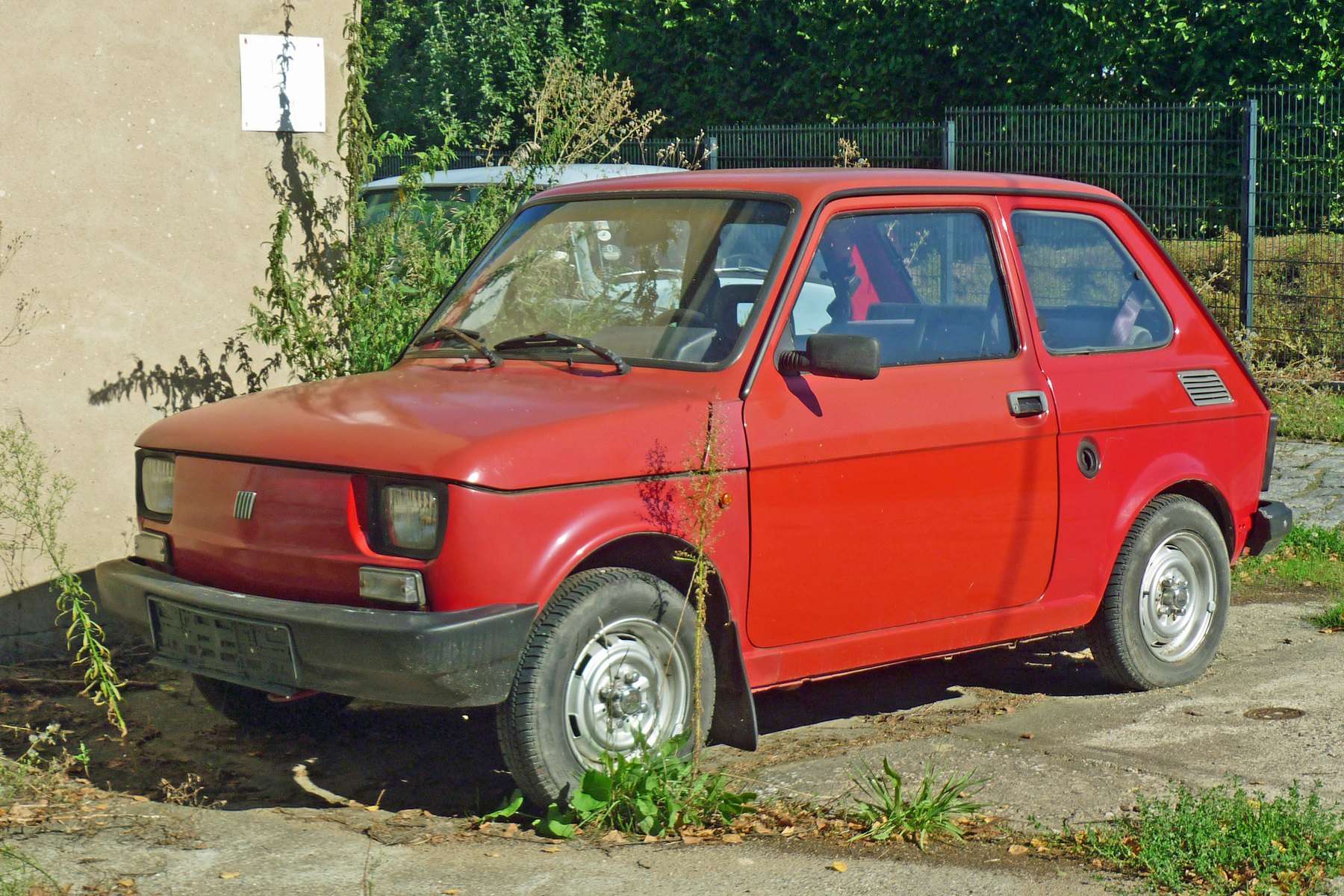
- Featured image: Fiat 126 by SchiDD, CC BY 4.0; resized and compressed for web display.
Continue the Fiat story
Explore the Rare & Performance Fiats hub, take the all-weather route with the Fiat Panda 4×4, or follow the competition career of the Fiat 131 Abarth Rally.