UNUSUAL CARS MODEL GUIDE
The Fiat 131 Abarth Rally transformed a conventional family saloon into a three-time World Rally Championship winner. Its wide-arched body, independent rear suspension and competition-developed twin-cam engine made it one of the most successful rear-wheel-drive rally cars of the late 1970s.
Quick answer: Fiat and Abarth developed the two-door 131 into a Group 4 homologation special for 1976. Road cars used a 1,995 cc twin-cam engine with about 140 hp; works rally cars developed roughly 235 hp in early form and more as development continued. Fiat won the manufacturers’ championship in 1977, 1978 and 1980. Genuine road and competition cars are rare, so provenance is as important as condition.
Why Fiat chose the 131
The rear-wheel-drive 131 Mirafiori was introduced in 1974 as a practical three-box family car. That ordinary starting point was useful: rally success could connect directly with a high-volume showroom model. Abarth had already experimented with the mid-engined X1/9, but Fiat’s competition strategy moved toward the 131.
Bertone assembled the homologation road cars from two-door bodyshells modified with composite wings, bonnet and boot lid. The dramatically flared arches were functional, covering wider tracks and competition wheels while reducing weight.
Engineering the homologation special
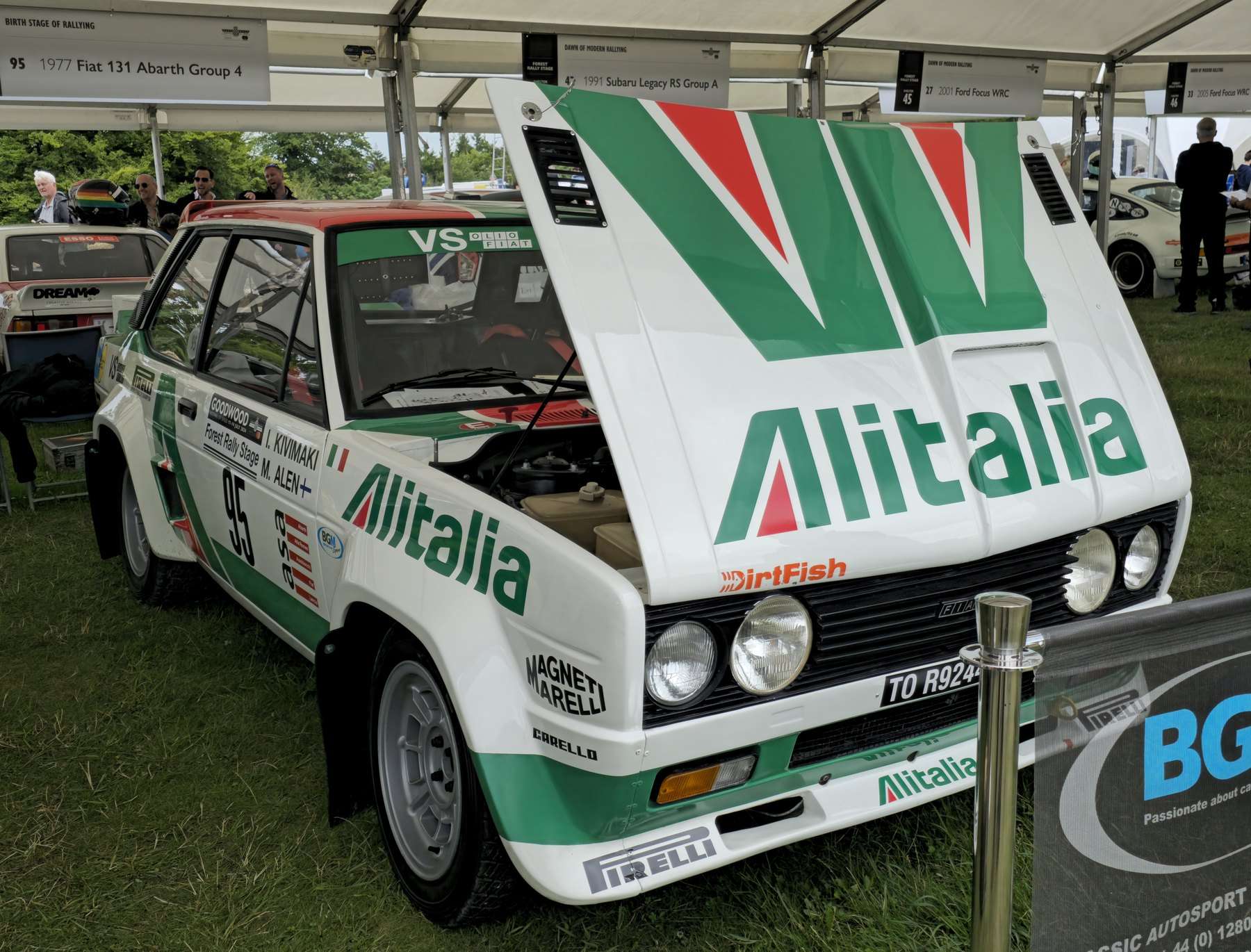
The road-going 131 Abarth Rally used a 1,995 cc four-cylinder engine with twin overhead camshafts and four valves per cylinder. Fiat’s archive material quotes 140 hp for the production version. Power went through a five-speed gearbox to the rear wheels.
The standard 131’s live rear axle was replaced by independent suspension, a change made for competition rather than showroom comfort. Ventilated disc brakes were fitted at all four wheels. The road car therefore carried meaningful rally engineering, even though its carburetted engine and trim were gentler than the fuel-injected works machinery.

Road car and rally car compared
| Feature | 131 Abarth Rally road car | Group 4 competition car |
|---|---|---|
| Engine | 1,995 cc 16-valve twin-cam | Competition-developed 1,995 cc 16-valve twin-cam |
| Power | About 140 hp | About 235 hp initially, rising with development |
| Fuel system | Carburettors | Mechanical fuel injection |
| Suspension | Independent rear suspension | Competition springs, dampers and geometry |
| Purpose | Homologation and road use | International Group 4 rallying |
Exact competition specification varied by event, season and surface. Gear ratios, brakes, suspension, underbody protection and engine tune were adapted continually. A historic rally car should therefore be described using its documented chassis history rather than a single generic specification.
World Rally Championship success
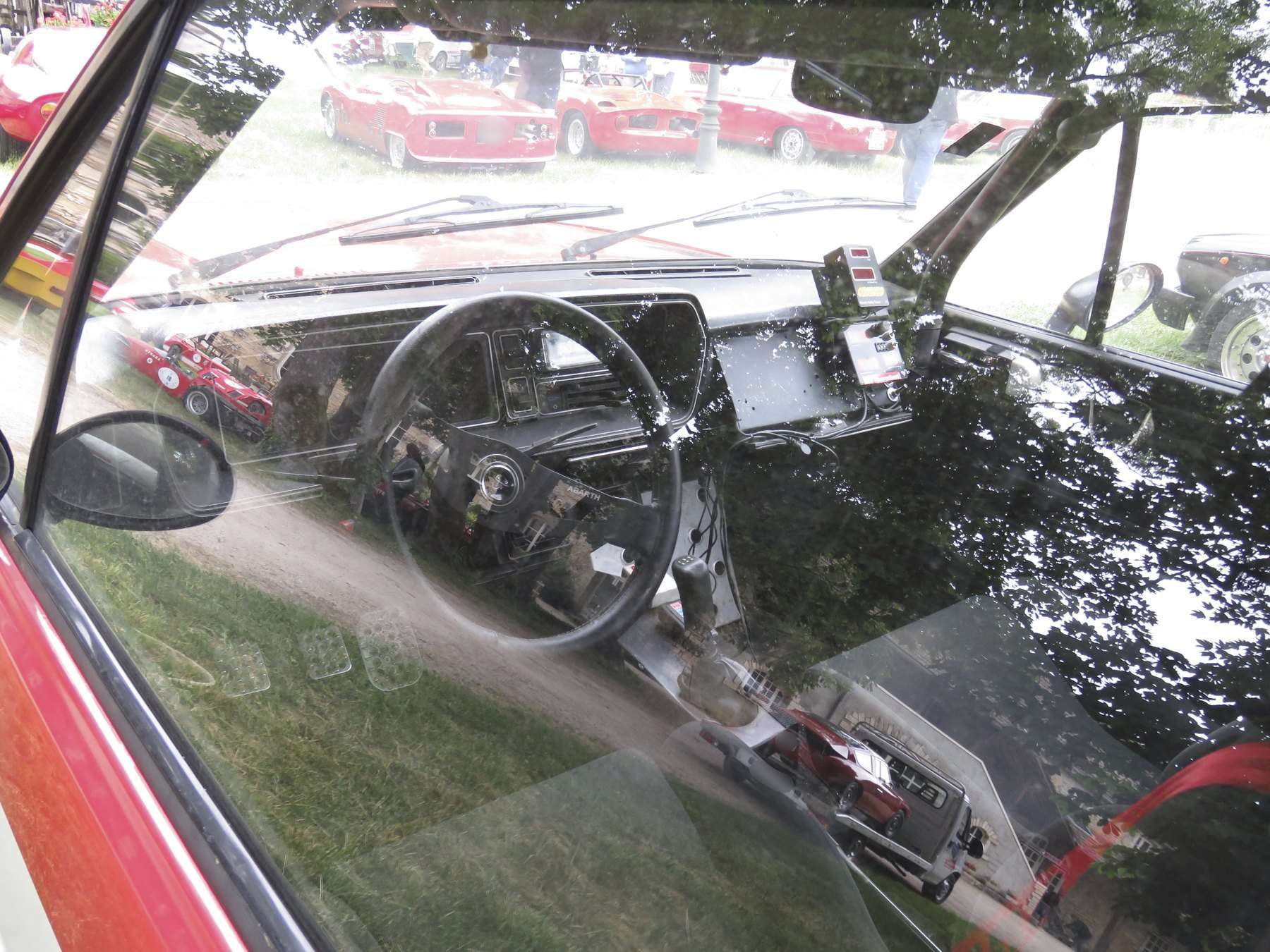
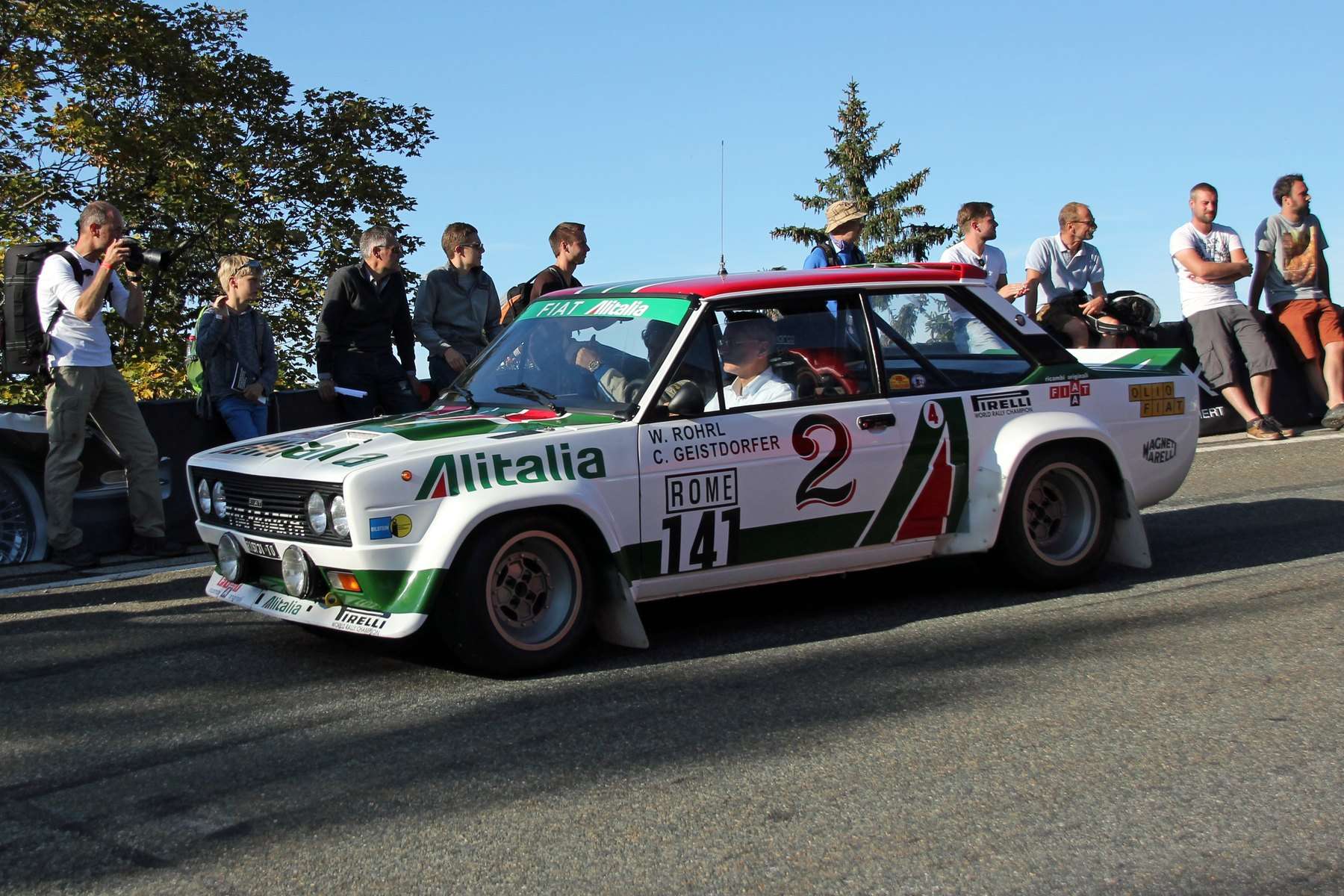
The 131 Abarth entered top-level competition in 1976 and delivered Fiat the World Rally Championship for Makes in 1977. It repeated the achievement in 1978 and won the manufacturers’ title again in 1980. Markku Alén took the 1978 FIA Cup for Rally Drivers, the precursor to the formal drivers’ world championship, and Walter Röhrl won the 1980 drivers’ title.
Its victories came on tarmac, gravel and snow. That range mattered: the 131 was not a specialist for a single surface but a robust, adaptable works car supported by deep Fiat resources and experienced Abarth engineers.

Love cars you don’t see every day?
Get forgotten cars, surprising motoring stories and the most interesting finds from Unusual Cars by email.
Free to join. No spam. Unsubscribe whenever you like. See our privacy policy.
What the 131 Abarth is like to drive
A road car is fast by mid-1970s family-car standards rather than modern supercar standards. Its appeal lies in the responsive twin-cam engine, close control weights and balance of a compact rear-wheel-drive chassis. The wide tyres and short gearing add urgency, while the stripped-back body transmits more noise and vibration than an ordinary 131.
A competition car is a different proposition. Straight-cut gears, a plated differential, firm suspension and an engine that rewards revs demand experienced operation. Cars converted for historic rallying vary enormously, so a test drive is meaningful only when supported by build records and inspection.

Buying checks
Identity and provenance
Begin with the chassis number, factory records and continuous ownership history. Genuine homologation cars, period competition cars, later replicas and modern historic-rally builds are different things. Body panels, badges and Alitalia colours do not establish identity.
Body and structure
Inspect sills, floors, suspension pick-up points, inner wings, windscreen surrounds, chassis rails and every previous repair. Composite outer panels can conceal corrosion in the steel structure. Measure alignment and look for evidence of old competition damage.
Engine and fuel system
Check cold oil pressure, compression, coolant condition and cam-belt history. Carburettors or mechanical injection need specialist setting. Competition engines have finite service lives, so ask for build sheets, hours or mileage and the date of the last rebuild.
Transmission, differential and suspension
Gear noise may be expected in a competition car but still requires interpretation. Check for cracked casings, worn joints, leaking dampers and play in suspension bearings. Confirm that ratios, limited-slip differential and brakes match the car’s intended use.
Road legality and event eligibility
For a rally-prepared car, verify registration, insurance requirements, roll-cage certification, seats, harnesses, fire system and the rules of the events you plan to enter. Historic eligibility is based on specification and documentation, not appearance.
Frequently asked questions
How much power did the Fiat 131 Abarth have?
The homologation road car produced about 140 hp. Fiat’s archive quotes roughly 235 hp for the early Group 4 rally version, with output increasing as the works cars developed.
How many championships did the Fiat 131 Abarth win?
Fiat won the World Rally Championship for manufacturers with the 131 Abarth in 1977, 1978 and 1980.
Who drove the Fiat 131 Abarth?
Its leading works drivers included Markku Alén and Walter Röhrl, alongside other major names such as Sandro Munari and Timo Salonen.
Was the Fiat 131 Abarth sold as a road car?
Yes. A limited run of road-going homologation cars was built so the competition version could qualify for Group 4.
How can I tell whether a Fiat 131 Abarth is genuine?
Do not rely on appearance. Check chassis identity, factory or Abarth records, ownership history and period competition documentation with a recognised marque specialist.
Research sources
- Stellantis archive: FCA motorsport history and the 131 Abarth
- Abarth: competition history and 131 championship results
- Abarth and Stellantis Heritage: Abarth history
- Featured image: 1976 Fiat 131 Abarth by Calreyn88, CC BY-SA 4.0; resized and compressed for web display.
Continue the Fiat story
Explore the Rare & Performance Fiats hub, compare another Abarth favourite in the Strada/Ritmo 125TC and 130TC guide, or take the all-weather route with the Fiat Panda 4×4.