
UNUSUAL CARS MODEL GUIDE
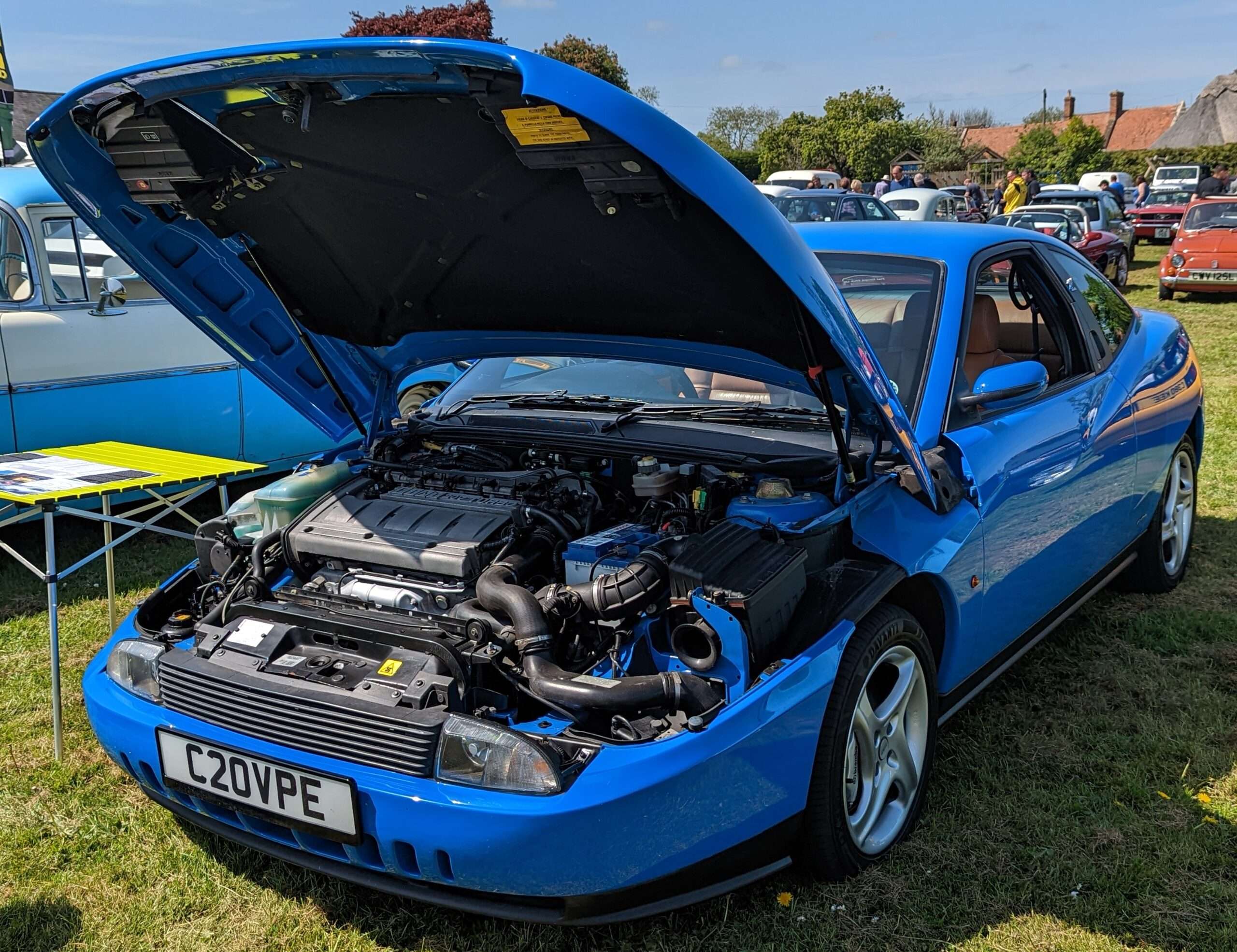
The Fiat Coupé combined Chris Bangle’s sharply cut exterior, a Pininfarina-designed cabin and, in its ultimate form, a 220 hp turbocharged five-cylinder engine. Built from 1993 to 2000, it turned familiar Fiat mechanical foundations into one of the most distinctive and rapid front-wheel-drive coupés of the 1990s.
Quick answer: the 20V Turbo is the flagship Fiat Coupé. Its 1,998 cc five-cylinder engine produced 220 hp, used a six-speed gearbox on later cars and was officially capable of 250 km/h. Buyers should prioritise documented belt servicing, oil pressure, cooling health, sound bodywork and an unmodified example over colour or mileage alone.
Why the Fiat Coupé mattered
Fiat had not offered a comparable production coupé since the 128-derived cars disappeared. The new model restored that strand of the range without imitating a traditional rear-wheel-drive grand tourer. It used the Tipo platform and front-wheel drive, but the body, cabin and powertrain choices gave it a character of its own.
Stellantis Heritage records that the launch car used the turbocharged 16-valve development of Fiat’s Lampredi twin-cam, driving through a five-speed transmission and Viscodrive viscous-coupling differential. A naturally aspirated version broadened the range. In 1996 the four-cylinder engines gave way to Fiat’s newer five-cylinder 20-valve units.
Design: Bangle outside, Pininfarina inside
The exterior was created within Fiat’s own design centre under Chris Bangle. Its slash-cut wheelarches, exposed circular fuel cap, small round rear lamps and scalloped bonnet avoided the generic smoothness of many contemporary coupés. Pininfarina developed the interior and manufactured the car, using a body-coloured strip across the dashboard to bring the exterior palette inside.
The result remains recognisable without badges. That is important to the car’s current appeal: it is interesting before its performance figures are considered.
Engines and versions
| Version | Engine | Character |
|---|---|---|
| 2.0 16V | Naturally aspirated four-cylinder | Early entry model with Lampredi-family roots |
| 2.0 16V Turbo | Turbocharged four-cylinder, 195 hp | Fast launch flagship with Viscodrive |
| 1.8 16V | Naturally aspirated four-cylinder, 130 hp | Later, lighter-duty range entry |
| 2.0 20V | Naturally aspirated five-cylinder, up to 154 hp | Distinctive sound and useful grand-touring pace |
| 2.0 20V Turbo | Turbocharged five-cylinder, 220 hp | The fastest and most sought-after regular version |
Outputs and equipment varied by market and year. Identity should be established from the VIN, engine code, original sales documentation and surviving factory equipment rather than badges alone.
The 20V Turbo
The five-cylinder turbo transformed the Coupé. Fiat quoted 220 hp and a 250 km/h maximum speed, making it the company’s fastest production sports car at the time. The engine’s uneven five-cylinder rhythm also gave the car a voice quite unlike the four-cylinder turbo it replaced.
Later turbo cars used a six-speed gearbox. Strong acceleration through the front wheels required careful torque management, good tyres and healthy suspension rather than simply more boost. Modified cars can be entertaining, but extra power increases the importance of cooling, fuelling, clutch, differential and brake condition.

Limited Edition and Turbo Plus
The Limited Edition added a six-speed transmission, push-button starting, red Brembo brake callipers, a strut brace, distinctive trim and numbered identification. The later Turbo Plus carried much of that visual and mechanical theme into the regular range. Fiat’s 1999 material describes the Turbo Plus with 220 hp, 16-inch wheels, side skirts, front spoiler and a standard Sport Pack.
Because trim has been copied onto ordinary cars, a badge or red calliper is not sufficient proof. A prospective buyer should check chassis information, original invoices, numbered details where applicable and the complete equipment specification.
What the Fiat Coupé is like to drive
A sound 20V Turbo is a rapid, flexible road car rather than a delicate lightweight. The engine supplies strong mid-range acceleration, while the wide cabin and useful hatchback luggage area make it a credible long-distance car. The steering and front axle have to manage substantial torque, so tyre quality, alignment and suspension condition strongly affect the experience.
Naturally aspirated cars are slower but place less strain on the front tyres and driveline. They retain the same dramatic shape and can be appealing when condition is clearly better than that of a neglected turbo.
Love cars you don’t see every day?
Get forgotten cars, surprising motoring stories and the most interesting finds from Unusual Cars by email.
Free to join. No spam. Unsubscribe whenever you like. See our privacy policy.
Buying checks
Service history and timing belt
Demand dated evidence for belt, tensioner and associated service work. A seller’s recollection is not a substitute for an invoice. Confirm the correct interval with a current Fiat specialist because age, storage and previous workmanship matter as much as mileage.
Oil pressure and engine health
Start the car from cold, listen for abnormal bottom-end or valvetrain noise and check hot oil pressure. Blue smoke, persistent warning lights, contaminated fluids or unexplained modifications require diagnosis before purchase.
Cooling and turbo system
Inspect the radiator, hoses, expansion tank, fans, thermostat operation and evidence of overheating. On turbo cars, check boost delivery, intercooler and intake plumbing, exhaust smoke and whether the engine management remains correctly calibrated.
Gearbox, clutch and differential
Test every ratio from cold and warm. The clutch should take up cleanly without slip, and the car should accelerate without vibration or torque-steer severe enough to suggest worn suspension, tyres or driveline components.
Body and structure
Check sills, floors, jacking points, wheelarches, rear quarters, subframe mounting areas and previous repairs. The galvanised body helped, but age, blocked drains, accident damage and poor lifting technique can still create expensive problems.
Suspension, brakes and steering
Uneven tyre wear, wandering, knocks and a nervous response under power can point to worn bushes, tired dampers or poor geometry. Turbo brakes should feel strong and progressive; verify that expensive model-specific components have not been replaced with unsuitable parts.

Originality or modification?
Many Coupés were tuned when they were inexpensive. Sensible upgrades with invoices can improve usability, but undocumented boost increases, improvised wiring and mixed braking or suspension parts make evaluation difficult. An original car with continuous specialist history is usually the safer basis for preservation.
Frequently asked questions
How much power does a Fiat Coupé 20V Turbo have?
Fiat quoted 220 hp for the production 2.0-litre five-cylinder turbo.
Is the Fiat Coupé rear-wheel drive?
No. Every production Fiat Coupé is front-wheel drive.
Who designed the Fiat Coupé?
The exterior was created by Fiat’s design centre under Chris Bangle; Pininfarina designed the interior and built the car.
What is the difference between the Limited Edition and Turbo Plus?
Both add special trim and performance equipment to the 20V Turbo. The numbered Limited Edition preceded the later Turbo Plus; exact specification varies by market, so documentation is essential.
What should be checked before buying one?
Prioritise timing-belt evidence, hot oil pressure, cooling, turbo and gearbox health, structural condition, suspension geometry and proof of identity.
Research sources
- Stellantis Heritage: Fiat Coupé
- Fiat press material: 1999 Coupé range
- Fiat press material: Turbo Plus specification
Continue the Fiat story
Explore the Rare & Performance Fiats hub, compare the Fiat Uno Turbo i.e., or read about the Strada/Ritmo Abarth.

