UNUSUAL CARS MODEL GUIDE
The original Fiat 124 Sport Spider is one of the most enduring Italian roadsters: a Pininfarina shape, rear-wheel drive, a five-speed gearbox, four-wheel disc brakes and Aurelio Lampredi’s twin-cam engine. The rare 124 Abarth Rally transformed that elegant formula into a Group 4 weapon.
Quick answer: the classic 124 Sport Spider ran from 1966 to 1985, evolving from 1.4 to 2.0 litres and eventually wearing Pininfarina badges. Buy first on body integrity, then on documented timing-belt and cooling-system care. A genuine Abarth Rally is a substantially different homologation model and must be authenticated by a marque specialist.
From family saloon to Pininfarina roadster
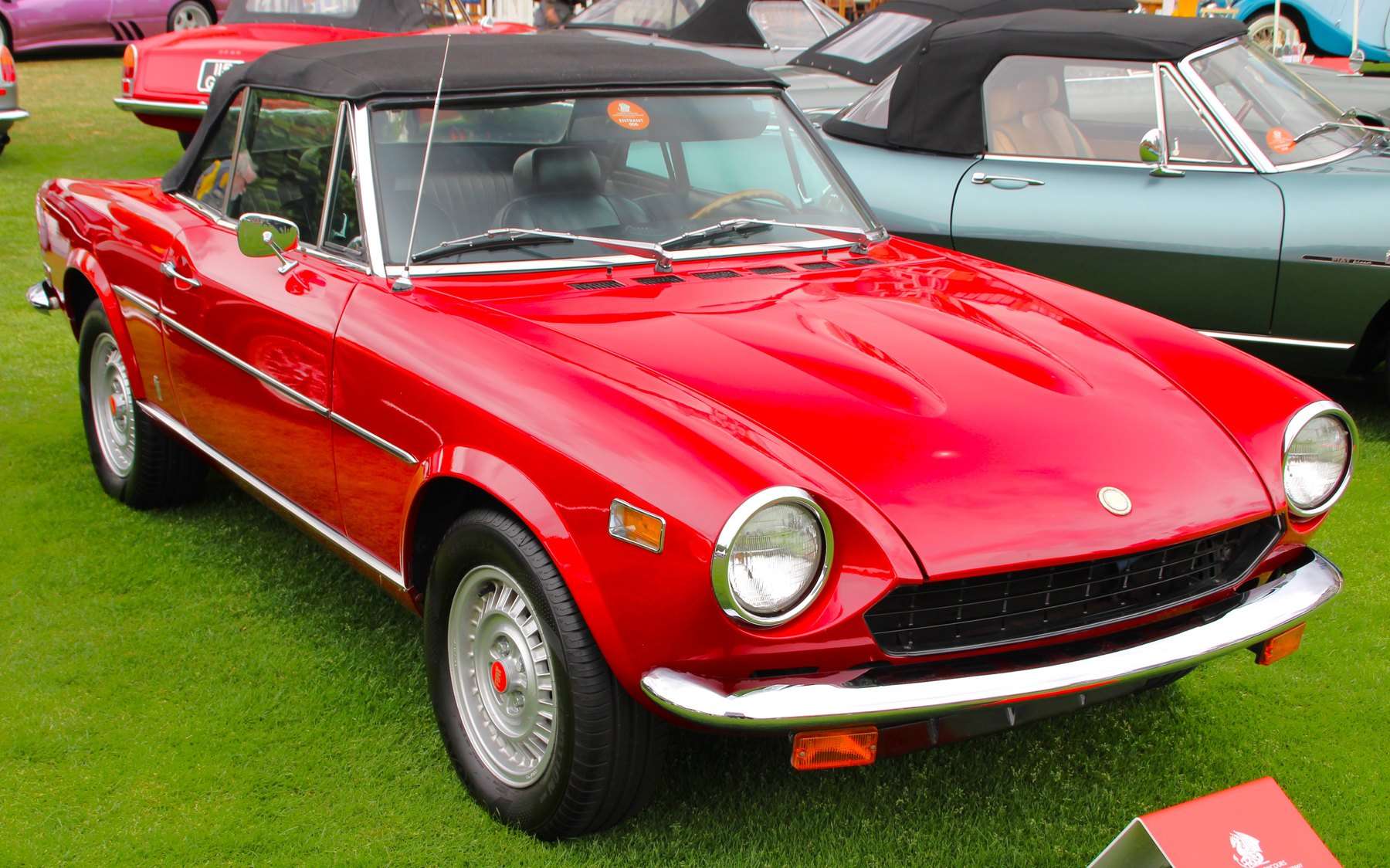
Fiat unveiled the 124 Sport Spider at the Turin motor show in November 1966. Tom Tjaarda created the shape while working at Pininfarina, which also built the bodies. The saloon supplied the basic architecture, but the Spider used a shortened, reinforced wheelbase and a much more sporting mechanical specification.
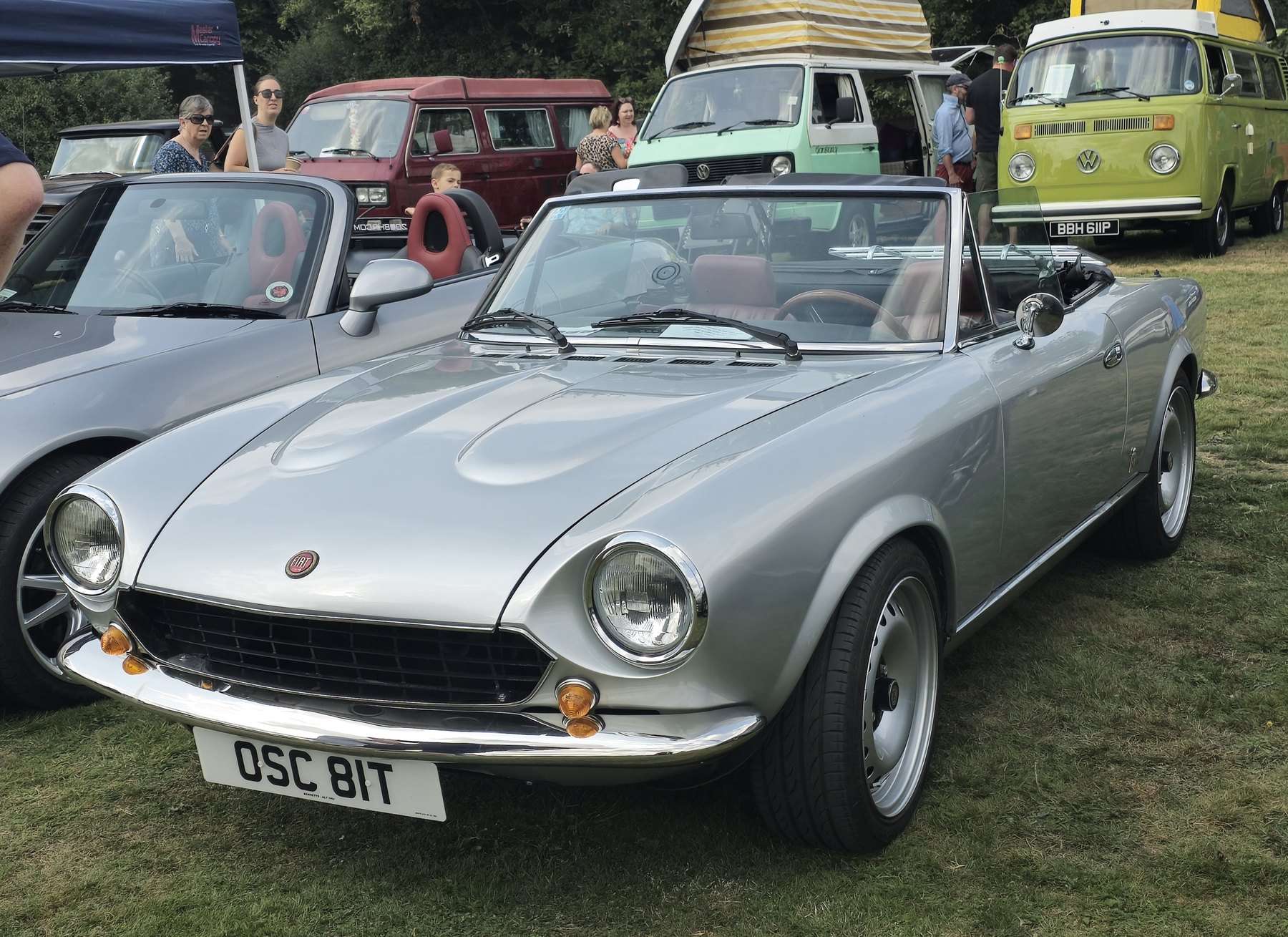
The first AS-series cars had a 1,438 cc twin-cam four-cylinder engine, five-speed manual gearbox and disc brakes at all four wheels. Those were sophisticated ingredients for an affordable open car in the late 1960s, and they helped the Spider feel more substantial than its modest dimensions suggested.
Engines and model evolution
The 1969 BS-series brought a 1,608 cc option with twin carburettors and the bonnet humps needed for clearance. For 1972, Fiat revised the range again: the 1,592 cc 1600 and 1,756 cc 1800 engines came from the Fiat 132 family. Fiat’s contemporary history quotes 108 hp for the 1600 and 118 hp for the 1800, with claimed maximum speeds of 180 and 185 km/h respectively.
After European production receded, the Spider continued primarily for North America. Larger impact bumpers, emissions equipment and differing ride heights make US cars easy to distinguish. A 1,995 cc engine arrived for 1978, initially carburettor-fed and later with Bosch fuel injection in key markets.
Pininfarina took over final production and marketing in the early 1980s. The Spider Europa combined the familiar body with the 2.0-litre engine and improved equipment. The final Volumex derivative used a supercharger and is both rare and expensive to replace correctly.

What makes the 124 Abarth Rally special?
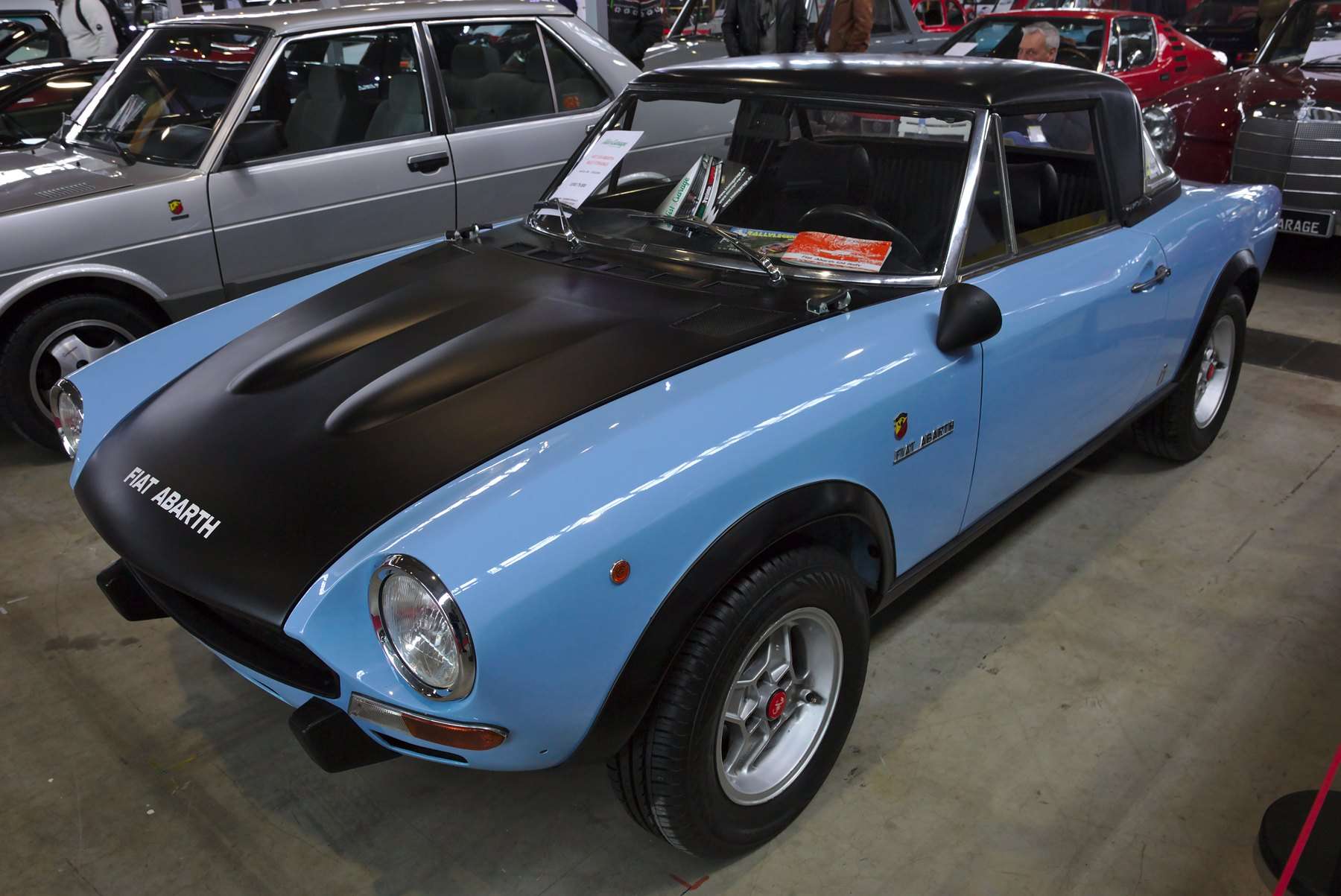
The 124 Abarth Rally arrived in 1972 as the homologation basis for Fiat’s Group 4 programme. It was not merely a Spider with stripes. The road-going Stradale gained a fixed hardtop, independent rear suspension in place of the live axle, a roll bar, lightweight aluminium and glass-fibre panels, and a hotter 1.8-litre twin-cam.
Competition cars were developed further by the Abarth racing team. Fiat’s official history records lighter panels and a more powerful engine, and says the works programme ran from the 1972 season through 1975. The 124 secured important international rally victories before the purpose-built 131 Abarth took over.
Published official Heritage material gives two totals for Abarth road-car production—995 in one account and 1,013 in another. That disagreement is a reason to avoid using a simple badge-and-panel checklist: chassis identity, period records and specialist inspection matter.

How the 124 Spider drives
A good Spider feels light, balanced and usefully modern. The engine wants to rev, the standard five-speed gearbox gives relaxed cruising, and disc brakes all round inspire more confidence than many contemporaries. It is a touring roadster rather than a raw sports-racer, with communicative steering and a compliant ride.
Engine size changes the character more than the shape suggests. Early 1.4 and 1.6 cars feel eager and delicate; 1.8-litre cars add useful torque; fuel-injected 2.0-litre versions are generally easier to use regularly. US-market emissions specifications vary, so judge an individual car by its exact year and equipment rather than assuming all 2.0-litre cars are identical.

Love cars you don’t see every day?
Get forgotten cars, surprising motoring stories and the most interesting finds from Unusual Cars by email.
Free to join. No spam. Unsubscribe whenever you like. See our privacy policy.
Fiat 124 Sport Spider buying guide
Body and structure
Rust is the decisive issue. Inspect the inner and outer sills, floors, chassis legs, front crossmember, suspension mounts, wheelarches, inner wings, valances, boot floor and windscreen surround. Closing door gaps or doors that lift when shut can indicate a weakened shell. Fresh underseal without photographic restoration evidence deserves suspicion.
Engine, timing belt and cooling
The Lampredi twin-cam is durable when serviced, but a failed timing belt can cause major internal damage. Ask when the belt and tensioner were changed and treat missing evidence as a job due now. Look for serious oil leaks, a damaged low-mounted sump, overheating, coolant staining and head-gasket trouble. Carburettors should be correctly balanced rather than adjusted to disguise another fault.
Gearbox and driveline
The manual gearbox should not jump out of gear or rumble. Test every ratio from cold and warm, listen for worn synchromesh, and inspect the rubber driveline coupling. Automatic US cars exist, but the five-speed manual best suits the Spider’s character.
Suspension, brakes and steering
Expect precise steering and a settled ride. Wandering, knocks or rear-steer sensations point to worn bushes, ball joints, springs or dampers. Check that the four-wheel disc brakes stop straight, with no seized calipers, leaking hoses or badly corroded pipes.
Hood, trim and originality
Operate the hood, inspect its frame and seals, and check the carpets and rear shelf for water ingress. Correct lights, bumpers, instruments and trim can be costly to source. On an Abarth, assume nothing: replicas range from sympathetic tributes to cars represented as genuine, so commission an expert authentication.

Which version should you buy?
Choose the best structure and history you can afford. Early European cars have the cleanest detailing and strongest collector appeal, while later fuel-injected 2.0-litre Spiders are often the easiest to use. A dry-state US import may be sound, but sunlight, previous crash repairs and poor conversions can replace rust with different problems.
The Abarth Rally is for a different budget and demands specialist due diligence. For most owners, a well-restored standard Spider delivers the essential experience with far simpler parts sourcing.
Frequently asked questions
Who designed the Fiat 124 Sport Spider?
Tom Tjaarda designed it at Pininfarina, which also built the Spider bodies.
What engines did the classic Fiat 124 Spider use?
Production versions used Fiat twin-cam four-cylinder engines of roughly 1.4, 1.6, 1.8 and 2.0 litres, with outputs and fuelling varying by year and market.
Is the Fiat 124 Abarth Rally just a tuned Spider?
No. The homologation car used a fixed hardtop, lighter panels, independent rear suspension, a roll bar and substantial engine and chassis changes.
Where does the Fiat 124 Spider rust?
Critical areas include the sills, floors, chassis legs, front crossmember, suspension mounts, wheelarches, inner wings, valances and boot floor.
How many Fiat 124 Abarth Rally road cars were built?
Official Heritage publications conflict, quoting 995 and 1,013. Treat any claimed Abarth as a car requiring specialist authentication rather than relying on one production total.
Research sources
- Fiat: 124 Spider 50th-anniversary history
- Stellantis Heritage: Fiat 124 history and 60th anniversary
- Stellantis Heritage: Abarth history and 124 Rally
- Hagerty UK: Fiat 124 Spider buying guide
- Featured image: 1976 Fiat 124 Sport Spider by MrWalkr, CC BY-SA 4.0; resized and compressed for web display.
Continue the Fiat story
Explore the Rare & Performance Fiats hub, discover the Ferrari-engined Fiat Dino, or follow Fiat’s later rally success with the Fiat 131 Abarth Rally.