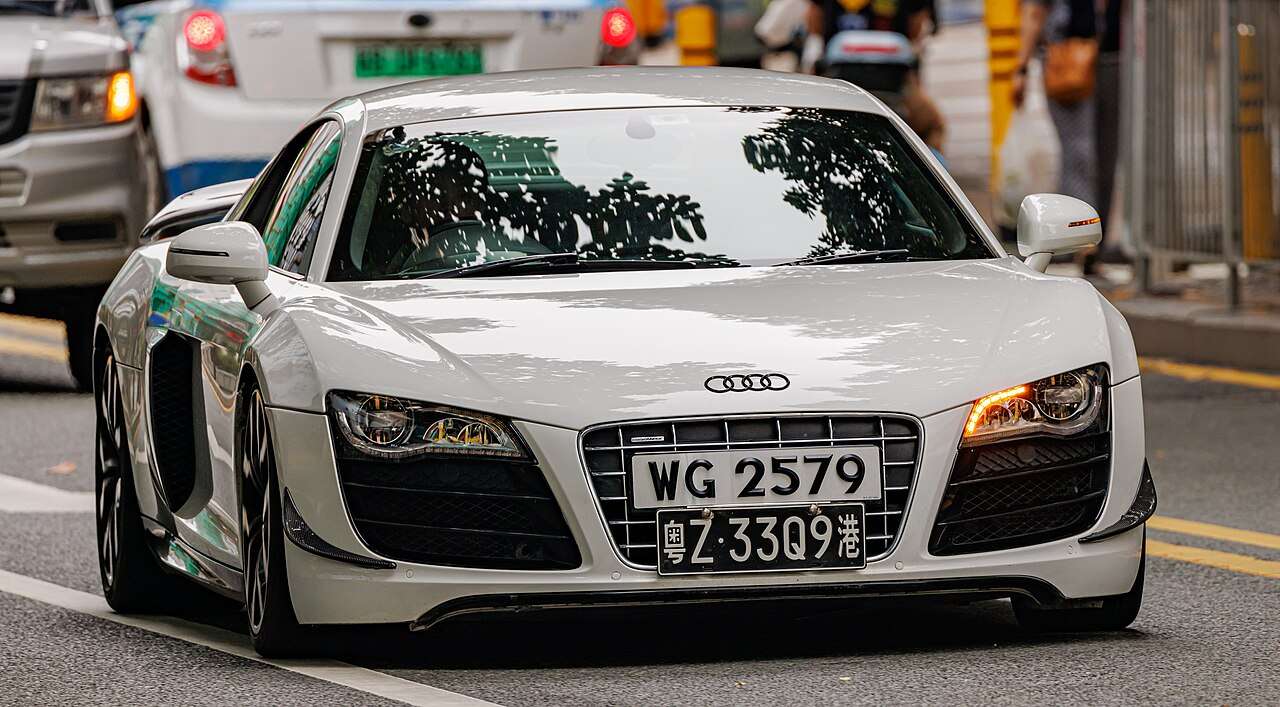
The first Audi R8 transformed the brand from a maker of rapid saloons and estates into a credible mid-engined supercar manufacturer. Its usability was new; its aluminium construction, dry-sump engines and gated manual were properly exotic.
1. A 2003 concept previewed it
The Le Mans quattro concept established the mid-engined layout and sideblade treatment. The production R8 debuted at Paris in 2006 and reached customers in 2007.
2. Its name came from Audi’s Le Mans winner
Audi reused the R8 name from the dominant endurance racer, deliberately connecting its road flagship with the company’s new motorsport identity.
3. The chassis used an aluminium space frame
Audi Space Frame construction kept the structure light and stiff. Production at Neckarsulm involved extensive specialist assembly rather than a normal high-volume line.
4. The original V8 used dry-sump lubrication
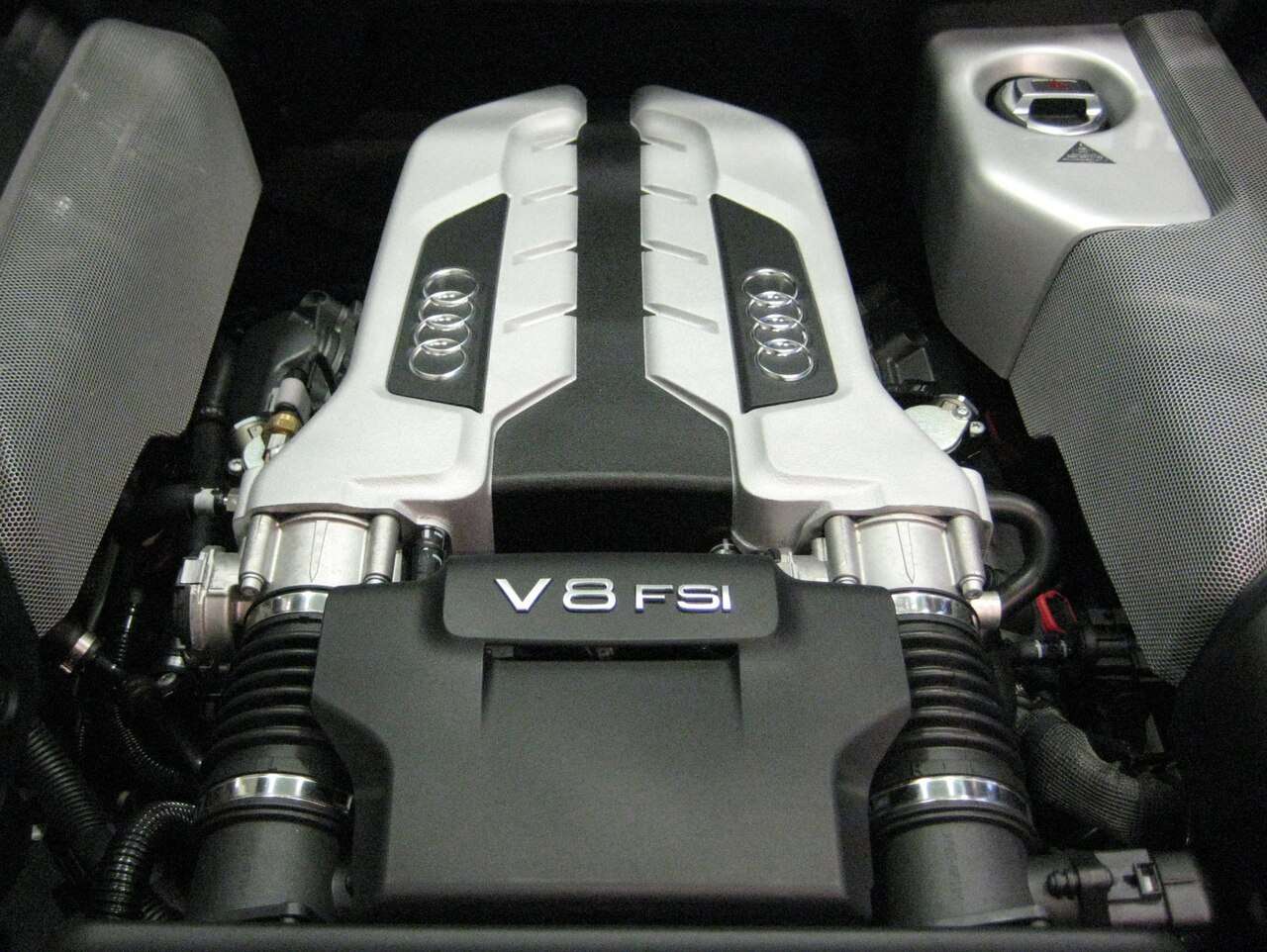
The 4.2 FSI made 420PS initially and mounted behind the cabin. Dry-sump lubrication allowed a lower installation and protected oil supply during hard cornering.
Love cars you don’t see every day?
Get forgotten cars, surprising motoring stories and the most interesting finds from Unusual Cars by email.
Free to join. No spam. Unsubscribe whenever you like. See our Privacy Policy.
5. The famous manual gate was functional
Six-speed manual cars used an exposed metal gate that made every shift part of the experience. The alternative R tronic was an automated single-clutch manual, not a dual-clutch gearbox.
6. The V10 shared its family with Lamborghini
The 5.2-litre V10 connected the R8 mechanically with the Gallardo, though Audi calibrations and specifications differed. Power grew through the generation to as much as 570PS.
7. Quattro was strongly rear-biased
A viscous coupling sent most torque rearwards in normal conditions, preserving mid-engined balance while providing front-axle assistance when required.

8. It pioneered full LED headlights
Audi states that in 2008 the R8 became the first production car available with full LED headlamps, reinforcing its role as a technology flagship.
9. The GT was lighter as well as more powerful
The limited R8 GT reduced mass, added aerodynamic and chassis focus and raised V10 performance. Coupé and Spyder GT derivatives became the most intense Type 42s.
10. Late cars gained S tronic
From 2012 the quick dual-clutch S tronic replaced R tronic in much of the range. It made the R8 easier and faster, though collectors increasingly prize the slower but more involving gated manual.
Love cars you don’t see every day?
Get forgotten cars, surprising motoring stories and the most interesting finds from Unusual Cars by email.
Free to join. No spam. Unsubscribe whenever you like. See our Privacy Policy.
Sources
- Audi MediaCenter first-generation R8 retrospective.
- Unusual Cars R8 guide