

The first-generation Audi TT, known internally as the Type 8N, turned a 1995 motor-show concept into one of the most recognisable production cars of the late 1990s. Built from 1998 to 2006 as a Coupé and Roadster, it combined Bauhaus-influenced styling with Volkswagen Group mechanicals, turbocharged engines and optional quattro four-wheel drive. Its importance lies not in one performance figure but in how faithfully Audi put a radical design into mass production.
Audi presented the TT Coupé study at the Frankfurt motor show in 1995, followed by the Roadster concept in Tokyo. The production Coupé arrived in 1998 with remarkably little visual dilution. The circular roofline, pronounced wheelarches, aluminium-look cabin details and simple geometric forms made it unlike the conventional sports coupés around it.
Where the Audi TT came from
The TT was created while Audi was reshaping itself as a premium manufacturer. Beneath the distinctive body sat a transverse-engine platform related to the contemporary Audi A3 and Volkswagen Golf Mk4. That gave Audi proven engines, transmissions and running gear, while the designers were free to create a car with a much stronger identity.
The name recalled the Isle of Man Tourist Trophy and the sporting NSU TT of the 1960s. Production involved Ingolstadt and Audi Hungaria at Győr: painted bodies travelled from Germany to Hungary for final assembly. Audi records 178,765 first-generation Coupés and 90,733 Roadsters, making the 8N successful enough to establish the TT as a permanent model line rather than a short-lived design exercise.
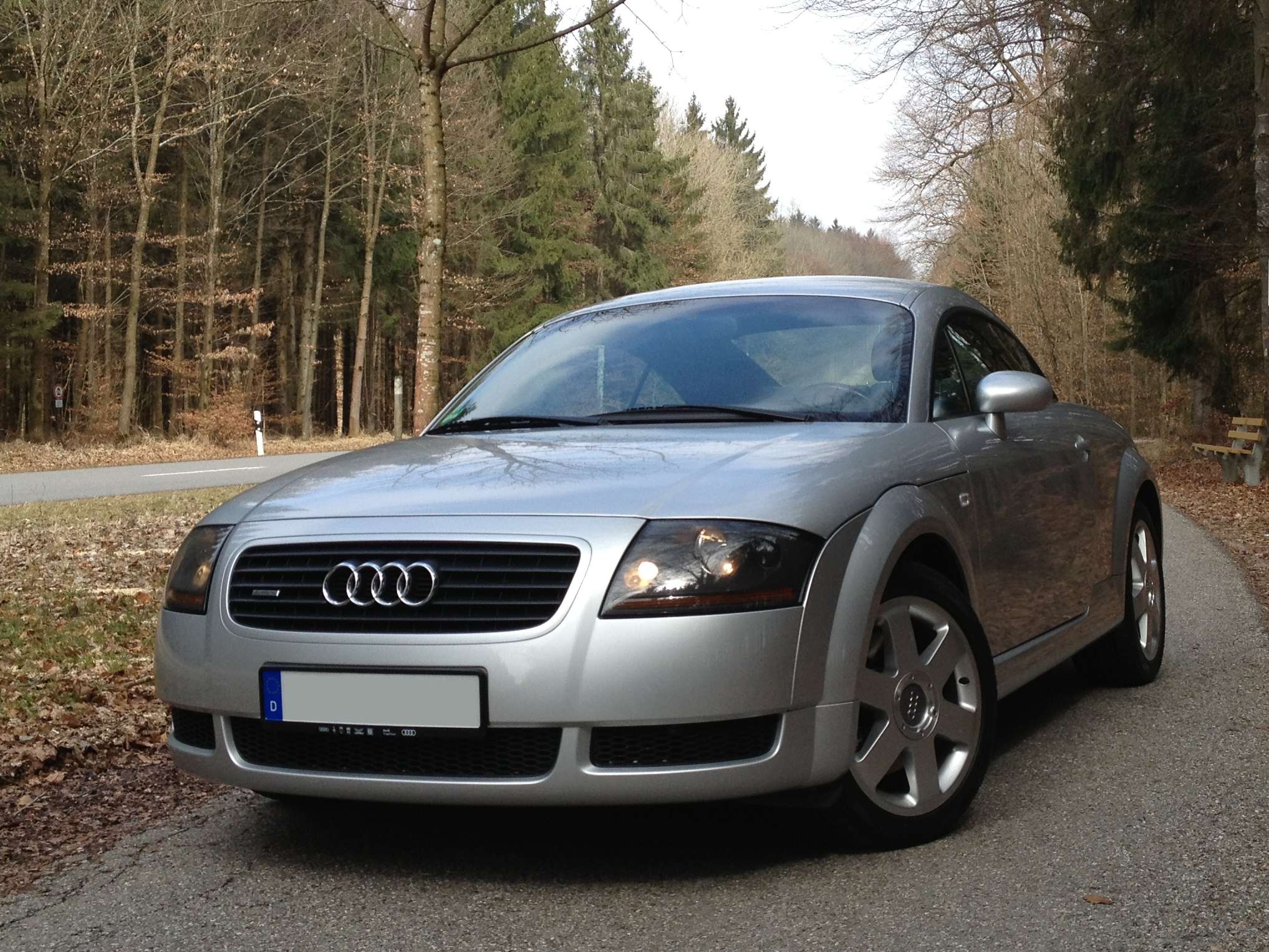
Audi TT 1.8T: 150, 180 and 225PS
Most Mk1 TTs used the Volkswagen Group 1.8-litre 20-valve turbocharged four-cylinder. Outputs varied by year and market, but the versions enthusiasts most often distinguish are the 180PS and 225PS cars. Lower-output 150 and 163PS derivatives broadened the range later.
The 225PS model was more than a software upgrade. It used two intercoolers and further engine changes, and was normally paired with a six-speed manual gearbox and quattro. The 180PS car could be front-wheel drive or quattro depending on specification. Badges and exhaust outlets offer clues, but an individual car should be identified from its engine code and build data rather than appearance alone.
Quattro, front-wheel drive and the Haldex system
In the TT, quattro did not mean the longitudinal Torsen arrangement familiar from an Ur-quattro or S2. The transverse layout used an electronically controlled Haldex coupling to send drive to the rear axle when required. It gave the TT useful traction without changing its compact-car architecture.
Front-wheel-drive models are lighter and mechanically simpler; quattro cars offer greater traction and represent a central part of the TT story. Neither should be confused with the rear-biased character of a traditional sports car. The 8N was designed as a secure, usable all-weather coupé or roadster.
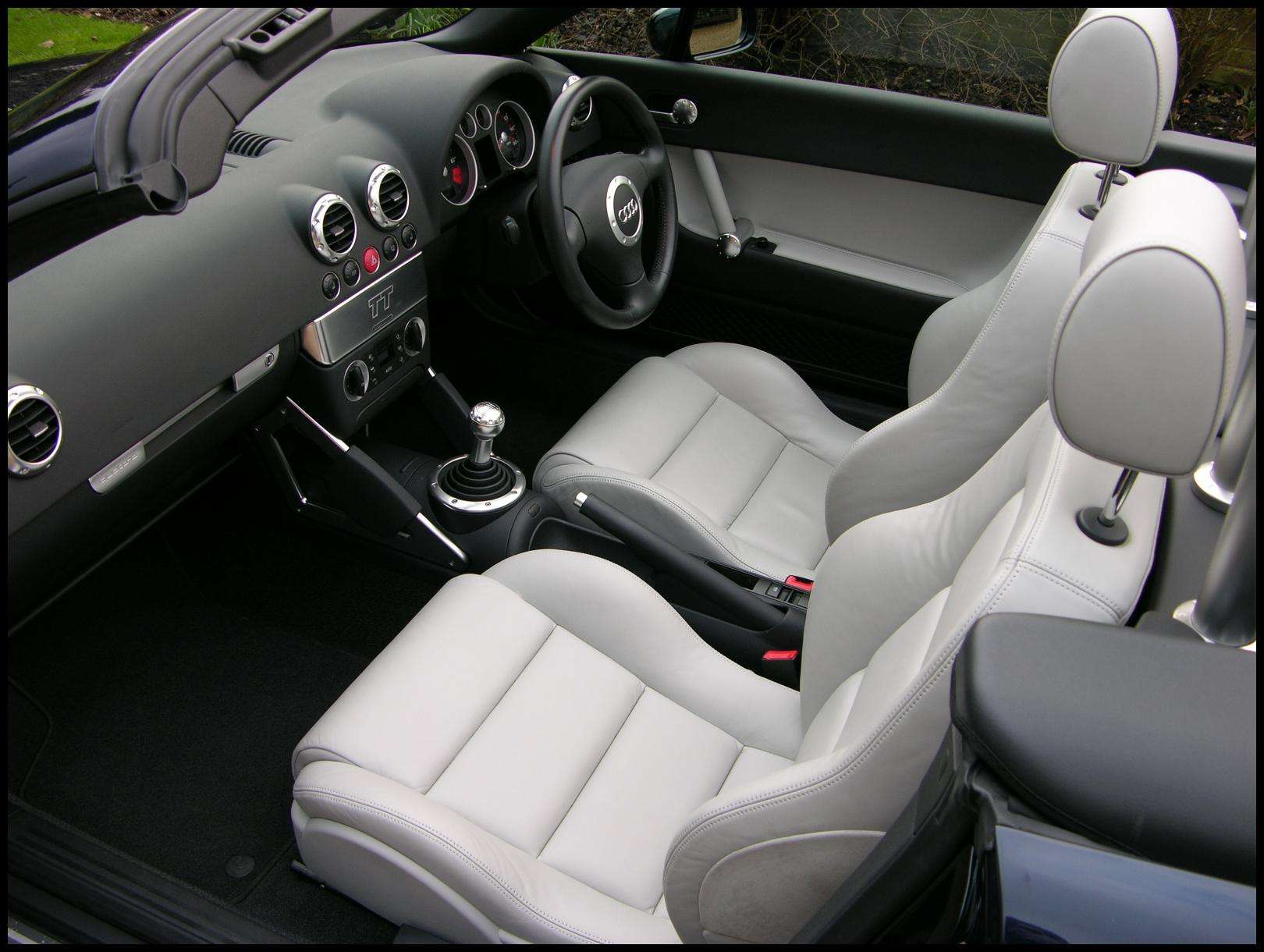
The 3.2-litre VR6 and DSG
The 3.2 quattro arrived near the end of 2002 and gave the TT a 250PS narrow-angle six-cylinder engine. Its appeal is different from that of the 1.8T: the VR6 is valued for its sound, smooth delivery and naturally aspirated response rather than easy turbocharged tuning.
The 3.2 also helped introduce the dual-clutch gearbox then called DSG. A six-speed manual remained available, so the transmission is an important part of identifying and evaluating a 3.2. The heavier engine changes the car’s balance, but the model occupies a distinctive place as the only six-cylinder Mk1 TT.
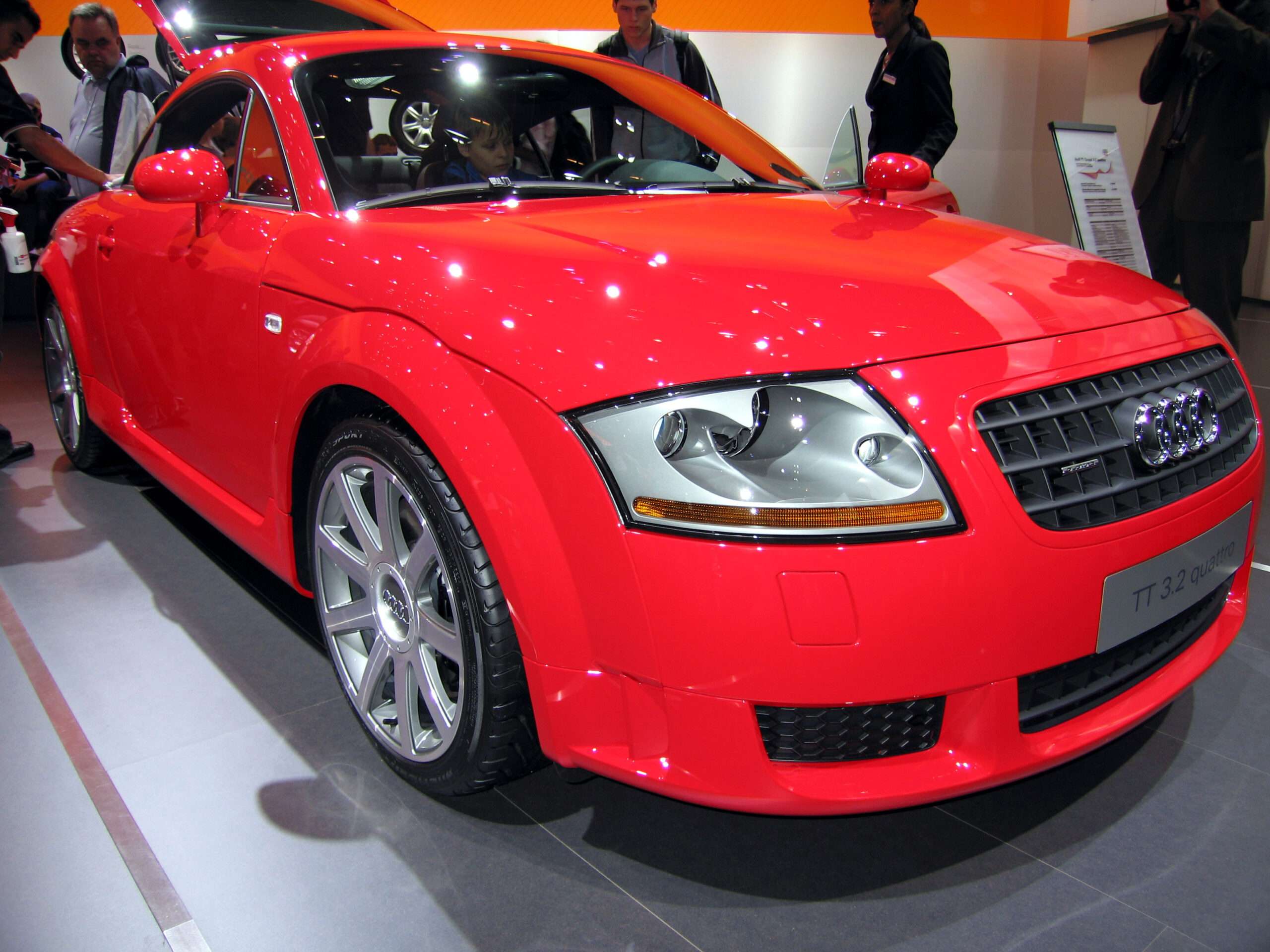
The early stability recall
Early high-speed accidents led Audi to revise the TT. The programme added a rear spoiler and electronic stability control, alongside suspension changes; earlier cars were recalled for the work. The subject is often reduced to the spoiler, but the complete response involved both aerodynamic and chassis/electronic measures.
For an early car, documentation showing what work was carried out matters. A spoilerless example may look closer to the original concept, yet originality should not be confused with an incomplete safety update.
Love cars you don’t see every day?
Get forgotten cars, surprising motoring stories and the most interesting finds from Unusual Cars by email.
Free to join. No spam. Unsubscribe whenever you like. See our privacy policy.
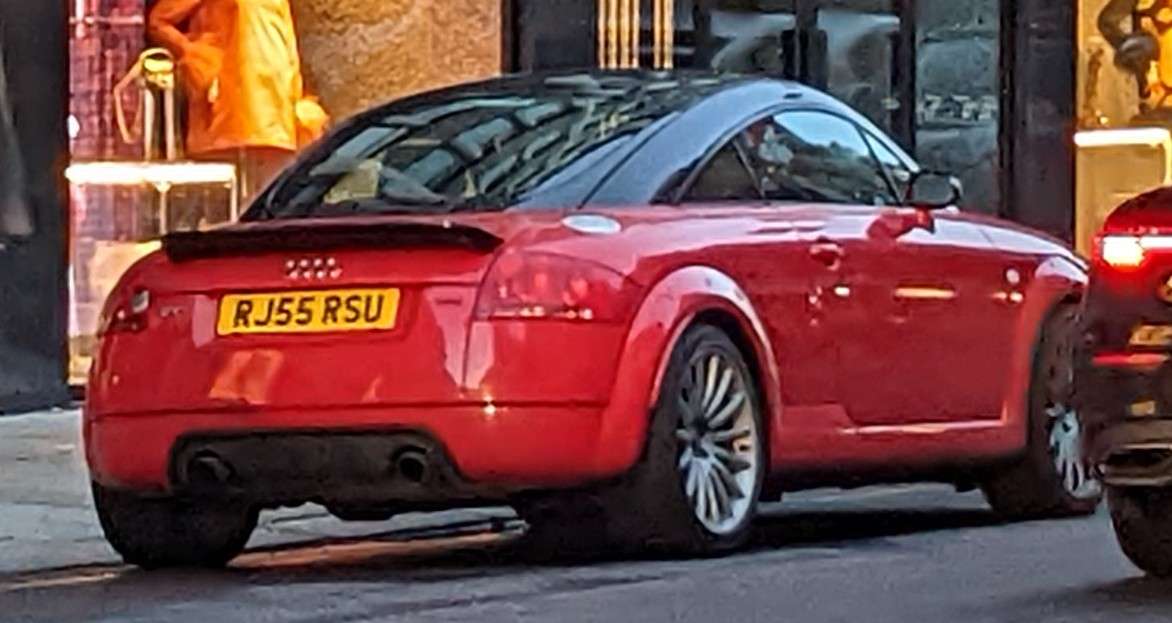
Audi TT quattro Sport
The most focused factory Mk1 was the limited-production TT quattro Sport, introduced in 2005. Audi raised the 1.8T to 240PS, reduced weight by removing the small rear seats and fitted distinctive two-tone paint, a black roof, Recaro seats and model-specific details. Audi says 1,168 were delivered.
Its importance is not simply rarity. The quattro Sport sharpened the original car at the end of its life and showed that the TT could be treated as a serious driver-focused derivative as well as a design-led coupé.
Coupé or Roadster?
The Coupé preserves the shape closest to the original 1995 concept and offers a surprisingly useful hatchback. The two-seat Roadster trades that practicality for open-air character and includes styling details of its own, notably the twin rollover hoops. Condition and provenance matter more than body style, but buyers should inspect a Roadster’s hood operation and water management particularly carefully.

Why the Mk1 Audi TT matters
The first TT proved that a production car could retain the clarity and visual drama of a concept while using high-volume mechanical foundations. That combination made it attainable, recognisable and commercially viable.
Today the range offers several distinct experiences: accessible front-wheel-drive 1.8Ts, high-output quattro cars, the six-cylinder 3.2, open Roadsters and the scarce quattro Sport. The best reason to remember the 8N is therefore not nostalgia alone. It is a rare example of industrial design, mass production and enthusiast engineering meeting in one coherent car.
Frequently asked questions
What years was the Mk1 Audi TT built?
Series production began in 1998. Audi built the first-generation Coupé until 2006, while the Roadster was produced from 1999 to 2006.
What does 8N mean on an Audi TT?
8N is Audi’s type designation for the first-generation TT. It distinguishes the original model from the later 8J and FV/8S generations.
Is every Audi TT quattro?
No. Several four-cylinder Mk1 TTs were front-wheel drive. Quattro was fitted to selected versions, including the 225PS, 3.2 and quattro Sport models.
How many TT quattro Sports were made?
Audi’s official 25-year TT history states that 1,168 examples of the 240PS quattro Sport were delivered.
Did the Mk1 Audi TT have a recall?
Yes. Following concerns about high-speed stability, Audi introduced a programme involving a rear spoiler, electronic stability control and suspension-related changes. Documentation should confirm the work on an early car.
Research sources
- Audi: A timeless design icon – the Audi TT turns 25
- Audi Tradition: ascent to the premium segment
- Wikimedia Commons creator and licence records linked beneath each photograph.
Power outputs, equipment and availability varied by model year and market. Confirm an individual car from its engine code, build data and original documentation.
Continue the Audi story
Browse the Rare & Performance Audi hub, or continue with the Audi RS2 Avant and Audi Ur-quattro.


