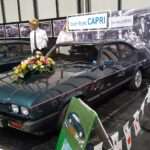
The Ford Probe arrived in Britain carrying an impossible burden. It was a sleek, front-wheel-drive coupé shaped by Ford’s American design studios, engineered through the company’s partnership with Mazda and quietly expected to occupy some of the space left by the Capri. For many European enthusiasts, that complicated family tree counted against it before they had even driven one.
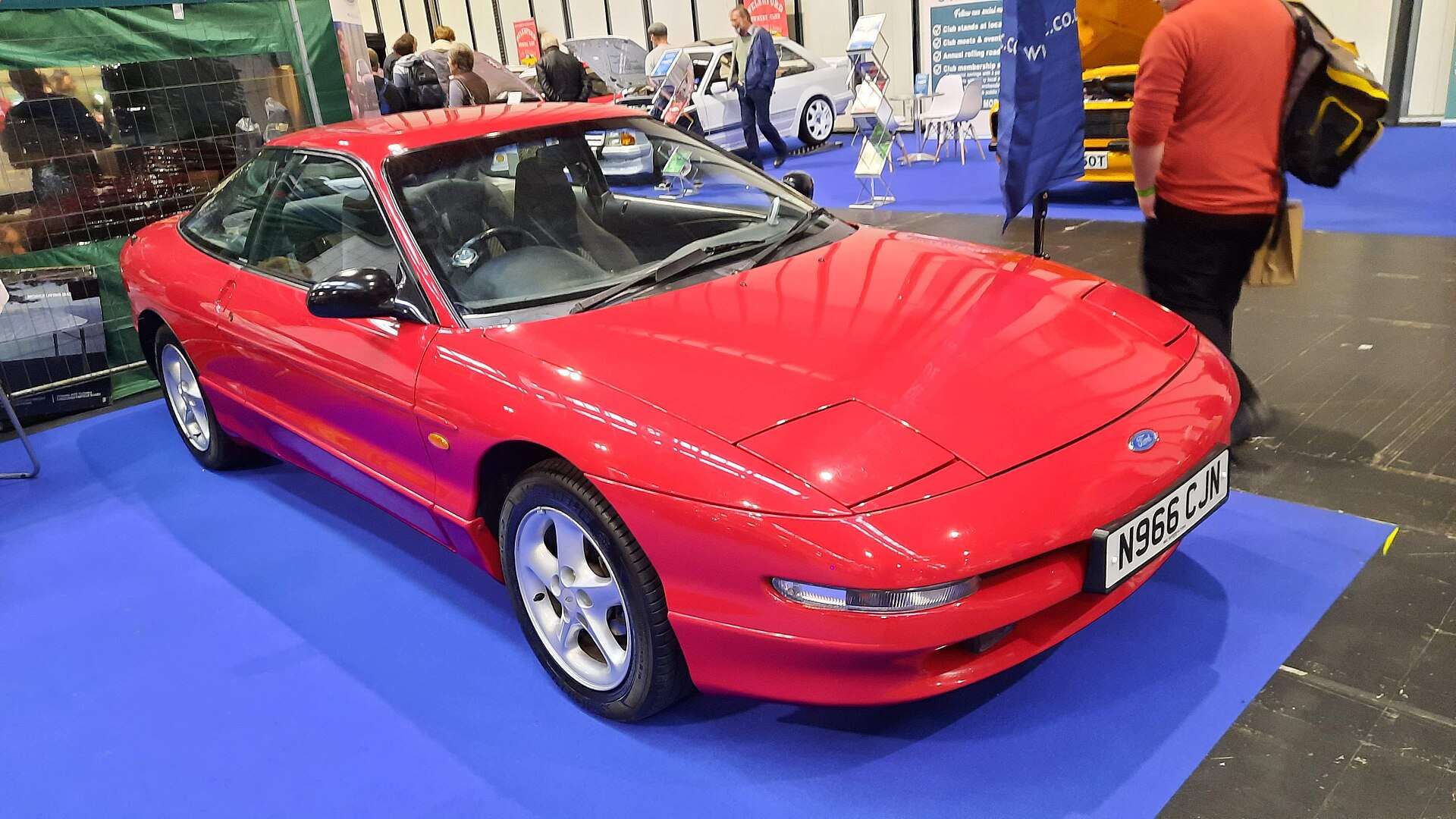
Three decades later, the second-generation Probe 24V looks far more interesting. Its compact 2.5-litre V6, low driving position, pop-up headlights and flowing 1990s body make it a distinctive performance coupé from an era now disappearing quickly.

Born from Ford and Mazda working together
The Probe was not a conventional European Ford. Its roots lay in Ford’s long relationship with Mazda and the joint-venture AutoAlliance operation at Flat Rock, Michigan. The first Probe reached American showrooms for the 1989 model year, sharing important engineering with Mazda’s MX-6 and 626 while wearing a body and interior developed to give it a separate Ford identity.
The second generation appeared for the 1993 model year. It again shared its basic platform and powertrains with the Mazda MX-6, but it was not simply a Mazda with different badges. Ford led the exterior and interior design, producing a lower, curvier and more dramatic car than its predecessor. The result was recognisably American in presentation but Japanese in much of its underlying engineering.
The difficult Capri comparison
Ford’s own later histories acknowledge that the Probe and Cougar were effectively modified American products offered to European buyers after the Capri era. That did not make the Probe a literal Capri replacement, but dealers, magazines and customers inevitably judged it against the beloved rear-wheel-drive coupé.
That comparison was rarely helpful. The Probe was front-wheel drive, more technically related to a Mazda family than to an Escort or Sierra, and aimed at a 1990s market increasingly interested in refined Japanese-style coupés. Judged as a Capri successor it seemed culturally wrong. Judged beside the Toyota Celica, Honda Prelude, Vauxhall Calibra and Mazda MX-6, its purpose becomes much clearer.

The 24-valve V6
The European flagship was badged simply 24V. Under its long bonnet sat Mazda’s all-alloy KL-series 2.5-litre V6 with twin overhead camshafts and four valves per cylinder. Contemporary Ford material quoted approximately 164hp for American GT versions; European-market figures are commonly listed at 163PS or 119–120kW depending on year and market.
The numbers never made it a supercar, but they miss what made the engine special. The V6 was compact, smooth and willing to rev, with a distinctive induction note and a character unlike the turbocharged four-cylinder engines that increasingly defined affordable performance. A five-speed manual gearbox suited it best, although an automatic was also offered.
| Ford Probe 24V | Specification |
|---|---|
| Engine | 2.5-litre KL-series DOHC V6 |
| Valvetrain | 24 valves |
| Output | Approximately 163–164hp, market dependent |
| Drive | Front-wheel drive |
| Body | Three-door 2+2 liftback coupé |
Love cars you don’t see every day?
Get forgotten cars, surprising motoring stories and the most interesting finds from Unusual Cars by email.
Free to join. No spam. Unsubscribe whenever you like. See our Privacy Policy.
A proper 1990s cockpit
The Probe’s cabin placed the driver low behind a broad, curved dashboard. The windscreen base seemed distant, the doors were long and the rear seats were best treated as occasional accommodation. Yet the large hatch made it more usable than the silhouette suggested.
Pop-up headlamps provided the essential period drama. Frameless door glass, a steeply raked windscreen and a full-width rear light treatment helped the car look more exotic than its Ford badge implied. The design has aged particularly well because it avoided the heavy grilles and elaborate surface decoration of later coupés.


More grand tourer than sports car
The Probe 24V was not a razor-edged track machine. Its strengths were fluid performance, secure front-wheel-drive handling and long-distance refinement. The multi-link rear suspension, four-wheel disc brakes and broad torque delivery made it an accomplished road car, while the steering and compact V6 gave it enough personality to avoid feeling like a merely decorative coupé.
That positioning also explains some of the contemporary disappointment. Buyers expecting a new rear-drive Capri or a rival for more powerful turbocharged coupés found the Probe too civilised. Drivers who treated it as a stylish, well-equipped V6 grand tourer generally understood it better.
Why the Probe disappeared
The coupé market changed rapidly during the 1990s. Insurance costs rose, practical hot hatchbacks became faster and buyers increasingly moved towards roadsters, prestige badges and eventually SUVs. The Probe ended after the 1997 model year without a third generation. Ford later tried the European coupé market again with the Cougar, another car with transatlantic origins and front-wheel drive.
The Probe’s production story also reflects a particular moment in the global motor industry: an American Ford designed around Japanese-developed mechanical hardware and built in Michigan through a Ford–Mazda partnership. That mixture once made its identity seem confused. It now makes the car historically fascinating.

Why it deserves another look
The Ford Probe 24V is now rare enough to stop traffic, but it remains recognisable and usable. It offers six-cylinder sound, manual-gearbox involvement, pop-up-headlight theatre and a design that could only have come from the early 1990s.
Most importantly, time has loosened the Capri comparison. The Probe no longer needs to replace anything. It can be appreciated as the unusual product of two major manufacturers combining their strengths: Ford styling and market reach with Mazda’s sophisticated compact V6 and chassis architecture. That is a far more interesting story than the old claim that it was simply the wrong successor to a famous name.
Continue the Ford story
Browse the Rare & Performance Fords hub, compare Ford’s later V6 thinking in the Mondeo ST200 and ST220, or revisit the traditional European coupé in our Ford Capri guide.
Research sources
Model positioning and period specifications were checked against Ford’s 1997 Probe brochure and owner documentation, Ford Heritage material, and contemporary European technical catalogues. Ford’s own Capri history was used for its later assessment of the Probe’s place in Europe. Images are used from Wikimedia Commons under the licences stated on their file pages.