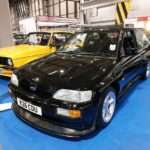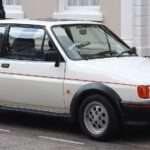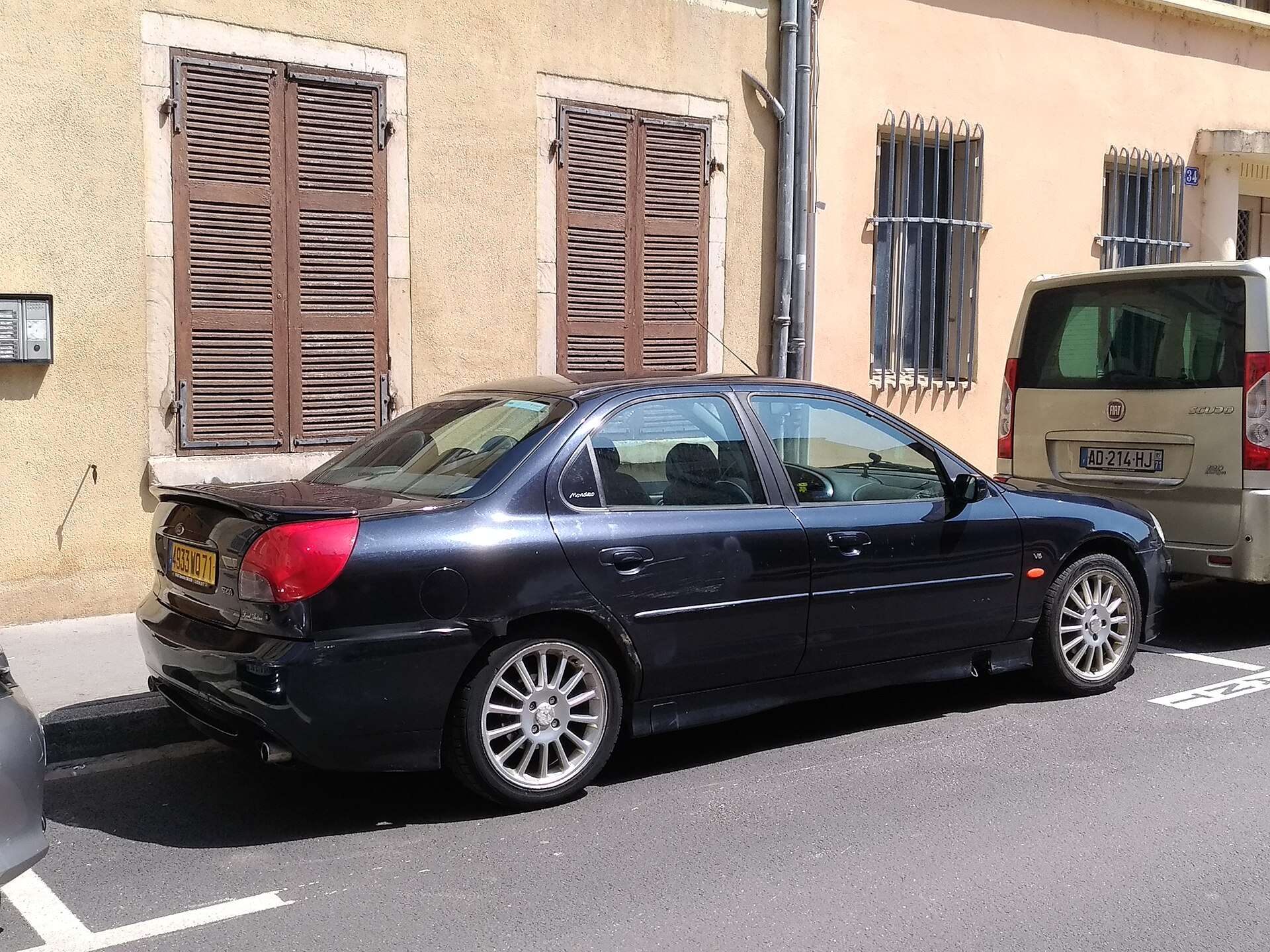
Before fast family cars became dominated by four-cylinder turbos, Ford built two Mondeos that did things the old-fashioned way. The ST200 and ST220 were naturally aspirated V6 saloons, hatchbacks and estates created for drivers who wanted performance without giving up the space, comfort and anonymity of an ordinary company car.
They shared a badge and a broad idea, but they were not successive versions of the same machine. The ST200 was the sharp-edged finale of the first-generation Mondeo, while the ST220 arrived with a larger engine, a more mature chassis and the confidence to stand as Ford of Europe’s flagship performance car.

Why Ford needed a fast Mondeo
The Mondeo had been designed as a world car and launched in Europe in 1993. Its great strength was balance: even basic versions combined accurate steering, a composed ride and unusually capable front-wheel-drive handling. That made it an obvious basis for a faster derivative, but Ford initially approached the idea cautiously.
The 2.5-litre V6 brought refinement and pace, while the late-1990s ST24 added sportier styling and suspension. The ST200 went much further. Introduced for 1999, it was developed by Ford’s Special Vehicle Engineering operation and turned a good sporting Mondeo into a credible performance car.
ST200: the first complete fast Mondeo
Ford’s own parts catalogue identifies the ST200’s SGA-code Duratec V6 as a 2,495cc engine producing 151kW, or 205hp. Ford’s historical performance-car material quotes 204 metric horsepower, a 230km/h top speed and 0–100km/h in 7.0 seconds. Those figures placed it well above the ordinary 170PS V6 Mondeo without changing the car’s essential character.
The transformation involved more than a badge and body kit. Revised cylinder heads and camshafts, a different inlet system, freer breathing and electronic calibration helped the V6 rev with greater purpose. The chassis received firmer springs and dampers, a lower stance and sharper responses. A close-ratio five-speed manual gearbox kept the engine working, while larger brakes and distinctive multi-spoke wheels completed the package.

Inside were deeply bolstered Recaro seats, blue detailing and white-faced instruments. Imperial Blue became the colour most closely associated with the model, although other finishes were offered. Crucially, the ST200 was sold as a five-door hatchback, four-door saloon and estate. Ford had created a genuine performance range rather than a single showroom special.
| Model | ST200 | ST220 |
|---|---|---|
| Production | 1999–2000 | 2002–2007 |
| Engine | 2,495cc Duratec V6 | 2,967cc Duratec V6 |
| Output | 205hp / 151kW | 226hp / 166kW |
| Driven wheels | Front | Front |
| Body styles | Hatch, saloon, estate | Hatch, saloon, estate |
Love cars you don’t see every day?
Get forgotten cars, surprising motoring stories and the most interesting finds from Unusual Cars by email.
Free to join. No spam. Unsubscribe whenever you like. See our Privacy Policy.
ST220: the idea grows up
The second-generation Mondeo arrived for 2000 as a larger, more substantial car. Ford launched the ST220 in 2002 and increased capacity to 2,967cc. The MEBA-code 24-valve V6 produced 166kW, or 226hp. Ford quoted 243km/h and 0–100km/h in 6.5 seconds, making this a meaningfully quicker car rather than a styling successor.
The engine delivered its performance progressively. There was no turbocharger to mask the throttle response or produce a sudden mid-range surge; instead, the ST220 gathered speed with a smooth, increasingly urgent V6 note. A six-speed manual gearbox was fitted to later cars, while the chassis retained the fluent, communicative behaviour that had made the regular Mondeo such a benchmark.

Its styling was more integrated than the ST200’s. Deeper bumpers, mesh grilles, twin exhaust outlets and 18-inch wheels gave it presence, but it remained recognisably a Mondeo. Inside, leather Recaro seats and blue-faced instruments provided the necessary sense of occasion without turning the cabin into a caricature.
As with its predecessor, buyers could choose hatchback, saloon or estate bodywork. That matters to the ST220’s identity. It was fast enough to be special but useful enough to serve as a family car, long-distance express or discreet company vehicle. The estate, in particular, distilled the entire idea into one shape: a large, handsome load-carrier with a naturally aspirated V6 and a manual gearbox.

Two cars, two different moods
The ST200 feels like a homologated idea even though it was never a homologation special. Its rarity, Recaro cabin, vivid colours and rev-hungry 2.5-litre engine give it the character of a late-1990s limited-production performance Ford. It is the more obviously collectible of the pair and the closer relative, in spirit, to the Escort and Sierra fast-Ford tradition.
The ST220 is broader in ability. It is quieter, roomier and more mature, but also faster. It belongs to the era when powerful executive saloons could still rely on large-capacity naturally aspirated engines, manual gearboxes and carefully judged suspension rather than selectable drive modes.
Why they matter now
Neither Mondeo carried the motorsport mythology of an RS Cosworth, and neither was marketed as a compact hot hatch. That may explain why both spent years in an awkward middle ground: too practical to be treated as exotics, yet too specialised to survive in large numbers as ordinary used cars.
Today that lack of theatre is central to their appeal. The ST200 and ST220 represent a type of performance car that has nearly disappeared. Their speed came from responsive V6 engines; their handling came from careful chassis tuning; and their usefulness was not compromised for the sake of a dramatic silhouette.

The fast Mondeo legacy
Ford never produced a direct replacement. Later Mondeos could be powerful and ST-Line models borrowed the visual language, but Ford itself described the 2016 ST-Line as its sportiest Mondeo since the ST220. That statement underlines the importance of the real ST cars: they were engineering-led performance models, not appearance packages.
The ST200 proved the original Mondeo could become a convincing enthusiast’s car. The ST220 took the same principle into a larger and faster generation, then quietly became the final full-strength performance Mondeo. Together they form one of the most appealing double acts in the modern Ford back catalogue.
Continue the Ford story
Browse the Rare & Performance Fords hub, discover the lighter and rawer Fiesta XR2 and XR2i, or meet another discreet fast Ford in our Scorpio 24V Cosworth feature.
Research sources
Technical figures and production dates were checked against Ford’s official historical performance-car material and Ford’s UK parts catalogue. Ford’s 2016 Mondeo ST-Line announcement was used to confirm the ST220’s 2002 debut and its position in the Mondeo story. Images are credited to their Wikimedia Commons creators and used under the licences stated on their file pages.