The 1990s Ford Escort RS2000 has spent much of its life in the shadow of the Escort RS Cosworth. That comparison has never been especially fair. The RS2000 was not a cheaper imitation of the homologation special; it was a different kind of fast Ford, designed to put a strong naturally aspirated engine and a serious chassis into a familiar Escort shell.
Introduced in 1991, it used Ford’s 2.0-litre 16-valve engine to produce 150PS. It began with front-wheel drive, gained an exceptionally rare four-wheel-drive version and survived the Escort’s major 1995 restyle. Today it is one of the most overlooked cars to carry an RS badge—and one of the clearest links between the Escort RS Turbo era and the first Focus RS.
Introduced: 1991 | Engine: 1,998cc DOHC 16-valve four-cylinder | Power: 150PS | Torque: 190Nm | Drive: front-wheel drive or, from 1994, four-wheel drive
Why Ford revived the RS2000 name
The RS2000 badge carried enormous weight. Earlier rear-wheel-drive Escorts had made it famous on road and rally stage, but the Escort had changed fundamentally by the 1990s. The fifth-generation car was front-wheel drive, aimed squarely at the mass market and criticised at launch for conservative engineering and unremarkable dynamics.
Ford needed a version that restored some enthusiast credibility without attempting to duplicate the expensive, specialist Escort RS Cosworth. The answer was a high-revving, normally aspirated RS2000 that could be sold and serviced through the regular dealer network.

The 16-valve engine at its heart
The RS2000’s engine was not the Zetec unit used by mainstream 1990s Fords. It belonged to the I4 family and combined a cast-iron block with a twin-cam, 16-valve aluminium cylinder head. In RS2000 form it produced 150PS and 190Nm, figures that gave the Escort brisk rather than supercar performance.
Its character mattered more than the headline number. The engine was naturally aspirated, responsive and willing to rev, without the sudden boost delivery associated with the earlier Escort RS Turbo. Contemporary buyers could use it every day, yet the engine still felt distinct from an ordinary Escort powerplant.
Ford quoted a 0–62mph time of less than nine seconds and a top speed around 130mph, depending on body version and market specification. Those numbers placed it among serious early-1990s hot hatchbacks while keeping enough distance from the RS Cosworth to give both cars a clear role.
Chassis changes beyond the badge
The RS2000 received firmer suspension, quicker responses and stronger brakes than the ordinary Escort. Its front-drive layout could not offer the adjustable balance of an older rear-driven RS2000, but the combination of the 16-valve engine and revised chassis made it far more convincing than the regular Mk5.
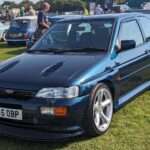
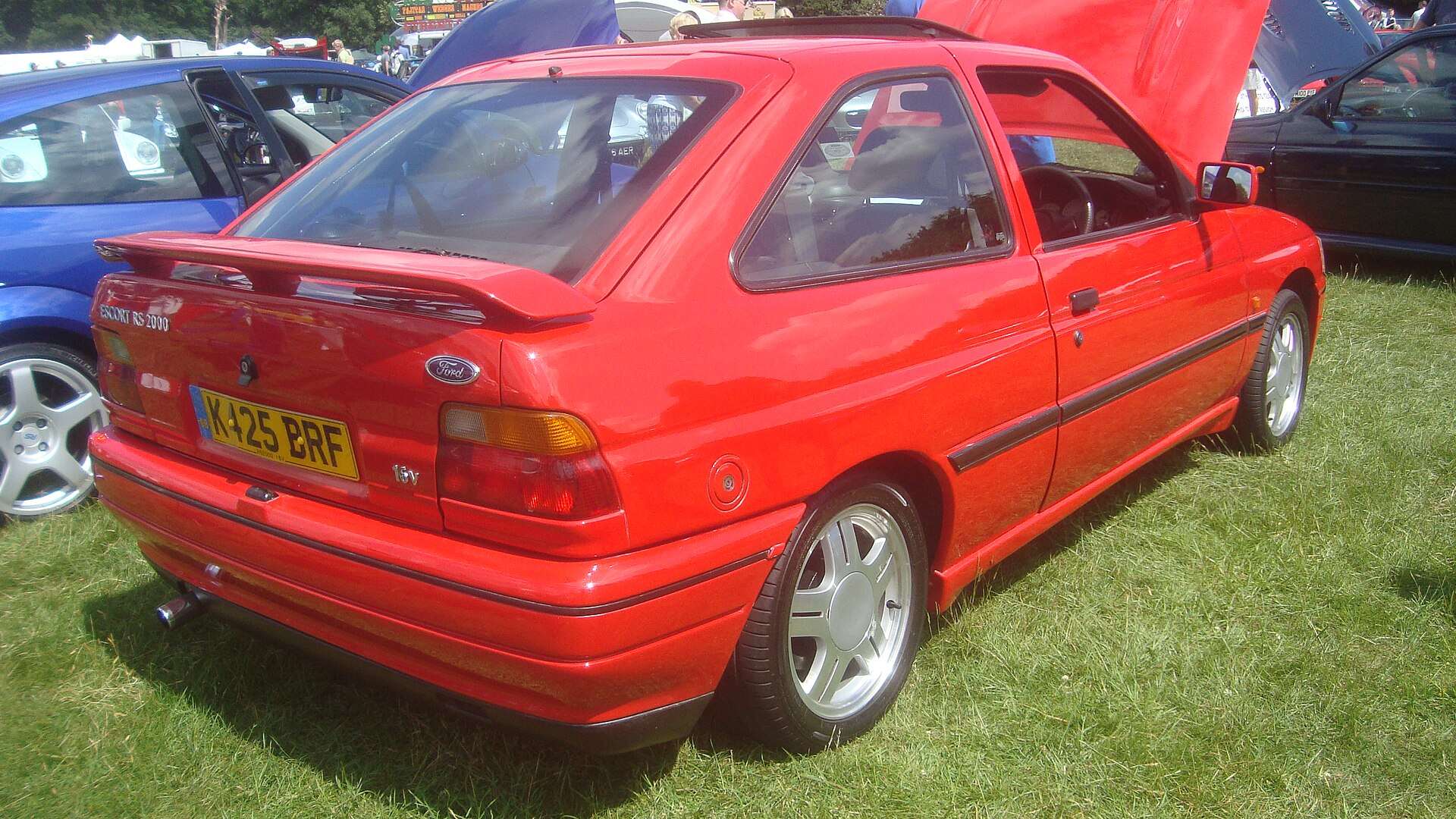
Visually, early cars were recognisable by the bonnet bulges, deeper bumpers, side skirts, rear spoiler and model-specific alloy wheels. The cabin received supportive sports seats, white instruments and RS details. The result was purposeful without becoming as visually theatrical as the whale-tailed Cosworth.


Love cars you don’t see every day?
Get forgotten cars, surprising motoring stories and the most interesting finds from Unusual Cars by email.
Free to join. No spam. Unsubscribe whenever you like. See our Privacy Policy.
The rare RS2000 4×4
Ford added four-wheel drive in 1994. This was not the Escort Cosworth transmission transplanted into a cheaper shell, but a road-focused system intended to improve traction and all-weather ability. Ford itself places the RS2000 4×4 among the significant cars in RS history, alongside the Sierra RS Cosworth 4×4 and Escort RS Cosworth.
The extra driveline hardware brought weight and mechanical complexity, so the 4×4 was not simply a faster version of the front-driven car. Its attraction lay in rarity, balance and the unusual combination of a normally aspirated 16-valve engine with four driven wheels. Sales were limited, and surviving original examples are now much harder to encounter than the already uncommon front-wheel-drive RS2000.

Mk5, Mk5b and Mk6: understanding the shape changes
The model names used by enthusiasts can be confusing because Ford repeatedly revised the fifth-generation Escort. The original 1991 RS2000 wore the earliest Mk5 front end. A substantial 1992 update introduced the oval grille and other detail changes, often called Mk5b in Britain. In 1995 the Escort received a much softer exterior redesign generally known as Mk6.
The RS2000 continued through these changes. The final cars lost some of the visual aggression of the early version, but retained the 150PS 16-valve engine. They represented the last production Escorts to wear the RS2000 name and arrived when insurance pressures and changing tastes were moving the hot-hatch market in a more restrained direction.


Why it became overlooked
The RS2000 had the misfortune to sit beside one of the most famous fast Fords ever made. The Escort RS Cosworth had rally homologation credibility, four-wheel drive and dramatic bodywork; the ordinary RS2000 inevitably looked conservative in comparison. It also arrived during a period when the basic Escort was regularly criticised, making it difficult for the performance model to escape the reputation of the range beneath it.
Yet those circumstances are precisely why the car is interesting now. The RS2000 offers a distinctive Ford engine, genuine RS development and period character without pretending to be a Cosworth. It represents the attainable side of Rallye Sport—the car a keen driver might genuinely have used for commuting, family journeys and fast cross-country roads.
The place of the RS2000 in Ford history
The 1990s RS2000 was a bridge. Behind it were the turbocharged Escort RS Turbo and the rear-wheel-drive RS2000 legends. Beside it sat the specialist Escort RS Cosworth. Ahead was the Focus RS Mk1, which would reinvent the front-wheel-drive RS formula with turbocharging, a Quaife differential and a much more extreme chassis.
Ford’s later performance cars became faster and more sophisticated, but few occupy the same underdog position. The Escort RS2000 Mk5 and Mk6 deserve to be remembered not as failed Cosworth substitutes, but as practical, naturally aspirated RS cars with a technical identity of their own.
Find more overlooked sporting Fords in our Rare & Performance Fords hub.
Sources and further reading
- Ford Media Center: 50 years of Ford RS models
- Ford Media Center: Escort model history
- Wikimedia Commons: Escort RS2000 Mk5 archive
Continue the Ford story
Browse the Rare & Performance Fords hub, compare the Escort RS Turbo, or continue with the Focus RS Mk1.