UNUSUAL CARS MODEL GUIDE
The AE86 is the rear-wheel-drive performance version of Toyota’s fifth-generation Corolla family, sold from 1983 to 1987 as the Corolla Levin and Sprinter Trueno in Japan. Its modest power, light weight, communicative chassis and exceptionally durable 4A-GE engine turned an affordable coupé into one of Toyota’s most influential enthusiast cars.
Quick answer: a genuine AE86 combines the E80-generation rear-drive platform with Toyota’s 1.6-litre twin-cam 16-valve 4A-GE. Levin models have fixed headlamps; Trueno models use pop-up lamps. In Britain the official version was the fixed-headlight Corolla GT Coupé. Identity, corrosion and the quality of past drift or motorsport work matter far more than cosmetics.
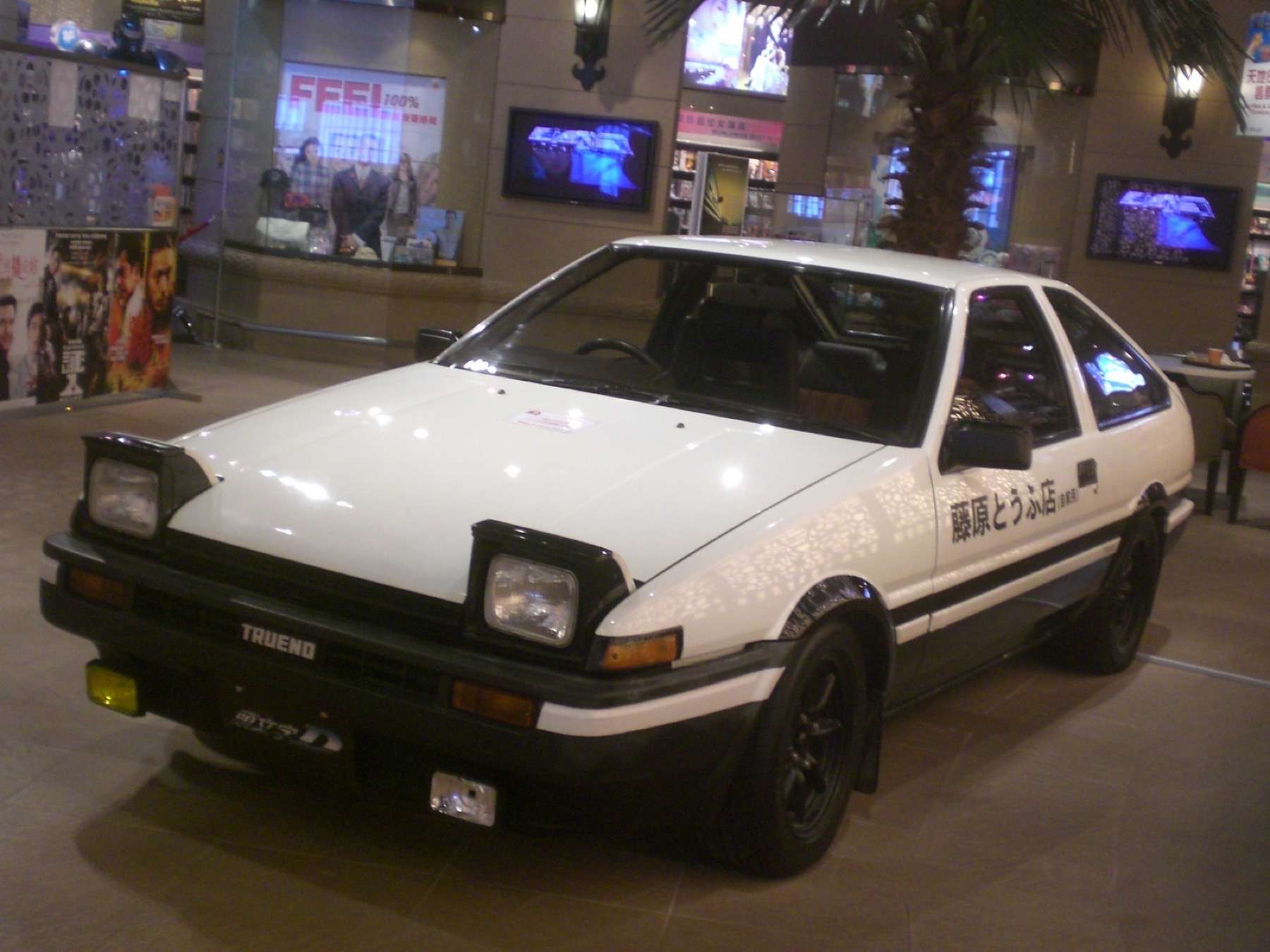
Featured image: Sprinter Trueno 1600 GT photographed by Tao280m, CC BY-SA 3.0, via Wikimedia Commons; locally hosted and resized.
What is an AE86?
AE86 is a Toyota chassis code, not the original model name. “A” identifies the A-series engine family, “E” the Corolla platform, and 86 the particular rear-wheel-drive performance derivative. Toyota also built lower-powered AE85 models with similar bodywork, so an inspection must go beyond badges and pop-up lamps.
The E80 Corolla range marked Toyota’s broad move to front-wheel drive, but the two-door and three-door sporting coupés retained rear-wheel drive. That decision left the AE86 with a simple live rear axle, MacPherson-strut front suspension and a low kerb weight—old-fashioned on paper, but unusually adjustable and rewarding on the road.

Levin, Trueno and UK Corolla GT differences
| Version | Identification | Market context |
|---|---|---|
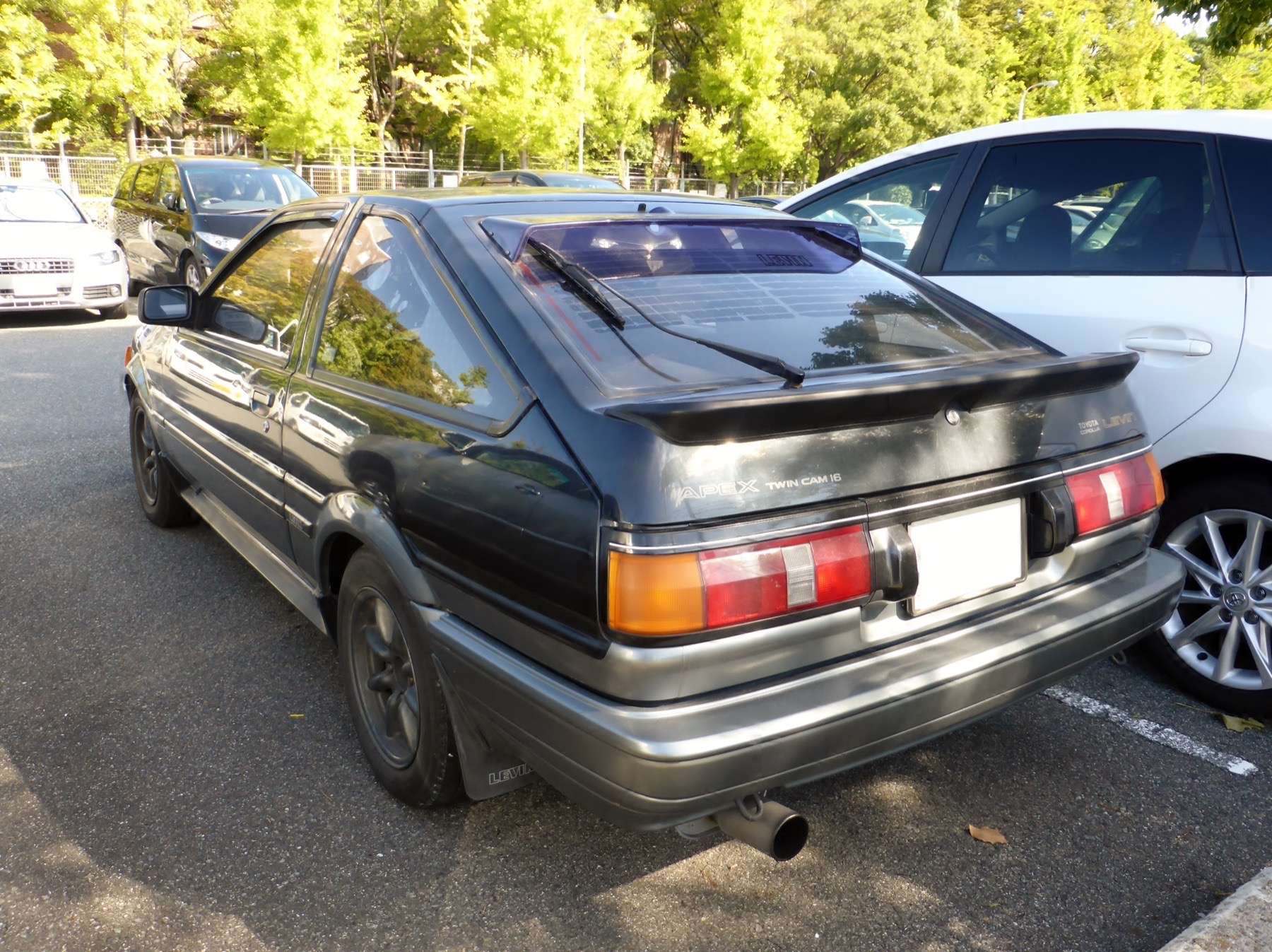
| Corolla Levin | Fixed headlamps; two-door or three-door body | Japanese-market performance model; the UK GT Coupé followed this appearance. |
| Sprinter Trueno | Pop-up headlamps; distinct front and rear detailing | Japanese-market sister car sold through Toyota’s Sprinter channel. |
| Corolla GT Coupé | Three-door fixed-headlight body, right-hand drive | Official UK name for the AE86, using the 4A-GE engine. |
Japanese cars came in several grades, including GT, GT-V and GT Apex, and details vary by year. Early “Zenki” cars ran from launch to mid-1985; later “Kouki” cars brought revised lights, bumpers, trim and mechanical detail changes. Because panels, lamps and interiors have been swapped for decades, chassis and model codes are essential.

The 4A-GE engine and driving character
The 1,587cc 4A-GE used twin overhead camshafts, four valves per cylinder and electronic fuel injection. Toyota UK quoted 124bhp for the Corolla GT Coupé. Performance was brisk rather than brutal—period UK figures put 0–60mph at about 8.3 seconds and maximum speed near 122mph—but the engine’s willingness to rev suited the short-geared five-speed manual.
A limited-slip differential was fitted to many desirable specifications, though not every car has its original axle. The steering is unassisted on many versions and the chassis communicates clearly at sensible speeds. The AE86’s later association with drifting came from this balance and serviceability, not from enormous standard power.

Why the AE86 became a cult car
Club motorsport, rallying, circuit racing and Japanese mountain-road culture established the AE86 long before international fame arrived. The manga and anime Initial D, racing games and drifting then made the Trueno’s black-and-white shape recognisable worldwide. Demand rose sharply, bringing restoration, replica builds and heavily modified cars into the same market.
That fame can distort the car’s appeal. A standard AE86 is relatively narrow-tyred, light and mechanically straightforward. It rewards momentum and precision. The best surviving cars feel coherent because suspension, tyres, differential and engine all work together—not because one component produces a dramatic headline number.

Love cars you don’t see every day?
Get forgotten cars, surprising motoring stories and the most interesting finds from Unusual Cars by email.
Free to join. No spam. Unsubscribe whenever you like. See our privacy policy.
Toyota AE86 buying guide
Confirm the identity
Check the chassis stamping, identification plate and model code against the registration and import records. Establish whether the car began as an AE86, which body and grade it was, and whether the engine, gearbox and axle match the claimed specification. AE85 conversions and mixed-shell builds can be enjoyable, but they should be described and valued honestly.
Inspect corrosion and crash repairs
Examine sills, jacking points, floor, chassis rails, inner and outer rear arches, suspension turrets, boot floor, spare-wheel well, windscreen surround and hatch aperture. Look underneath seam sealer and interior trim. Drifting and competition use make straight rails, sound suspension pick-ups and consistent panel gaps especially important.
Check the 4A-GE and cooling system
Listen for rattles, knocks and excessive valvetrain noise from cold. Check oil pressure, smoke, coolant condition and evidence of overheating. Modified induction and exhaust parts are common; verify that wiring and engine management are tidy and that the car starts, idles and pulls cleanly when hot.
Transmission, axle and suspension
The T50 five-speed can suffer worn synchros and bearing noise. Check clutch engagement, propshaft vibration and differential whine. Confirm any limited-slip differential rather than trusting a badge. Rose joints, coilovers and steering modifications need careful inspection for geometry, clearance and road legality.
Trim and originality
Correct seats, dashboard, exterior mouldings, lamps and uncut interior panels are increasingly valuable. Reproduction support is improving—including Toyota’s GR Heritage Parts programme—but rare market-specific trim can still be difficult to replace.
Frequently asked questions
What is the difference between an AE86 Levin and Trueno?
The main visual difference is the nose: the Corolla Levin has fixed headlamps, while the Sprinter Trueno has pop-up headlamps. Both were offered with the rear-drive AE86 platform and 4A-GE engine in performance form.
Was the Toyota AE86 sold in the UK?
Yes. Toyota sold it officially as the Corolla GT Coupé, using the three-door fixed-headlight body and 1.6-litre 4A-GE engine.
How much power did a standard AE86 have?
Output varied by market and test standard. Toyota UK quoted 124bhp for the Corolla GT Coupé; Japanese figures are often listed in PS and should not be compared without context.
Are all AE86s genuine 4A-GE cars?
No. Similar AE85 models used lower-powered engines, and many cars have been rebuilt or converted. Verify the shell, chassis code and drivetrain.
Is an AE86 a sensible first classic?
It can be rewarding, but prices, corrosion and decades of modification make expert inspection important. A structurally sound, documented car is safer than a cheaper project with uncertain identity.
Research sources
- Toyota: 1983 Corolla and Sprinter launch
- Toyota UK Magazine: history of the Toyota 86
- Toyota GR Heritage Parts for AE86
- Toyota Corolla 50th anniversary history
Continue the Toyota story
Explore more rare and performance models in the Toyota hub, including the Supra, MR2 and Celica GT-Four.