UNUSUAL CARS MODEL GUIDE
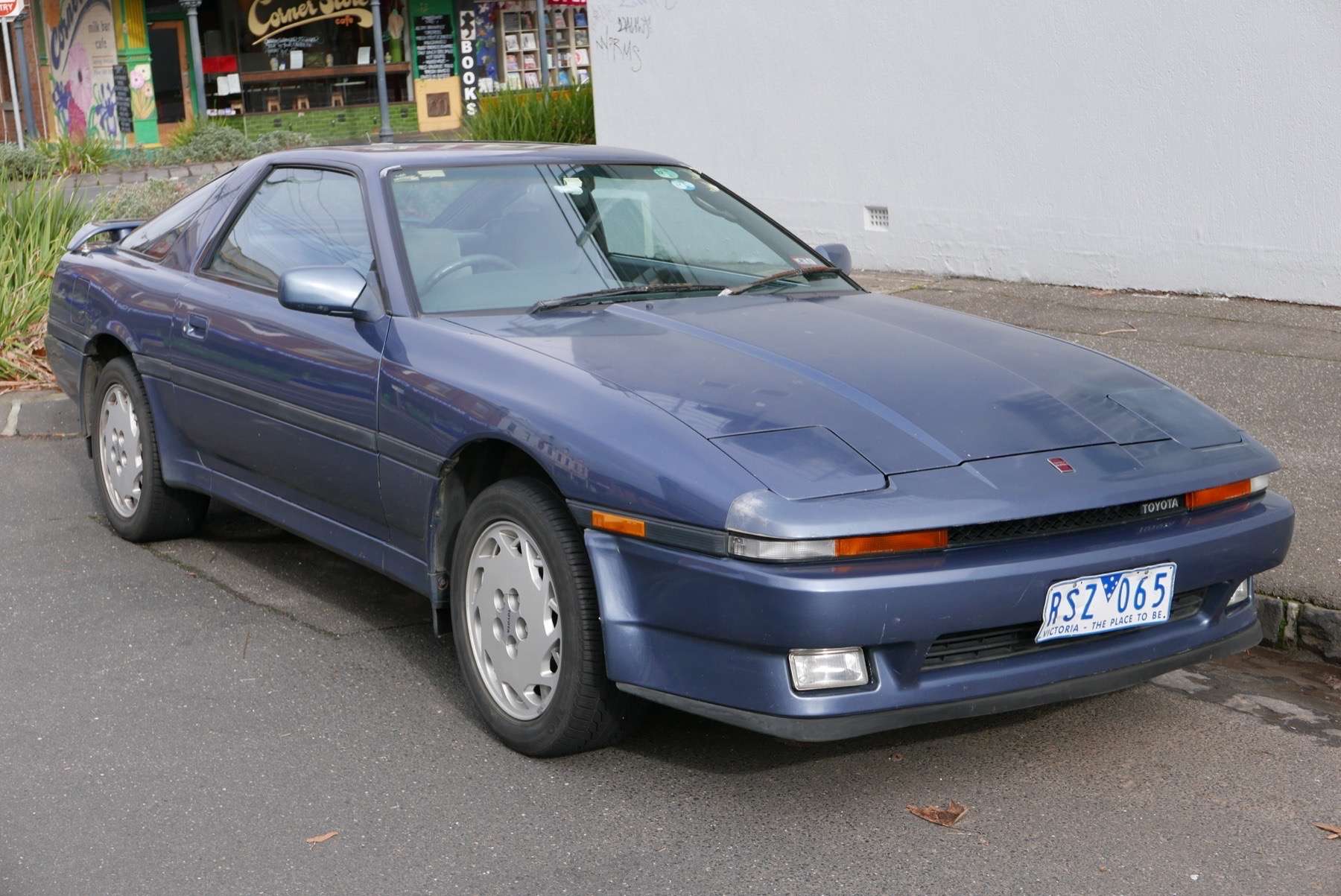
The third-generation Toyota Supra, usually called the A70 or Mk3, arrived in 1986 as the first Supra developed as a model distinct from the Celica. Its long bonnet, liftback body, pop-up headlamps and sophisticated independent suspension made it a true 1980s grand tourer, offered with naturally aspirated, turbocharged and Japanese-market twin-turbo straight-six engines.
Quick answer: the A70 is the link between the Celica-derived early Supras and the famous A80. It combines four-wheel double-wishbone suspension with engines including the 3.0-litre 7M-GE and turbocharged 7M-GTE. Buy on body condition, cooling-system health, correct cylinder-head work and documented maintenance—not on boost pressure or visual modifications.
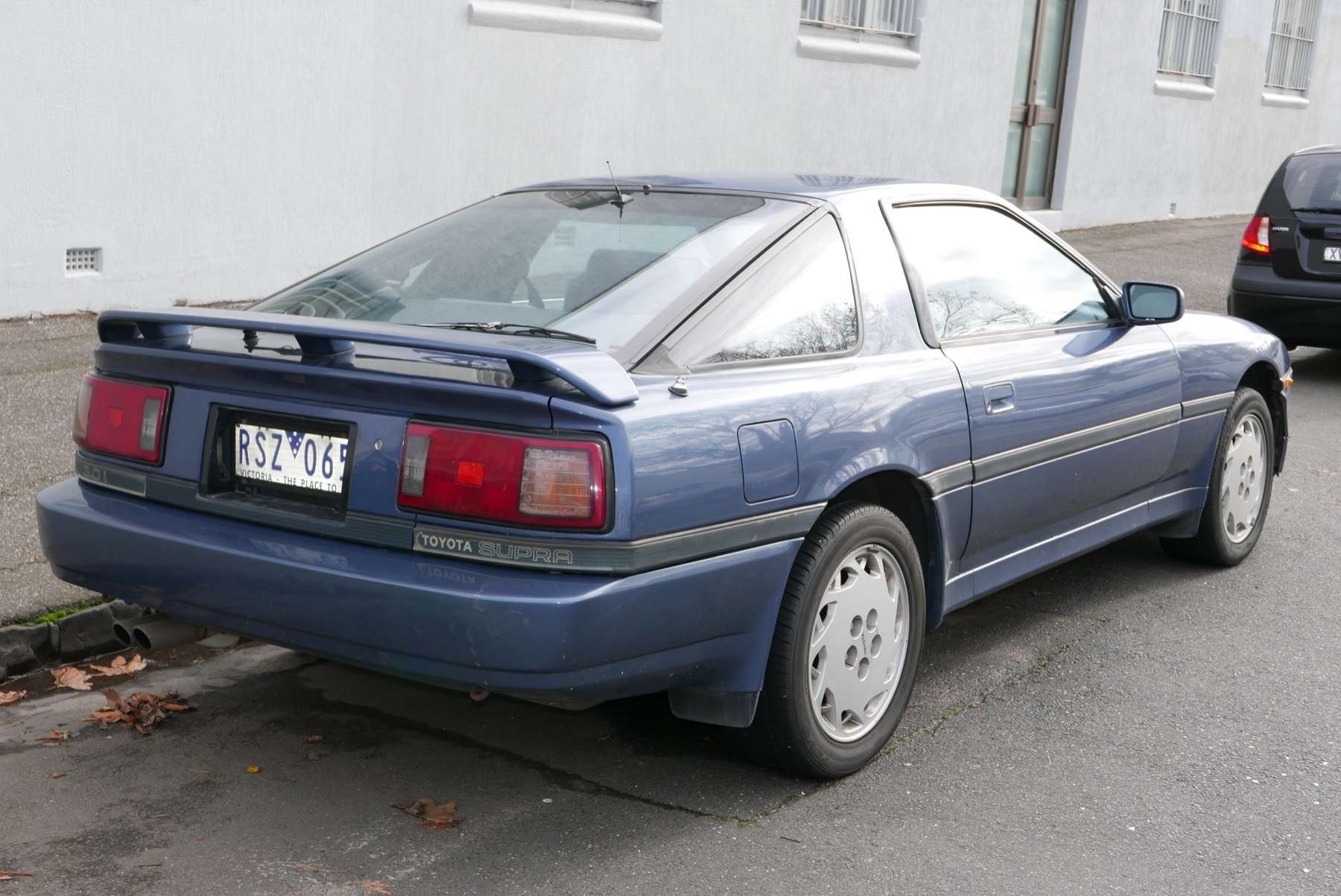
Featured image: 1986 Toyota Supra MA70 photographed by OSX, public domain, via Wikimedia Commons; locally hosted and resized.
How the A70 Supra became its own model
Earlier Celica Supra generations shared much of their identity with Toyota’s Celica. When the Celica moved to front-wheel drive, the Supra retained its front-engine, rear-wheel-drive layout and became a separate model. Toyota launched the new car in Japan in February 1986, highlighting its aerodynamic shape, 0.32 drag coefficient and double-wishbone suspension at all four wheels.
The A70 was larger and more refined than its predecessors. It was designed for high-speed stability and long-distance comfort, with substantial seats, a broad dashboard and available electronic equipment that made it feel more like a technological flagship than a stripped sports car.

A70 engines and versions
| Version | Engine | Character |
|---|---|---|
| 3.0i | 7M-GE, 3.0-litre naturally aspirated straight-six | Smoother and simpler grand tourer; specification varies by market and year. |
| 3.0 Turbo | 7M-GTE, single-turbo 3.0-litre straight-six | Core export performance model; Toyota’s 1986 Japanese launch figure was 230PS. |
| 2.0 Twin Turbo | 1G-GTEU, 2.0-litre twin-turbo straight-six | Japanese-market tax-class model, originally rated at 185PS. |
| 2.5 Twin Turbo R | 1JZ-GTE, 2.5-litre twin-turbo straight-six | Late Japanese-market performance version with a newer JZ-family engine. |
| Turbo A | Competition-oriented 7M-GTE derivative | Limited run of 500 in 1988, created for Group A homologation. |
Market differences are substantial. Outputs, emissions equipment, transmissions, trim and body width can vary. From the 1988 facelift, Toyota applied the wider body to all 3.0-litre models in Japan; the update also revised the front and rear styling and detail engineering.

The 7M-GTE and the head-gasket question
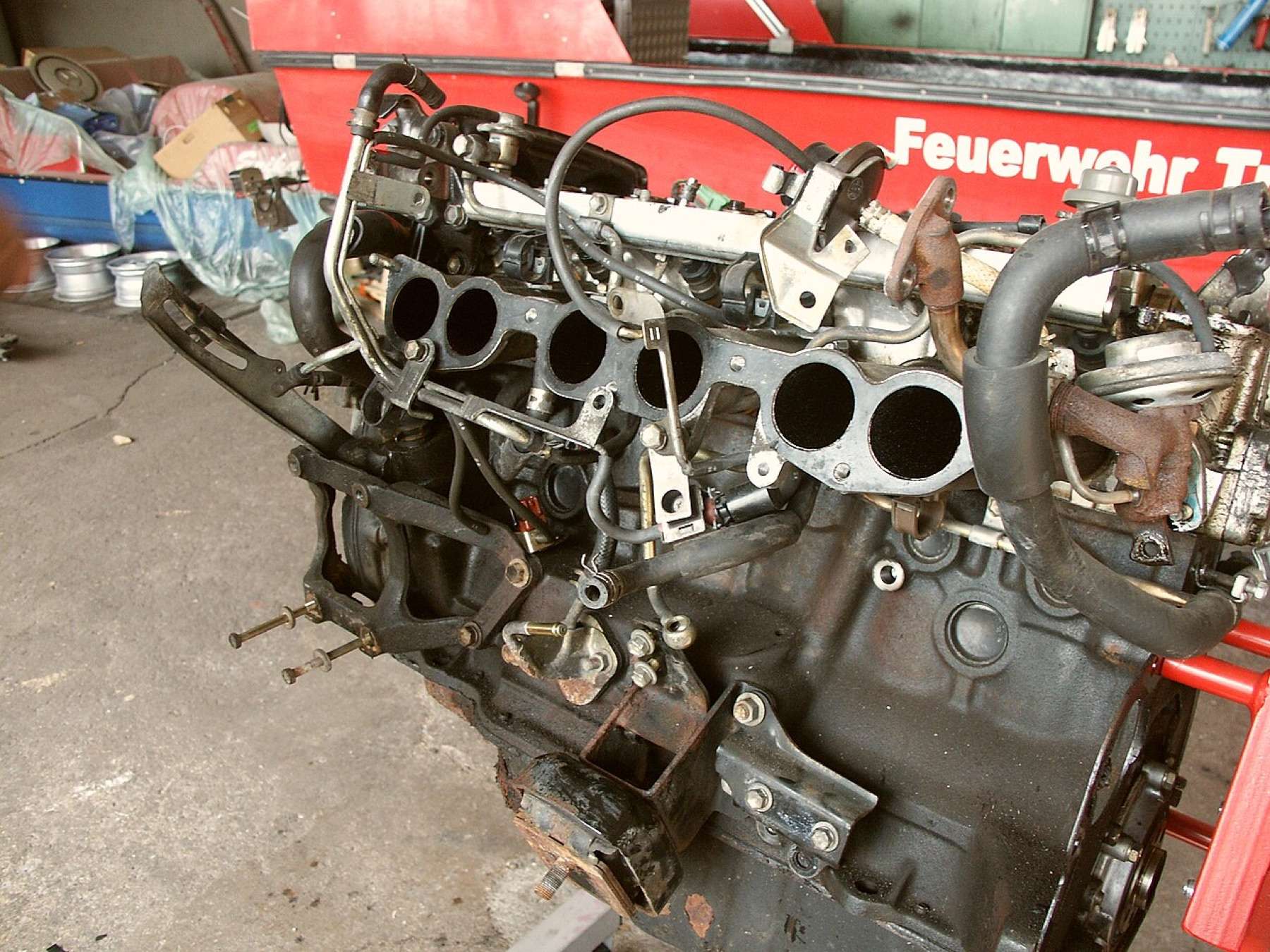
The 7M-GTE is a 2,954cc twin-cam straight-six with a single turbocharger. It gives the A70 effortless mid-range performance and responds strongly to careful tuning. Its reputation is dominated by head-gasket failures, however. Age, overheating and incorrect head-bolt torque after previous work can all contribute.
A repaired engine is not automatically a problem. What matters is evidence that the head and block were properly checked, the correct gasket and fasteners were used, and the cooling system was restored rather than ignored. Repeated coolant loss, combustion pressure in the expansion tank, overheating or unexplained white smoke demand specialist testing.
Chassis, equipment and driving character
Four-wheel double-wishbone suspension was advanced for the period. Some cars used Toyota Electronically Modulated Suspension, allowing the damper setting to change, while anti-lock brakes and a limited-slip differential appeared on selected versions. The A70 feels substantial rather than delicate: it is composed at speed, comfortable over distance and progressively balanced when its bushes, dampers and alignment are correct.
Removable-roof models add open-air appeal but also demand close inspection for leaks, seal condition and body movement. Digital instruments, climate control and electrically adjustable equipment add period atmosphere, though failed modules and brittle interior parts can be difficult to replace.

Love cars you don’t see every day?
Get forgotten cars, surprising motoring stories and the most interesting finds from Unusual Cars by email.
Free to join. No spam. Unsubscribe whenever you like. See our privacy policy.
Toyota Supra A70 buying guide
Body, rust and accident damage
Inspect the sills, jacking points, floor, rear arches, spare-wheel well, hatch aperture, front chassis legs and suspension mounting points. Lift carpets where possible and check behind body kits. Water entering around the hatch, lamps or removable roof can create corrosion away from immediate view.
Cooling system and cylinder head
Begin from cold. Confirm stable coolant level, clean coolant, correct warm-up and consistent temperature in traffic. Ask for invoices describing previous head-gasket work, machining, fasteners and torque procedure. A vague claim that “the gasket was done” is not enough.
Turbo, engine and exhaust
Check oil pressure, smoke, crankcase fumes and boost delivery. Listen for turbo noise and exhaust leaks. Modified cars need proof of fuelling, engine management and rolling-road calibration. Old fuel pumps, improvised boost controls and marginal cooling turn apparently cheap power into expensive repairs.
Gearbox, differential and suspension
Manual gearboxes should select cleanly without bearing rumble or clutch slip; automatics should change smoothly. Check differential noise, driveshaft boots, steering play and uneven tyre wear. Worn bushes can make the car feel vague and can disguise poor accident repair.
Electrics, trim and roof seals
Test every switch, instrument, lamp, window and climate-control function. Verify that warning lights illuminate and go out correctly. On targa-roof cars, inspect seals, drains and carpets for water. Original seats, mouldings and dashboard parts are increasingly hard to source.
Frequently asked questions
What years was the Toyota Supra A70 made?
The A70 generation was introduced in 1986 and remained in production into 1993, with market availability and model years varying by country.
Is the Mk3 Supra the same as the A70?
Yes. “Mk3” is the common enthusiast description for the third-generation Supra; A70 is the Toyota platform designation covering several specific model codes.
Did every A70 Supra use the 7M-GTE?
No. The range included naturally aspirated 7M-GE cars, 7M-GTE turbo models and Japanese-market 1G and later 1JZ versions.
Why do A70 Supras suffer head-gasket problems?
Age, overheating and incorrect fastener torque after earlier work are common factors. The safest car has documented professional repair and a fully healthy cooling system.
What is the Supra Turbo A?
The Turbo A was a limited 500-car Japanese homologation model introduced in 1988 to support Group A competition.
Research sources
- Toyota: 1986 Supra launch
- Toyota: 1988 Supra facelift and Turbo A
- Toyota Gazoo Racing: A70 Supra heritage
Continue the Toyota story
Compare the next-generation Supra A80 and browse the complete rare and performance Toyota hub.