UNUSUAL CARS MODEL GUIDE
The Toyota Starlet GT Turbo and Glanza V turned an unassuming three-door supermini into one of Japan’s most memorable 1990s hot hatches. Both used the turbocharged 1.3-litre 4E-FTE engine, front-wheel drive and a light body, creating performance that felt far stronger than the modest engine capacity suggested.
Quick answer: the EP82 Starlet GT arrived with Toyota’s 1989 Starlet generation, while the rounder EP91 Glanza V followed for 1996. Both were Japanese-market cars rather than official UK models, so British examples are imports. Rust, accident damage, engine management, cooling and the quality of modifications matter more than a claimed boost figure.
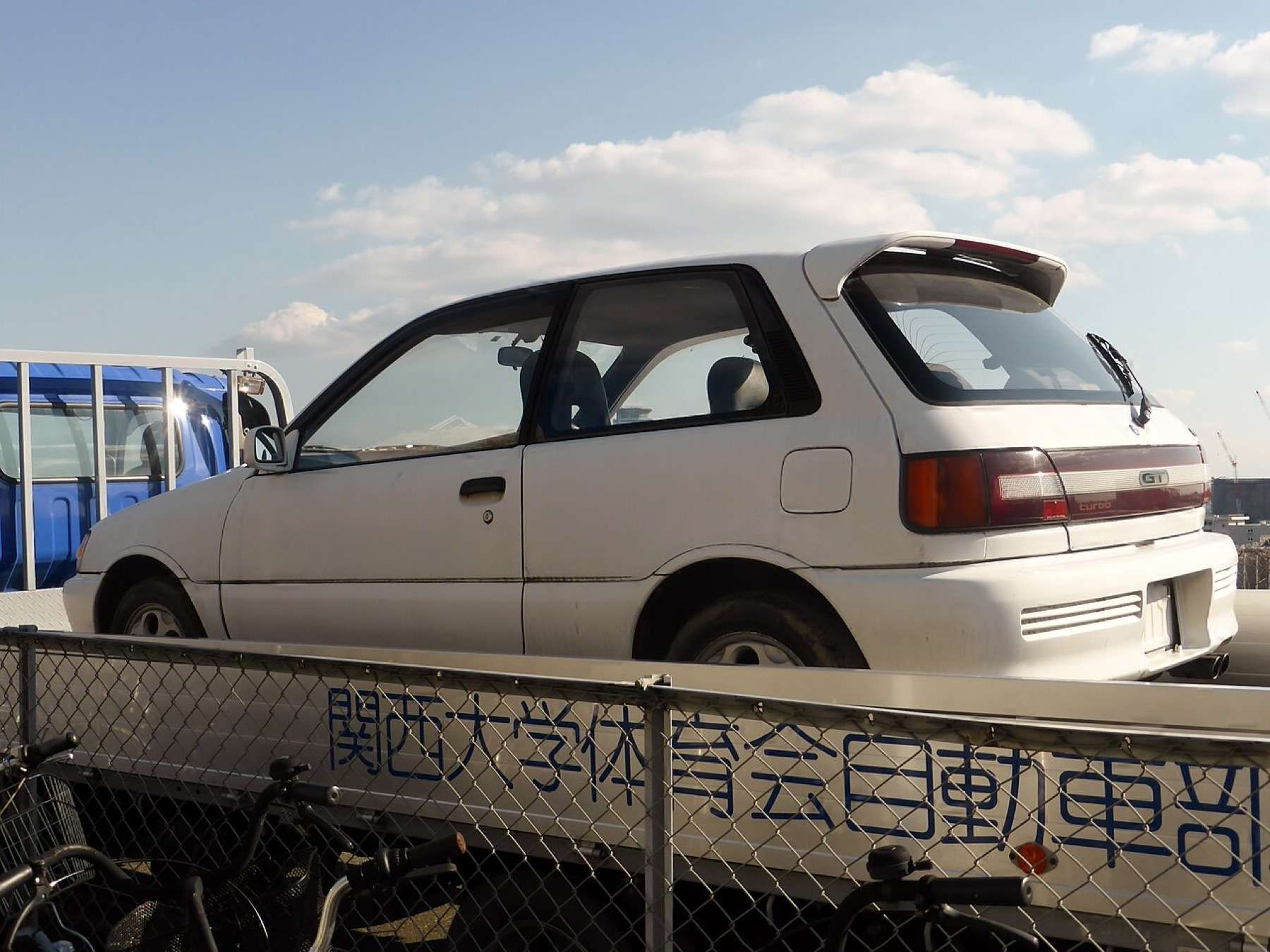
Featured image: Toyota Starlet GT Turbo EP82 photographed by Tokumeigakarinoaoshima, CC0, via Wikimedia Commons; locally hosted and resized.
From practical Starlet to GT Turbo
Toyota introduced the fourth-generation Starlet in December 1989. Most versions were economical everyday hatchbacks, but the three-door GT used the new 4E-FTE: a 1,331cc twin-cam 16-valve engine with electronic fuel injection, an air-to-air intercooler and a CT9 turbocharger. Toyota quoted 135PS and more than 16kg-m of torque for the Japanese launch car.
The EP82 retained a compact footprint and low weight, so it did not need a large engine to feel urgent. Distinctive bumpers, bonnet scoop, spoilers and quad headlamps identified later GT Turbos, but trim evolved through the model’s life and many cars now combine parts from different phases.
What is the 4E-FTE engine?
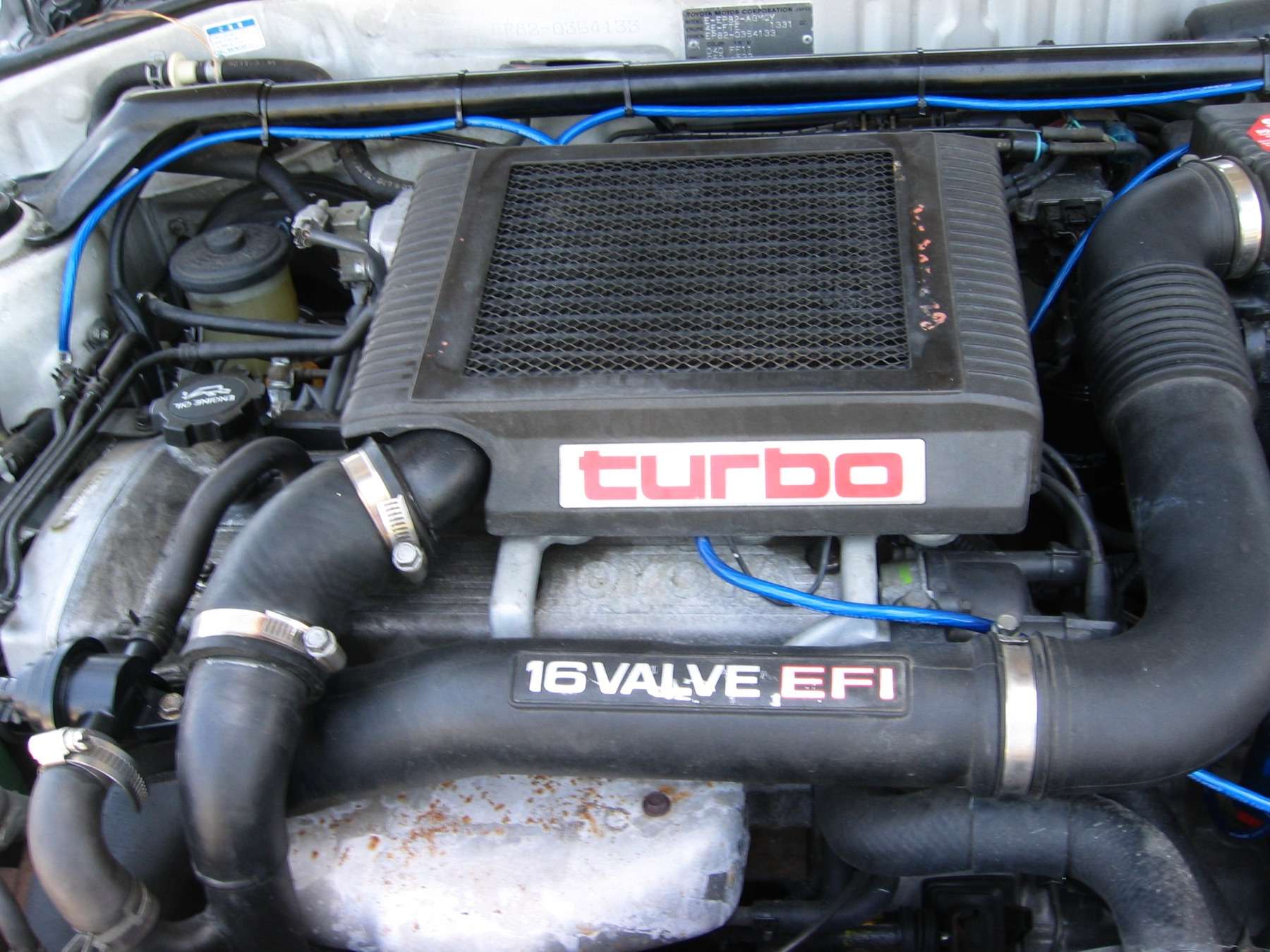
The 4E-FTE is the turbocharged member of Toyota’s E-series four-cylinder family. It combines a cast-iron block, aluminium 16-valve cylinder head, electronic injection and a compact Toyota CT9 turbocharger. In standard form it balances quick response with everyday drivability.
Both the GT Turbo and Glanza V used a two-mode boost system on many specifications. A dashboard control could limit boost for smoother low-power running, with full output available in the higher mode. Modified cars often bypass or replace this system, so the presence of the button does not prove the car remains standard.
EP82 GT Turbo and EP91 Glanza V compared
| Model | Production context | Main character |
|---|---|---|
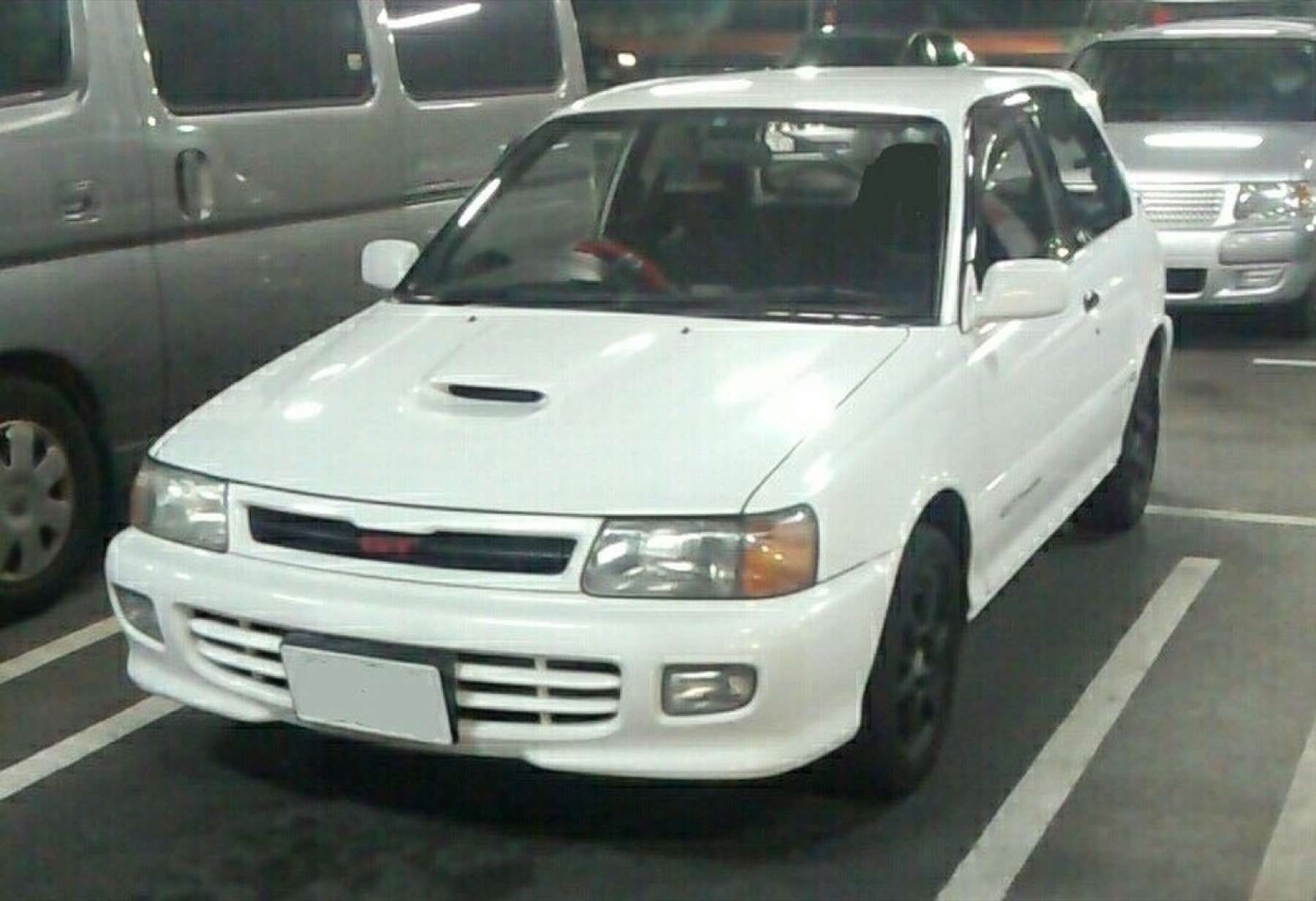
| Starlet GT Turbo (EP82) | Introduced with the 1989-generation Starlet | Angular styling, low weight, 4E-FTE turbo engine and a rawer hot-hatch feel. |
| Starlet Glanza V (EP91) | Introduced with the 1995-generation Starlet and sold from 1996 | Rounder body, improved crash structure and refinement, with the turbo 4E-FTE retained. |
| Starlet Glanza S | EP91 era | Sporting appearance with a naturally aspirated engine; not the turbocharged V. |
The name Glanza was derived from the German word “Glanz”, referring to brilliance or radiance. Toyota’s EP91 generation brought the company’s GOA safety body and made ABS standard across the Japanese range. The Glanza V kept the small-capacity turbo formula but packaged it in a more rounded and mature shell.

Why these Starlets became import favourites
Neither turbo Starlet was officially sold new in Britain. Imports offered a combination that was difficult to find locally: Japanese reliability, strong tuning support, low running weight and genuinely rapid real-world acceleration in a small hatchback. Clubs and specialists soon developed a deep knowledge base around the 4E-FTE.
That popularity also created risk. Many cars were modified, raced, damaged or dismantled for parts. A visibly standard car can hide an earlier high-boost setup, while a modified example may be excellent if its fuel system, cooling, mapping and chassis work are properly documented.
Love cars you don’t see every day?
Get forgotten cars, surprising motoring stories and the most interesting finds from Unusual Cars by email.
Free to join. No spam. Unsubscribe whenever you like. See our privacy policy.
Toyota Starlet turbo buying guide
Identity and import history
Confirm the chassis code, engine code and Japanese import documents. Make sure an EP91 described as a Glanza V is not a naturally aspirated Glanza S conversion. Check the registration details, mileage evidence and auction or export records where available.
Rust and accident damage
Inspect sills, jacking points, rear arches, floor, suspension turrets, inner wings, boot floor and the areas behind body-kit parts. Look for creased rails, uneven seams and overspray. Light cars can be quick, but poor crash repairs compromise both geometry and safety.
4E-FTE, turbo and cooling
Start from cold and check for smoke, rattles, crankcase pressure and unstable idle. The CT9 turbo should deliver boost progressively without siren noise or persistent blue smoke. Inspect the radiator, hoses and expansion tank, and ask how fuelling and ignition were calibrated after any boost or turbo change.
Gearbox, differential and clutch
Check every gear under load and on the overrun. Listen for bearing noise and feel for worn synchromesh. Uprated clutches can be harsh; a limited-slip differential may alter steering behaviour. Verify claimed gearbox and differential specifications from invoices rather than stickers.
Suspension, brakes and tyres
Cheap coilovers, incorrect wheel offsets and mismatched tyres can make a short-wheelbase Starlet nervous. Inspect bushes, ball joints, brake lines and calipers, then check that the car tracks straight and stops cleanly. A geometry printout is useful evidence after suspension work.

Frequently asked questions
What is the difference between a Starlet GT Turbo and Glanza V?
The GT Turbo is based on the angular EP82 generation; the Glanza V is the later EP91 turbo model with rounder styling, a newer safety body and greater refinement.
Were turbo Starlets sold officially in the UK?
No. Genuine EP82 GT Turbos and EP91 Glanza Vs in Britain are Japanese-market imports.
How much power did the standard Starlet GT Turbo have?
Toyota quoted 135PS for the 4E-FTE-powered EP82 GT at its 1989 Japanese launch.
Is a Glanza S the same as a Glanza V?
No. The Glanza V uses the turbocharged 4E-FTE engine; the Glanza S is a naturally aspirated sporting model.
Are modified Starlet turbos reliable?
They can be when the fuel system, cooling, engine management and chassis have been engineered together. Unsupported boost increases and improvised wiring are warning signs.
Research sources
- Toyota: 1989 Starlet and GT launch
- Toyota: 1995 Starlet and Glanza launch
- Toyota UK Magazine: history of the Starlet
Continue the Toyota story
Browse the complete rare and performance Toyota hub for more Japanese performance cars, rally homologation models and unusual Toyota engineering.