UNUSUAL CARS MODEL GUIDE
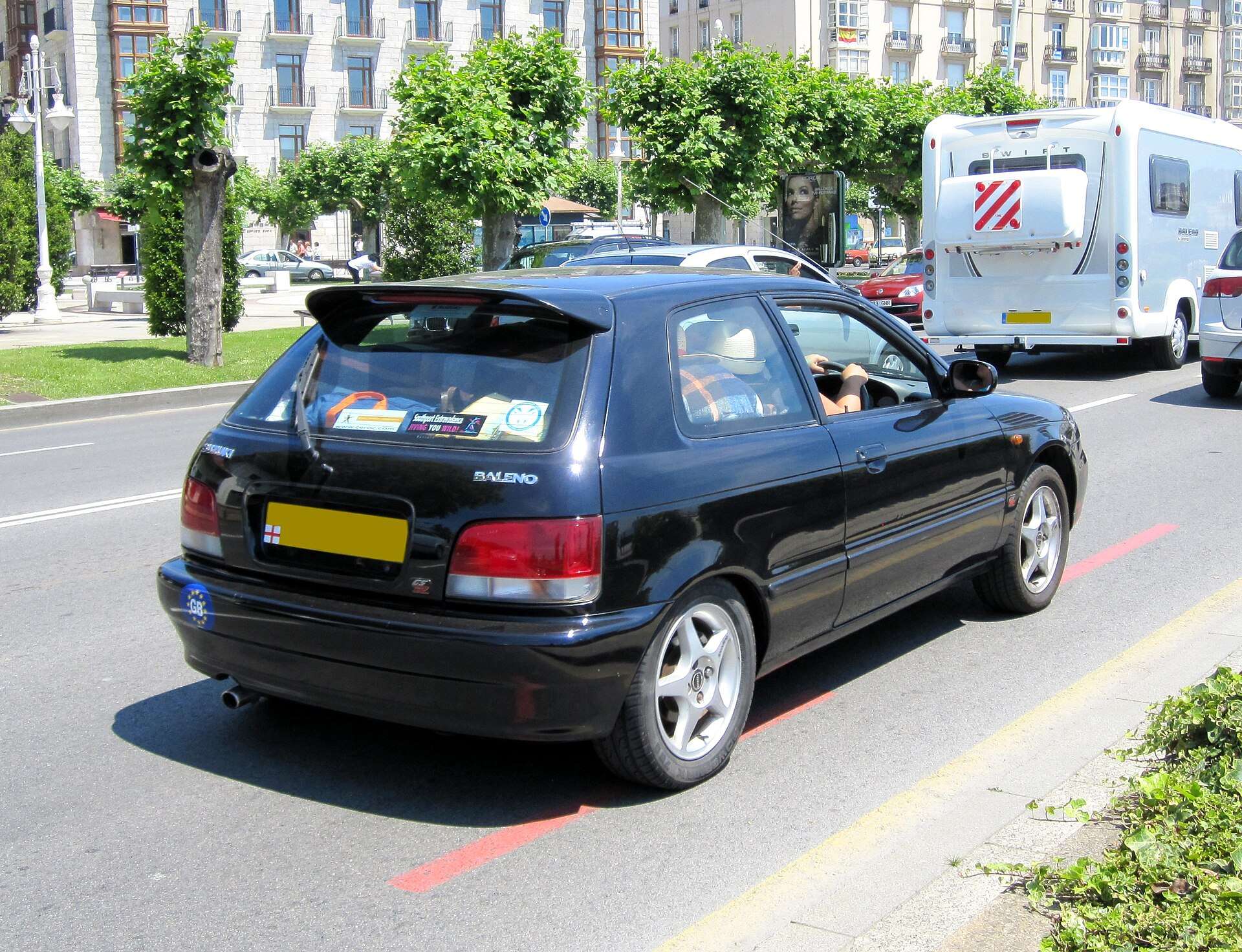
Featured image: Spanish Coches, CC BY 2.0, via Wikimedia Commons; locally hosted.
The Suzuki Baleno GSR 1.8 was an understated late-1990s warm hatch: a light three-door body, a chain-driven twin-cam engine producing about 120 bhp and almost no visual theatre. Sold officially in Britain after the Baleno facelift, it offered brisk performance without the insurance and image of better-known hot hatchbacks.
Quick answer: the GSR’s appeal lies in low weight, rarity and a flexible 1.8-litre engine. Its greatest risks are corrosion, accident repairs, missing GSR-specific trim and years of parts scarcity. A complete original example with a credible history is worth seeking out.
Where the Baleno fitted
Suzuki launched the model known globally as Baleno or Cultus Crescent in 1995, adding an estate in 1996. It was a conventional small family car offered in several body styles and with a range of petrol engines. In Britain the Baleno sat above the Swift and traded on value, equipment and straightforward engineering rather than badge prestige.

The GSR appeared with the facelifted range and gave the three-door hatch a larger J18A engine. Period UK coverage quoted just under 120 bhp and 0–60 mph in roughly nine seconds. Those figures were useful rather than spectacular, but the car’s modest mass gave it an energetic character.
| GSR 1.8 outline | Detail |
|---|---|
| Engine | 1.8-litre J18A twin-cam petrol four-cylinder |
| Output | About 120 bhp, depending on source and rating convention |
| Transmission | Five-speed manual, front-wheel drive |
| Body | Three-door hatchback |
| UK character | Rare, discreet warm hatch rather than an overt homologation special |
Love cars you don’t see every day?
Get forgotten cars, surprising motoring stories and the most interesting finds from Unusual Cars by email.
Free to join. No spam. Unsubscribe whenever you like. See our privacy policy.
What makes the GSR different?
The engine is the defining feature. Compared with smaller Balenos, the 1.8 has stronger mid-range response and enough performance to make the light body feel lively. Styling remained restrained, so the GSR could pass unnoticed beside more aggressively marketed rivals.

Do not assume every three-door with alloy wheels is a GSR. Check the registration record, chassis and engine numbers, original badging, trim and period paperwork. Modified or reshelled cars need particularly careful identity checks.
Engine and transmission
Start the J18A from cold. A brief noise may occur as oil pressure builds, but persistent chain or valvetrain rattle requires diagnosis. Look for oil and coolant leaks, overheating evidence, brittle hoses and neglected fluids. The engine should rev cleanly without smoke or warning lights.

The five-speed gearbox should select second and third cleanly under load and on a gentle downshift. Check clutch bite, driveshaft joints and engine mounts. Exhaust systems and catalysts may have been replaced with pattern or modified parts, so inspect their fit and legality.
Corrosion and bodywork
Structural condition is critical. Inspect sills inside and out, jacking points, floor seams, rear arches, suspension mounts, subframes, brake pipes and the boot floor. Lift trim where possible and look for fresh underseal applied over scale or patch repairs.

Front wings, bumpers, lamps, doors and glass can be harder to obtain than service parts. Check every panel gap and paint finish for accident damage. The three-door’s long doors place stress on hinges, while blocked drains can trap water in seams.
Suspension, steering and brakes
Worn dampers, bushes and top mounts make a light car feel loose. Listen for wheel bearings, check power steering assistance and inspect tyre wear. Brakes should stop the car evenly, with no seized calipers or corroded pipes. Original wheel sizes help preserve ride and steering response.

Because the model has often been treated as an inexpensive used car, maintenance quality varies widely. A thick folder of routine invoices is more reassuring than a recent cosmetic restoration without underside photographs.
Cabin and equipment
Inspect seat bolsters, headlining, switches, heater controls, electric windows and central locking. Confirm that warning lamps illuminate at start-up and extinguish correctly. Model-specific seat fabric, spoilers and badges can be more difficult to replace than mechanical consumables.
Should you buy a Baleno GSR?
The GSR suits an enthusiast who values obscurity, simplicity and usable 1990s performance. It does not have the parts or specialist support of a mainstream hot hatch, so the best purchase is a complete car rather than a cheap restoration. Good preservation matters more than chasing a precise mileage figure.
Sources and further reading
- Suzuki centenary timeline: Baleno and Cultus Crescent history
- PetrolBlog: Suzuki Baleno GSR UK history and specifications
- Suzuki: global automobile history
Continue the Suzuki story
The Baleno GSR is a reminder that Suzuki’s lightweight performance story extended beyond the better-known Swift and Ignis. Explore the Suzuki hub, the Swift GTi guide, the Ignis Sport guide.
Frequently asked questions
Was the Suzuki Baleno GSR sold in the UK?
Yes. The facelift-era 1.8 GSR was an official UK-market three-door Baleno, although it sold in small numbers and is now rare.
What engine does the Baleno GSR use?
It uses Suzuki’s 1.8-litre J18A twin-cam petrol four-cylinder, commonly quoted at about 120 bhp in UK coverage.
Is the Baleno GSR a hot hatch?
It is better described as a warm hatch. Low weight and the 1.8-litre engine give useful performance, but its chassis, styling and market position were less extreme than leading hot hatches.
Does the Baleno GSR have a timing belt?
The J18A uses a timing chain, but oil condition and persistent chain or valvetrain noise still require careful checking.
What is the biggest buying risk?
Corrosion and poor repairs are the biggest risks, followed by missing GSR-specific trim and the limited availability of model-specific body and interior parts.