UNUSUAL CARS MODEL GUIDE
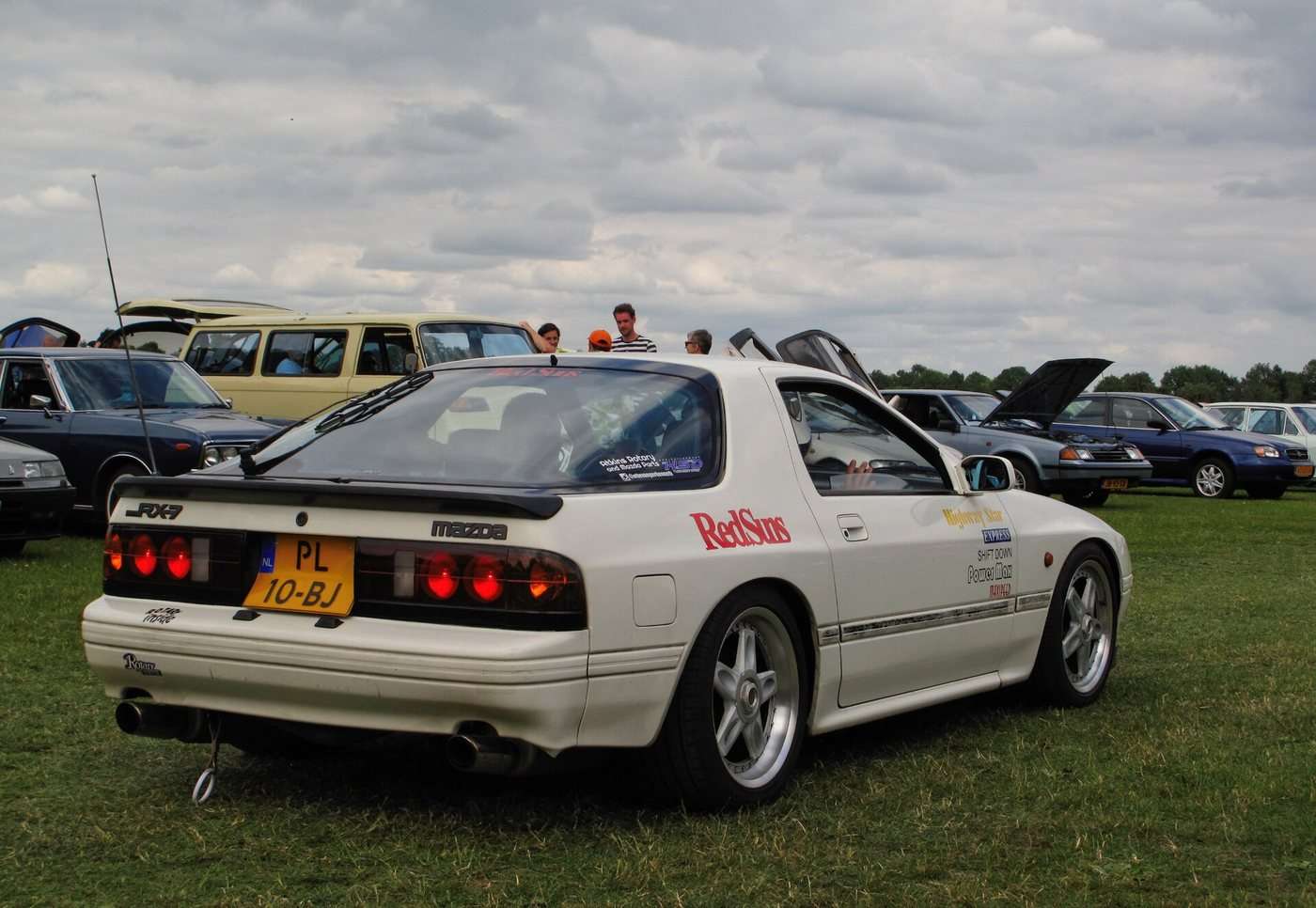
The Mazda RX-7 FC is the second generation of Mazda’s rotary sports car, produced from 1985 to 1992. It moved the RX-7 towards a more mature grand-touring brief while retaining a front-mid-mounted 13B rotary engine, rear-wheel drive and a compact 2+2 coupé shape.
Quick answer: the FC matters because it combined the smooth, compact 13B rotary with independent rear suspension and Mazda’s Dynamic Tracking Suspension System. Naturally aspirated and turbocharged versions existed, and a convertible joined the range later, so identity and market specification must be checked carefully.
From affordable sports car to New Adult Sport
Mazda launched the FC-series Savanna RX-7 in Japan in October 1985. Its development theme, described by Mazda as “New Adult Sport”, deliberately added comfort and refinement without abandoning the low engine position and balanced chassis that defined the first RX-7.
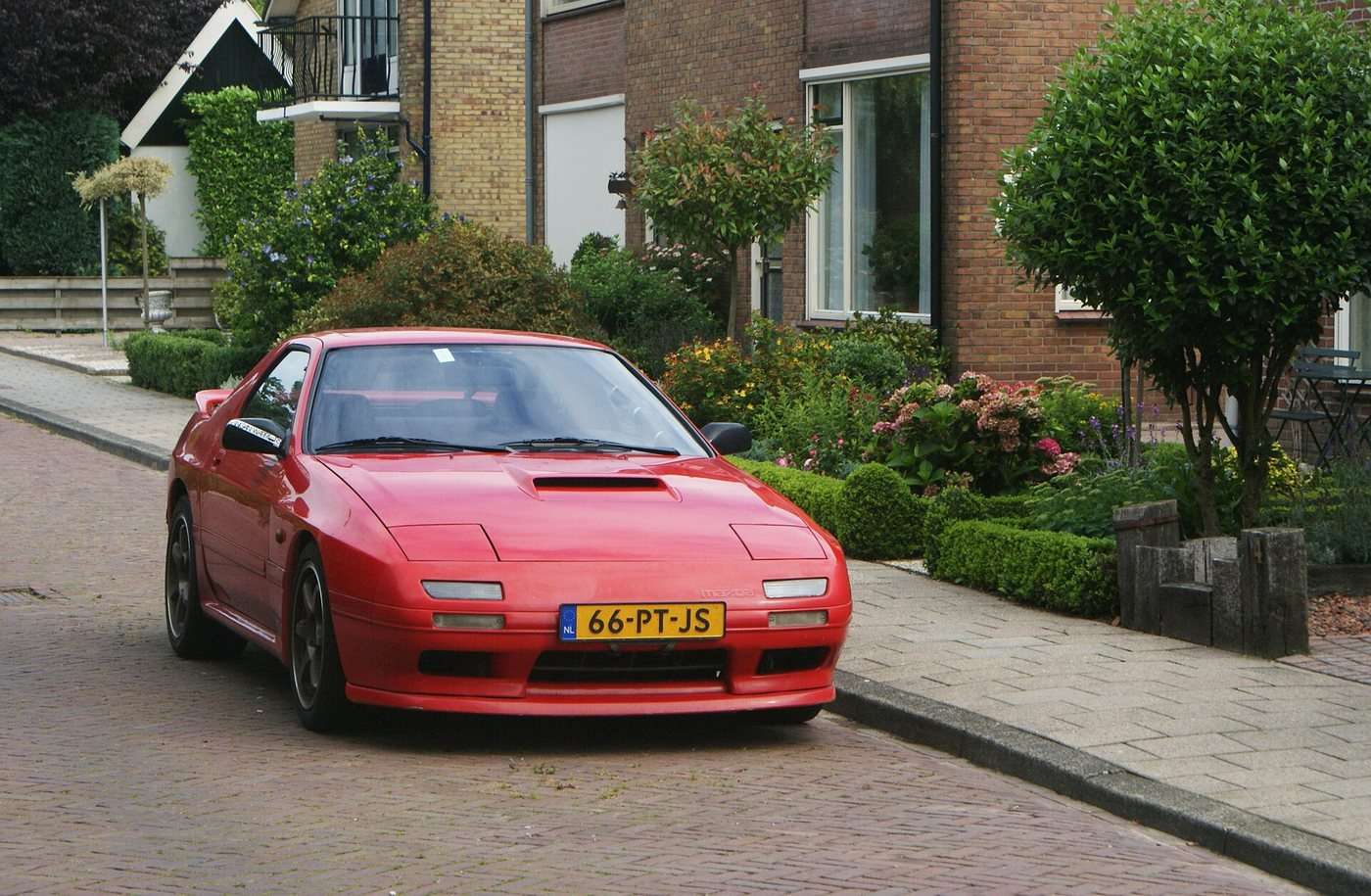
The body became smoother and wider, with pop-up headlamps and a large glass hatch. The layout remained distinctive: the rotary sat behind the front axle line, leaving the car with proportions and weight distribution that a conventional front-engined coupé could not easily copy.
13B rotary engines and Turbo II
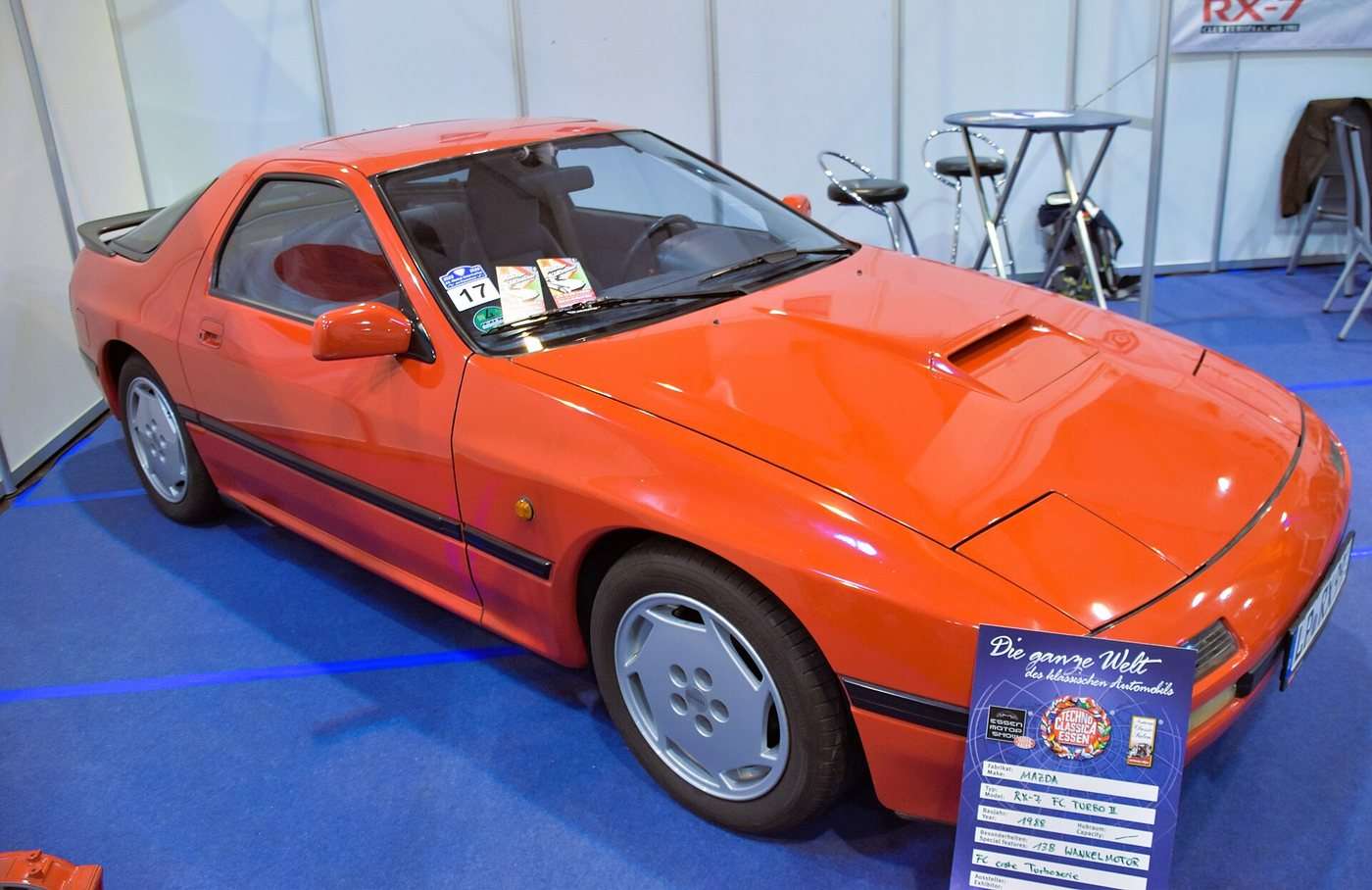
The FC used Mazda’s twin-rotor 13B engine in naturally aspirated and turbocharged forms. The Turbo II name identified the intercooled turbo model in several export markets; Japan used Savanna RX-7 grade names and market-specific outputs. Power figures therefore vary by year, emissions rules and measurement standard rather than describing one universal FC specification.
Mazda’s turbo engine used a twin-scroll arrangement intended to improve response across the rev range. Later Series 5 cars received mechanical, styling and equipment changes, and generally carried higher quoted outputs than early Series 4 models.
| Version | What distinguishes it |
|---|---|
| Series 4 | 1985 launch phase; early body details and market-specific naturally aspirated or turbo engines |
| Series 5 | Late-1980s update with revised styling, engine management and higher-output turbo specifications in several markets |
| Convertible | Open FC introduced later in the model cycle, with additional body reinforcement and a distinctive roof arrangement |
| Infini | Limited Japanese-market performance editions with carefully selected chassis, trim and equipment changes |
Chassis technology and handling
The FC adopted independent rear suspension and Mazda’s Dynamic Tracking Suspension System. Compliance was used to alter rear toe under cornering load, helping stability without adding complex electronic control. Some versions also used speed-sensitive power steering and electronically controlled dampers.
Those systems are part of the car’s character but age changes the result. Worn bushes, unsuitable wheels and incorrect alignment can make an FC feel vague or unpredictable. A standard, well set-up chassis often explains the model better than a heavily modified example.

Series 5 and Japanese special editions
The Series 5 update is recognised by revised bumpers, lamps and interior details, although changes differ by market. Japanese Infini editions are sought after, but badges and trim are easy to copy. A claimed Infini should be verified through chassis details, original documentation and equipment rather than appearance alone.
Love cars you don’t see every day?
Get forgotten cars, surprising motoring stories and the most interesting finds from Unusual Cars by email.
Free to join. No spam. Unsubscribe whenever you like. See our privacy policy.
Mazda RX-7 FC buying guide
Rotary compression and hot starting
Arrange a warm rotary-specific compression test with results corrected for cranking speed. Difficult hot starting, uneven readings, smoke or unexplained coolant loss need specialist investigation.
Cooling and turbo systems
Inspect radiator, hoses, water pump, oil-cooler lines and evidence of overheating. On turbo cars check boost delivery, intercooler plumbing and modifications as a complete system rather than judging individual parts.
Rust and structure
Check sills, rear arches, floor, suspension mounts, hatch area and windscreen surround. Convertible reinforcement and drains need additional attention. Fresh underseal should never substitute for inspection on a lift.
Transmission and chassis
Test synchromesh cold and warm, listen for differential noise and inspect every suspension bush and ball joint. Uneven tyre wear can reveal poor geometry or previous accident repairs.
Originality and identity
Confirm the chassis code, original market, engine specification and model phase. Imported cars may have replacement instruments, and special-edition parts can migrate between shells.
Why the FC remains important
The FC is the bridge between the light original RX-7 and the highly focused FD. It shows Mazda adapting the rotary sports-car idea to a more mature market without giving up the packaging advantages that made the RX-7 different.
Research sources
- Mazda: Savanna RX-7 second- and third-generation history
- Mazda: product history, 1980–1989
- Mazda Japan: Classic Mazda FC/FD support
Continue the Mazda story
Explore the Rare & Performance Mazdas hub, then compare the RX-7 FD guide and the RX-8 guide.
Frequently asked questions
What does FC mean on a Mazda RX-7?
FC is the chassis-family designation for the second-generation RX-7 introduced in 1985. FC3S commonly identifies the coupé, while convertible designations differ by market.
What is an RX-7 Turbo II?
Turbo II is the name used for intercooled turbocharged FC RX-7s in several export markets. Power and equipment vary by year and country.
Did Mazda build an FC RX-7 convertible?
Yes. Mazda added an open version later in the model cycle with body reinforcement and a distinctive roof system.
What is the difference between Series 4 and Series 5?
Series 5 is the later update, with revised styling, electronics and engine specifications. Exact changes depend on market.
What is the most important FC RX-7 buying check?
A rotary-specific compression test is fundamental, followed by cooling-system, rust, turbo, transmission and chassis checks.