Quick answer: the B7-generation Audi RS4 replaced the B5’s turbocharged V6 with a naturally aspirated 4.2-litre FSI V8 producing 420PS and revving beyond 8,000rpm. Offered as a saloon, Avant and Cabriolet, every version used a six-speed manual gearbox and quattro four-wheel drive.

Why the B7 RS4 was a major change
The original B5 RS4 had established quattro GmbH as a maker of extremely fast estates. Its successor arrived in 2005 with a very different philosophy. Instead of a turbocharged V6 and Avant-only body, the B7 used a high-revving naturally aspirated V8 and appeared first as a saloon.
Avant and Cabriolet versions followed, creating the broadest RS4 family yet. The formula made the model easier to understand internationally: it was an A4-sized car with supercar engine response, muscular bodywork and four-wheel-drive usability.

The 4.2 FSI V8
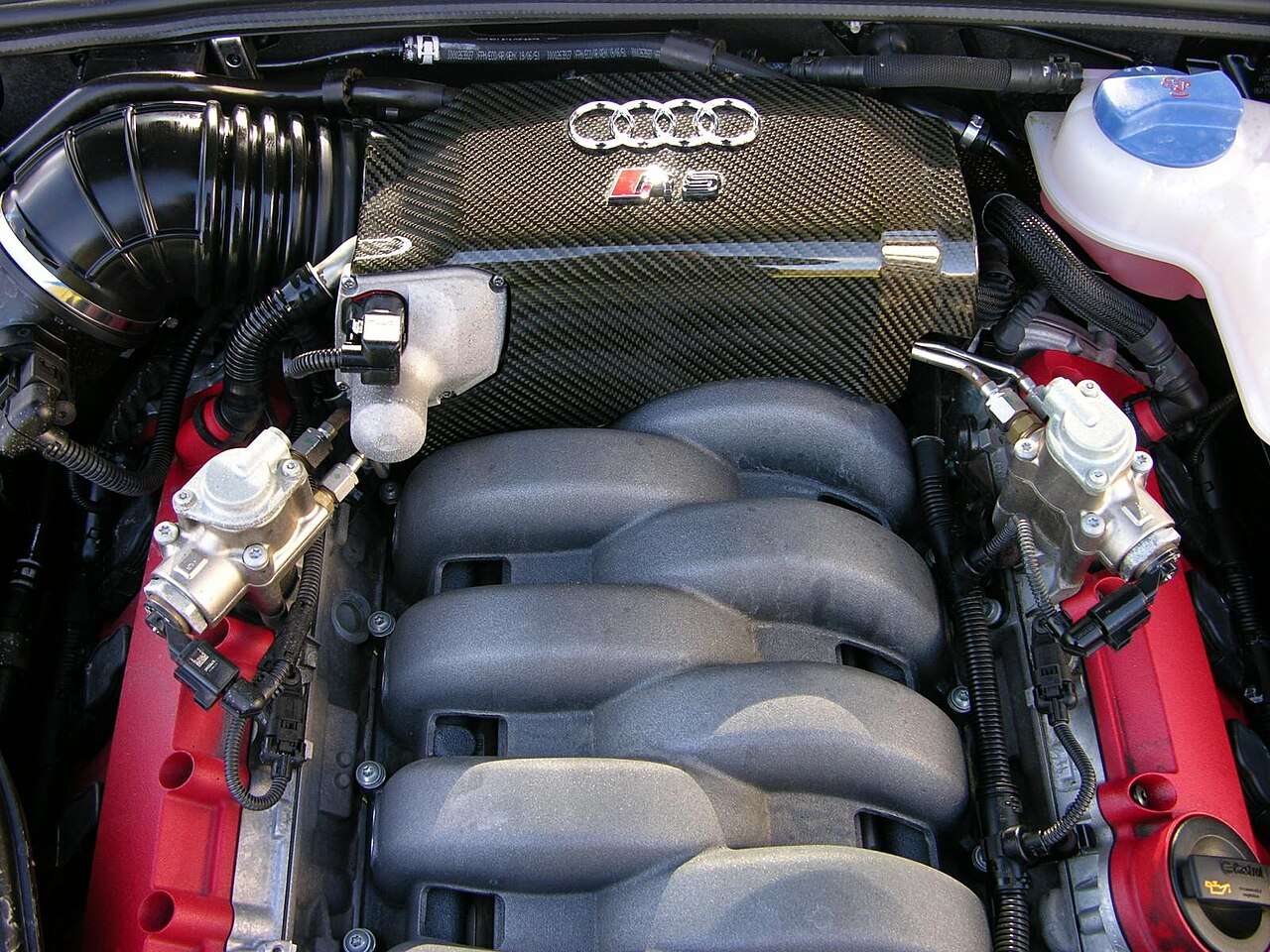
The 4,163cc direct-injection V8 produced 309kW, or 420PS, at 7,800rpm and was designed to rev beyond 8,000rpm. Its specific output was exceptional for a naturally aspirated road-car engine of the period.
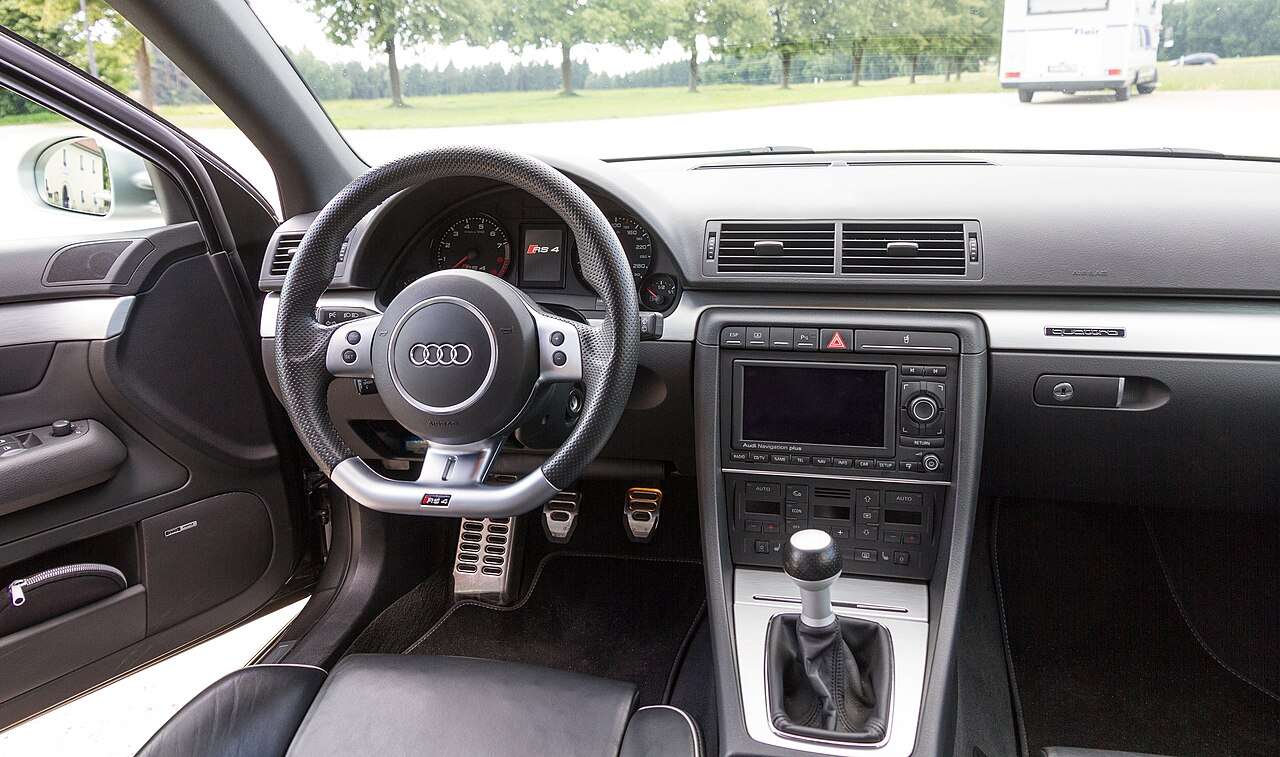
A six-speed manual gearbox was standard across the range. That combination is now central to the B7’s appeal: later fast Audis increasingly used turbocharging and dual-clutch or automatic transmissions, while the RS4 demanded revs and deliberate gear selection.
quattro, Dynamic Ride Control and chassis character
The B7 used a rear-biased evolution of quattro, helping it feel less nose-led than earlier fast Audis. Dynamic Ride Control linked diagonally opposed dampers hydraulically to resist pitch and roll without relying on conventional electronic adaptive dampers.
The result was a car capable of carrying enormous speed in poor conditions while retaining useful steering and throttle adjustability. The system also became an ownership issue: leaking DRC dampers led many cars to repairs, replacements or aftermarket suspension conversions.
Love cars you don’t see every day?
Get forgotten cars, surprising motoring stories and the most interesting finds from Unusual Cars by email.
Free to join. No spam. Unsubscribe whenever you like. See our privacy policy.
Saloon, Avant and Cabriolet
The saloon is the visual original and, for many drivers, the most balanced expression of the B7. The Avant adds genuine carrying ability with little sacrifice in identity, continuing the RS estate lineage. The Cabriolet is heavier and less structurally focused but offers a unique open-air version of the V8 experience.
Body style should not be treated as a simple hierarchy. Originality, history and condition matter more, while intended use should decide whether the saloon’s focus, Avant’s practicality or Cabriolet’s theatre is most appropriate.
Legacy and points that define a good car
The B7 RS4 is remembered because its engine and manual transmission gave it a character no later RS4 repeated. Its wide arches, oval exhausts and purposeful stance were dramatic without losing the basic A4 shape.
Important condition questions include intake-valve carbon deposits, DRC condition, clutch and dual-mass flywheel wear, auxiliary radiators, oil leaks, brakes, suspension bushes and evidence of poor-quality modification. A diagnostic scan and specialist inspection are sensible, but the article’s central point is historical: this was Audi’s naturally aspirated, manual-gearbox RS4 at its most complete.
Frequently asked questions
How much power does the Audi RS4 B7 have?
Audi rated the 4.2-litre FSI V8 at 309kW, equivalent to 420PS.
Was the B7 RS4 available as an automatic?
No. Saloon, Avant and Cabriolet versions used a six-speed manual gearbox.
What is Audi Dynamic Ride Control?
DRC is a hydraulic damping system that links diagonally opposed dampers to reduce pitch and roll. Leaks and loss of pressure are recognised age-related concerns.
Did Audi make a B7 RS4 Cabriolet?
Yes. The B7 was offered as a saloon, Avant and Cabriolet, making it unusually broad compared with the Avant-only B5.
Continue the Audi story
Browse the Audi hub, then continue with the Audi R8 Mk1.
Research note: engine output, model chronology and body-style information were checked against Audi Tradition and Audi Sport historical material. Service issues should be confirmed with a model specialist and the individual car’s records.